LIKE US? To Receive a Monthly DIGESTWORLD Reminder, Click the Link to Send Email Request: SUBSCRIBE
NOTE: Place Cursor over a photo for a few seconds to read text description.
== == == == == == == == == == == == == == == == == == == == == == == == == 
All the tools you need for a simple Speed Trace
IN ONE PLACE.
== == == == == == == == == == == == == == == == == == == == == == == == ==
~~~~~~~~~~~~~~
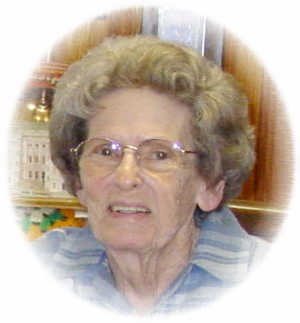
~~~~~~~~ In Memoriam: Azelda Babin Musso (1920 - 2007) ~~~~
~~~~~~~~ Bobby's Beloved Godmother, his Aunt Zelda ~~~~~
~~~~~~~~~~~~~~Be like the bird that pausing in her flight a while, on boughs too slight, feels them give way beneath her — and yet sings, knowing that she has wings.
Victor Hugo (French poet, dramatist, and writer)
~~~ GOOD MOUNTAIN PRESS DIGEST #07a Published October 1, 2007 ~~~ == == == == == == == == == == == == == == == == == == == == == == == == ==Quote for the Fall Color Month of October:Philosophers answer questions that come naturally to children using methods that come naturally to lawyers.
— Jeffrey L. Kasser== == == == == == == == == == == == == == == == == == == == == ==
By Subscription only.== == == == == == == == == == == == == == == == == == == == == ==
Editor: Bobby Matherne
[To Contact Bobby Click Here!]
To Subscribe, Click Here : http://www.doyletics.com/subscrib.htm
or here: <A HREF="http://www.doyletics.com/subscrib.htm">Click here</A>
To Unsubscribe, see bottom of Digest.
©2007 by 21st Century Education, Inc, Published Monthly.
To Read All of Bobby's Writings Click Here!
~~ Click on Heading to go to that Section (Allow Page First To Fully Load). ~~
THE GOOD MOUNTAIN PRESS DIGEST #07a, October 2007 Archived Digests
Table of Contents1. October's Violet-n-Joey Cartoon
2. Honored Readers for October
3. On a Personal Note
4. Cajun Story
5. Recipe of the Month from Bobby Jeaux’s Kitchen: Leeks-Eggplant-Mushroom Étouffée
6. Poem from Flowers of Shanidar:"Blank Spaces"
7. Reviews and Articles Added for October:8. Commentary on the World
- ARJ2: The Space of Love — The Ringing Cedars Series Book 3 by Vladmir Megré
- ARJ2: The Little Prince by Antoine de Saint-Euxpéry
- ARJ2: Co-creation — The Ringing Cedars Series, Book 4 by Vladmir Megré
9. Closing Notes - our mailing list, locating books, unsubscribing to Digest
10. Gratitude== == == == == == == == == == == == == == == == == == == == == ==
THE GOOD MOUNTAIN PRESS DIGEST #07a == == == == == == == == == == == == == == == == == == == == == ==
ARCHIVED DIGESTWORLD ISSUES ON THE WEB ~ ARCHIVED DIGESTWORLD ISSUES ~ 2000: INAUGURAL YEAR: Jun #1 Jul #2, Aug #3, Sept #4, Oct #5, Nov #6, Dec #7
2001: Jan #8, Feb #9, Mar #10, Apr #11, May #12, Jun #13, Jul #14, Aug #15, Sep #16, Oct #17, Nov #18, Dec #19
2002: Jan #20, Feb #21, Mar #22, Apr #23, May #24, Jun #25, Jul #26, Aug #27, Sep #28, Oct #29, Nov #30, Dec #31
2003: Jan #32, Feb #33, Mar #34, Apr #35, May #36, Jun #37, Jul #38, Aug #39, Sep #40, Oct #41, Nov #42, Dec #43
2004: Jan #44, Feb #45, Mar #46, Apr #47, May #48, Jun #49, Jul #50, Aug #51, Sep #52, Oct #53, Nov #54, Dec #55
2005: Jan#051,Feb#052,Mar#053,Apr#054,May#055,Jun#056,Jul#057,Aug#058,Sep#059,Oct#05a,Nov#05b,Dec#05c
2006: Jan#061,Feb#062,Mar#063,Apr#064,May#065,Jun#066,Jul#067,Aug#068,Sep#069,Oct#06a,Nov#06b,Dec#06c
2007: Jan#071,Feb#072,Mar#073,Apr#074,May#075,Jun#076,Jul#077,Aug#078,Sep#079,Oct#07a,Nov#07b,Dec#07c
2008: Jan#081,Feb#082,Mar#083,Apr#084,May#085,Jun#086,Jul#087,Aug#088,Sep#089,Oct#08a,Nov#08b,Dec#08c
2009: Jan#091,Feb#092,Mar#093,Apr#094,May#095,Jun#096,Jul#097,Aug#098,Sep#099,Oct#09a,Nov#09b,Dec#09c
2010: Jan#101,Feb#102,Mar#103,Apr#104,May#105,Jun#106,Jul#107,Aug#108,Sep#109,Oct#10a,Nov#10b,Dec#10c
2011: Jan#111,Feb#112,Mar#113,Apr#114,May#115,Jun#116,Jul#117,Aug#118,Sep#119,Oct#11a,Nov#11b,Dec#11c
2012: Jan#121,Feb#122,Mar#123,Apr#124,May#125,Jun#126,Jul#127,Aug#128,Sep#129,Oct#12a,Nov#12b,Dec#12c
2013: Jan#131,Feb#132,Mar#133,Apr#134,May#135,Jun#136,Jul#137,Aug#138,Sep#139,Oct#13a,Nov#13b,Dec#13c
2014: Jan#141,Feb#142,Mar#143,Apr#144,May#145,Jun#146,Jul#147,Aug#148,Sep#149,Oct#14a,Nov#14b,Dec#14c
2015: Jan#151,Feb#152,Mar#153,Apr#154,May#155,Jun#156,Jul#157,Aug#158,Sep#159,Oct#15a,Nov#15b,Dec#15c
2016: Jan#161,Feb#162,Mar#163,Apr#164,May#165,Jun#166,Jul#167,Aug#168,Sep#169,Oct#16a,Nov#16b,Dec#16c
2017: Jan#171,Feb#172,Mar#173,Apr#174,May#175,Jun#176,Jul#177,Aug#178,Sep#179,Oct#17a,Nov#17b,Dec#17c
2018: Jan#181,Feb#182,Mar#183,Apr#184,May#185,Jun#186,Jul#187,Aug#188,Sep#189,Oct#18a,Nov#18b,Dec#18c
2019: Jan#191,Feb#192,Mar#193,Apr#194,May#195,Jun#196,Jul#197,Aug#198,Sep#199,Oct#19a
To Receive a Monthly DIGESTWORLD Reminder — Click Here.
== == == == == == == == == == == == == == == == == == == == == ==
1. October Violet-n-Joey CARTOON:
== == == == == == == == == == == == == == == == == == == == == ==For newcomers to the Digest, we have created a webpage of all the Violet-n-Joey cartoons! Check it out at: http://www.doyletics.com/vjtoons.htm Also note the rotating calendar and clock that follows just to the right of your mouse pointer as you scroll down the page. You'll also see the clock on the 404 Error page if you make a mistake typing a URL while on the doyletics.com website.
The Violet-n-Joey Cartoon page is been divided into two pages: one low-speed and one high-speed access. If you have Do NOT Have High-Speed Access, you may try this Link which will load much faster and will allow you to load one cartoon at a time. Use this one for High-Speed Access.
This month Violet and Joey learn to Forget It.
#1 "Forget It" at http://www.doyletics.com/images/09180701.gif
== == == == == == == == == == == == == == == == == == == == == ==
2. HONORED READERS FOR October:
== == == == == == == == == == == == == == == == == == == == == ==Each month we take time to thank two of our good readers of Good Mountain Press Digest, books and reviews. Here's our two worthy Honored Readers for this month. One of their names will be in the TO: address line of your email Digest notification. Our Honored Readers for October are:
Jane Kirkpatrick in Baton Rouge, Louisiana
Paavo Pylkkänen in Sweden
Congratulations, Jane and Paavo!
== == == == == == == == == == == == == == == == == == == == == == == == == == == == == == == == == == == == ==
3. ON A PERSONAL NOTE:
== == == == == == == == == == == == == == == == == == == == == == == == == == == == == == == == == == == == ==
Out Our Way:
People have asked me, since the Saints are 0-3 at the point where last season they were 3-0, "What's going on with the Saints?" My answer is one that I discovered in "Shakespeare in Love" during our recent viewing of that great play within a play movie: "It's a mystery." And as with any great mystery, you don't want to put it down until the very end. Have the Saints knocked the ball off the cliff or will they come bouncing back out of the trees and land on the green? It's a mystery. Stay tuned.
We gave our five tickets to the last preseason game against the Dolphins to a Louisiana kids charity volunteer, Tom Verret. Four lucky kids got to see the Saints, still unbeaten in regular season at that time, beat Miami in the Superdome. Will they win another game? It's a mystery. For the first time in history, LSU opened its season against an SEC opponent on Thursday night, the same night as the Saints' last preseason game, so I opted to stay home and watch both games in High Definition in the Timberlane Screening Room. It was a busy night at the remotes for me
switching the sound back and forth between FM radio broadcast of LSU and TV sound for both games on TV. Both teams won. Now they are about 50-50. LSU is 4-0 and Saints are 0-3. After whipping Tulane soundly 34-9 on Sept. 29, LSU is now 5-0. On a day which saw every Top Ten team challenged and five of them beated, LSU rose to the top undefeated.
Hopefully the Saints will wake up after their BYE week. Hope they take the word BYE seriously. Especially those on the offensive line who have not been offensive, but accommodating to opponents attackers and allowing them to sack, pillage, and plunder our backs for three games. I'll gladly drive over to the Saints practice field to say BYE to dem guys! Drew Brees has been like a toreador dodging charging bulls without a cape or a sword. The offensive line has been as tight as the 17th Street Canal levee during Katrina! Soft, squishy, leaky, and a big pushover! No one's drowned in the backfield, but several have been airlifted off the field so far, such as star running back Deuce McAllistair. Is it too soon to call out the Louisiana National Guard to protect our backfield guys? Let's see if we vocal fans can hold the offensive linemen's feet to the fire while Deuce is cooling his heels.
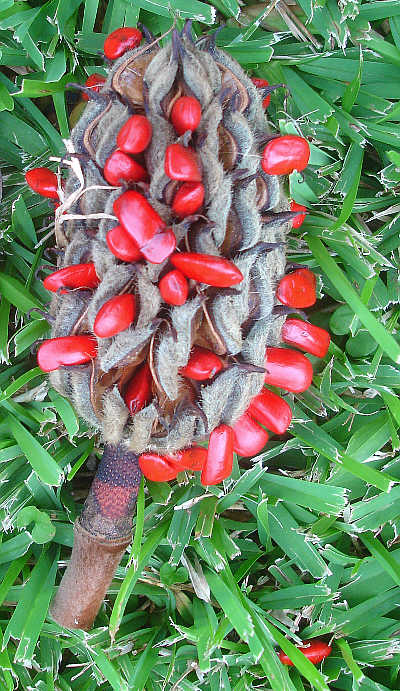
A few years ago when my daughter, Maureen, asked me to attend college with her, I enrolled in post-graduate course in Education at UNO. She and I met at PJ's Coffeeshop on Robert E. Lee near campus so we would need only one car on campus. I learned to enjoy PJ's coffee, especially their double lattes. Two shots of Expresso in steaming milk and froth. Sipping good for 15 minutes or more. Keep you awake for 3 hours of class from 7 to 10 pm. I was drinking PJ's on my way to college back then. Nowadays, I listened to college courses in my Maxima on my daily trip to and from our local PJ's, so you might say that I am going to college on my way to PJ's now. One day on my way to PJ's, I was listening to Prof. Robert Sapolsky, neuroscientist, talk about the "jumping genes" of Barbara McClintock, who predicted them fifty years ago and was ridiculed until the 1980s when it was discovered that the genes did jump around the DNA of plants and also humans. These "transposable genes" can move based on information coming from the outside in the form of chemicals and thus we have a mechanism that shows the plausibility of what Anastasia talks about "the seed as physician." The seed and the resulting plant can access the chemical information from the human being who plants it, nurtures it, and harvests it, all the while adapting its interior structure to help heal that human of whatever illnesses might be present in that person. You can read about this in more detail in The Space of Love review in this Digest.
I heard from our daughter Carla in Beaumont where she has a new beau. She called after she and Patrick had spent the morning looking through all my upgraded Digests. She told me how much they enjoyed doing so. First it gave Patrick a perspective of what we've been doing for the past 6 years in a meaningful and fun way. Said they loved the Bobby & Del photos, noticed the "I Have Issues" purse photo which finally struck home as to its meaning, as well as the No Bug Us Photo. We have added a new feature for the future Digests called "A Blast from the Past". This is one photo near the end of the Digest of a family member from 20 or more years ago. Check out the photo of me,
Claude Trosclair, and Bob Housden from 1957 in Mimosa Park in this issue. By the way, all but one or two Digests have been upgraded and the remainder will be done as soon this Digest is published. Next month I'll begin on upgrading the Reviews.
Inspired by Anastasia's concept of the "seed as physician", I bought some radish seeds. Dug up a barrow full of Bio-Dynamic mulch and made a seed bed with it on the east side of the center garden. Put the radish seeds in my hands and added my saliva on them. Held the seeds warm in my hands and prayed as the saliva entered the seeds, then I committed them to the warm arms of Mother Earth to bring them into sprout and food. I love radishes and yet have never planted them, up until now. This marks a new day on Earth for me. Meanwhile the bell peppers, eggplant, and green beans are beginning to grow in the same garden. I expect to continue this on a larger and better prepared scale come the Spring growing season.
This month Del's mom had another back operation, a kyphoplasty again, this time cementing L4 and L5 vertebrae, the last two Lumbars not previously cemented. The recovery has been problematic with pains appearing in various places. Too soon to tell how long this will go on. So far the X-rays of the back after the operations shows everything is fine. She is now getting up and down after about a week of needing help, so that's good news.
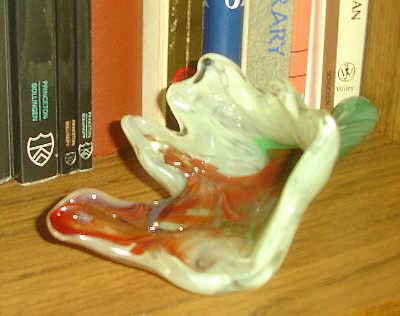
Fridays this month have been my day in the library prison. Chained to my seat, working my way through old books, discarding those no one will ever read, boxing those good enough for my club's new library, cleaning off the shelves, turning over any bent ones, and chasing dust bunnies down the library hallway to catch them before they start multiplying! I promised Del back in March I would do the entire library before her Timberlane Garden Club meeting here, and by summer I had yet to start, so I allocated Friday mornings for the task while Del was working on other cleaning projects. Got through 60% of the library before the meeting and will pick up doing the rest next Friday. (ugh!)
Early one Friday morning I made some macaroni-tuna salad for us and for the pot luck at Rummel High School tomorrow. After 15 years of listening to Archbishop Joseph Francis Rummel's long-winded exhortations in his weekly letters to parishioners at Our Lady of Prompt Succor in Westwego, I figured that it's about time I have a grandson going to his eponymous school, so we joined the Grandparents Club and will go to the first meeting and then Grandparents Day later in the school year. Just in time for his freshman year, Gabe has had a growth spurt of several inches in height, and has begun sounding like his Uncle Rob over the telephone.
First reports are that he is teaching things to some of his religion teachers. Not surprising for a kid who said he wanted to be Pope about 8 years ago.
Gabe's dad, Steve, showed me the large redfish they caught at Venice yesterday. Gave me two of them to filet. I prefer cleaning redfish myself, because I can clean away anything but the white flesh, ensure there's no bones, and slice some for grilling and chop some in chunk-sized pieces for a courtboullion. Took me about two hours to clean the redfish and clean up the mess, but in the end I had some filets to grill for a supper with butter beans one night this week, plus a pack of filets to fish fry another night, and a package of chunks for redfish courtboullion later. Decided to throw away the frozen courtboullion from last year, and made some fresh redfish courtboullion. — also resolved to eat or give away the courtboullion instead of freezing it. Before it was all gone, our friends, Brian and Judy, Rosie, Ann and Don, John and Carole, and Paul Oliver had all enjoyed the dish.
I complimented Chef Bobby Jeaux on a best ever. Not only the best redfish courtboullion he ever made, but the best food I'd eaten anywhere, ever. Talk about good! The recipe is there folks on the recipe page. My dad, Buster, cooked almost the same recipe since the 1950s before Bobby Jeaux took it over and added a few twists of his own.
Just so you know that I do other things than write all day: Out cutting grass this morning. 81 and cloudy. In the middle of grass-cutting, I had to repair the grass catcher. The vertical holder had bent back over time and I took the maul to it to bend it vertical again. That's why the grass bag had been slipping out a bit during cutting. Also had to remount the cotter pin, plus I shimmed it up so that it won't have the amount of play that it did before. Both things will make it operate easier and with less trouble than before. I decided to trim the hedges on the West Portico. When I was almost through, I cut through the extension cord and stopped to splice it together again. Part of the price of avoiding a noisy combustion engine. That took me close to an hour to do it right. Then I trimmed a little more hedge, but it had been raining and I stayed under cover. Will need some final touches, but I cut the Indian hawthorn hedge back as much as it was possible without a chainsaw or pruning tool.
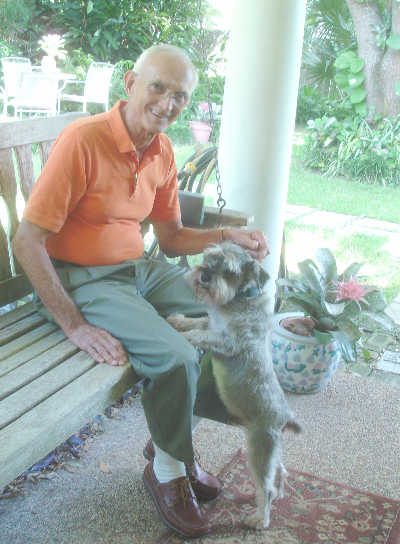
I was exhausted and took a 2-hour nap after the outdoors work. For supper I had an Audrey avocado. Noticed how I couldn't bear the thought of eating a plain avocado as I have taken to doing recently. Needed the vinegar and the mayonnaise for my depleted bodily resources. Realized it immediately by how I felt instantly better with the first bite from the vinegar. Another sign of how our body communicates to us what kind of food it needs if we do not stuff ourselves every meal.
This month we treated the gardens of Timberlane with our Barrel Compost compound. A handful of the special preparation, stirred into rainwater for twenty minutes, and then sprinkled from a long-handled brush over the plants after dark. One treatment a year seems to work very well on the plants. I emailed Ferdinand in British Columbia to make sure he was still around and selling the stuff. Apparently his answer was yes, because he told me in reply he had put some in the mail for me. His price was still $25 including postage and I'll have another five years supply. We use no artificial fertilizers in our gardens at Timberlane, but we apply this compound to the plants and to the large mulch beds from which we obtain nice, rich organic soil. Plus whenever Bobby Jeaux is cooking in his Kitchen, he keeps all the organic portions of the food in a grocery plastic bag for me to spade into a needy spot in the gardens.
In preparation for the Garden Club meeting, I took Steiner, our beloved Schnauzer to be groomed. The owner, Jim was not there, and the groomer told me, "That's okay. He doesn't do the work." Well, she did a number on Steiner! Skinned him of all his leggings! ! Jim would never do that without my approval. He would ask if it was needed. Scalping was not needed, but Jim was sure needed! The cypress leaves have not begun to fall yet and Steiner was definitely not matted. His leggings were just growing back from last years close cut after cypress season. To make it worse, the groomer said that I told her to do a short cut.
That was a blatantly obvious lie because I told her nothing, just thinking about the hubris of what she said about Jim. Well, Steiner is ready for an early falling of the cypress leaves. They have tiny hooks on the leaves and usually stick in his leggings and soft white fur on his chest, all of which are gone.
On the day of the garden club meeting, three ladies showed up about 9:45 with food and drinks. Del had everything set up in the east and south portico gardens. Allen Cowen of the LSU Agricultural Center came to speak about ornamentals, new ones. My improvised screen using the flipchart stand worked great over the fireplace. He told us about new ornamentals and flowers. He covered Knockout roses and Cajun Hibiscus, sweet potato vines and wave petunias: tidal wave are the newest and biggest; shockwave the smallest, the teeniest 'tunias.
Del asked me to read the theme poem I wrote for the Yearbook to the garden club, and later said that I did great. Rosie said it was the best meeting ever. The food was good, and Del had arranged a beautiful setup of tables under the live oak and South Portico. We presented Norma Lulich with a Birthday Cake on her birthday and sang to her. I sliced the cake for everyone and ate a slice myself. Several people pleaded with Elaine the President to invite me to talk to the Club about bio-dynamic gardening. I told her if she needed a fill-in at some point, give me a couple of weeks notice and I'd do it for them.
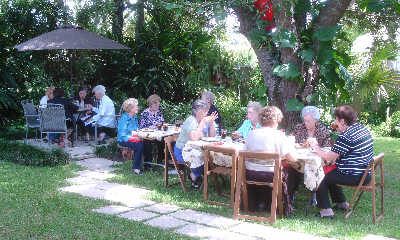
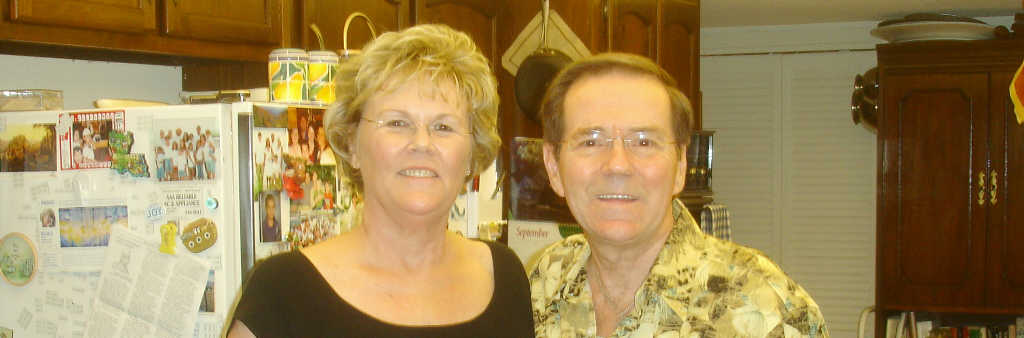
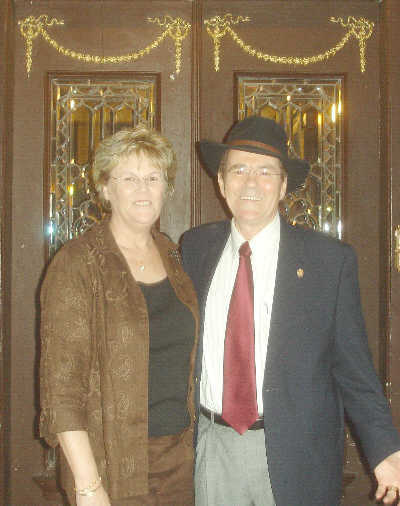
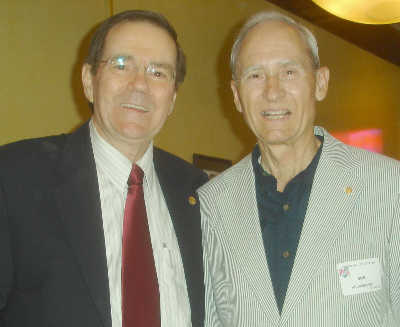
One Sunday we went to a Military Officers luncheon in Metairie with Jim and Gail Webb. Joining us were Mike and Wendy Jamison. Del and I met there an old friend from our Unlimited Singles days in the 1970s in Metairie, Bob Hildebrandt. After the luncheon the Mathernes, Webbs, and Jamisons motored to our club for the New Member Reception which usually marks the beginning of a new year of activities. One of Jim's fellow JROTC commanders was inducted as a new member. Del and I enjoyed seeing all the club members again after a long summer.
Near the end of the month, my mother's sister, Azelda, died in Thibodaux, Louisiana. I quickly updated my In Memoriam for Aunt Zelda, my Godmother, whom I called, as is the Cajun custom, my "Nanan." She died at 87 years of age. I found a 2002 photo of her that I'd taken to use. You can see that her eyes are still shining. This is the only color photo I had of her in digital form.

Today's kids have birthday parties every year, it seems, and they get multiple presents from all kinds of people every birthday and Christmas. When I grew up, I never had a birthday party until Del gave me one on my 60th birthday. I never received a birthday present from my parents even. On my 16th birthday they happened to have a BBQ on my birthday and never even had a cake or acknowledgment that it was my birth-day that day.
But there was one person who always remembered my birthday and Christmas and made sure that I had a present from her, my beloved Aunt Zelda. She lived an hour or so away, so maybe I didn't get my birthday present till a few days after my birthday, but one always showed up eventually. May the Angels be with you, Nanan, and Christ Jesus hold you safe during this new phase of your Life.
I drove to the funeral in Thibodaux at St. Joseph's, a beautiful cathedral-size church founded in 1920. Its interior ceiling, apse, and altar matches that of most churches I have seen of similar sizes in Europe. Even had a bier for St. Valerie, the virgin and martyr, with a relic of her. Got to talk to my Babin cousins there, Myra, Gaton, Leonard, Judy, Raleigh, Donna, and Pamela, plus two of my mother's remaining sisters, the twins, Clara and Clarice. It was a rainy day as if the clouds were also gathering to wept for the loss of our beloved mother, aunt, sister, and friend. After standing up for over three hours, I drove two hours back to Timberlane and Del and I went to the Saints Monday game in the Superdome. I stood up cheering the Saints on for three more hours. But it was a fruitless endeavor. The football Saints went down like Saint Valerie did, a virgin — no wins — and a martyr — slaughtered by the Greek giants, the Titans. As William Bendix used to say on "The Life of Riley", "What a revoltin' development!" We finally crashed at home about midnight after my exhausting day.

On Friday we had dinner at a long-time favorite Honduran restaurant nearby called "Divino Corazon" or Sacred Heart or simply the Pupuseria because they feature pupusas, a soft tortilla filled with cheese, etc. And our favorite drink, a kind of lemonadeade-like concoction called Chan. The owner Gloria was recovering from a knee operation and wasn't there, but her son Frank posed for a photo for us. They have just re-opened after being shut down by Katrina and completely remodeled.
This Saturday, the last one of September is Michaelmas, which is the 90th of my father, Hilman "Buster" Matherne. We're meeting him for a late lunch at his favorite restaurant in Metairie. I expect there will be many Louisiana oysters shucked for our table during that celebration. He joins his older sister Hilda on the sunny side of ninety on this birthday. She is a couple of years older than he is. We move the birthday party after the meal to Mimosa Park where the grandkids and great-grandkids will be gathering for cake and ice cream. Happy Birthday, Pop!
That's it from out our way for another month. Till next month, God Willing and the river don't rise! Make it a great October in your own Space of Love ! ! !
~~~~~~~~~~~~~~~~~~~~~~~~~~~~~~~~~~~~~~~~~~~~~~~~~~~~~~~~~~~~~~
IMPORTANT MESSAGE:
To those Good Readers who are puzzled by How the Moon could be Rising In Front of a Mountain, Click on Photo. To see 161021 photo, Click Here. ALSO: if you are puzzled because you No Longer get our Monthly Reminder, you may have Changed Your Email Address without notifying us. NOTIFY US NOW by a simple Click Here!
Here's the Sting:
You will NOT receive a Monthly Reminder unless you have Re-subscribed under your new address to DIGESTWORLD.If you've already receiving DIGESTWORLD Reminders, ignore this message.
If you're not subscribed, and would like to Subscribe to DIGESTWORLD Reminders to receive one short email a month to inform you of the latest ISSUE, now's a good time. SUBSCRIBE NOW
by Clicking Here.Yes, this message does no good to those who changed their email address without notifying me — but it can alert those of you who are going to change your address.
If you've changed or are planning to change your email address, Click Here to SEND NEW ADDRESS. (Alternate way is to copy into your Browser this URL: http://www.doyletics.com/subscrib.htm )
EASE OF VIEWING NOTES:
NOTE: For Internet Explorer Browsers, DIGESTWORLD is best viewed at 100% Zoom and the Window's width sized so that Digest Archives lines are single-spaced, just barely. Adjust Window width so that Mountains almost touch the Archive Numbers, especially if you find some Photos overlapping text.PHOTO CAPTIONS (CURSOR FLYOVER ISSUE RESOLVED):If you have been enjoying the photos in DIGESTWORLD, but have wondered who or what you were looking at, you will now be able to hold your cursor still over the photo and the photo's description will appear. (Test on Butterfly-Crab Image at Right.) We spend a lot of time writing these photo captions and hope you will read them. All the Archived Issues have been updated to provide descriptions when your cursor rests for a second on a photo. Note that older Reviews have not been updated. If you haven't finished reading text when description disappears, move cursor away and back on photo to finish. We thank you for your patience and hope this pleases you.
New Quotes Added to quotes.htm this month:
I long to accomplish a great and noble task, but it is my chief duty to accomplish small tasks as if they were great and noble.
— Helen KellerNothing fails like success because we don’t learn from it. We learn only from failure.
— Kenneth BouldingPrivate property was the original source of freedom. It still is its main bulwark.
— Walter LippmannThe work an unknown good man has done is like a vein of water flowing hidden underground, secretly making the ground green.
Thomas CarlyleFatigue makes cowards of us all. (When we are tired, a reduced level of serotonin is sent to our frontal cortex and that makes us less able to make strong decisions.)
— Bobby MatherneNew Stuff about Website: Note that under "EASE OF VIEWING" above we have added Firefox Browser instructions for easily viewing photograph descriptions and credits by a simple cursor over of the photo. The five most popular Reviews for August, 2007 are listed below. If you haven't read any of these before, why not find out why folks keep coming back to these five. Annie Dillard's book has topped the chart for almost six months.  1. An American Childhood by Annie Dillard
2. Reminiscences of Rudolf Steiner by Andrei Belyi, Margarita Voloschin & Assya Turgenieff
3. The Diving Bell and the Butterfly by Jean-Dominique Bauby
2. Frogs into Princesby Richard Bandler and John Grinder
5. Anam Cara by John O'Donohue
New Stuff on the Internet:
- [add here]
~~~~~~~~~~~~~~~~~~~~~~~~~~~~~~~~~~~~~~~~~~~~~~~~~~~~~~~~~~~~~~
Movies we watched this past month:
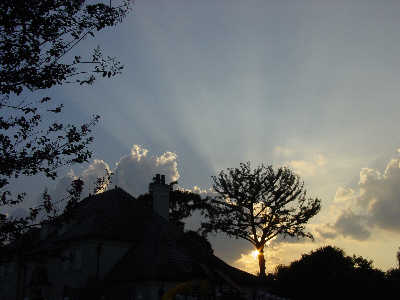 Notes about our movies: Many of the movies we watch are foreign movies with subtitles. After years of watching movies in foreign languages, Arabic, French, Swedish, German, British English, Russian, Spanish, Italian, Japanese, Chinese, and many other languages, sometimes two or three languages in the same movie, the subtitles have disappeared for us. If the movie is dubbed in English we go for the subtitles instead because we enjoy the live action and sounds of the real voices so much more than the dubbed. If you wonder where we get all these foreign movies from, the answer is simple: NetFlix. For a fixed price a month they mail us DVD movies from our on-line Queue, we watch them, pop them into a pre-paid mailer, and the postman effectively replaces all our gas-consuming and time-consuming trips to Blockbuster. To sign up for NetFlix, simply go to http://www.netflix.com/ and start adding all your requests for movies into your personal queue. If you've seen some in these movie blurbs, simply copy the name, click open your queue, and paste the name in the Search box on NetFlix and Select Add. Buy some popcorn and you're ready to Go to the Movies, 21st Century Style. You get to see your movies as the Director created them — NOT-edited for TV, in full-screen width, your own choice of subtitles, and all of the original dialogue.Hits (Watch as soon as you can. A Don't Miss Hit is one you might otherwise ignore.). We lead off this month with a movie about a "Good Man" and a "Good Woman":
P. S. Look for HD/DVD format movies which are now available from NetFlix.“Next” (2007) Nicholas Cage has a gift of knowing what the future holds for him up to two minutes in the future, thanks to the author Philip K. Dick. Can he help locate and defuse a nuclear bomb in time? With his girl friend’s life at stake he reluctantly helps. An edge of the seat thriller from beginning to abrupt end. It ends with a bang.
“Bon Voyage” (2003) Delightful, fast-paced comedic drama with a half-dozen sub-plots woven around the capitulation of France under Marshall Petain to the German invaders and the spiriting from German hands some heavy water and shipping it to Britain to keep the atom bomb from the Germans. A DON’T MISS HIT ! ! !
“Evening” (2007) As Ann lays bleakly dying, we enter her reverie of memories which are bright and cheerful. We learn who Harris is, Buddy, Lila, and other key figures in Ann’s (Claire Danes) early life. A summer in the cottage by the sea. A wedding. A plunge into the sea. A new found love. A friend dies. These were not flashbacks but a view of Ann’s life as she was reliving it on her death bed. An amazing movie with three other marvelous actresses, Glenn Close, Meryl Streep, and Vanessa Redgrave.
“Black Book” (2006) Ellis was a singer before WWII and is trapped in Holland with her Jewish parents. Offered a way to escape with their money on barge through the marsh, they are mercilessly machine-gunned and only she escapes. To her horror she slowly discovers a plot to do this to all the rich jewish families trying to escape the Nazis. She has friends in the resistance, but whom can she trust? An up close and personal look at the ignominies of war for a short 2 and a half hours. A DON’T MISS HIT ! ! !“The Lives of Others” (2007) could be titled a “Sonata for a Good Man” in East Berlin in 1984, but that would be telling. Who is the good man? The playwright who writes Western ideas? His favorite director, now blacklisted? Or the State Police agent spying on him 24/7? This is an amazing movie showing the world of the GDR at the time Gorbachev was just coming into power. “It’s hard to imagine a man like you running an entire country” was said at the end to a not-good man. The 2 hours and 17 minutes will evaporate into the mist of time as this movie captivates and entertains you. A DON’T MISS HIT ! ! ! ! ! !
“A Good Woman” (2005) makes for a great movie. Actually two good women star: Scarlett Johansson and Helen Hunt. Helen plays the Scarlet Lady and Scarlett the ingenue newly married. If you agree that gossip is a dish best served hot, then watch this one right away! Wit and crumpets are never far away. A DON’T MISS HIT ! ! ! ! ! !
Heat of the Sun: Disc2 1-3: (1991) Scotland Yard detective ends up in Kenya after he shot and killed an upper class pederast in the act of committing another crime after being released. He finds missing people, lion attacks, arson, corruption, and more teflon upper class felons to content with. But instead of following orders, he follows his nose and roots out the killer. “The Closer” could have been modeled after this mini-series.
“Ladykillers” (1995) with Alec Guiness and Peter Sellers as part of a gang heisting an armored car with a plan to have the Mrs. Wilburforce, a tiny 87-year-old lady Alec is renting from, pick up the money in a trunk added to the receiving dock as if it had come in from out of town. While police are looking at all incoming luggage, she waltzes out with the trunk oblivious to its contents. Can she survive this episode at the hands of these deadly thugs? Ah, thereupon hangs a few thugs over a railroad track. . .
“L’Auberge Espagnole” (2002) is a Spanish apartment filled with 6 students at the Eramus University, all from different countries: Russian, German, Spanish, English, American, Belgium, and France. Spend their year in Barcelona with them and, during the two hours of this movie, you will be most entertained. They are learning spanish, but speak various combinations of their other languages one on one with each other, but their one common language, English, comes out briefly for planning meetings of the whole crew. Exceptional cinematography, especially during their drinking and dancing celebration in a local club. A DON’T MISS HIT ! ! ! ! !
“Danny Deckchair” (2003) made it big in a small town and that’s no small thing. He dropped in on Glenda three times: first time, she accepted him, second, she rejected him, and third, met him with open arms. Take a wild ride in a folding chair with Danny. You’ll love every minute. A DON’T MISS HIT ! ! !
“The Valet” (2006) goes from parking cars to sleeping with a supermodel at the whim of her billionaire lover who wishes to keep her, his wife, and his business. So he put her in the valet’s pumpkin shell apartment in order to keep her very well. But things of mice and men gang aft agley and thereupon hangs the tale of a mouse.
“Emma” (1996) with Gwenyth Paltrow, Ewan MacGregor etal in a delicate rendition of Jane Austen’s classic novel.
Misses (Avoid At All Costs): We attempted to watch these this month, but didn't make it all the way through on most of them. Awhile back when three AAAC horrors hit us in one night, I decided to add a sub-category to "Avoid at All Costs", namely, A DVD STOMPER. These are movies so bad, you don't want anyone else to get stuck watching them, so you want to stomp on the disks. That way, if everyone else who gets burnt by the movie does the same, soon no copies of the awful movie will be extant and the world will be better off.
“Equilibrium” (2002) equals soulless stagnation in a world so bleak and violent, we checked out before the second act. Worthless science fiction. A societal solution worse than the problem it sought to solve. Worthless science fiction.Your call on these — your taste in movies may differ, but I liked them:
“Amores Perros” (2000) translates literally as “loves dogs” but idiomatically as “Love is a Bitch”. Both apply in this trilogy of love and hate. A supermodel moves in with a married man she clawed away from his wife and daughters. A young man falls in love with his older brother’s fighting dog and pregnant wife. A guerilla leaves jail to kill the man who married his ex-wife and replaced him as father to his daughter. Mix these together violently and you have a bloody, well, interesting movie.
“Mentor” (2006) Rutger Hauer plays the mentor to a younger English professor and fellow writer, but somehow they menàge to fall in love with the same woman and thereupon hangs a bit of tail. Intriguing weaving of flashbacks into real-time. “Heat of the Sun” (1999) “Sport of Kings” this episode completes the mini-series. They separated two episodes on disks 1 and 2, causing us to miss the end of Disk 2 thinking it completed on Disk 3. Enjoyable character playing the Scotland Yard detective in a Kenya that wasn’t ready to enforce justice against the Brits.
“I Am a Sex Addict” (2005) and an innovative film-maker who leads us through his film introducing the actors and the people they play as we go along. Graphic sex scenes almost portrayed, mostly talked about. Humor and innovation sustains interest.
“Romance” (1999) Slow movie about a French school teacher who wants a baby by her husband who won’t have sex with her, so she experiments with other men. Director’s Cut shows actresses’s over and over. A barely YC
“Ripley’s Game” (2003) but nobody knows why. Malkovich plays Ripley and it’s an inscrutable game they play together. Why does the enigmatic art dealer and amoral assassin choose Jonathan, a frame-maker with leukemia, to become a paid hit man? Ripley is an art collector, an art dealer, and an artful murderer who prefers to spend time playing the harpsichord with his talented wife, but he has a game on the side which is worth sticking with to the end.
“Life Without Dick” (2001) and without a script. That’s the predicament Harry Connick, Jr. found himself in when his hitman assignment was to kill Sarah Jessica Parker’s husband Dick, whom she had just shot through his guitar. (One dead in the cellar, Chris Rose!) Dick was the private dick on TV, “Just dial IMA-DICK”. Well, fun happens even when the script sucks and Craig Ferguson shows up as Harry’s boss and spices up the show, otherwise filled with inane jokes like, “We are Irish, not Mafia.” And Harry’s reluctance to sing or kill people, which can be fatal to one’s occupation as a hitman, but thanks to absence of a script, he manages to survive to give this turkey a Your Call rating.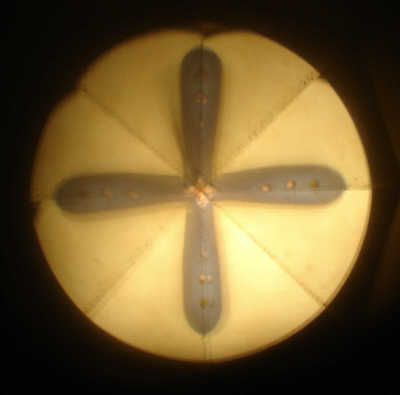
“The Star Maker” (1995) is Joe, an itinerant film agent who wanders the countryside of Sicily giving auditions. Everyone he meets he looks at and says they could be a movie star. Then he charges for filming their audition. But what develops? Not the film he shoots. But a series of memorable vignettes of local people and one girl who falls in love with Joe.
“Italian for Beginners” (2000) is a small class sponsored in a Scandinavian town. Six to eight lonely people meet to learn how to ask for a double bed in Italian and six of them go to Venice and learn to enjoy double beds together as three couples. Venice makes flow that which was stagnant back home.
“The Highwaymen” (2004) Road rage at its zenith. Caviezel stalks the cyborg-man-cadillac who blatantly killed his wife as one of his serial murders of women. Will the man and machine ever beat the man-machine? Bloody, brutal, and baleful from beginning to end. Not a bedtime story for the kiddies.
“The Very Thought of You” (1999) Joseph Fiennes and Rufus Sewell in a three-way romp with an American gal three Brit friends meet and fall in various forms of love and lust with. Fiennes’ bit with the “psychiatrist” is a classic.
“Blades of Glory” (2007) HD view of two guys ice skating in the Doubles Championship. The “Elf” meets “Napoleon Dynamite” on the ice. Which one will lead? Who cares? Some funny bits got lost in the ridiculous plot making it barely a Your Call.
“Ten Canoes” (2006) and ten paddlers looking for goose eggs in a swamp in Oz plus an aboriginal narrator who laughed when something funny happened on the screen. He closed by saying, “Our story is a good story — not like your story, but a good story all the same.”
== == == == == == == == == == == == == == == == == == == == == ==
4. CAJUN STORY:
== == == == == == == == == == == == == == == == == == == == == == Boudreaux comes home shortly after leaving for work. Marie wipe her hands at the sink and goes over to him slumped in his chair at the kitchen table, his face in his hands.
“Mais, Boudreaux! Wat happened? Your face is all black and blue!”
“Marie, Ah jest don’ wanna talk about dat, me,” Boudreaux said, sounding so dejected, that Marie went over and put her arm over his shoulders.
“Mon petit, ah’m so sorry you had de bad day. But told me wat happened so’s you can feel better, okay?”
“Wahl, okay, ah guess. First t’ing happened is dis car in front slams on his brakes and ah go KERPOW! right into his trunk! See ah tole you it wasn’t good.”
“But Boudreaux we got insurance to fix the car — tole me how you got all beat up.”
“Dat’s the worse part. De driver done got out the car and ah see dat he is one of dem midgets, howyacallem, a dwarf.”
“Yes? So wat happened?”
“He came over to me, looked at his bashed up trunk, turned and looked up at me, standing up on his toes, and blasted me with, ‘I am NOT happy!’
“So wat could I do? I looked down at him and said, ‘Well, which one ARE you then?’ And dat’s how the fight started!”
== == == == == == == == == == == == == == == == == == == == == ==
5. RECIPE of the MONTH for October, 2007 from Bobby Jeaux’s Kitchen:
(click links to see photo of ingredients, preparation steps)
= = = = = = = = = = = = = = = = = = = = = =Leeks-Eggplant-Mushroom Red Beans Étouffée
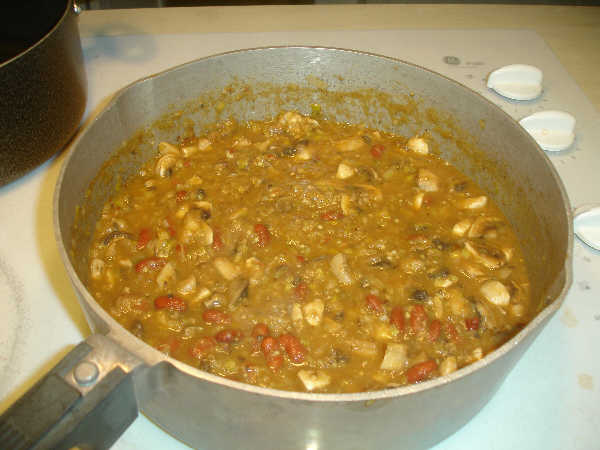
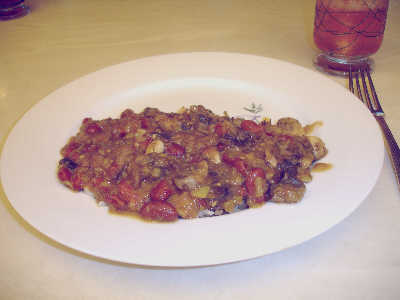 Background on Leeks-Eggplant-Mushroom Red Beans Étouffée: An eggplant étouffée makes a great base for the Crawfish Eggplant Dressing and the Crab-Eggplant-Shrimp étouffée, so when I had an eggplant which needed to be used and was planning to make some quick red beans and rice, I combined the eggplants with some leeks and mushrooms with the red beans and came up with this recipe.
Ingredients
Two leeks
8 oz mushrooms
1 Eggplant
1 can of Van Camp's New Orleans Red Kidney Beans
1 can of Trappey's Red Kidney Bean with Chili Sauce
1 Bay leaf
1 TBSP chopped garlic
1 TBSP of chopped Bell Pepper
3 TBSP of Bertolli Extra Lite Olive OilPreparation
Slice the eggplant into thin slices for quick cooking. Soak slices in salted water right away. Open cans of red beans.
Chop the Bell pepper, mushroom, leeks.
Cooking Instructions
Coat bottom of large fry pan with Olive Oil, HEAT on HIGH, place a tsp of chopped leeks in pot and when it begins to sizzle add the rest of the leeks, sauté until translucent, add bell pepers, garlic, and half of mushrooms.Stir and sauté. Add sliced eggplants, stir, and sauté. Add liquid from eggplant marinade till slices are covered up.
Bring to boil, then HEAT to MEDIUM. Let cook for about an hour, stirring every 15 minutes and adding water if necessary to keep from burning.
Empty cans of red beans into pot. Stir in second half of mushrooms and cook on Med-Low heat for about 30 minutes. Should look like this when ready to serve..
While étouffée is cooking, prepare some wild rice/long grain rice according to recipe at: http://www.doyletics.com/digest31.shtml#section5
Serving Suggestion
Serve warm over wild rice/long grain steamed rice.
Other options
Subsitute yellow onions for leeks. Double the mushrooms. For a special treat, chop the eggplant in chunks and do not mash down the chunks to add texture and savor to the final dish. If you do the chunks, the mixture will look like this in the pot cooking.
== == == == == == == == == == == == == == == == == == == == == ==
6. POETRY by BOBBY from Flowers of Shanidar:
= = = = = = = = = = = = = = = = = = = = = =Blank Spaces
Mendeleev did as he was able —
To create a periodic table,
He left blank spaces for the elements,
And he ignored the Ph D's laments."Dmitri," they would wail, "they just don't fit.
Your table has some vacant spots in it."
"Yes, I know," the table maker replied,
"But by their holes, the missing can be spied."Leave blank spaces in your life: Ones not filled with toil or strife.
Plan them empty without sin,
Joy will come to fill them in.
== == == == == == == == == == == == == == == == == == == == == ==
7. REVIEWS and ARTICLES for October:
= = = = = = = = = = = = = = = = = = = = = =And for my Good Readers, here’s the new reviews and articles for this month. The ARJ2 ones are new additions to the top of A Reader’s Journal, Volume 2, Chronological List, and the ART ones to A Reader’s Treasury.
1.) ARJ2: The Space of Love The Ringing Cedars Series Book 3 by Vladmir Megré

After the success of Vlamir's first book, people came to find Anastasia and none were more persistent than Boris and his group of six who planned to kidnap her and her son and spirit them away from their Space of Love to a Nature Preserve outside of Moscow. Boris has even selected a mate for Anastasia to replace the unworthy Vladimir. Their guns and helicopter proved useless against Anastasia, however, and they left their base to return home haunted by what happened to them. They endured a Hell of their own making and watched Anastasia performing a "grand miracle" on a small girl.
Vladimir sought out Anastasia's foremother's dolmen, the one in which she sacrificed her life to help mothers everywhere learn the truth about breast-feeding. He fell from the side of a cliff and was unconscious for days while the foremother in her spirit helped him to stay alive. Recovering finally, Vladimir takes three roses to her dolmen in her memory — the first person since her death many generations ago to pay their respects for her sacrifice.
He returned to find Anastasia, and was warned away by local guides, but continued on his way, only to be beset by ferocious dogs from the city returned to the wilds. Anastasia got there in the nick of time to save him and to escort him to meet his son. This was a grand meeting for Vladimir and he was astounded by what he found when he reached the space of love, the small glade where his son was growing up.
Later Vladimir visited the special school in Gelendzhik, which is a prototype of a school run by the school children themselves. In addition to the joyful song of children’s voices singing, he saw children creating the two-story school building by themselves. But what about the academic side of things, you ask? Read for yourself, and decide if this kind of academic achievement could be possible in public school systems which create soulless slaves who only strive to escape their enslavement as soon as possible.
 [page 131] At this school children take but a year to master the whole ten-year public-school maths syllabus, along with studying three foreign languages. They neither recruit nor produce child prodigies. They simply give kids a chance to discover what already lies within.What can we learn from this book? Anastasia tells us that we should not put our lamp under a bushel basket. When its light is not visible anymore, much discussion will be generated, but little light will be shed upon the subject until we raise the basket. What is this basket which shields us from the light of wisdom? She names it, “the erudition of invented dogmas.” Academic gobbledy-gook, in other words.[page 108] “It is the parents’ duty not to hide the creative Light under the erudition of invented dogmas. For ages upon the Earth debates have arisen as to which system might be the wisest. But think about it yourself, Vladimir. Debates arise where Truth is hid from sight. Fruitless debates can go on forevermore as to what might be found behind the closed door. But one has only to open the door and it will be clear to all, and there will be nothing to debate, since everyone will be able to see the Truth for himself.”
You are Man, each of you reading this text. You have latent within yourself all the power that Anastasia has, and she is willing to tell you how to use your power. The choice is in your power. Read the book or not.
Read the Review at:
http://www.doyletics.com/arj/spaceo03.htm2.) ARJ2: The Little Prince by Antoine de Saint-Euxpéry

So you think you know the Little Prince because you saw the movie with Gene Wilder and Robert Fosse? Unfortunately fairy tales do not convert to the big screen very well. Too much stuff going on visually to comprehend the truth behind the screen.
The Fox's Gift reveals this truth to us if we ponder it: "It is only with the heart that one can see rightly what is essential is invisible to the eye." If you were looking for the truth on the screen, you probably missed it. Here's your chance to begin over, to make a fresh start.
Read the book.
Learn about the people around you and about yourself. Do you know business people, people who drink too much, people who wish to be treated as royalty? Antoine de Saint-Euxpéry is a lamp lighter, read his works directly allow him to turn on one light after another in your mind as you read this gentle story.
Read the book.
He will lead you to remember how to view the world of big people as you did as a child again. Remember when you thought adults were strange. . . . and you had a special friend that meant the world to you in a way no friend since has . . . remember when a special friend of yours died and left a hole too big for adult words to fill . . . the author remembers such a friend . . .
 [page 14] For I do not want anyone to read my book carelessly. I have suffered too much grief in setting down these memories. Six years have already passed since my friend went away from me, with his sheep. If I try to describe him here, it is to make sure that I shall not forget him. To forget a friend is sad. Not everyone has had a friend. And if I forget him, I may become like the grown-ups who are no longer interested in anything but figures . . .You are older now and concerned with grown-up things. You have solved all the riddles in the world, haven't you? What riddles? Oh, like where we go after we die? No one has the answer to that riddle, you say? The snake does:[page 60] “Oh! I understand you very well,” said the little prince. “But why do you always speak in riddles?”A movie is noisy and a book is silent. Read this book and you will find out things in silence that you cannot find out by asking other people or watching noisy movies. You will learn to hear the stars laugh . . .
“I solve them all,” said the snake.
And they were both silent.Read the Review at:
http://www.doyletics.com/arj/lilprinz.htm3.) ARJ2: Co-creation — The Ringing Cedars Series, Book 4 by Vladmir Megré

In the short 260 pages of this book, we are given the story of creation of a paradise on Earth for Man, we are taken on a trip with Anastasia and Vladimir to another planet, and finally we are shown how you and I can make for ourselves a Paradise on Earth today, beginning where we are. After reading this book, we can be passive readers no longer. Anastasia lays out a plan for each of us to construct our own piece of Paradise on a hectare of land (2.5 acres) in which we may live healthy and productive lives without depending upon some federal agency to provide us health care, medicines, or any of the other obtrusive interventions which have progressively reduced both the quality of life and independence of human beings across the globe.
If you have read the first three books of the Ringing Cedars Series, you know about Anastasia's beloved dachniks, Russians who work in the city, but have a small plot of ground about the size of a city lot in the USA on which they cultivate fruits and vegetables on the weekends. Over half of all Russians get most of their fresh produce this way. You have also heard about the concept of the "Seed as Physician", and if you have read my review of Book 3, The Space of Love, you have heard how the discoveries of biochemists in the last two decades have revealed the mechanism of "transposable genes" in plants which provides a pathway for the information from your own body to modify the proteins made by plants you grow so that your body will receive nutrients which are vital for your health. This happens on a one-on-one basis. Only the foods you individually plant, harvest, and eat provide such fine-tuning of their proteins directly for your individual body. The seed can thus become your personal diagnostician and pharmacist to heal what ails you before any outwardly visible disease appears, and, in fact, forestall indefinitely the onset of any disease. Clearly, not many drug companies or physician networks would acknowledge such a mechanism, up until now.
In this book, Anastasia, under prodding by Vladimir, goes further and shares her dream for a world in which the concept of dachniks evolves into people living on the hectare-size plots of ground with trees, berry hedges for fences, a pond, a tree plot, a garden and a house. Photos of drawings of these plots appear on color plates between pages 186 and 187. Anastasia is openly and gladly sharing with us the opportunity to build our own Space of Love on such a plot of ground which will live on for generations as a place of veneration and living love for our descendants.
If you think this is unrealistic, then I agree, to you it seems unrealistic, but what Anastasia proposes is realizable and people around the world are already beginning to build these garden paradises in which to live and raise their children and themselves. If you are convinced it is unrealistic, then it would be best to stop reading here. If you continue reading, either of two things will happen: 1) you will come to grasp that her plan is realizable or 2) you will justify your original position by trying to undermine those who believe it is realizable. For your on peace of mind, simply stop reading now.
"What kind of dreams do God's children have today?" she asks Vladimir. What do you use your creative dreams for? This is the question she poses for all of us. Vladimir, representing everyman in the book, answers, "Money for food, car, clothes, furniture, etc." She spoofs him, saying that we are already given these things by God. Vladimir wants to know where these are hidden and she tells him and us a paraphrase of what the Fox told the Little Prince, "It is only with the heart that one can see
rightly, what is essential is invisible to the eye." Our feelings, what we feel with our heart, are invisible to the eye, and only the most heartless of Bacon's adherents would deny that they possess such feelings. We are given a charge in this next passage to allow our feelings to lead us into the new millennium in which our culture of frailty, need, and want will fade from view and a new vision of robustness, abundance, and joy will begin to replace it.
My dad always had a large garden with a lot of produce; usually he had green beans, bell peppers, cucumbers, eggplants, okra, and tomatoes. He shared them with all six of us children and I never tasted a better tomato or cucumber than that which came from his garden. It wasn't until reading the Ringing Cedar Series that I came to understand about the significance of the difference in flavor. Those plants were grown in soil that I had worked as a child and an adult. Those plants had modified themselves to my own body's requirements using their transposable genes to create proteins and other nutrients my body needed. My body recognized the presence of these nutrients and signaled me of their presence by the enhanced flavor presented to me from my palate.
This concept of enhanced flavor due to the presence of the body's needs may seem far-fetched to you, dear Reader, so let me give you a down-to-earth example from my own experience. Growing up in South Louisiana summers were hot and sweaty with temperatures in the 80s and 90s into September and humidity less than 60 percent was considered dry. In the 1940s and 50s as a growing boy, a special treat was an ice cold watermelon on a steamy summer afternoon. Along with the watermelon, my mother, as was the custom in our area, always placed a salt shaker on the table to sprinkle on the watermelon, "to make it taste better." I remember trying the watermelon with and without the salt and sure enough, the watermelon tasted better with the salt sprinkled on it. Even as a child, I was an experimenter, and I wondered at times about how something salty could make something sweet like watermelon taste better. I held that unanswered question for about six decades until recently.

One day I was invited to have watermelon with an 87-year-old friend of ours, Rosie. She placed a salt shaker on the table. Neither one of us used the salt, but it was there. Why? Why was the shaker there, and why did we not use it? If salt in fact made watermelon taste better, as I had confirmed as a child, why did we not use it some today? What was different? Then it hit me! Air conditioning! As a child, neither Rosie nor I had air conditioning in our homes. We were outside playing, running around, working, etc., and perspiring profusely. That perspiration contains salt and our bodies were depleted of salt, so we sat down to eat watermelon, which contains little or no salt within it, our bodies needed salt, and by sprinkling a bit of salt, we restored a healthy balance of salt to our bodies. That's simple biochemistry stuff. But note our body let us know that we were doing the right thing by adding salt by changing the flavor so that the watermelon actually tasted better when we added the salt! Our bodily wisdom actually encouraged us to add salt by enhancing the taste. Nowadays with air conditioning we do not sweat as much and while someone might, out of habit, place a salt shaker on the table with the slices of watermelon, no one uses it anymore.
It is a short step from the salt-watermelon to the home-grown cucumbers tasting better because they contain nutrients with designer genes created by the plants specifically for our bodies. Vladimir discovers the special taste of the cucumbers grown by Anastasia in her cedar glade, and notes it for us.

[page 85, 86] You see, this ordinary-looking cucumber was utterly different in taste from any I had ever eaten before. This taiga cucumber had a pleasant unique fragrance. You'reno doubt aware that cucumbers grown in hothouses taste quite different from those raised in garden beds in the open air. The ones growing in the open have a significantly superior taste and fragrance. But Anastasia's cucumber surpassed all the open-air cucumbers I had tasted before, and possibly by an even greater margin of difference.
I quickly picked up a tomato, tried it and polished it off on the spot. Its taste, too, was extraordinarily delicious. Like the cucumber, it was far tastier than any other tomato I had ever eaten. Neither of them required any salt, sour cream or salad oil. They were delicious in and of themselves. Just like a raspberry, or an apple or an orange. Nobody would ever think of either sweetening or salting an apple or a pear.Our bodily wisdom, by flavor enhancement of what it requires, helps us to select and favor those things. Anastasia tells Vladimir she had prepared the feast in the taiga so that his body could begin taking over the cure which she had been doing on two previous visits but would do no more. He asks, "What might cure me?"
[page 88] "Your own body. Once you try a bit of everything, the body itself selects what it needs. You will feel like eating more of what you have chosen. Your body itself will determine what it needs."
Then he asks her why she will not take the pain away from now on. Her answer contains a deep insight into the healing profession. She offers us the words, "Pain is a conversation between God and Man." Translated into karmic terms, God represents the spiritual burden of karmic debt each one of us carries, and the pain is our bodies way of balancing that karmic debt. No one else can remove that karmic debt, only defer it for a time. But if we change our diet and other addictive habits, we can bring some balance into our karmic debt and the pain will cease. By providing him with foods that could help Vladimir, she offers him a chance to do exactly that. The signal of accomplishment will come if and when his pain ceases.
[page 89] "I shall not take away your pain any longer. Pain is a conversation between God and Man. But, I can now... since I am just offering you food - that does not go against Nature, although it does go against them."
"Who's them?"
"The ones who thought up the regime that is so harmful to Man."
The regime is simply that followed by most people — buy what is made available at supermarkets. Isn't that your regime, up until? Have you given any thought as make the regime you follow healthful from now on? Have you thought of a way to provide a new regime for you and your family in your own life?
Here is a solution for you to ponder: Sow and grow and eat food grown with your own hands. You already have the ease of acquiring food, but pains which accompany your choices, and a large industry of drug companies eager to sell you drugs designed to minimize your pains which your store-bought food cannot alleviate. The drugs do not take it away, do not cure your underlying deficiencies, but instead merely reduce your pain to a level of tolerance, and create in their wake a plethora of unwanted and unpleasant side-affects which are often as bad as the original pain. Do you really want to continue to provide your body as a dart board for medicine's latest miracle cures? Miracle cures? Does that mean it'll be a miracle if it helps more than it hurts? You have lived with pain, up until now. Is there a practical solution for you today?
[page 90, Anastasia, Vladimir] "All systems under a technocratic way of living invariably work only for themselves, Vladimir. Do you consider it 'convenient' to get those lifeless frozen or tinned foods, or water that is half-dead? Was it your body that determined the selection of foodstuffs available in grocery stores and supermarkets?
"The technocratic world's system has taken upon itself the role of supplying you with the necessities of life. You have agreed to this, you have complete faith in it, to the point that you have even ceased to wonder whether you have been supplied with all the necessities."
"But we're still alive — we aren't dying from using these stores!"
"Of course you are still alive. But the pain! Where do you think your pain comes from? Think about where pain comes from with the majority of people. Disease and pain are not natural for Man, they are the effect of choosing the wrong and then take what you like with you. Three days is sufficient for these little herbs — which you yourself will select — to overcome your pains."
I began trying a little of everything while Anastasia was still speaking. Some of the clumps of herbs were tasteless, while others I felt like eating more of. Before my departure Anastasia put the things I had taken a liking to into my backpack. I ate them over a three-day period. And the pain completely disappeared.Vladimir asks for more details about creating sustainable land without artificial fertilizers and exactly what crops to plant, etc. So she outlines the plan starting from the hedge fence of berry plants and trees.
[page 189] "Let us say our lot is on a barren section of land, and is now enclosed on all sides by a hedge. Let us divide it, reserving half or three-quarters of the lot for a forest, and there plant a variety of trees. On the edge of the forest, where it borders on the remaining part of the lot, we shall plant a hedge in such a way that animals cannot pass through it and trample the crops growing in the garden plot.
"In the forest we shall set up a pen using densely planted saplings, which in time will be home to a goat or two. And we shall also use saplings to construct a shelter for egg-laying hens.
"In the garden plot we shall make a pond approximately 16 meters across. We shall plant raspberry and currant bushes among the trees in the forest, and wild strawberries around the edge. Later, after the trees in the forest have grown a little, we can set up two or three empty log hives there for bees. And we shall use trees to make a gazebo where you will have a cool place, safe from the heat, to talk with your children or your friends. And we can make a summer sleeping area out of living things, along with a creative workshop for you. And sleeping places for the children, and a living room."
"Wow! It won't be a forest we end up with, but more of a palace!"
There is a tremendous lot of barren land in the USA where such hectare plots of land could be turned into such a Space of Love in perpetuity for a family using the general plan outline set down by Anastasia and modified for local flora and fauna.
Anastasia builds a scenario for a marriage between a man and a woman living in the Space of Love, their own bit of Paradise, a Kin’s domain built as she laid out the plans. One such plan was designed by Irina Labountsova ©2003, and a color plate facing page 186 is reproduced below to give you a visual of how the various pieces of Anastasia’s plan might fit into the hectare plot of land.
In this book and the rest of the series, Vladimir is a hardened entrepreneur who is constantly lodging objections which are overcome and he ends up being wowed by Anastasia’s descriptions , such as how young people, who will be reading these stories in the coming years, will create out of their thoughts Spaces of Love containing homes which will be palaces in their own Kin’s Domain where they will conceive, give birth to, and raise their children in living love, a place where all the planes of being will be woven into one tapestry of love.
What are you waiting for to begin building your own Space of Love and participating in your true vocation as a co-creator in the Universe? The time is now, the place is where you are, and it all begins with the most powerful weapon in the Universe which you as a Man possesses, your thoughts. Think about that.
Read the Review at:
http://www.doyletics.com/arj/cocrea04.htm= == == == == == == == == == ==
I hear often from my Good Readers that they have bought books after reading my book reviews. Keep reading, folks! As I like to remind you, to obtain more information on what's in these books, buy and read the books — for less information, read the reviews.
== == == == == == == == == == == == == == == == == == == == ==
8. COMMENTARY:
= = = = = = = = = = = = = = = = = = = = = =In this section I like to comment on events in the world, in my life, and in my readings which have come up during the month. These are things I might have shared with you in person, if we had had the opportunity to converse during the month. If we did, then you may recognize my words. If I say some things here which upset you, rest assured that you may skip over these for the very reason that I would likely have not brought up the subject to spoil our time together in person.1. Padre Filius Reads a Church Billboard in Gretna this Month:
Padre Filius, the cartoon character created by your intrepid editor and would-be cartoonist, will appear from time to time in this Section of the Digest to share us on some amusing or enlightening aspect of the world he observes during his peregrinations.
This month the good Padre reads a reminder that Love is not a thing to be received, rather something you do in the process of loving, therefore, rightly understood, Love is a Verb.
2.Comments from Readers: 
- EMAIL from Bob Housden in Missouri (See 1957 Photo of him at right):
I thought you might be interested in knowing that the B-25 you featured was not one of the bombers on Doolittle's Raid; all sixteen of those B-25B's were crash landed or bailed out of over China . . . except for one which landed in Russia and was confiscated. Pachito is a B-25J which was manufactured too late to see combat in WWII. (Bobby: Thanks, Bob. Duly noted and corrected in Digest.)- EMAIL Question about Digest079, Comment 5:
> Bobby,
> Where did you find the info on the wage earner fighting the IRS?
> I've shared that info with some folks and they all asked:
> who/what/where/when. My son especially! He is taking wills and estates
> this semester and so is quite interested in anything IRS related.Thanks for noticing the tax thing. Try Googling it. I purposely didn't post the name because I've known people who went to jail already for using that tax evasion strategy. I don't wish to encourage others to do the same thing. Forget the Constitution — it only protects those who pretend to enforce it.
You may have noticed that I don't dance with the forces of coercion. I pay my taxes even though they are illegal, unconstitutional and unforgiveable. What's so good about taxation WITH representation? But until the guys with guns stop coming after people who don't pay, rightly so or not, I'll pay so I don't have to dance with the thugs.

- EMAIL from Hawaii:
Aloha Bobby,
I am so glad to be one of 3+ million readers of your website! Your technique is really fun! I just found out about it and spend about 3-5 hours reading it. I also did some exercises for food (snails, bugs) and it seems that they are not important anymore. My face remains calm and confident! Sooo Fun! I love it!
You see, I am fascinated with human mind and with the possibilities to LivDelicious no matter what has happened in the childhood.
Lots of love and delight about your work!
Helena- EMAIL from Larry:
[Email sent from Digest No. 43 Header] Cool but homey layout. Enjoyable search.- EMAIL from Dave in California:
Do you happen to know if Doyle Henderson is still alive or not? What jogged my memory to check your site was that a forest fire is burning near Doyle's home in Fawnskin, Calif. in the mountains near San Bernardino, Calif. Doyle wasn't in the best of health, as I recall.Dave [Thanks, Dave. Doyle is in robust but fragile health and in living in his large motorhome near Redlands, California. He sold his home in Fawnskin a year or two ago as the trips up the mountain (7,000 ft) were getting difficult for him physically. He recently drove up to Oregon and visited his ole buddy Warren Liberty while he was up there for repairs to his motor home.]

- EMAIL from Stephen:
Hi,
I just wanted to let you know that I enjoy your website and thank you for presenting it. I have recently been using the Steiner Study Guide, and I appreciate the listing of the Arenson 50.
I don't know about the Anastasia Books, I have not heard about them before — did you apply a dose of skepticism to them before you you decided they were for real, the stuff I am reading on the Net, albeit briefly is pretty fantastic and sound somewhat Castanadean in nature. I may get the first book and try to keep an open mind.
Best regards
Stephen
~~~~~~~~~~~~~~~~~~~ Bobby's Reply to Stephen about Anastasia:
Apparently the web is overdosing on skepticism and does not need my help! Velikovsky had his best-selling books pulled away from MacMillan by Harlow Shapely who admitted that he only read what the skeptics had to say. Of course when 26 of 26 of Velikovsky's predictions in that book proved correct, the skeptics were silent. Never apologized to this day, so far as I know. The skeptics in her own field ridiculed Barbara McClintock's work on transposable genes. They laughed at her right up to the day she received her Nobel Prize for her pioneering work. Skeptics do not build the highway to the future, instead they lay down in front of bulldozers, among other obstructionist things. The pyramids of Egypt were not built by skeptics, someone once said, but I doubt that's the whole story!EMAIL from Howard in New South Wales, Australia:
Dear Bobby,
Bless You — your response brought tears to my eyes. You care. I reached out and you answered.Thank you for your inspiration and support. Yes, I will let you know how I go.
with gratitude
Howard
EMAIL from Vlado in Slovakia:
Dear Bobby,
I have read your reviews of Paavo Pylkkänen's Mind, Matter, and the Implicate Order and
Stephen Edelglass's The Physics of Human Experience and I liked them — wonderful!
Have a good time, best wishes
Vlado
== == == == == == == == == == == == == == == == == == == == ==
9. CLOSING NOTES:
= = = = = = = = = = = = = = = = = = = = = =Thanks to all of you Good Readers for providing the Chemistry which has made this site a Glowing Success. — Especially those of you who have graciously allowed us to reprint your emails and show photos of you and by you on this website — you're looking good! As of June 1, 2019, it enters its 20th year of publication. The DIGESTWORLD Issues and the rest of the doyletics website pages have received over 21.6 MILLION VISITORS ! ! !
We have received over ONE MILLION VISITORS per Year to the Doyletics Website since its inception June 1, 2000, over twenty years ago. Almost 2 million in the past 12 months. We are currently averaging about 150,000 visitors a month. A Visitor is defined as a Reader who is new or returns after 20 minutes or more has passed. The average is about one visitor for every 10 Hits.
IMPORTANT NOTES about DIGESTWORLDtm Our DIGESTWORLD came into existence years before Facebook and all the other social media which interrupt people's schedules many times a day. All our photos, reviews, cartoons, stories, etc, come to you via a link inside of one short email Reminder at the beginning of each month. We hope you appreciate how we let YOU choose when to enjoy our DIGESTWORLD Issues. To Get a Monthly Reminder, Click Here .
We especially want to thank you, our Good Readers, in advance, for helping our readership to grow. NOTE our name is now: DIGESTWORLD. Continue to send comments to Bobby and please do create links to DIGESTWORLD issues and Reviews on LinkedIn, on your Facebook page, and on other Social Media. When you copy any portion of a webpage or review, please include this text: "Copyright 2018 by Bobby Matherne".
Email your friends about the reviews, the handy doyletics Speed Trace, the Household Hints, the cartoons, the Cajun jokes, the recipes, the poems, and the photos in all the DIGESTWORLD Issues archived on our website. Urge them to subscribe to the DIGESTWORLD Reminder so they won't miss a single issue!
The Subscription Process SIMPLE: no Reply Confirmation is required. An email to the Editor with your First and Last names is all that's required. There is never a charge for viewing any page on our website; nor for any of the guidance we offer to people using the FIRST AID KIT or asking for help with doyletics in any other areas.
For those who are able to contribute to the site we offer a year's subscription for receiving the DIGESTWORLD Monthly Reminders for $50.~~ NOTE: DIGESTWORLD is a Trademark of 21st Century Education, Inc. ~~ The cost of keeping this website on-line with its 300 Gbytes of bandwidth a month is about $50 a month. Thank you, our Good Readers, for continuing to patronize our advertisers when they provide products and services you are seeking as you visit any of our web pages. Remember the ads are dynamically displayed and every time you read even the same page a second time, you may find new products and services displayed for your review. Our reviews, digests, tidbits, etc, all our webpages act as Google magnets to bring folks to the website to learn about doyletics and frequent our advertisers, so they support one another in effect.
We wish to thank all Good Readers who have made a contribution to the doyletics.com website! Special thanks go to Chris and Carla Bryant in Corpus Christi and Gary Lee-Nova in Canada!We welcome your contributions to the support of the website and research into the science of doyletics. To obtain our street address, email Bobby at the address found on this page: http://www.doyletics.com/bobby.htm and we will send it to you. Every $50 subscription helps toward keeping this website on-line for another month. If you can't send money, at least show your support by sharing your favorite Issue of DIGESTWORLD and Reviews with a friend.
You can read a description of how to do a Speed Trace (either in English or Spanish):Learn to Do a Speed Trace Here

Or Watch Bobby extemporaneously explain How to Do a Speed Trace on Video:
To make a connection to the Doyletics website from your own website, here's what to do. You may wish to use the first set of code below to link to the site which includes a graphic photo, or to use the second set of code for a text-only link. Immediately below is how the graphic link will look on your website. Just place this .html in an appropriate place on your website.
<CENTER> < — with graphics link — >
<A HREF="http://www.doyletics.com/index.htm">Learn to Do a Speed Trace Here<BR>
<IMG SRC="http://www.doyletics.com/doylepb.gif" width="309" height="102" border="2" TITLE="Learn to Remove Doyles — all those Unwanted Physical Body states of fear, depression, migraine, etc." ALIGN=middle><A/></CENTER>
<CENTER> < — text only link — >
<A HREF="http://www.doyletics.com/introduc.htm">Learn to Do the Speed Trace at doyletics.com <A/>
</CENTER>Check out the new additions to the Famous and Interesting Quotations at:
http://www.doyletics.com/quotes.htm== == == == == == == == == == ==
My reviews are not intended to replace the purchasing and reading of the reviewed books, but rather to supplant a previous reading or to spur a new reading of your own copy. What I endeavor to do in most of my reviews is to impart a sufficient amount of information to get the reader comfortable with the book so that they will want to read it for themselves. My Rudolf Steiner reviews are more detailed and my intention is bring his work to a new century of readers by converting his amazing insights into modern language and concepts.
== == == == == == == == == == ==The Good Mountain Press Digest is mailed monthly to:
Friends and associates
Individuals who have expressed interest in the Digest
Persons who have subscribed at the Digest Subscription Page.Please Don't Bug Us 
Nothing BUGS US more than losing Hale-and-Hearty, Ready-to-Read Good Friends from the DIGESTWORLD Reminder List.
So we've made it easy for Good Readers who have changed their Email addresses and Friends who would like to begin receiving the DIGESTWORLD Reminder at the first of each Month:
IT'S EASY to RE-SUBSCRIBE or SUBSCRIBE:
CLICK HERE!
As of August, 2011 we have begun using a Contact Manager with an Email Merge feature which allows us to send personalized Emails to everyone in our Contact List. You can receive the colorful Email containing the DIGESTWORLD Reminder beginning with "Dear [Your First Name]". It is important that we have your First Name, so if the name you are addressed by in your Reminder is not your first name, please notify us of the name you wish us to use. For convenience you can send a quick email to give us your name by Clicking Here. To Contact Bobby, his Email address is visible on this page.
NOTE: As of 2018 the Topica.com List messages are NO LONGER READABLE!
Please do your part by letting us know of any email address change so that you may continue receiving the DIGESTWORLD Reminders. Most of our Readers come from folks who don't get these Reminders, but we offer the DIGESTWORLD Reminder as a service to our regular Good Readers. To send us your new email address, CLICK HERE! .
If you discovered this page by a Google Search and want to SUBSCRIBE NOW
If you have enjoyed a particular issue, let us know, especially around the first of each month when those "lost soul" messages are bugging us, Send us a quick email by Clicking Here!
Simply Click the Link at right to send an Email Request: SUBSCRIBEIf you have a friend or two that you think would enjoy reading the DIGESTWORLD, suggest they view the current DIGESTWORLD Issue and perhaps they'll decide to Subscribe.To unsubscribe from the DIGESTWORLD Reminder List:
Click Link at right to send a Blank email to: UNSUBSCRIBEIf the above links which provide canned emails don't work on your system, you can send a Subscribe/Unsubscribe request to the address found on this page: http://www.doyletics.com/bobby.htm Please include your first and last name when Subscribing.
== == == == == == == == == == == == == == == == == == == == ==
10. GRATITUDE - in Three Easy Steps:
= = = = = = = = = = = = = = = = = = = = = =
Maintaining a website requires time and money, and apart from sending a donation to the Doyletics Foundation, there are several ways you can show your gratitude and support our efforts to keep doyletics.com on-line.
One would be for you to buy a copy of my Dolphin Novel, The SPIZZNET File. Books May be ordered in hardback or paperback form from Xlbiris the Publisher here:
online: http://www.xlibris.com/TheSPIZZNETFILE.html
email: orders@xlibris.com
The best source at the best price is to order your copies on-line is from the publisher Random House/Xlibris's website above.
Two would be for you to use the Google Search Engine for your web searches or to find an item on doyletics.com website. New reviews will have a place to do a Google Search at the top and the bottom of the reviews. Just enter a search phrase in the box below to do a Search. Note you can check whether to Search just this site or all websites.
Three would be for you to let us know you like us by Subscribing to our monthly Reminder. One short email each month with a link to our Latest DIGESTWORLD Issue will keep you apprised of our latest reviews, photography, poetry, Cajun stories, recipes, Movie Blurbs, Travels, and even more! Simply Click Here: Subscribe Me!
Thank you in advance!
~~~~~~~~~~~~~~~~~~~~~~~~~~~^~~~~~~~~~~~~~~~~~~~~~~~~~~~
LIKE US? To Receive a Monthly DIGESTWORLD Reminder, Click the Link to Send Email Request: SUBSCRIBE
NOTE: Place Cursor over a photo for a few seconds to read text description.
All the tools you need for a simple Speed Trace
IN ONE PLACE.== == == == == == == == == == == == == == == == == == == == == ==
== == == == == == == == == == == == == == == ==
22+ Million Good Readers have Liked Us
22,454,155 as of November 7, 2019
Mo-to-Date Daily Ave 5,528 Readers
For Monthly DIGESTWORLD Email Reminder:
Subscribe! You'll Like Us, Too!
== == == == == == == == == == == == == == == ==
Any questions about this DIGESTWORLD ISSUE, Contact: Bobby Matherne
CLICK HERE TO OPEN OUR FIRST-AID KIT. Does your Face sometimes resemble the Faces Below? If so, Click on the Faces or Flags to Dig into our First Aid Kit.
To follow Research in the science of doyletics, Read our Monthly DIGESTWORLD Issues.
Click Here to get Monthly Reminder.
For Copies of Reviewed Steiner Books, Click on SteinerBooks Logo below.
Visit Bobby's Other Reviews, Articles, and Essays
Books are Lighthouses Erected in the Sea of Time
Counselor?
Visit the Counselor's Corner for Suggestions
on Incorporating Doyletics in Your Work.
e-mediatelytm is a Trademark of 21st Century Education, Inc. Prototyped 2000.