LIKE US? To Receive a Monthly DIGESTWORLD Reminder, Click the Link to Send Email Request: SUBSCRIBE
NOTE: Place Cursor over a photo for a few seconds to read text description.
== == == == == == == == == == == == == == == == == == == == == == == == == 
All the tools you need for a simple Speed Trace
IN ONE PLACE.
== == == == == == == == == == == == == == == == == == == == == == == == ==
~~~~~~~~~~~~~~
~~~~~~~~ In Memoriam: Mary Travers (1936 - 2009) ~~~~
~~~~~~~~ The Mary of Peter, Paul, and Mary
The musical trio known for folks songs
Such as "Blowing in the Wind" ~~~~~
~~~~~~~~~~~~~~
~~~ GOOD MOUNTAIN PRESS DIGEST #101 Published January 1, 2010 ~~~ == == == == == == == == == == == == == == == == == == == == == == == == ==Quote for the New Decade Month of January, 2010:A successful person is one who can lay a firm foundation with the bricks that others throw at him.
— David Brink== == == == == == == == == == == == == == == == == == == == == ==
By Subscription only.== == == == == == == == == == == == == == == == == == == == == ==
Editor: Bobby Matherne, Asst. Editor: Del Matherne
[To Contact Editor Click Here!]
To Subscribe, Click Here or copy into your Browser
this URL: http://www.doyletics.com/subscrib.htm
To Unsubscribe, see bottom of Digest.
©2010 by 21st Century Education, Inc, Published Monthly.
To Read All of Bobby's Writings Click Here!
~~ Click on Heading to go to that Section (Allow Page First To Fully Load). ~~
THE GOOD MOUNTAIN PRESS DIGEST #101, January 2010 Archived Digests
Table of Contents1. January's Violet-n-Joey Cartoon
2. Honored Readers for January
3. On a Personal Note
4. Cajun Story
5. Recipe of the Month from Bobby Jeaux’s Kitchen: Grama Del's Oatmeal Cookies
6. Poem from April 22, 1971: "On Writing Sonnets"
7. Reviews and Articles Added for January:ARJ2: The Journal of Thoreau — Volume 14 from Aug. 1860 to Nov. 1861 by Henry David Thoreau8. Commentary on the World
9. Closing Notes - our mailing list, locating books, unsubscribing to Digest
10. Gratitude== == == == == == == == == == == == == == == == == == == == == ==
THE GOOD MOUNTAIN PRESS DIGEST #101 == == == == == == == == == == == == == == == == == == == == == ==
ARCHIVED DIGESTWORLD ISSUES ON THE WEB ~ ARCHIVED DIGESTWORLD ISSUES ~ 2000: INAUGURAL YEAR: Jun #1 Jul #2, Aug #3, Sept #4, Oct #5, Nov #6, Dec #7
2001: Jan #8, Feb #9, Mar #10, Apr #11, May #12, Jun #13, Jul #14, Aug #15, Sep #16, Oct #17, Nov #18, Dec #19
2002: Jan #20, Feb #21, Mar #22, Apr #23, May #24, Jun #25, Jul #26, Aug #27, Sep #28, Oct #29, Nov #30, Dec #31
2003: Jan #32, Feb #33, Mar #34, Apr #35, May #36, Jun #37, Jul #38, Aug #39, Sep #40, Oct #41, Nov #42, Dec #43
2004: Jan #44, Feb #45, Mar #46, Apr #47, May #48, Jun #49, Jul #50, Aug #51, Sep #52, Oct #53, Nov #54, Dec #55
2005: Jan#051,Feb#052,Mar#053,Apr#054,May#055,Jun#056,Jul#057,Aug#058,Sep#059,Oct#05a,Nov#05b,Dec#05c
2006: Jan#061,Feb#062,Mar#063,Apr#064,May#065,Jun#066,Jul#067,Aug#068,Sep#069,Oct#06a,Nov#06b,Dec#06c
2007: Jan#071,Feb#072,Mar#073,Apr#074,May#075,Jun#076,Jul#077,Aug#078,Sep#079,Oct#07a,Nov#07b,Dec#07c
2008: Jan#081,Feb#082,Mar#083,Apr#084,May#085,Jun#086,Jul#087,Aug#088,Sep#089,Oct#08a,Nov#08b,Dec#08c
2009: Jan#091,Feb#092,Mar#093,Apr#094,May#095,Jun#096,Jul#097,Aug#098,Sep#099,Oct#09a,Nov#09b,Dec#09c
2010: Jan#101,Feb#102,Mar#103,Apr#104,May#105,Jun#106,Jul#107,Aug#108,Sep#109,Oct#10a,Nov#10b,Dec#10c
2011: Jan#111,Feb#112,Mar#113,Apr#114,May#115,Jun#116,Jul#117,Aug#118,Sep#119,Oct#11a,Nov#11b,Dec#11c
2012: Jan#121,Feb#122,Mar#123,Apr#124,May#125,Jun#126,Jul#127,Aug#128,Sep#129,Oct#12a,Nov#12b,Dec#12c
2013: Jan#131,Feb#132,Mar#133,Apr#134,May#135,Jun#136,Jul#137,Aug#138,Sep#139,Oct#13a,Nov#13b,Dec#13c
2014: Jan#141,Feb#142,Mar#143,Apr#144,May#145,Jun#146,Jul#147,Aug#148,Sep#149,Oct#14a,Nov#14b,Dec#14c
2015: Jan#151,Feb#152,Mar#153,Apr#154,May#155,Jun#156,Jul#157,Aug#158,Sep#159,Oct#15a,Nov#15b,Dec#15c
2016: Jan#161,Feb#162,Mar#163,Apr#164,May#165,Jun#166,Jul#167,Aug#168,Sep#169,Oct#16a,Nov#16b,Dec#16c
2017: Jan#171,Feb#172,Mar#173,Apr#174,May#175,Jun#176,Jul#177,Aug#178,Sep#179,Oct#17a,Nov#17b,Dec#17c
2018: Jan#181,Feb#182,Mar#183,Apr#184,May#185,Jun#186,Jul#187,Aug#188,Sep#189,Oct#18a,Nov#18b,Dec#18c
2019: Jan#191,Feb#192,Mar#193,Apr#194,May#195,Jun#196,Jul#197,Aug#198,Sep#199,Oct#19a
To Receive a Monthly DIGESTWORLD Reminder — Click Here.
== == == == == == == == == == == == == == == == == == == == == ==
1. January Violet-n-Joey CARTOON:
== == == == == == == == == == == == == == == == == == == == == ==For newcomers to the Digest, we have created a webpage of all the Violet-n-Joey cartoons! Check it out at: http://www.doyletics.com/vjtoons.htm Also note the rotating calendar and clock that follows just to the right of your mouse pointer as you scroll down the page. You'll also see the clock on the 404 Error page if you make a mistake typing a URL while on the doyletics.com website.
The Violet-n-Joey Cartoon page is been divided into two pages: one low-speed and one high-speed access. If you have Do NOT Have High-Speed Access, you may try this Link which will load much faster and will allow you to load one cartoon at a time. Use this one for High-Speed Access.
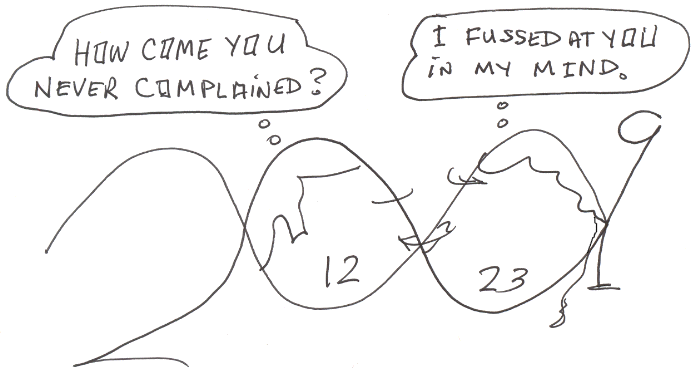
This month Violet and Joey learn about Complaining.
#1 "Complaining" at http://www.doyletics.com/images/122309jv.gif
== == == == == == == == == == == == == == == == == == == == == ==
2. HONORED READERS FOR January:
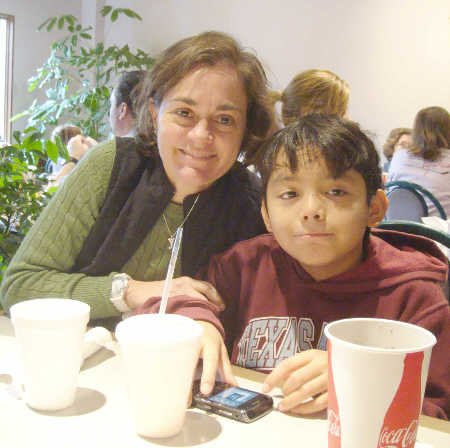
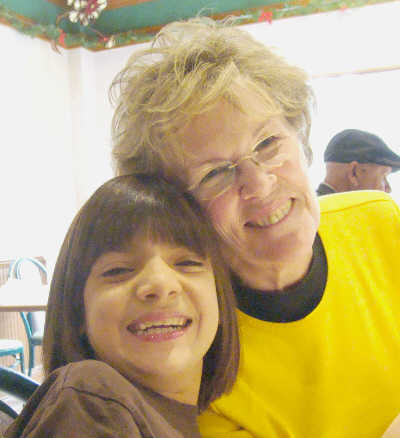
== == == == == == == == == == == == == == == == == == == == == ==Each month we take time to thank two of our good readers of Good Mountain Press Digest, books and reviews. Here's our two worthy Honored Readers for this month. One of their names will be in the TO: address line of your email Digest notification. Our Honored Readers for January are:
Leonard Jaeger in Harahan. Louisiana
Bill Morgan in Cyberspace
Congratulations, Leonard and Bill !
== == == == == == == == == == == == == == == == == == == == == == == == == == == == == == == == == == == == ==
3. ON A PERSONAL NOTE:
== == == == == == == == == == == == == == == == == == == == == == == == == == == == == == == == == == == == ==
Out Our Way:
FINAL TOUCHES ON THE MOVE AND THE DECADE OF THE OH-OH'S
Our moving is done! This month we began the final touches on our new home. The new brick-lined flower beds along the West Portico patio were shaped and completed this month. As of the end of the month, we had only four Bird of Paradise plants placed in them, with large stones of various shapes punctuated the spaces between them. We found that we were short of shelf space for the non-fiction library downstairs and we ordered two new white bookshelves for the living room and everything fit, with room to spare.
Major project is 99% done: our new Sierra Grey roof. The crew ran out of roofing tiles and the factory was shut down for the holidays, so the last of tiles will be installed in the first week of the new year. The endless days of stomping and hammering on the roof are over finally. It was very hard to think while the roofing work was going on, and I had to be there as questions arose. So I lost a week or two of work on my reading and writing due to the roof.
The new projects in the works are new bifold shutters over the large windows on the ends of the house. The current shutters stay closed all the time and the new bifold shutters will remain folded open until they are needed to be closed. They will be painted gray to match the roof along with the shutters over the French doors on the East Portico. Two beveled glass doors will replace the solid doors currently installed. They will have white frames to match the glass frames on either side. The last item will be the pouring of a curved driveway across the front lawn to make it possible for guests to use the new front doors. Currently all guests come in through the north-side laundry room, and while the Laundry Room is Del's favorite room in the house, the entrance through the East Portico doors gives a more efficient entrance and pleasing prospect for visitors to Timberlane.
THE BABE & THE CHRISTMAS TREE
We always wanted a big Christmas and were previously limited by the height of the ceiling, but no more. This year we had lots of options for tree size, up to 20 feet high if we wished. We decided to place the tree alongside the right side of the double-doors (seen from the street) because the right-side door is rarely used except for moving large items of furniture. An 8-foot tall Frazer Fir fit the space nicely and we had fun decorating the tree in early December. Driving our Christmas tree home is usually a problem, with even smaller trees sticking out our trunks, but not this year, thanks to the Babe, our pickup truck. With her 8-foot bed, I simply dumped the tree into the bed and drove home. We'll miss Babe next year when it's time to get our next large Christmas tree. We had the tree all decorated and filled to overflowing with wrapped presents by the time our Family Christmas day arrived.
FAMILY CHRISTMAS FLOOD
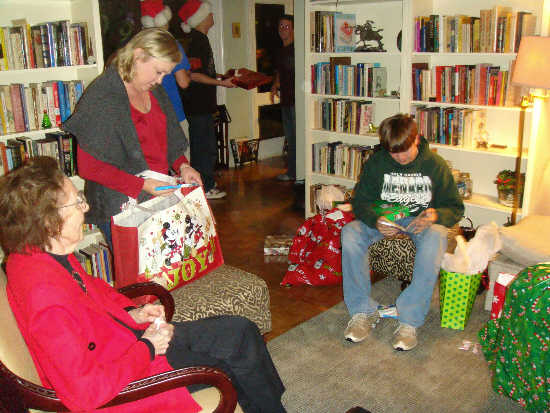
Four of the Hatchett kids and one of the Matherne kids flooded our new home with their various children plus our grand-daughter Tiffany with her three boys (our great-grandsons). Tiffany arrived late when it was dark and raining heavily.
I helped her get her boys in the house. Sam and Weslee our Santa grandsons were nearly finished distributing the gifts when I got back into the living room. Then the flood started outside when rain came down like Armageddon, but the nice part about living across from a drainage canal is that if the water gets high, the excess simply flows down the driveway into the canal. Del's brother Dan and his wife Karen were here and they encountered some high water getting Doris, Del and Dan's mom, back to her place along Behrman Highway. Tiffany told me later, she had to park her car at a service station on West Metairie and her husband came to pick them up, driving through the high water. We had a lake alongside the fairway for a couple of days, and when it drained, it left behind a lot of mulch material which I raked up for our new garden and mulch beds.Another flood was the huge array of food Del had available for our family: a Honey-Baked Ham, shrimp fettuccini, seafood gumbo, and lots appetizers and sandwiches for hearty or picky appetites. Two of the kids spent the night, the ones from Alexandria and Beaumont and the guest bedrooms handled them well. Only two lanky teenaged boys overflowed onto the long sofas in the living room.
The Christmas tree looked mostly empty the next morning, but soon it filled up again as Del and I completed our Christmas shopping and the UPS man became a regular visitor to our East Portico to drop off the latest boxes. This time it was me doing most of the Christmas present wrapping upstairs in the middle guest bedroom which serves as our wrapping room.
The day after the flooding rain was misty and after everyone left, we planted a couple of trees and treated the garden plot with my Bio-dynamic Barrel Compost which is a preparation which enhances the living organisms in the soil and helps the decomposition of the mulch.
THE SAINTS ARE BUMMING, UP UNTIL NOW!
Instead of "coming" as the song goes. In December the Saints seem to be turning into stumble bums, losing two home games in a row, to Dallas and bottom-feeder Bucs. But there are about a dozen walking wounded Saints and even with the limited crew available, the Saints stayed in the two losing games to the end.Only a fluke missed field goal with time running out allowed the Bucs to win in over-time when they won the coin toss instead of the Saints. With prayerful help from the Vikings losing two games in a row, the Saints have locked in Home Field advantage and with a first round Bye, they can rest up their banged-up players for the Play Off games.
No frozen field and getting snowballs thrown at our Saints (like in Chicago in the NFC Championship Game a couple of years ago) — the Saints will be in the cozy confines of the Dome, ready to FIRE UP their offense and defense which tailored a 13-win season (so far) and locked in the playoff top seed for their fans. Look out you Sinners in Miami! Make way for some real S A I N T S!AFTER CHRISTMAS KIDS
On the week after Christmas our two daughters arrived from Texas, first Yvette and then Carla. Yvette came with her husband Greg Clark, and their kids, Evelyn and Aidan. Evelyn loved the riding crop I got for her Christmas present. She is doing English dressage, horseback riding, and didn't have a leather crop all her own. Aidan loved the Lego machine kit which we gave him.
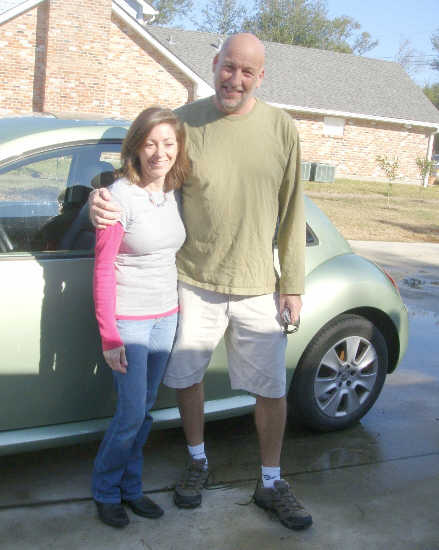
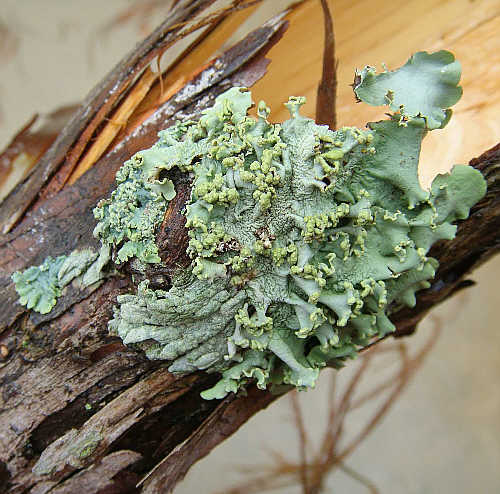
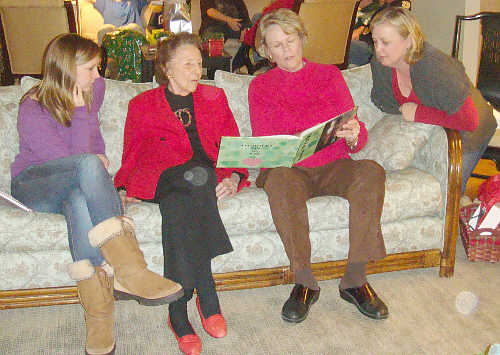
Del took Evelyn to get her nails done with her and, when she came back with colorful nails, we asked her, "Is that fungus on your fingers?" As we used to say as teenagers in the 1950s, "At ease, Disease! There's fungus among us." She laughed. Actually the color looked more like that of lichens which are a combination of fungus and algae. Sort of a gecko color. I never imagined that anyone would name a color, "gecko", until our next daughter arrived from Beaumont, TX in a new Volkwagen Beetle and on the key of the rental car, it said, COLOR: GECKO. See photo and judge for yourself.When Carla and Patrick arrived, it had warmed slightly and was a warm, drizzling day all day, perfect for staying inside and watching movies and playing BLOKUS. That's a simple but challenging board game that our grandson Thomas likes to play and he's a terror at the game, since Del and I needed some practice for our next bout with Thomas, we introduced Carla and Pat to the game. Carla loved it and Pat played along for a couple of games. We had already watched "Cadillac Records" twice, so we unsealed the NetFlix envelope (ready to return) and let Carla and Pat watch it while I wrote these Personal Notes and they loved it as well. Great story, great music, and great history all tied up in an excellent script.
HAPPY NEW YEAR AND DECADE!
It's New Year's Eve morn and I'm finishing up the Digest as we get ready for a couple of parties tonight and some LSU football in the Capitol One Bowl game tomorrow which pits the State Universities of Pennsylvania and Louisiana tomorrow. We made wrecks of the Georgia Tech team last year in a Bowl Game, so perhaps our Fighting Tigers will maul the Nittany Lions at noon tomorrow as we digest our traditional New Orleans New Year's Day fare of boiled cabbage, blackeye peas and rice, and corn bread. May your New Year's Day will be equally festive and fun wherever in this Wonderful World you reside.
TILL NEXT MONTH
That's it for another month of Digest. Till next month, February 1, 2010, when, God willing, we will return with a new Digest for you to enjoy — designed, written, and lovingly published for you by Bobby & Del. With Christmas and the New Year holidays behind us, many parts of the country are dreading the dark months of winter with nothing to celebrate, but not in New Orleans. January 6, King's Day, brings Carnival Balls followed by Parades all over the metro area leading up to Mardi Gras. There is no limit of fun things to do in New Orleans. The Saints are making a run for the Super Bowl, playing one, two playoff games in the Superdome. The city will segue into Spring Festival and Jazz Fest shortly after the Super Bowl and Mardi Gras is over. Spring around here begins in February with Japanese Magnolias and azalea blooms. My friend Gus, from Michigan, says there are more things to do in one night in New Orleans than in a whole year in his hometown up north. Make it a great month for yourself and pray for the Saints to finish the playoffs with a flourish!
~~~~~~~~~~~~~~~~~~~~~~~~~~~~~~~~~~~~~~~~~~~~~~~~~~~~~~~~~~~~~~
IMPORTANT MESSAGE:
To those Good Readers who are puzzled by How the Moon could be Rising In Front of a Mountain, Click on Photo. To see 161021 photo, Click Here. ALSO: if you are puzzled because you No Longer get our Monthly Reminder, you may have Changed Your Email Address without notifying us. NOTIFY US NOW by a simple Click Here!
Here's the Sting:
You will NOT receive a Monthly Reminder unless you have Re-subscribed under your new address to DIGESTWORLD.If you've already receiving DIGESTWORLD Reminders, ignore this message.
If you're not subscribed, and would like to Subscribe to DIGESTWORLD Reminders to receive one short email a month to inform you of the latest ISSUE, now's a good time. SUBSCRIBE NOW
by Clicking Here.Yes, this message does no good to those who changed their email address without notifying me — but it can alert those of you who are going to change your address.
If you've changed or are planning to change your email address, Click Here to SEND NEW ADDRESS. (Alternate way is to copy into your Browser this URL: http://www.doyletics.com/subscrib.htm )
EASE OF VIEWING NOTES:
NOTE: For Internet Explorer Browsers, DIGESTWORLD is best viewed at 100% Zoom and the Window's width sized so that Digest Archives lines are single-spaced, just barely. Adjust Window width so that Mountains almost touch the Archive Numbers, especially if you find some Photos overlapping text.PHOTO CAPTIONS (CURSOR FLYOVER ISSUE RESOLVED):If you have been enjoying the photos in DIGESTWORLD, but have wondered who or what you were looking at, you will now be able to hold your cursor still over the photo and the photo's description will appear. (Test on Butterfly-Crab Image at Right.) We spend a lot of time writing these photo captions and hope you will read them. All the Archived Issues have been updated to provide descriptions when your cursor rests for a second on a photo. Note that older Reviews have not been updated. If you haven't finished reading text when description disappears, move cursor away and back on photo to finish. We thank you for your patience and hope this pleases you.
Five Reviews of Books by Carl Jung:
1. Carl Jung's
On the Nature of the Psyche .
The writing of a review of this book is as difficult as reading Jung's writing on the subject of the psyche. He points out that writing ( a conscious activity) about unconscious process is fraught with problems. How does one write about what one doesn't know? The only way is to begin writing consciously and allowing the content to bubble up from the unconscious well. The concept of well is a good metaphor for the unconscious: every time we dip deep into the well we bring up the possibility for refreshing water or muck. We never know until we find out (Matherne's Rule No. 2) by looking into our dipper.The French say "no omelet unless you break an egg." In writing, the "dipping into the well" equivalent is the "free writing" process taught by Peter Elbow — probably originated by Dorothea Brande in her 1930's writing classes. See her classic book, "Becoming a Writer". I am writing this review using a free writing process, which allows me to write about a book that otherwise I could not begin to write about. At least not without an enormous effort and even then to write in a stilted style, sapped of all life and vibrancy.
The nature of the psyche and the nature of Carl Jung merge in this book. Each subject he covers trails off into an open ended question of the type he admits to evolving into in his dream interpretations. The dilemma he faced in dream work was how to permit the patient complete freedom to interpret her own dream if that freedom permitted no starting place from which to begin?
Lacking the Archimedean lever point of physicists, psychologists are destined to be both the observer and the observed. Their psyches must inspect their own psyches — how, in such a subjective endeavor, can an objective science be formed? In this book, Jung tries to answer this question. The archetypes have a level of reality because their effects on the psyche (via the psyche's effects on the external world) can be observed. For example, the mandala can be observed in its various manifestations of a person's life, even though the internal mandala archetype cannot be observed. In reference to hard physics, Jung points out that atom (a-tom) means "not-divisible", just as unconscious means "not-conscious". Both definitions are negative definitions, and as such point to a reality beyond words. Such is the nature of the psyche.
2. Carl Jung's
Psychological Types
I devoted the month of June to reading this book on psychological types by the master. Having read various second and third hand descriptions of Jung's types over the past ten years I decided it was time for me to get the full undiluted treatment. It was equivalent to "jogging in the swamp" — it's slow going, you get mud splashed all over you at times, you fall in over your head many times, and it just plainly wears you out. That's a sensate description of the book — my inferior function, so forgive my crude attempt to communicate intelligently with you primary sensates (who probably aren't reading this review anyway — except you occasional secondary thinking types).
To you feeling types: you might enjoy this account better if you have someone read it to you that feels like they understand it. Then you may find your inferior thinking function activated enough to want to read it on your own.
To you thinkers: there's a bright shiny goldmine of connections and interconnections. Carl goes back to the Gnostics, to Tertullian and Origen, to Schiller, to Goethe, to Epimedes, he covers Abelard, Aquinas and Nietzche, delving into Apollonian and Dionysian types, into Galen's humours, into Romantics and Classics, into William James' types — and that's only the first few chapters. The possibilities for exposition would tax Mr. Spock's ental capacity.
And now for you intuitives — what a treat is in store for you — as you've always suspected — Jung has fleshed your type out so that the rational types can think about you and feel for you and the irrational sensate type ( your alter ego type) can understand you as the source of their most curious unconscious behavior under stress. Lastly, you extroverts can use this to line your spouse's bird's cage.
And this is for the rest of you not covered by the above typology:
3. Carl Jung's
Two Essays on Analytical Psychology
In this book Jung gives the most powerful presentation of his philosophy of the reality of the psyche. At one point he offer the caveat that readers do not take his writings as a description of how one does therapy. His interest is in demonstrating the psychology of the individual, not how to do the therapy on them. This goal pervades the writings assembled in this book and makes it an excellent starting pint for a newcomer to Jung. That is saying a lot since there are few other suggestions for a starting point for a serious beginner in his voluminous works.
He explains in detail the difference between Adler's will to power approach to understanding the psyche and Freud's sexual repression approach. He gives them each credit for a useful and comprehensive addition to the sum of human knowledge about the unconscious and for providing a pragmatic approach to therapy. Along the way the reader comes to understand that both Adler's and Freud's theories are subsumed in Jung comprehensive theory of the unconscious.
Two insights I gained from this book are best described via diagrams. The first one drawn below shows
my diamond typology diagram with bands of conscious and unconscious drawn across it. The intuition function draws its material from the collective unconscious directly and the sensation from the personal unconscious whereas both the rational functions, thinking and feeling, draw their material from the conscious. In fact it is the mediation by the thinking and feeling functions of material that originates in the personal and collective unconscious that constitutes the very process of consciousness itself.
The second insight comes from page 194 in which he discusses the influence of inner and outer forces in the individual. "To the degree that the world invites the individual to identify with the mask, he is delivered over to influences from within." The attraction of the ego to the persona is like that of a weight to a large body via gravity. As the ego is pulled towards consciousness, the unconscious pulls back via the spring tension of the anima. This creates the conditions of a harmonic oscillator in world of
physics and one might expect to find similar outcomes in the world of the psyche. The states of harmonic oscillation are: 1) steady oscillation, 2) damped oscillation, 3) over-damped oscillation, and 4) critically damped oscillation. Just as the design criteria for shock absorbers for an automobile would be to provide critically damped oscillations to give a smooth ride for the driver and passengers, so too the aim for psychotherapy would be, for quite similar reasons. The diagram of the opposing forces looks so:
Here are Jung's words about the oscillation: "The persona, the ideal picture of a man as he should be, is inwardly compensated by feminine weakness, and as the individual outwardly plays the strong man, so he becomes inwardly a woman i.e., the anima, for it is the anima that reacts to the persona. But because the inner world is dark and invisible to the extraverted consciousness, and because a man is all the less capable of conceiving his weaknesses the more he is identified with the persona, the persona's counterpart, the anima remains completely in the dark and is at once projected so that our hero comes under the heel of his wife's slipper. If this results in a considerable increase of her power, she will acquit herself none too well. She becomes inferior, thus providing her husband with the welcome proof that it is not he, the hero, who is inferior in private, but his wife. In return the wife can cherish the illusion, so attractive to many, that at least she has married a hero, unperturbed by her own uselessness. This little game of illusion is often taken to be the whole meaning of life." Thus the harmonic pendulum of the psyche swings back and forth from increasing consciousness to decreasing consciousness (unconsciousness). (If the wife in Jung's scenario above refuses to become inferior, the marriage is not likely to survive the strain in the relationship that results.)
4. Carl Jung's Modern Man in Search of a Soul

If I change my concept of reality in such a way as to admit that all psychic happenings are real - and no other use of the concept is valid - this puts an end to the conflict of matter and mind as contradictory explanatory principles. Each becomes a mere description for the particular source of the psychic contents that crowd into my field of consciousness.But this insight is not sprung on the reader out of the blue, but built up to by the careful editing of these assembled lectures of Jung. In the first lecture he describes the four types of psychotherapy: confessional, interpretational, educational, and transformational. These four types he builds into a pyramid with confessional at the base. For some patients, he says, it is enough to confess their faults and sins to go on with their lives. For others, the confession is not enough, but interpretation of the meaning of their transgressions is required before they can continue their development. For still others, the interpretation helps, but leaves them helpless as a child to deal with the new insights. Only through education can they proceed to build a normal life.
While the Freudian school might leave the patient in such a childlike state, the Adlerian school would educate them in the social skills necessary for their next stage of life development. For some patients the educational phase turns out to be superfluous, coming at a stage in their life when they already have the social skills necessary. For these, only a therapy that deals with transformational issues will suffice. This is the contribution of Carl Jung, to put the capstone on the pyramid of psychotherapy. He created his analytical psychology for these very patients, for whom mere confession, interpretation, or education is not sufficient, because they crave for a transformation in depth, one not achievable by these three. For this reason Jungian therapy is sometimes referred to as depth psychology.
In other lectures Jung lays the groundwork of his psychology of types, describes the state of archaic man, details his analytical psychology, and finally as the question "Should a patient go to a psychotherapist or a clergyman?"
If you have been put off by the polysyllabic prose of the ponderous tomes in the Collected Works of Jung, this book will serve you as a fine introduction to his more detailed works. This book is an introduction to Jung's works by Jung himself. He covers the major issues of his life's work in a manner easily comprehended by the layperson. I wish I had read this book first.
5. Carl Jung's The Undiscovered Self

This classic little book written by Jung first appeared in the centennial edition of The Atlantic and popped into my hands in the bookstore the other day. That told me it was time to read or re-read it and I did, straight through in two days. It brought to my mind the strange paradox of reading Jung -even his material written for the layperson - if you can already understand Jung's writings, you can read it and understand it further, if not, reading it will add nothing to your comprehension of Jung. This makes it very hard to get started with Jung. It is reminiscent of the old saying I made up a while back, "When learning something new, it's best to know all about it before you start."
This book is a start. It is about an old subject for Jung: the reality of the psyche. How the dual character of the individual, the ego and the unconscious psyche rule the individual. In addition, Jung demonstrates how the rule of governments mirror the rule of the ego in the individual. In their various forms of despotism, such as dictatorship, communism, and democracy, the ruling classes of society exert influences on the masses of society similar to that which the ego exerts on the life of the individual. The rule of creeds (as Jung calls organized religions with fixed sets of beliefs, but not necessarily spiritual elements) over the autonomy of the individual is ever replaced by other rulers, such as kings, dictators, and tyrannical governments. In each case the ruling class is subject to the foibles of the individual egos of their membership and foist on the governed masses the same onerous restrictions as the rulers they replaced had done, only changed slightly due to current fads and theories.
Thus one comes, with Jung, to see that relief from onerous dictatorship from without can only come by relief from the onerous dictatorship from within - the individual ego. Like external dictatorships condemn individual choice and action as harmful to the aims of the state, so too does the ego condemn the existence of the psyche as an independent existence in the individual. The state maintains control by statistics that nullify the existence of the individual psyche, and the ego maintains control by planting the idea to use statistics in the first place. When analyzing the omnipotent state, one can only come to the conclusion that it is ego all the way down.
In Jung's words, "Since it is universally believed that man is merely what his consciousness knows of itself, he regards himself as harmless and so adds stupidity to iniquity. He does not deny that terrible things have happened and still go on happening, but it is always 'the others' who do them. And when such deeds belong to the recent or remote past, they quickly and conveniently sink into the sea of forgetfulness, and that state of chronic woolly-mindedness return which we describe as 'normality'." And further on in the book, he says, "If a world-wide consciousness could arise that all division and all antagonism are due to the splitting of opposites in the psyche, then one would really know where to attack." One would begin the assault within oneself, to come to discover and understand the duality of the ego and the self.
New Stuff on the Internet:
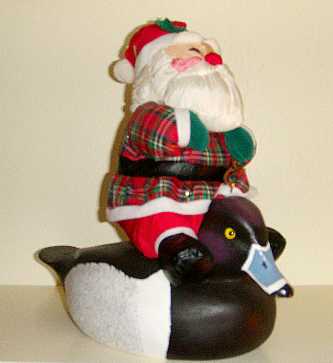
- This internet photo of a lazy Christmas decorator has passed around the world a couple of times, so I share it with in case you missed it.
~~~~~~~~~~~~~~~~~~~~~~~~~~~~~~~~~~~~~~~~~~~~~~~~~~~~~~~~~~~~~~
Movies we watched this past month:
Notes about our movies: Many of the movies we watch are foreign movies with subtitles. After years of watching movies in foreign languages, Arabic, French, Swedish, German, British English, Russian, Spanish, Italian, Japanese, Chinese, and many other languages, sometimes two or three languages in the same movie, the subtitles have disappeared for us. If the movie is dubbed in English we go for the subtitles instead because we enjoy the live action and sounds of the real voices so much more than the dubbed. If you wonder where we get all these foreign movies from, the answer is simple: NetFlix. For a fixed price a month they mail us DVD movies from our on-line Queue, we watch them, pop them into a pre-paid mailer, and the postman effectively replaces all our gas-consuming and time-consuming trips to Blockbuster. To sign up for NetFlix, simply go to http://www.netflix.com/ and start adding all your requests for movies into your personal queue. If you've seen some in these movie blurbs, simply copy the name, click open your queue, and paste the name in the Search box on NetFlix and Select Add. Buy some popcorn and you're ready to Go to the Movies, 21st Century Style. You get to see your movies as the Director created them — NOT-edited for TV, in full-screen width, your own choice of subtitles, and all of the original dialogue. Often you get the Director's Cut Edition which adds back excellent footage that was cut from the theater releases.
P. S. Look for HD/DVD format movies which are now available from NetFlix.Hits (Watch as soon as you can. A Don't Miss Hit is one you might otherwise ignore.):“How About You?” (2007) I like it, how about you? Vanessa Redgrave plays someone her own age to perfection. Definitely A DON’T MISS HIT!
“Star Trek” (2009) A prequel without equal: How Kirk Spock, Bones, and Scotty, and became Captain by winning the no-win scenario twice, once in the Academy and once in real life. Dings against it: Copied the Superman origin story: how James Tiberius Kirk was born, got his name, how his father became Starship Captain for ten minutes before dying. Copied ‘Men in Black’ type monsters. Copied Conan Doyle’s quote about the impossible without attribution, blithely, as if it came from the script-writers’ minds. Barely a Hit after the hit for copying others.
“Gifted Hands: The Ben Carson Story” (2009) Cuban Gooden in another memorable performance as the surgeon who separated cranically conjoined twins, the first to figure a way to do so with both twins surviving.
“sex, lies, and videotape” (1989) First Soderberg film, shot in Baton Rouge with new stars James Spader and Peter Gallagher about a wife who doesn’t like sex, a husband who’s sleeping with her sister, and his college friend who is impotent. A potent mixture for doings and undoings.
“Nothing Like the Holidays” (2008) Alfred Molino as pater familias of this eclectic extended family facing challenges for Christmas when suddenly love breaks out.
“The Open Road” (2009) with Mary Steenbergen faces major heart surgery, she asks for her estranged husband (Jeff Bridges) the baseball jock to come to her and her son and girl friend must fly to him and drive him across country in time. Will love break out in multiple directions?
“The Case for Christ” (2007) starring Lee Strobel in Max Lucado documentary of evidence for the existence of Christ Jesus.
“Faith Like Potatoes” (2006) true story of Scottish farmer in Zambia forced to start over in South Africa.
“Harry Potter: The Half Blood Prince” (2009) With a new Potions teacher, Harry discovers curious recipes on his battered copy of the textbook by the Half-Blood Prince. Intrigue by Malfoy and Snape lead to Dumbledore’ death and Harry discovery of the Horecruxes which keep Valtemore alive.
“The Ugly Truth” (2009) is what Mike (Gerard Butler) is bantering about until Craig Ferguson asks him the tough question. Mike teaches the controlling bitch how to hook her man, but is he bound for take home or catch-and-release? A DON’T MISS HIT ! ! !
"Somers Town" (2008) Charming movie about two teenage boys growing up in London.
“Paper Heart” (2009) stars Charlynne “Chuck”, a plain looking gal in early twenties, virginal and never in love, and making a movie which asks people what’s it like to be in love. Along the way love happens and shortstops the movie makers plan for a honeymoon in Paris. Or did it?
“Julia & Julie” (2009) Julie is a young fan of Julia Child’s “Mastering the Art of French Cooking” and decides to cook her way through the entire book in one year, 524 recipes. Can her job and her marriage withstand the barrage of cooking blogging? In a parallel view we watch both Julie and Julia make their mark in the world. If you think Julie’s experiences are worth a movie, you’re watching it.
“The Merchant of Venice” (2004) Great production with Serpico as Shylock trying to exact his pound of flesh and destroying his own life in the process.
“Camille” (2007) is a horse of four different colors. Camille dies but insists on her Niagara Falls honeymoon anyway. Quirky, unpredictable, and deeply insightful while stretching the tenuous bonds of reality.
“Angels & Demons” (2009) Pulse-throbbing suspense and non-stop action around the election of a new Pope and the theft of hi-tech anti-matter bomb. A DON’T MISS HIT ! ! !
“Black Book” (2006) In Blu-Ray movies seem so vivid that we thought we’d watched this one in black & white back in 2007 (before Blu-Ray). Great movie showing the problems the resistance faced near the end of WWII in Holland. Whom can you trust? A DON’T MISS HIT !!!
“Avenue Montaigne” (2007) Young Jessica befriends an art collector, a concert pianist, and a comedienne, and bewitches us viewers on the Avenue of Broken Dreams and Fulfilled Ones. A DON’T MISS HIT !!!
“The Education of Charlie Banks” (2007) evokes themes of Great Gatsby with a Brando-Irish-Stanley loose cannon banging people up.
“Cadillac Records” (2008) was the pet name of Leonard Chess’s record company because he bought each of his stars, Muddy Waters, Little Walter, Howling Wolf, Etta James, Chuck Berry, among others, a brand-new Cadillac. A DON’T MISS HIT with LOTS of HITS.
“My Boy Jack” (2007) Daniel Radcliffe took a break from being Harry Potter to star as Rudyard Kipling’s star-crossed son who joined the army to escape his father’s clutches and did.
“The Tunnel” (2001) Star swimmer of Germany escapes East Berlin and helps build tunnel to get Lotte, his sister, and others out. Long movie, but worth every minute, a truly epic saga which heats up during the last hour. A DON’T MISS HIT ! ! ! !
“Go for Zucker” (2005) A Minnesota Fats gone wild at the pool tables, in his massage parlor, in his home, with his daughter, but he won’t talk to his estranged and strange Orthodox brother till his mother reaches up from the grave to force him.
“Changing Times” (2006) Gerard Depardieu and Catherine Deneuve as former lovers separated by decades but united once again by love, but will she accept him back?
“The Merchant of Venice” (2004) Great production with Serpico as Shylock trying to exact his pound of flesh and destroying his own life in the process.
“The Note” (2006) delivers forgiveness from a downed airliner & opens the heart of the columnist of the newspaper’s Heartline. No super actors or directors, but the great story pulls this movie through to A DON’T MISS HIT !!!!Misses (Avoid At All Costs): We attempted to watch these this month, but didn't make it all the way through on most of them. Awhile back when three AAAC horrors hit us in one night, I decided to add a sub-category to "Avoid at All Costs", namely, A DVD STOMPER. These are movies so bad, you don't want anyone else to get stuck watching them, so you want to stomp on the disks. That way, if everyone else who gets burnt by the movie does the same, soon no copies of the awful movie will be extant and the world will be better off.
“Punisher: War Zone” (2008) Seven necks sliced open in 11 seconds, DVD STOMPED during the 12 th Second. A DVD STOMPER! ! ! !
“The Other Man” (2008) is Antonio Banderas and Liam Neeson tracks him down to discover the truth that lies beneath his Italian suit and smug exterior. Premise is great; execution of the movie is awful. Plot, script suck; a waste of great talent. Another Laura-Linney-mediocre movie.Your call on these — your taste in movies may differ, but I liked them:
“The Merry Gentleman” (2008) Battered wife moves across town to escape husband and witnesses Michael Keaton as suicidal hitman trying to jump and saves his life. Suddenly she has three men orbiting her life, a batterer, a hitman, and a cop.
“The Bothersome Man” (2006) In a Twilight Zone-type movie, a man is transported to this ideal city and job, but with curious consequences. A bothersome movie.
“Woman Under the Influence” (1974) Life with all its warts. A woman driven to insanity by her supposedly sane family. Will it be a one-way trip?
“I Want Someone to Eat Cheese With” (2006) Another bothersome man who at 39 lived with his mother and hadn’t gotten laid in 5 year. Then he met Sarah Silverman and a chubby chaser (lovely ambiguity) and his life will never be the same.
== == == == == == == == == == == == == == == == == == == == == ==
4. CAJUN STORY:
== == == == == == == == == == == == == == == == == == == == == ==This story was told me by my brother Paul from Opelousas, whom I assured that I would not use any four letter words when I told it.Boudreaux was eating in a fancy restaurant which just opened up in Breaux Bridge. By fancy I mean it had tablecloths instead of paper covering the tables. As he was eating, he dropped his spoon on the floor as his waiter was passing. The waiter pulled a spoon from his shirt pocket and handed it to Boudreaux.
"Merci beaucoup!" Boudreaux said. "How did you know that Ah would drop my spoon?"
"Actually, I didn't. We just had an efficiency expert come to the restaurant and he trained us on how to save time. Instead of walking back to the kitchen to get you a new spoon, I simply carry one around with all the time in case it's needed."
"Mais, dat's somet'ing!" Boudreaux replied. "Ah like that efficiency stuff. Any other tricks he taught you?"
"Well, yes. You see that string hanging out of my zipper fly?"
"Uh-huh. Wat's dat for?"
"He showed us how to save time going to the washroom. It's attached to my penis and I use it to pull it out of my pants and it saves me the time I used to spend washing my hands. It works great and is sanitary."
"Hmm," Boudreaux said, thinking real hard, "Sounds efficient, for sure, but told me something, how you put it back in yo' pants?"
The waiter looked around a bit, leaned over to Boudreaux, and whispered, "I don't know what the other guys do, but I use the spoon."
== == == == == == == == == == == == == == == == == == == == == ==
5. RECIPE of the MONTH for January, 2010 from Bobby Jeaux’s Kitchen:
(click links to see photo of ingredients, preparation steps)
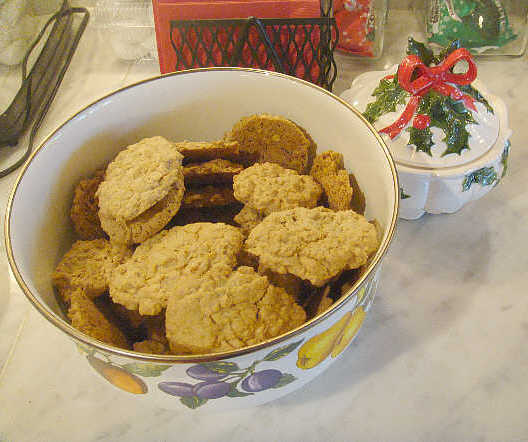
= = = = = = = = = = = = = = = = = = = = = =Grama Del's Oatmeal CookiesBackground on Grama Del's Oatmeal Cookies: Del got the recipe from back of Quaker Old-Fashioned Oats box about 1965. (Original recipe has been replaced over the years.) Children say it's the best cookie they've ever eaten. A favorite Christmas treat for the whole family.
Ingredients
3/4s Cup Crisco Shortening
1 cup brown sugar (packed firm)
1/2 Cup granulated sugar
1 Cup general purpose flour
1 tsp salt
1/2 tsp baking soda
3 cups Quaker Oats (Old-fashioned oats, not rolled oats)
1 egg
1 tsp vanilla
1/4 Cup waterPreparation
Sift the flour. grease (rub Crisco over) a cookie sheet. Preheat oven to 350 degf.
Cream (Mix thoroughly together) the shortening, brown sugar and white sugar.
Add and beat until smooth the water, egg, and vanilla
Add and beat the flour, salt, baking soda and Oats
Spoon on greased cookie sheet.
Cooking Instructions
Bake for 12 to 15 minutes in preheated 350 degf oven.
Serving Suggestion
Make 5 dozen cookies.
Other options
Can add pecans, walnuts, or raisins for variation, about 1 cup of any of the extra ingredients.
== == == == == == == == == == == == == == == == == == == == == ==
6. POETRY by BOBBY from April 22, 1971:
= = = = = = = = = = = = = = = = = = = = = =
On Writing Sonnets
Don McNeill might sing if he wrote like me,
“It's Sonnet Time around the breakfast feast;
Let's eat our grits and fritters, cakes of yeast;
A daily sacrament for all to see.”How easy rhyming is with letter E.
No need to seek the syllabus of Greece;
Just pick a syllable or two apiece
And then you've got a word like Me and Thee.The hardest part is in the closing line
To choose your pattern carefully (with grace)
To keep your penta-meter in its place
And the iambs not trailing far behind.When you come to choose a rhyming couplet
Find a happy sounding word and doublet.== == == == == == == == == == == == == == == == == == == == == ==
7. REVIEWS and ARTICLES for January:
= = = = = = = = = = = = = = = = = = = = = =And for my Good Readers, here’s the new reviews and articles for this month. The ARJ2 ones are new additions to the top of A Reader’s Journal, Volume 2, Chronological List, and the ART ones to A Reader’s Treasury. NOTE: these Blurbs are condensations of the Full Reviews sans footnotes and many quoted passages.
1.) ARJ2: The Journal of Thoreau — Volume 14 from Aug. 1860 to Nov. 1861 by Henry David Thoreau

I will miss these daily walks
With the Norseman Thorer
Through the ancient hills and rills
Of Concord town.The little ditty from Volume 13 I repeat above as it aptly reflects my mood as I type my last review of Henry David Thoreau's 14 volume journal, all two million words, spanning his years from 1837 to 1861. Since Volume 1 covered the ten year period from 1837 to 1847, the rest of the Volumes took approximately one year each. My reading of Volume 1 began June 22, 2001 and it finished with Volume 14 on December 14, 2009, filling almost an entire decade of my life with daily walks with Henry as his invisible and silent companion, his very favorite type of companion, one who remains quiet, unseen, and who does not disturb his meditative walks in the least. I figure, after all these years, I can call him by his first name. With a hint of sadness I pen these final notes and say goodbye to my erstwhile daily companion, relegated henceforth to my bookshelf, always at the ready for another trip to Conatum, Mt. Monadnock, or Cape Cod, or a boat trip down the Assabet or Concord Rivers. If you, dear Reader, think it a daunting task to attack the reading of Henry's Journals, I assure you will be entranced by his ease of writing style and the years will fly by quickly.
On Sept. 20, 1860 he delivered his lecture, "The Succession of Forest Trees" to the Middlesex County Agriculture Society's annual cattle show. His preliminary and followup work on the subject matter of the lecture fills a large part of this Volume. His observations of how pine forests are seeded and grow up among former oak forests, and vice-versa, are compiled from dozen of observations of forests in various states of natural growth, cutting, planting, and reforestation. The type of oak reforestation of which Henry wrote was that done by ubiquitous planters of acorns, the squirrels. We will share what he has to say about these tireless forest planters.
August is the haying month and Henry shares with his view of the sky and the golden yellow valley below.
[page 4, 5] Aug. 1. Again, I sit on the brow of the orchard, and look northwest down the river valley (at mid-afternoon). There flows, or rests, the calm blue winding river, lake-like, with its smooth silver-plated sides, and wherever weeds extend across it, there too the silver plate bridges it, like a spirit's bridge across the Styx; but the rippled portions are blue as the sky. This river reposes in the midst of a broad brilliant yellow valley amid green fields and hills and woods, as if, like the Nanking or Yang-ho (or what-not), it flowed through an Oriental Chinese meadow where yellow is the imperial color. The immediate and raised edge of the river, with its willows and button-bushes and polygonums, is a light green, but the immediately adjacent low meadows, where the sedge prevails, is a brilliant and cheerful yellow, intensely, incredibly bright, such color as you never see in pictures; yellow of various tints, in the lowest and sedgiest parts deepening to so much color as if gamboge had been rubbed into the meadow there; the most cheering color in all the landscape; shaded with little darker isles of green in the midst of this yellow sea of sedge. Yet it is the bright and cheerful yellow, as of spring, and with nothing in the least autumnal in it. How this contrasts with the adjacent fields of red-top, now fast falling before the scythe!
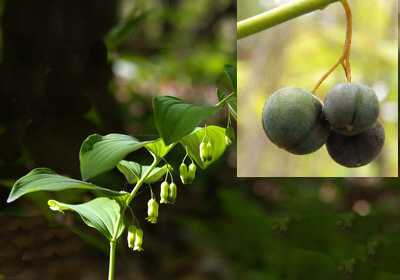
When your attention has been drawn to them, nothing is more charming than the common colors of the earth's surface. See yonder flashing field of corn through the shimmering air.Henry observes a Solomon's-seal fruiting and we share with you a photo of what the plant and its berries look like to accompany his words about the plant.
[page 5] Aug. 1. See a berry (not ripe) of the two-leaved Solomon's-seal dropped at the mouth of a mouse or squirrel's hole, and observe that many are gone from these plants, as if plucked by mice.
While on a camping trip to Mount Monadnock, Henry came upon some mountain cranberries. Accustomed as I am to thinking of cranberries as growing in bogs, I would not have expected there to be any such berries on a mountain, but there are, "the prettiest berry, certainly the most novel and interesting to me, was the mountain cranberry, now grown but yet hard and with only its upper cheek red." (Page 14)
[page 15] Aug. 5. We stewed these berries for our breakfast the next morning, and thought them the best berry on the mountain, though, not being quite ripe, the berry was a little bitterish — but not the juice of it. It is such an acid as the camper-out craves.
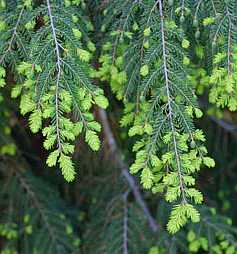
One of the trees which I was curious about was the hemlock. Henry noted it among the plants he recorded in his Journal as "The Plants of the Summit" on Monadnock, namely, "Hemlock; two little ones with rounded tops." Turns out that the hemlocks are very common trees in the northeast, and one is the state tree of Pennsylvania. A healthy tea may be brewed from the leaves of the hemlock tree. The tree gets its name because the leaves smell a bit like the poisonous hemlock herb. Here's a photo of fresh growth on a hemlock tree.
"A stone's throw" — how many of us have heard that phrase used to describe a distance and how few have ever measured the distance of a stone's throw in order to record a distance. Henry did. First, let's describe for the twenty-first century reader that a rod is 5 meters (5.5 yards) long, so that ten rods is about a half-football field in length.
[page 39] Aug. 9. The basis of my map was the distance from the summit to the second camp, measured very rudely by casting a stone before. Pacing the distance of an easy cast, I found it to be about ten rods, and thirteen such stone's throws, or one hundred and thirty rods, carried me to the camp. . . . it was fifty rods from the summit to the ravine and eighty more to the camp.
Henry recorded a meteorological phenomenon of clouds forming as they approached to within a half-mile of the mountain's peak, growing larger as they got closer, and then dissolving as they passed over the summit.
 His explanation of the cloud formation explains equally well why clouds form in advance of an approaching cold front, only in this case it is the cold mass that is moving towards the warmer moist air instead of the warm, moist air moving towards the cold mountain.
[page 46, 47] Aug. 9. I gave this account of it to myself. They were not attracted to the summit, but simply generated there and not elsewhere. There would be a warm southwest wind blowing which was full of moisture, alike over the mountain and all the rest of the country. The summit of the mountain being cool, this warm air began to feel its influence at half a mile distance, and its moisture was rapidly condensed into a small cloud, which expanded as it advanced, and evaporated again as it left the summit.
The difference between eating fish sticks and going fishing should be obvious — both ways you get to enjoy fish, but only by going fishing can you enjoy the environment of the fish as well as the flavor of the fish. Henry reckons the same difference between encountering berries in a pudding versus in its natural environment.
[page 56] Aug. 22. When I used to pick the berries for dinner on the East Quarter hills I did not eat one till I had done, for going a-berrying implies more things than eating the berries. They at home got only the pudding: I got the forenoon out of doors, and the appetite for the pudding.
Henry often found Indian relics and admits to have expected to find them before the fact, as he did with the shards of a pot he found sticking out slightly from the bank after a heavy rain.
[page 59, 60] Aug. 22. It is curious that I had expected to find as much as this, and in this very spot too, before I reached it (I mean the pot). Indeed, I never find a remarkable Indian relic — and I find a good many — but I have first divined its existence, and planned the discovery of it. Frequently I have told myself distinctly what it was to be before I found it.
It seems that Henry lived his life backwards to the normal men of his time: what they saw as small stuff, Henry attended to, what they say as big stuff, their ordinary business, Henry never bothered with. Here he shares his views on this matter:
[page 104] Oct. 7. Many people have a foolish way of talking about small things, and apologize for themselves or another having attended to a small thing, having neglected their ordinary business and amused or instructed themselves by attending to a small thing; when, if the truth were known, their ordinary business was the small thing, and almost their whole lives were misspent, but they were such fools as not to know it.
One day I was passing a new walking path that had been installed in our town along a road I took daily. There were people walking briskly along the path for their exercise of the day. What was curious to me was that there were as many cars in the attached parking lot as there were walkers on the path. Each walker must have driven a mile or two to the path in order to walk a mile or two on the path. Consider the lessened impact on the environment if the walkers had simply gotten their exercise by leaving their cars at home and simply walked back and forth to the walking park. Instead they need a machine to transport back and forth to a place where they can walk. Henry thought likewise about these townspeople he called derisively, "cockneys", in contrast to the sturdy country folk who got their exercise by actually exerting themselves in work.
[page 111] Oct. 10. They are hopelessly cockneys everywhere who learn to swim with a machine. They take neither disease nor health, nay, nor life itself, the natural way. I see dumbbells in the minister's study, and some of their dumbness gets into his sermons. Some travelers carry them round the world in their carpetbags. Can he be said to travel who requires still this exercise?
A party of school-children had a picnic at the Easterbrooks Country the other day, and they carried bags of beans from their gymnasium to exercise with there. I cannot be interested in these extremely artificial amusements. The traveler is no longer a wayfarer, with his staff and pack and dusty coat. He is not a pilgrim, but he travels in a saloon, and carries dumbbells to exercise with in the intervals of his journey."Ah, Science!" Henry seems to be saying in the next passage, "You give us the partial while we await the whole at which time your work can be discarded!"
[page 117] Oct. 13. The scientific differs from the poetic or lively description somewhat as the photographs, which we so wearing of viewing, from paintings and sketches, though this comparison is too favorable to science. All science is only a makeshift, a means to an end which is never attained. After all, the truest description, and that by which another living man can most readily recognize a flower, is the unmeasured and eloquent one which the sight of it inspires. No scientific description will supply the want of this, though you should count and measure and analyze every atom that seems to compose it.
Surely poetry and eloquence are a more universal language than Latin which is confessedly dead. In science, I should say, all description is postponed till we know the whole, but then science itself will be cast aside.One can only imagine that Henry is weary of looking at photographs because of the bland monochromatic Daguerreotypes which represented the highest quality of photography of his time. But it was not just the lacking of color, but a lack that no photography of today could provide. The closest approach is made by time-lapse photography which unfolds for us the entire development cycle of the plant. It was only with his imagination that Goethe, in Henry's time, could visual this kind of development cycle. He called this imagination the archetypal plant, the Urplanze.
Henry considers the scientific description of a plant to be like a man's passport, useful for little except to uniquely identify the man, but telling us little about his life as his friends and acquaintances know him, who have no need for a passport to identify him as their friend.
[page 119] Oct. 13. The men of science merely look at the object with sinister eye, to see if it corresponds with the passport, and merely visé [RJM: i.e. inspect] or make some trifling additional mark on its passport and let it go; but the real acquaintances and friends which it may have in foreign parts do not ask to see nor think of its passport.
Here we encounter our first passage about the "Succession of Forest Trees" in which Thoreau drolly compares oak trees to settlers and pine trees to pioneers.
[page 130] Oct. 16. Thus this double forest was advancing to conquer new (or old) land, sending forward their children on the wings of the wind, while already the oak seedlings from the oak wood behind had established themselves beneath the old pines ready to supplant them. The pines were the vanguard. They stood up to fire with their children before them, while the little oaks kneeled behind and between them. The pine is the pioneer, the oak the more permanent settler who lays out his improvements. Pines are by some considered lower in the scale of trees — in the order of development — than oak.
While the pines were blowing into the pastures from this narrow edging, the animals were planting the acorns under the pines."Let's hear for the squirrels!" Henry seems to be saying next. Rarely have I heard anyone praise squirrels, much less in such detail as he goes through. My dad complained that the squirrels were eating all of his pecans from his backyard tree, right up until the time he began shooting them one by one with his air rifle. Nothing tastes quite as good as his pecan-fed squirrel sauce piquante did. He told us we were eating his pecan crop. Henry rather sees the squirrel as a tree farmer, even if it is an inadvertent case of planting resulting from the squirrel's penchant for storing its booty in the ground where the seeds and nuts may eventually take sprout.
[page 138] Oct. 17. A squirrel goes a-chest-nutting perhaps as far as the boys do, and when he gets there he does not have to shake or club the tree or wait for frost to open the burs; he walks [ ? ] up to the bur and cuts it off, and strews the ground with them before they have opened. And the fewer they are in the wood the more certain it is that he will appropriate every one, for it is no transient afternoon's picnic with him, but the pursuit of his life, a harvest that he gets as surely as the farmer his corn.
Now it is important that the owners of these wood-lots should know what is going on here and treat them and the squirrels accordingly. They little dream of what the squirrels are about; know only that they get their seed-corn in the adjacent fields, and encourage their boys to shoot them every day, supplying them with powder and shot for this purpose. In newer parts of the country they have squirrel-hunts on a large scale and kill many thousands in a few hours, and all the neighborhood rejoices.
Thus it appears that by a judicious letting Nature alone merely we might recover our chestnut wood in the course of a century.There used to be passenger pigeon hunts on a large scale which killed thousands of pigeons in a few hours. It was easy to do because these particular pigeons congregated in very large flocks. Plus they were considered a delicacy (squab). What no one knew at the time was that these large flocks were absolutely essential for the survival of the passenger pigeon species — if a flock got below about three thousand, the pigeons would no longer reproduce. Thus it came about that large scale pigeon hunts went on until the day arrived when the last flock of over three thousand was thinned out and no more passenger pigeons were born. Soon the species disappeared off the face of the Earth. We human learned from that experience and now factor the mating and reproduction patterns into how many wild, sport animals are harvested for food. A recent example: our redfish population in coastal Louisiana had been decimated until it was discovered that redfish had to be over 26" long before it swam out to the Gulf waters to spawn. A simple creel limit of one redfish over 26" had led to an abundance of redfish for sport and eating once again.
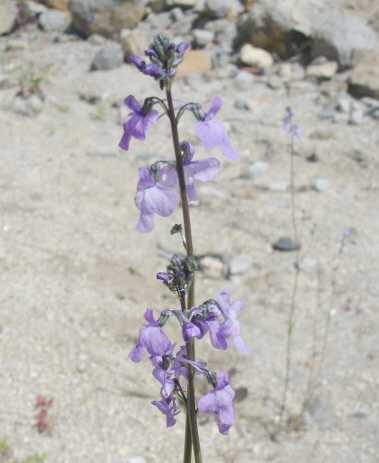
On page 257 Nov. 22. Henry notes, "The Linaria Canadensis is still freshly blooming. It is the freshest flower I notice now." The flower is shown in a photo for you. With his emphasis on the Succession of Forest Trees, Henry has rarely commented on the flowering plants in this volume.
In this next passage Henry invites to consider how in the New England winters, even though the richness of summer is gone, the world is yet rife with beauty. He chronicles his own Spartan life-style with no wine in his cellar, but long draughts of vintage air to breathe.
[page 259] Nov. 22. It is glorious to consider how independent man is of all enervating luxuries; and the poorer he is in respect to them, the richer he is. Summer is gone with all its infinite wealth, and still nature is genial to man. Though he no longer bathes in the stream, or reclines on the bank, or plucks berries on the hills, still he beholds the same inaccessible beauty around him. What though he has no juice of the grape stored up for him in cellars; the air itself is wine of an older vintage, and far more sanely exhilarating, than any cellar affords. It is ever some gouty senior and not a blithe child that drinks, or cares for, that so famous wine.
He disdains tropical delicacies and prefers the fruits and nuts of his native Concord, especially the apples, saying, "You cannot now find an apple but it is sweet to taste." (Page 260)
[page 265] Nov. 24. The bitter-sweet of a white oak acorn which you nibble in a bleak November walk over the tawny earth is more to me than a slice of imported pineapple. We do not think much of table-fruits. They are especially for aldermen and epicures. They do not feed the imagination. That would starve on them. These wild fruits, whether eaten or not, are a dessert for the imagination. The south may keep her pineapples, and we will be content with our strawberries.
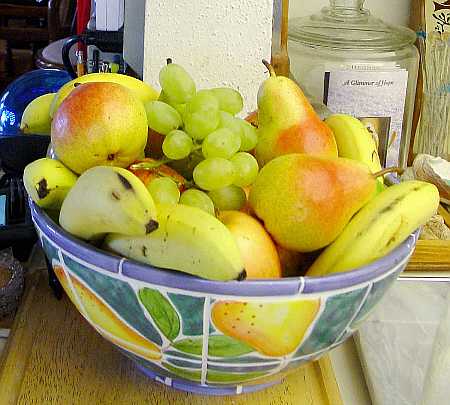
As I grew up I came to dislike immensely bowls of wax fruit which seemed ubiquitous at my relatives' homes when I was a child. I never could bring myself to buy such fruit when I owned my own home. The value of their look attracted me, but the complete absence of life in them turned me off. When I visited my friends Warren and Corinne Liberty in Ukiah, California about a decade ago, I was charmed by the bowl of fruit which they had on display in their kitchen. I wanted such a bowl in my kitchen, all fresh fruit, on perpetual display, which meant perpetual replacement of fruit.
Around the same time, I began a Bio-dynamical mulch bed and the two items seemed made for each other: the old fruit which didn't get eaten could provide live organic material for the mulch bed. I soon purchased a Portofino Pear bowl which made a wonderful fruit bowl in which to display our fresh fruit. As thanks for Corinne for giving me the idea and impetus to begin creating our own fruit bowl, I sent her an identical pear bowl. Since then, we always have fresh fruit filling our bowl, ready to eat at a moment's whim. Because the pears on the outside of the bowl had a blush of red color on the yellow pears, I began selecting Bartlett pears with red blushes on them and soon noticed that the flesh under the red blush had a delicious variation in flavor from the rest of the pear.Henry gave me the idea for sharing this story with you because in this next passage he talks on the enjoyment of the sight of fruit as well as their taste and nutrition.
[page 273, 274] Nov. 26. The value of these wild fruits is not in the mere possession or eating of them, but in the sight or enjoyment of them. The very derivation of the word" fruit" would suggest this. It is from the Latin fructus, meaning that which is used or enjoyed. If it were not so, then going a-berrying and going to market would be nearly synonymous expressions. Of course it is the spirit in which you do a thing which makes it interesting, whether it is sweeping a room or pulling turnips. Peaches are unquestionably a very beautiful and palatable fruit; but the gathering of them for the market is not nearly so interesting as the gathering of huckleberries for your own use.
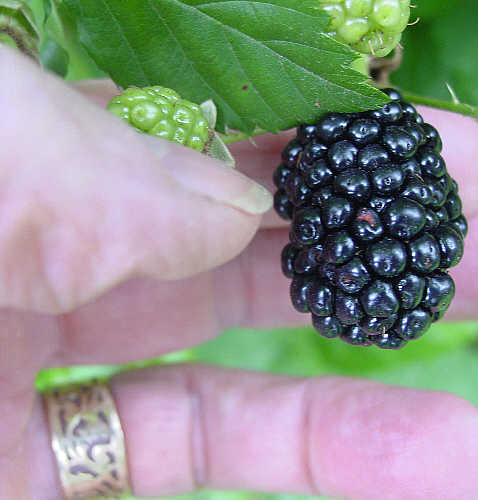
The enjoyment of blackberry picking cannot be purchased at the supermarket, it can only be found in the field where the berries grow. When three of my grandchildren refused to eat a blackberry picked from my bush, I felt sorry for them because they will never, no matter how rich they become, be able to purchase the joy of blackberry picking and will not know the joy they missed. There is a wonderful paradox about blackberry picking: if you send a teenage boy or girl out picking blackberries, they will return in an hour with a bucket of berries, but if you send them out together, it takes about two hours to get one bucket of berries.
[page 277] Nov. 28. 1860. It is a grand fact that you cannot make the finer fruits or parts of fruits matter of commerce. You may buy a servant or slave, in short, but you cannot buy a friend. You can't buy the finer part of any fruit — i. e. the highest use and enjoyment of it. You cannot buy the pleasure which it yields to him who truly plucks it; you can't buy a good appetite even.
Henry knew about primary property (intellectual derivatives of one's life) and valued it very highly, as we can tell from this next passage. How rare it is today to find a person of such excellent common sense among one's acquaintances! Shakespeare wrote in Julius Caesar, "The evil men do live after them, the good is oft interred in their bones." It is one's primary property which is the good men do which in deed lives after them, lives long after their houses, barns, woodlots, and corporations have been interred in the ground.
[page 281, 282] Nov. 29. 1860. If a man has spent all this days about some business, by which he has merely got to be rich, as it is called, i. e., has got much money, many houses and barns and woodlots, then his life has been a failure, I think; but if he has been trying to better his condition in a higher sense than this, has been trying to invent something, to be somebody, — i. e., to invent and get a patent for himself, — so that all may see his originality, though he should never get above board, — and great inventors, you know, commonly die poor, — I shall think him comparatively successful.
Henry talks about animals and plants vying for "possession of the planet" in the next passage. It my theory that each plant, in phylogenetic terms, did intend, for a time, to take possession of the planet, in what are called "plant blooms". Take the simple plant, algae. When it first came into existence, it had limitless food in the waters around it and ample sunlight, but not a single predator.
It grew without limits until soon an animal arose who was able to eat the algae and it found itself blessed with limitless food and no predators and it began to "bloom." Over aeons each plant and animal which “bloomed” eventually found itself having to combat newly-arrived predators and find a way to survive in severely constricted conditions compared to its "bloom times." We arrive on this planet after a myriad of such cascades of bloom and bust times and find a homeostasis of plants and animals with minor changes still going on, mostly disappearance of species of plants and animals whose time has past, who are unable to find a niche in which they can continue to exist, such as the roc, the dodo, the passenger pigeon, etc.[page 330, 331] March 18, 1861. When we consider how soon some plants which spread rapidly, by seeds or roots, would cover an area equal to the surface of the globe, how soon some species of trees, as the white willow, for instance, would equal in mass the earth itself, if all their seeds became full-grown trees, how soon some fishes, we are tempted to say that every organism, whether animal or vegetable, is contending for the possession of the planet, and if any one were sufficiently favored, supposing it still possible to grow, as at first, it would at length convert the entire mass of globe into its own substance.
Henry David Thoreau left behind a wealth of his primary property. He left behind no houses, no barns, no woodlots, no corporations, nothing that could rot, rust, or burn. Ideas. That was what he left behind and those ideas fill the minds and lives of millions of people yet today, people who haven't read or even heard of Henry, but who benefit from the National Parks he inspired, the conservation of trees, animals, and plants of all kinds, and from his love of the out of doors life. He was truly a rich man by his own accounts and he has bequeathed his riches and his richness to every one of us. Want to feel some of that richness on a personal level? Pick up one of his Journals and go on a walk through Concord with him, not to look at the buildings in the town, but to walk between the buildings out to the woodlots, the hilltops, the streams, Walden Pond, Flint's Pond, oar your way down the Assabet, glimpse the gossamer covering everything on gossamer days, watch the bream building their nest in the water, pick huckleberries, and enjoy that crisp flavor of a wild apple you plucked yourself from a tree no man but Henry knew existed.
Henry rarely mentions any member of his family. I recall only one mention of his father and several mentions of his mother. He talks about all the wildlife he sees and encounters during his walks, but rarely about himself. We come to the end of his Journal entries on November 1861 with the knowledge that he died the very next year, and yet he made little mention of his own health during the last year. Here is the one exception — he is sick but worried if a tree will recover from the huge burden of snow on its limbs:
[page 307] Jan. 3, 1861. As I was confined to the house by sickness, and the tree had already been four or five days in that position, I despaired of its ever recovering. . . .
One can only suppose that the sparseness of journal entries during 1861 was due to his being unwell, perhaps causing him to miss the months between May and November. Harding clears up the mystery for us.
[page vii, Introduction by Walter Harding] As the journal approaches its end, we find a very abbreviated account of his trip to Minnesota in May and June of 1861, when upon doctor's advice he was searching for a better climate to soothe his tubercular lungs. . . . In actuality Thoreau took lengthy notes on this journey, but they were left so cryptically abbreviated that they were omitted by the 1906 editors of the journal. They may be found in their entirety in my Thoreau's Minnesota Journey (Thoreau Society Booklet #16).
Harding tells us that Henry would rejoice today to know that his beloved Concord, "despite a much larger population, is more wooded and wild than it was in his own day, and the deer and the beaver that he never saw there have returned in great numbers. Even the mighty moose occasionally strays through its forests." (Page vii) No doubt, too, the mighty Thorer the Norseman, the man we know as Henry, occasionally strays through those same forests in spirit form today.
So long, dear friend. I've enjoyed our walks as your silent companion. Thanks for allowing me along to notice the aspects of New England woods I missed during the four years I lived there. My inspection of the woods was done on a trail bike at about 20 mph, not at the slow walking pace you used, so I missed so much of the local flora by speeding right past it. Plus, my ability to recognize the plants I found when I did stop was minimal. Through your impressive knowledge of the Latin names for the plants you encountered, I was able to search for images of the exact plant you were talking about and to see them as they are, some 150 years in the future of the time you lived in, but I doubt the plants of Concord have changed much in that time.
I'm standing here by the side of the path and watching as you walk away, giving you the "long goodbye" which the Japanese are wont to do. I'm standing here as you make a slight turn and drift out of my sight. A pain in my cheeks cause me to squeeze my eyes and tears form in them as I turn and head back to the future, back to the twenty-first century, my fingers resting on my computer keyboard, knowing that I will not see you again, but also that I will never forget you and all the things you have allowed me to learn from you during our walks together for almost ten years.
Read the Full Review at:
http://www.doyletics.com/arj/tjr14rvw.htm= == == == == == == == == == ==
I hear often from my Good Readers that they have bought books after reading my book reviews. Keep reading, folks! As I like to remind you, to obtain more information on what's in these books, buy and read the books — for less information, read the reviews.
== == == == == == == == == == == == == == == == == == == == ==
8. COMMENTARY:
= = = = = = = = = = = = = = = = = = = = = =In this section I like to comment on events in the world, in my life, and in my readings which have come up during the month. These are things I might have shared with you in person, if we had had the opportunity to converse during the month. If we did, then you may recognize my words. If I say some things here which upset you, rest assured that you may skip over these for the very reason that I would likely have not brought up the subject to spoil our time together in person.1. Padre Filius Reads the New Orleans Times-Picayune this Month:
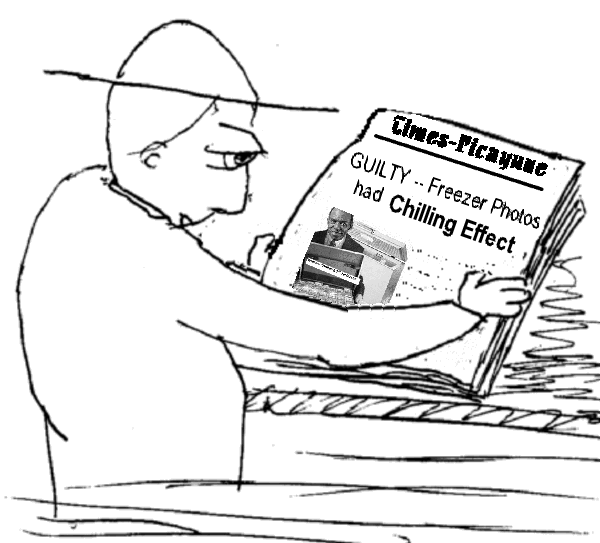
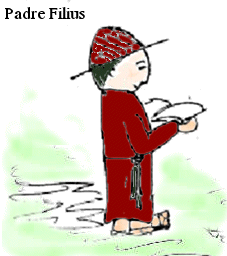
Padre Filius, the cartoon character created by your intrepid editor and would-be cartoonist, will appear from time to time in this Section of the Digest to share us on some amusing or enlightening aspect of the world he observes during his peregrinations.
This month the good Padre reads a Headline about a convicted local Congressman.
2.Comments from Readers:
- Response to EMAIL from Nicholas Potter:
Subject: Chance QuestionsDear Nicholas,
Thanks for writing. It's always great to meet a good reader of my reviews.I'll have a few comments. For a comprehensive understanding of these matters I suggest you read more of Steiner's original works. Outline of Esoteric Science best place to start.
you wrote:
> > In the writing on Lucifer and Ahriman presented on this page:
> http://www.bibleandanthroposophy.com/Smith/main/burning_bush/charts_tabs/i32.html
> it is suggested that an indication of an Ahrimanic characteristic is
> 'belief in chance'.Roll the dice. That's a materialistic way of talking about chance. Ahriman is a craps player par excellence because he wants you and me and all humans to believe that random chance is what governs our life. Makes sense?
That means the chance of my reading Steiner's works (I've read over 175 of his books) and yours are identical and have no bearing on our previous lifetimes. For myself, my life only makes any sense if I came to this world at this time in this body to begin studying Steiner's revelations at the age of 55, which I did. If you haven't read any Steiner books, perhaps this is your destiny to begin doing so now. Your interest expressed by the questions you ask seem to indicate that possibility.
> I read in this article:
> http://www.doyletics.com/arj/landarvw.htm
> however that 'superstition' is a characteristic of Lucifer
> and 'concrete sensory-based, materialism' seems to contradict that Ahriman is
> characterized by a belief in chance. I was wondering if you might be able to clarify this for me.> Many thanks,
> NicholasRemember "I Love Lucy" show? Lucy and Desi? Think of these two as Luci and Ahri. They represent two ways of keeping us from becoming fully human beings.
Luci wants us to fly towards the spirit, which if we do, we will crash to the ground like Icarus eventually. Luci wants us to believe in the spiritual world as the only reality.
Ahri wants us to crawl around on the ground and deal with only materialistic things, whether they be brick, dice, clothings, autos, computers, etc. Ari wants us to forget about belief and focus only on materials, on things. Dice are two physical objects which Ahri would say "Roll 'em" to prove that everything is chance. He does NOT want us to believe in anything. He just shows it to be a fact that belief in anything is pure superstitious folly. Obviously Luci and Ahri don't get along very well.
"Chance" is a concept, not a thing. "All paradox is at the level of metaphor" is my way of expressing the apparent contradiction you found in the two articles you quote.
If you said, "I believe in chance." Ahri would say, "Great!" "That man believes in pure random events independent of any spiritual influences. His Guardian Angel will be really upset and ignore his requests and soon his world will match his beliefs."
Ahri uses beliefs to further this aim of materializing every human.
To be fully human is not to avoid all Luci and Ahri tendencies, but bring the two into a balance in one's life.
We were saved from a completely spiritualized existence by Lucifer premature gift of freedom (the apple in Eden metaphor) and with that Freedom we can choose to be completely materialized which Ahriman would be pleased to assist us is doing so.
Christ Jesus came into the world to help us maintain a balance of Luci and Ahri in our lives.
Look at how he handled the three temptations in the desert: he showed us how to overcome Luci and Ahri by example.
most cordially,
BobbyEMAIL: Facetious Christmas Letter from our daughter, Carla:
Merry Christmas from Carla, Molly, Garret, and Pat,It’s been a wonderful year for the Tuckers. Molly, aged 11, has received early admission to Harvard; Garret, aged 8, has an internship at Microsoft under the supervision of Bill Gates (thanks Rob); I’ve been nominated to the President's Commission on Global Warming and chosen as Tiger Woods new “caddy”; and Pat has been picked as the spokesperson for the new, improved Mr. Clean. Wow, that felt good. I’ve always wanted to write a Christmas letter like that.
Love,
CarlaP.S. Seriously, it was Princeton.
EMAIL from Del's cousin in Houston:
Who dat!
Hope you and Del were at the Saints game,
Happy Holidays
Regards,
Patrick ClarkEMAIL from Rich Katona in Houston:
Can you tell which one of the seagulls is female?EMAIL from Debbie in Chicago:
Hi, Bobby,
As usual I enjoyed your digest. Funny thing though — today is only December 5, and your Christmas cactus picture says it was taken December 11, 2009....
Hope you like snow and that it will move on down to Timberlane this year!
Debbie Barford
[RJM Note: Sorry bout dat. One of Santa's elves's finger slipped on one of the date references to the photo. It was Dec. 11, 2008.]EMAIL from me Pirate Matey, Blackbead, announcing our new book with me poem of Captain Robespierre's mighty ship, 'The Frigate Grey Ghost', namely, Echoes From Other Worlds :
Ahoy, shipmates!Our book is now for sale! Tell your family, friends, and anyone who wants to buy a book to go to http://www.lulu.com/content/paperback-book/echoes-from-other-worlds/7909617 to purchase a copy of . . .
It's time now to start the biggest part of publishing — the marketing. I'm going to put this up EVERYWHERE! Please do the same. Great News is that Lulu has a Global Reach Distribution for our book! Get it out there my friends!
Okay, I'm going to go celebrate! YOU DO THE SAME!!
FAIR WINDS AND A FULL TREASURE CHEST TO US ALL!
Steve
EMAIL from daughter Yvette in Bellaire, TX: Check out this video of the kids doing a dance on Friday night! http://sharing.theflip.com/session/31f6adb72d49beb4acd12c3fcfc3ff9c/video/7949000
EMAIL from Glenn in Yorba Linda, CA:
Bobby & Del,It has been quite awhile since the last received newsletter about you and your family. I hope all is well with you and yours.
How are things going for you?
Glenn Martin
[NOTE: After my Reply, Glenn is now subscribed to the Good Mountain Press Digest Reminder List so he won't miss another issue of the Digest. If you haven't yet subscribed, why not Send a Blank Email right now to: gmpdigest-subscribe@topica.com ?
EMAIL: Christmas Card from Rose Ann Loupe.
(Turn on your sound and put on gloves) CLICK HERE!3. Thoughts on Modern Historians
Thoughts while reading this book, "Rudolf Steiner's Mission and Ita Wegman":
It occurs to me that so-called modern historians view events of the past much the way Martians might view a football game. They will have to invent motivations for the progress they observe left and right on the field, because the true motivations of the football players and the score will remain meaningless to Martian observers. Events of history are viewed by such modern historians by observing physical objects left on the ground after a football game (sometimes millennia later) and from the reports left by the players, who are often as clueless as the purpose of their actions than the Martian observers would be, since their intents and motivations are hidden from view and exist only in the spiritual realm, not the realm of sensory experience.
This is especially pertinent to those modern historians analyzing why Alexander wandered so far over the known world. They attribute it to his intent to conquer the world, but cannot explain why the world seemed more to conquer Alexander than vice-versa. They note the discontent of Alexander's army chiefs with his actions of taking on the dress of foreign lands, often participating in their religious rites, kowtowing to local high priests, and such, but miss the point that Alexander was more of a missionary than a conqueror, he was a harbinger of the Christ, a pre-Christian St. Paul, if you will, carrying the good news of Christ's reality to disparate lands and people.
in freedom and light,
BobbyReply from a friend in Australia:
It is truly a privilege to be able to consider the spiritual truth of what you say Bobby. I have been comforted recently by a deeper experience of the effect of just a few people when they perceive spiritual truth, as if a new conduit is built between the earth and the spiritual hierarchies.4. Reply from Historian, Professor Kevin Dann:
Bobby,
Thanks (I think!) for including me in the "not one of these historians" basket. A fun project for my visit would be for us to brainstorm a list of just such "hidden in plain sight" episodes — instances where historians act as Martians.
I'm working on 19th c. Spiritualism at the moment, and a whole bunch of related topics, and there is Martian history a-plenty to be found from all corners of the academy.
My brother's "Christmas card" just arrived today, and I couldn't resist sending it on to you. On the back he wrote: "No wonder we hated going to church. Whatever happened to those dresses?"
Yours,
Kevin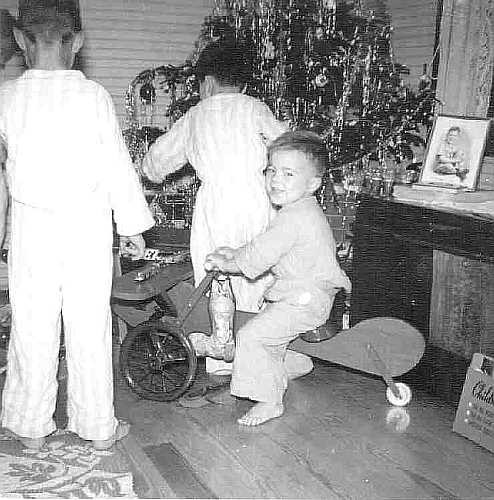
== == == == == == == == == == == == == == == == == == == == ==
9. CLOSING NOTES:
= = = = = = = = = = = = = = = = = = = = = =Thanks to all of you Good Readers for providing the Chemistry which has made this site a Glowing Success. — Especially those of you who have graciously allowed us to reprint your emails and show photos of you and by you on this website — you're looking good! As of June 1, 2019, it enters its 20th year of publication. The DIGESTWORLD Issues and the rest of the doyletics website pages have received over 21.6 MILLION VISITORS ! ! !
We have received over ONE MILLION VISITORS per Year to the Doyletics Website since its inception June 1, 2000, over twenty years ago. Almost 2 million in the past 12 months. We are currently averaging about 150,000 visitors a month. A Visitor is defined as a Reader who is new or returns after 20 minutes or more has passed. The average is about one visitor for every 10 Hits.
IMPORTANT NOTES about DIGESTWORLDtm Our DIGESTWORLD came into existence years before Facebook and all the other social media which interrupt people's schedules many times a day. All our photos, reviews, cartoons, stories, etc, come to you via a link inside of one short email Reminder at the beginning of each month. We hope you appreciate how we let YOU choose when to enjoy our DIGESTWORLD Issues. To Get a Monthly Reminder, Click Here .
We especially want to thank you, our Good Readers, in advance, for helping our readership to grow. NOTE our name is now: DIGESTWORLD. Continue to send comments to Bobby and please do create links to DIGESTWORLD issues and Reviews on LinkedIn, on your Facebook page, and on other Social Media. When you copy any portion of a webpage or review, please include this text: "Copyright 2018 by Bobby Matherne".
Email your friends about the reviews, the handy doyletics Speed Trace, the Household Hints, the cartoons, the Cajun jokes, the recipes, the poems, and the photos in all the DIGESTWORLD Issues archived on our website. Urge them to subscribe to the DIGESTWORLD Reminder so they won't miss a single issue!
The Subscription Process SIMPLE: no Reply Confirmation is required. An email to the Editor with your First and Last names is all that's required. There is never a charge for viewing any page on our website; nor for any of the guidance we offer to people using the FIRST AID KIT or asking for help with doyletics in any other areas.
For those who are able to contribute to the site we offer a year's subscription for receiving the DIGESTWORLD Monthly Reminders for $50.~~ NOTE: DIGESTWORLD is a Trademark of 21st Century Education, Inc. ~~ The cost of keeping this website on-line with its 300 Gbytes of bandwidth a month is about $50 a month. Thank you, our Good Readers, for continuing to patronize our advertisers when they provide products and services you are seeking as you visit any of our web pages. Remember the ads are dynamically displayed and every time you read even the same page a second time, you may find new products and services displayed for your review. Our reviews, digests, tidbits, etc, all our webpages act as Google magnets to bring folks to the website to learn about doyletics and frequent our advertisers, so they support one another in effect.
We wish to thank all Good Readers who have made a contribution to the doyletics.com website! Special thanks go to Chris and Carla Bryant in Corpus Christi and Gary Lee-Nova in Canada!We welcome your contributions to the support of the website and research into the science of doyletics. To obtain our street address, email Bobby at the address found on this page: http://www.doyletics.com/bobby.htm and we will send it to you. Every $50 subscription helps toward keeping this website on-line for another month. If you can't send money, at least show your support by sharing your favorite Issue of DIGESTWORLD and Reviews with a friend.
You can read a description of how to do a Speed Trace (either in English or Spanish):Learn to Do a Speed Trace Here

Or Watch Bobby extemporaneously explain How to Do a Speed Trace on Video:
To make a connection to the Doyletics website from your own website, here's what to do. You may wish to use the first set of code below to link to the site which includes a graphic photo, or to use the second set of code for a text-only link. Immediately below is how the graphic link will look on your website. Just place this .html in an appropriate place on your website.
<CENTER> < — with graphics link — >
<A HREF="http://www.doyletics.com/index.htm">Learn to Do a Speed Trace Here<BR>
<IMG SRC="http://www.doyletics.com/doylepb.gif" width="309" height="102" border="2" TITLE="Learn to Remove Doyles — all those Unwanted Physical Body states of fear, depression, migraine, etc." ALIGN=middle><A/></CENTER>
<CENTER> < — text only link — >
<A HREF="http://www.doyletics.com/introduc.htm">Learn to Do the Speed Trace at doyletics.com <A/>
</CENTER>Check out the new additions to the Famous and Interesting Quotations at:
http://www.doyletics.com/quotes.htm== == == == == == == == == == ==
My reviews are not intended to replace the purchasing and reading of the reviewed books, but rather to supplant a previous reading or to spur a new reading of your own copy. What I endeavor to do in most of my reviews is to impart a sufficient amount of information to get the reader comfortable with the book so that they will want to read it for themselves. My Rudolf Steiner reviews are more detailed and my intention is bring his work to a new century of readers by converting his amazing insights into modern language and concepts.
== == == == == == == == == == ==The Good Mountain Press Digest is mailed monthly to:
Friends and associates
Individuals who have expressed interest in the Digest
Persons who have subscribed at the Digest Subscription Page.Please Don't Bug Us 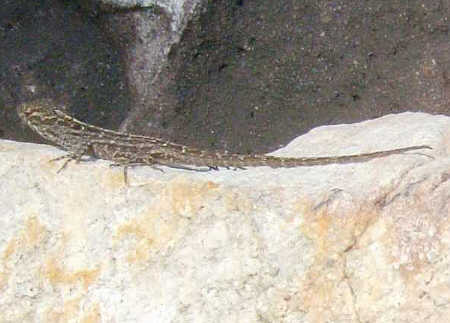
Nothing BUGS US more than losing Hale-and-Hearty, Ready-to-Read Good Friends from the DIGESTWORLD Reminder List.
So we've made it easy for Good Readers who have changed their Email addresses and Friends who would like to begin receiving the DIGESTWORLD Reminder at the first of each Month:
IT'S EASY to RE-SUBSCRIBE or SUBSCRIBE:
CLICK HERE!
As of August, 2011 we have begun using a Contact Manager with an Email Merge feature which allows us to send personalized Emails to everyone in our Contact List. You can receive the colorful Email containing the DIGESTWORLD Reminder beginning with "Dear [Your First Name]". It is important that we have your First Name, so if the name you are addressed by in your Reminder is not your first name, please notify us of the name you wish us to use. For convenience you can send a quick email to give us your name by Clicking Here. To Contact Bobby, his Email address is visible on this page.
NOTE: As of 2018 the Topica.com List messages are NO LONGER READABLE!
Please do your part by letting us know of any email address change so that you may continue receiving the DIGESTWORLD Reminders. Most of our Readers come from folks who don't get these Reminders, but we offer the DIGESTWORLD Reminder as a service to our regular Good Readers. To send us your new email address, CLICK HERE! .
If you discovered this page by a Google Search and want to SUBSCRIBE NOW
If you have enjoyed a particular issue, let us know, especially around the first of each month when those "lost soul" messages are bugging us, Send us a quick email by Clicking Here!
Simply Click the Link at right to send an Email Request: SUBSCRIBEIf you have a friend or two that you think would enjoy reading the DIGESTWORLD, suggest they view the current DIGESTWORLD Issue and perhaps they'll decide to Subscribe.To unsubscribe from the DIGESTWORLD Reminder List:
Click Link at right to send a Blank email to: UNSUBSCRIBEIf the above links which provide canned emails don't work on your system, you can send a Subscribe/Unsubscribe request to the address found on this page: http://www.doyletics.com/bobby.htm Please include your first and last name when Subscribing.
== == == == == == == == == == == == == == == == == == == == ==
10. GRATITUDE - in Three Easy Steps:
= = = = = = = = = = = = = = = = = = = = = =
Maintaining a website requires time and money, and apart from sending a donation to the Doyletics Foundation, there are several ways you can show your gratitude and support our efforts to keep doyletics.com on-line.
One would be for you to buy a copy of my Dolphin Novel, The SPIZZNET File. Books May be ordered in hardback or paperback form from Xlbiris the Publisher here:
online: http://www.xlibris.com/TheSPIZZNETFILE.html
email: orders@xlibris.com
The best source at the best price is to order your copies on-line is from the publisher Random House/Xlibris's website above.
Two would be for you to use the Google Search Engine for your web searches or to find an item on doyletics.com website. New reviews will have a place to do a Google Search at the top and the bottom of the reviews. Just enter a search phrase in the box below to do a Search. Note you can check whether to Search just this site or all websites.
Three would be for you to let us know you like us by Subscribing to our monthly Reminder. One short email each month with a link to our Latest DIGESTWORLD Issue will keep you apprised of our latest reviews, photography, poetry, Cajun stories, recipes, Movie Blurbs, Travels, and even more! Simply Click Here: Subscribe Me!
Thank you in advance!
~~~~~~~~~~~~~~~~~~~~~~~~~~~^~~~~~~~~~~~~~~~~~~~~~~~~~~~
LIKE US? To Receive a Monthly DIGESTWORLD Reminder, Click the Link to Send Email Request: SUBSCRIBE
NOTE: Place Cursor over a photo for a few seconds to read text description.
All the tools you need for a simple Speed Trace
IN ONE PLACE.== == == == == == == == == == == == == == == == == == == == == ==
== == == == == == == == == == == == == == == ==
22+ Million Good Readers have Liked Us
22,454,155 as of November 7, 2019
Mo-to-Date Daily Ave 5,528 Readers
For Monthly DIGESTWORLD Email Reminder:
Subscribe! You'll Like Us, Too!
== == == == == == == == == == == == == == == ==
Any questions about this DIGESTWORLD ISSUE, Contact: Bobby Matherne
CLICK HERE TO OPEN OUR FIRST-AID KIT. Does your Face sometimes resemble the Faces Below? If so, Click on the Faces or Flags to Dig into our First Aid Kit.
To follow Research in the science of doyletics, Read our Monthly DIGESTWORLD Issues.
Click Here to get Monthly Reminder.
For Copies of Reviewed Steiner Books, Click on SteinerBooks Logo below.
Visit Bobby's Other Reviews, Articles, and Essays
Books are Lighthouses Erected in the Sea of Time
Counselor?
Visit the Counselor's Corner for Suggestions
on Incorporating Doyletics in Your Work.
e-mediatelytm is a Trademark of 21st Century Education, Inc. Prototyped 2000.