
== == == == == == == == == == == == == == == == == == == == == == == == ==
LIKE US? To Receive a Monthly DIGESTWORLD Reminder, Click the Link to Send Email Request: SUBSCRIBE
NOTE: Place Cursor over a photo for a few seconds to read text description.
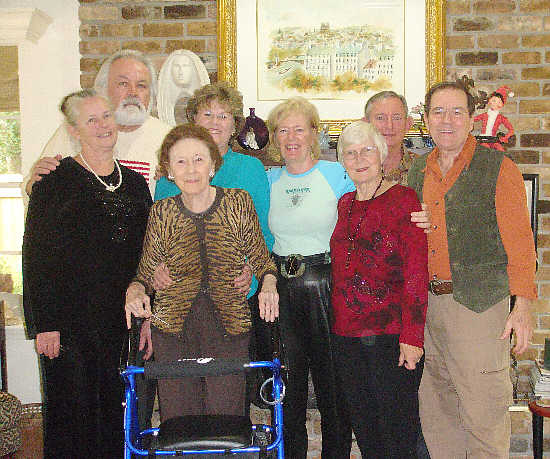
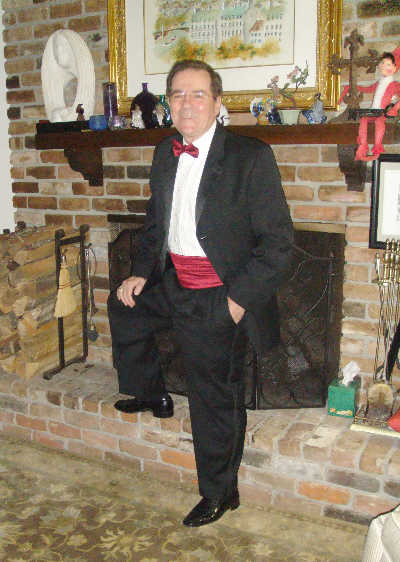
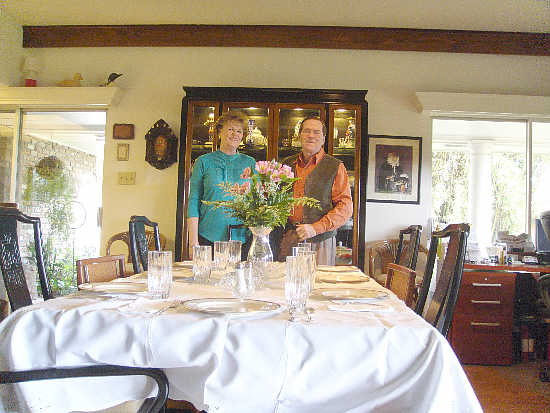
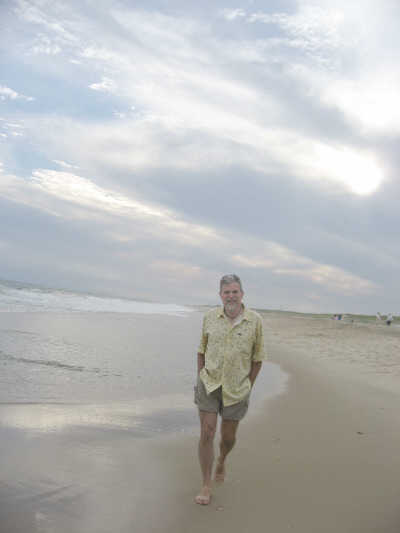
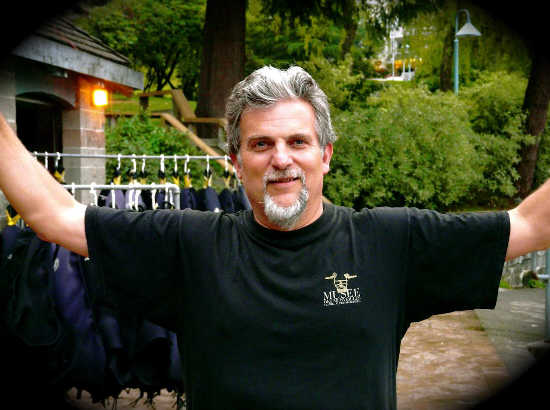
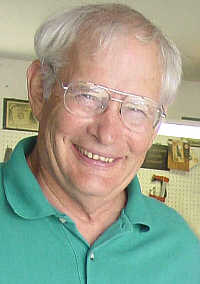
Warren Liberty was born June 2, 1921, in Chicago, Ill., to Dennis and Irene Liberty. Residing in Chicago throughout his childhood, he graduated from high school in 1939, later serving in the U.S. Army during World War II as a radar specialist. Following the war he met Corinne Rohdenburg at the famous Aragon Ballroom in Chicago. That very night, when he dropped her off at her parents’ house, he declared to her, “I’m gonna marry you,” fulfilling his first date promise on June 26, 1948. 
All the tools you need for a simple Speed Trace
IN ONE PLACE.
== == == == == == == == == == == == == == == == == == == == == == == == ==
~~~~~~~~ In Memoriam: Warren Louis Liberty (1921 — 2008) ~~~~~~~~
~~~~~~~~ Some details thanks to Scappoose, Oregon Obituary: ~~~~~~~~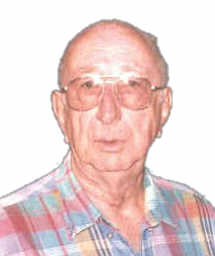
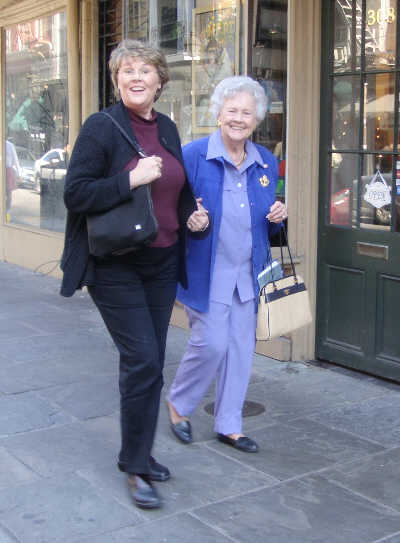
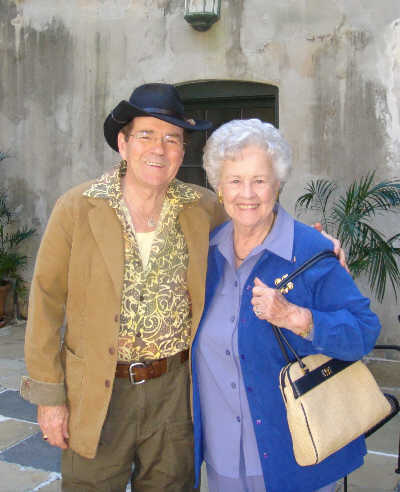
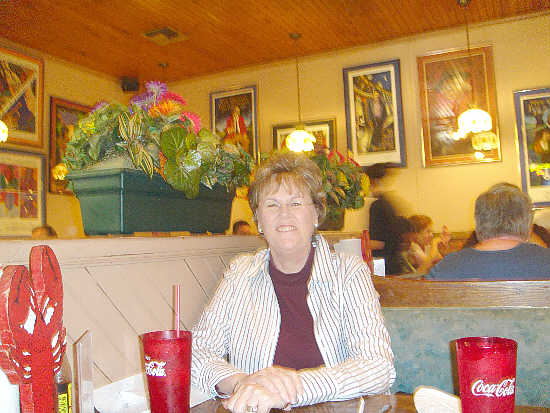
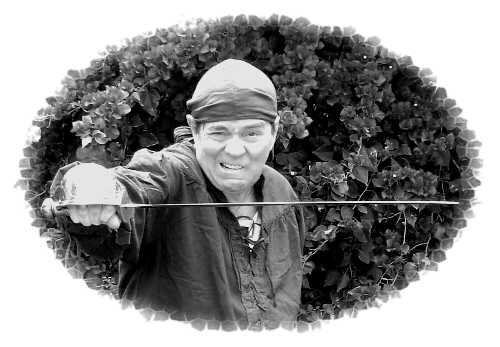
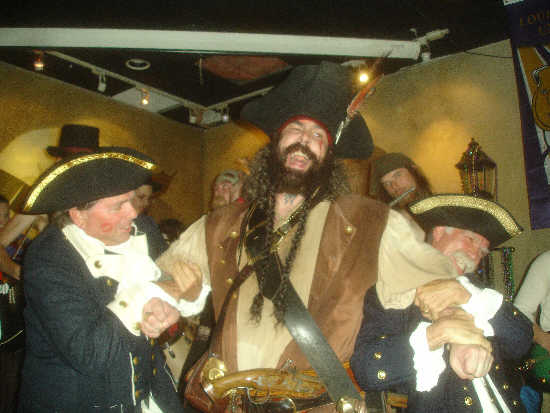
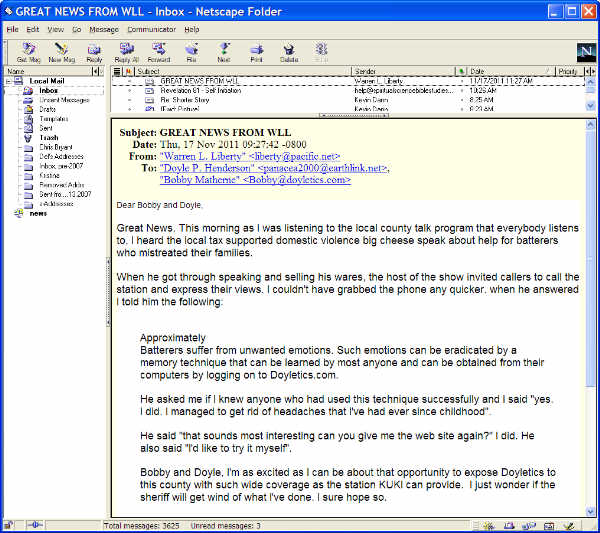
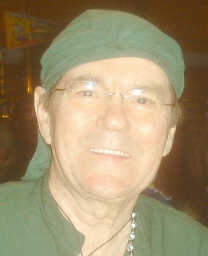
Warren and Corinne moved to southern California where he worked as an engineer for Cook Research, Northrop, and Aerojet. During his time at Northtrop, he met Doyle Henderson, who became his lifelong friend. He loved working, spending time with family and friends, riding motorcycles, RVing, and talking about politics and the medical profession. He took Volitional Science (V50) from Dr. Galambos in 1968, and was a pioneer in the science of doyletics, using it to remove lifelong migraines, insomnia, and a serious case of shingles. He came to New Orleans to the first Doyletics Conference in October, 2001, and another time on a visit to the French Quarter with his wife, Corinne. We took a ride in horse-drawn carriage through the Quarter, a first-time for all three of us, which resulted in the photo of our carriage-driver Lady Liberty tattoo at left.
Warren — my great friend — I will miss your emails, your gravelly voice over the phone, and will be always grateful for your exuberant support of the science of doyletics.
Bobby Matherne
~~~ GOOD MOUNTAIN PRESS DIGEST #08c Published December 1, 2008 ~~~ == == == == == == == == == == == == == == == == == == == == == == == == ==What is true in a man's life is not what he does, but the legend which grows up around him.
— Oscar Wilde , British Playwright== == == == == == == == == == == == == == == == == == == == == ==
 By Subscription only.== == == == == == == == == == == == == == == == == == == == == ==
Editor: Bobby Matherne, Asst. Editor: Del Matherne
[To Contact Editor Click Here!]
To Subscribe, Click Here : http://www.doyletics.com/subscrib.htm
or here: <A HREF="http://www.doyletics.com/subscrib.htm">Click here</A>
To Unsubscribe, see bottom of Digest.
©2008 by 21st Century Education, Inc, Published Monthly.
To Read All of Bobby's Writings Click Here!
~~ Click on Heading to go to that Section (Allow Page First To Fully Load). ~~
THE GOOD MOUNTAIN PRESS DIGEST #08c, December 2008 Archived Digests
Table of Contents1. December's Violet-n-Joey Cartoon
2. Honored Readers for December
3. On a Personal Note
Movie Blurbs
4. Cajun Story
5. Recipe of the Month from Bobby Jeaux’s Kitchen: Simple Syrup
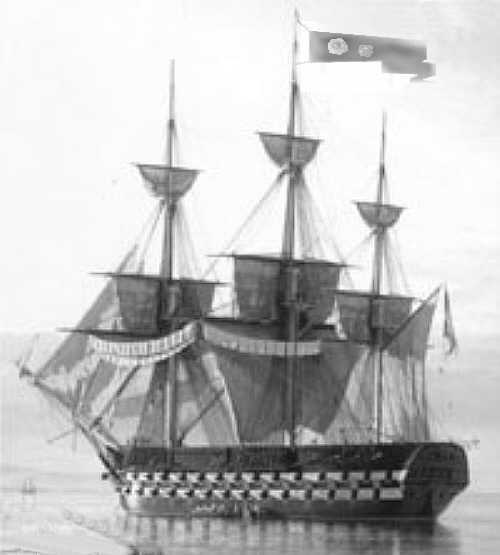
6. Poem from Future Book of Pirate Poems:"The Frigate Grey Ghost"
7. Reviews and Articles Added for December:8. Commentary on the World
- ARJ2: The Journal of Henry David Thoreau, Vol. 12, March 1859 to November 1859 by Henry David Thoreau
- ARJ2: A Short Story of American Destiny, 1909 — 2009 by Kevin Dann
- ARJ2: Raising Black Flags — Original Poetry By and About Pirates by Stephen Sanders, etal
9. Closing Notes — our mailing list, locating books, unsubscribing to Digest
10. Gratitude== == == == == == == == == == == == == == == == == == == == == ==
THE GOOD MOUNTAIN PRESS DIGEST #08c == == == == == == == == == == == == == == == == == == == == == ==
ARCHIVED DIGESTWORLD ISSUES ON THE WEB ~ ARCHIVED DIGESTWORLD ISSUES ~ 2000: INAUGURAL YEAR: Jun #1 Jul #2, Aug #3, Sept #4, Oct #5, Nov #6, Dec #7
2001: Jan #8, Feb #9, Mar #10, Apr #11, May #12, Jun #13, Jul #14, Aug #15, Sep #16, Oct #17, Nov #18, Dec #19
2002: Jan #20, Feb #21, Mar #22, Apr #23, May #24, Jun #25, Jul #26, Aug #27, Sep #28, Oct #29, Nov #30, Dec #31
2003: Jan #32, Feb #33, Mar #34, Apr #35, May #36, Jun #37, Jul #38, Aug #39, Sep #40, Oct #41, Nov #42, Dec #43
2004: Jan #44, Feb #45, Mar #46, Apr #47, May #48, Jun #49, Jul #50, Aug #51, Sep #52, Oct #53, Nov #54, Dec #55
2005: Jan#051,Feb#052,Mar#053,Apr#054,May#055,Jun#056,Jul#057,Aug#058,Sep#059,Oct#05a,Nov#05b,Dec#05c
2006: Jan#061,Feb#062,Mar#063,Apr#064,May#065,Jun#066,Jul#067,Aug#068,Sep#069,Oct#06a,Nov#06b,Dec#06c
2007: Jan#071,Feb#072,Mar#073,Apr#074,May#075,Jun#076,Jul#077,Aug#078,Sep#079,Oct#07a,Nov#07b,Dec#07c
2008: Jan#081,Feb#082,Mar#083,Apr#084,May#085,Jun#086,Jul#087,Aug#088,Sep#089,Oct#08a,Nov#08b,Dec#08c
2009: Jan#091,Feb#092,Mar#093,Apr#094,May#095,Jun#096,Jul#097,Aug#098,Sep#099,Oct#09a,Nov#09b,Dec#09c
2010: Jan#101,Feb#102,Mar#103,Apr#104,May#105,Jun#106,Jul#107,Aug#108,Sep#109,Oct#10a,Nov#10b,Dec#10c
2011: Jan#111,Feb#112,Mar#113,Apr#114,May#115,Jun#116,Jul#117,Aug#118,Sep#119,Oct#11a,Nov#11b,Dec#11c
2012: Jan#121,Feb#122,Mar#123,Apr#124,May#125,Jun#126,Jul#127,Aug#128,Sep#129,Oct#12a,Nov#12b,Dec#12c
2013: Jan#131,Feb#132,Mar#133,Apr#134,May#135,Jun#136,Jul#137,Aug#138,Sep#139,Oct#13a,Nov#13b,Dec#13c
2014: Jan#141,Feb#142,Mar#143,Apr#144,May#145,Jun#146,Jul#147,Aug#148,Sep#149,Oct#14a,Nov#14b,Dec#14c
2015: Jan#151,Feb#152,Mar#153,Apr#154,May#155,Jun#156,Jul#157,Aug#158,Sep#159,Oct#15a,Nov#15b,Dec#15c
2016: Jan#161,Feb#162,Mar#163,Apr#164,May#165,Jun#166,Jul#167,Aug#168,Sep#169,Oct#16a,Nov#16b,Dec#16c
2017: Jan#171,Feb#172,Mar#173,Apr#174,May#175,Jun#176,Jul#177,Aug#178,Sep#179,Oct#17a,Nov#17b,Dec#17c
2018: Jan#181,Feb#182,Mar#183,Apr#184,May#185,Jun#186,Jul#187,Aug#188,Sep#189,Oct#18a,Nov#18b,Dec#18c
2019: Jan#191,Feb#192,Mar#193,Apr#194,May#195,Jun#196,Jul#197,Aug#198,Sep#199,Oct#19a
To Receive a Monthly DIGESTWORLD Reminder — Click Here.
== == == == == == == == == == == == == == == == == == == == == ==
1. December Violet-n-Joey CARTOON:
== == == == == == == == == == == == == == == == == == == == == ==For newcomers to the Digest, we have created a webpage of all the Violet-n-Joey cartoons! Check it out at: http://www.doyletics.com/vjtoons.htm Also note the rotating calendar and clock that follows just to the right of your mouse pointer as you scroll down the page. You'll also see the clock on the 404 Error page if you make a mistake typing a URL while on the doyletics.com website.
The Violet-n-Joey Cartoon page is been divided into two pages: one low-speed and one high-speed access. If you have Do NOT Have High-Speed Access, you may try this Link which will load much faster and will allow you to load one cartoon at a time. Use this one for High-Speed Access.
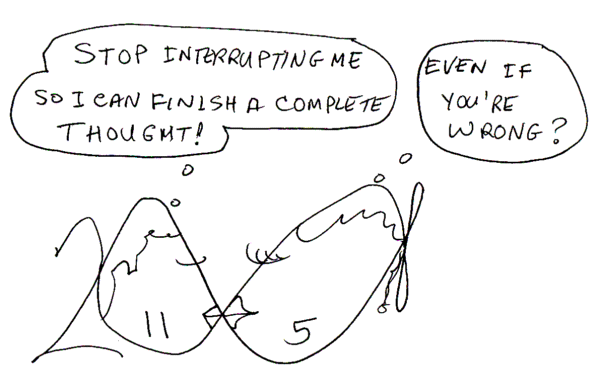
This month Violet and Joey learn about Interrupting Each Other.
#1 "Interrupting Each Other" at http://www.doyletics.com/images/110508jv.gif
== == == == == == == == == == == == == == == == == == == == == ==
2. HONORED READERS FOR December:
== == == == == == == == == == == == == == == == == == == == == ==Each month we take time to thank two of our good readers of Good Mountain Press Digest, books and reviews. Here's our two worthy Honored Readers for this month. One of their names will be in the TO: address line of your email Digest notification. Our Honored Readers for December are:
Paul Werner in New Orleans
Paula Lucidi in Canada
Congratulations, Paul and Paula !
== == == == == == == == == == == == == == == == == == == == == == == == == == == == == == == == == == == == ==
3. ON A PERSONAL NOTE:
== == == == == == == == == == == == == == == == == == == == == == == == == == == == == == == == == == == == ==
Out Our Way:
This month in our reviews, we completed a year's trek through the woods with Thoreau through his Journal No. 12, a century's trek through America's destiny with Kevin Dann, a modern Thoreau, and a book's melange of poetry by and for pirates with Stephen Sanders, and we invite you to join us by reading and enjoying the reviews, looking over our shoulders, walking along with us through Concord's environs, looking back at Hudson-Champlain anniversaries, past, present, and future, and rocking and rolling to the waves of the Seven Seas on the poop deck of Robespierre's Frightful Frigate, The Grey Ghost, peering through telescopic eye-pieces, searching that next gold-laden Spanish Galleon bound home from the New Worldm all the while enjoying the eye-popping photography which fills these pixelated pages.
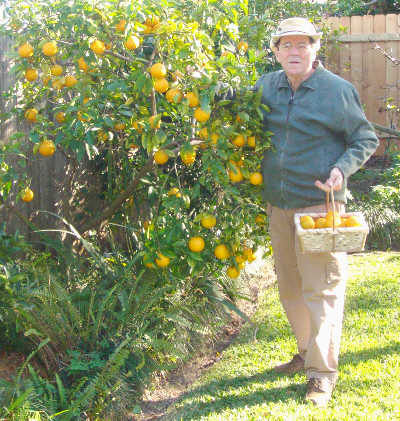
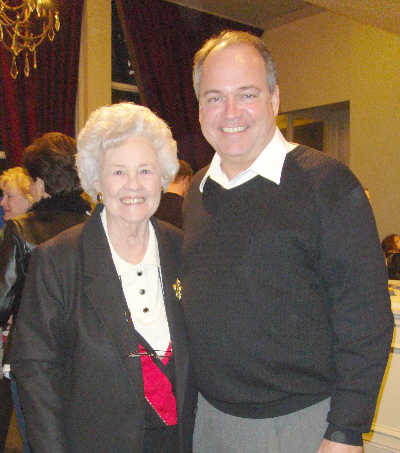
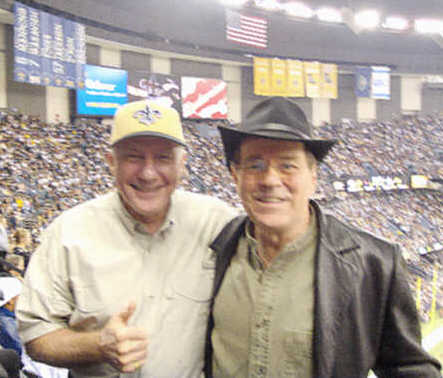
On the home front, in summary, we visited Prospect1 in the French Quarter, acquired a HD Blu-Ray DVD player, watched instant movies on our large screen TV through my HP laptop, watched Hornets games, Saints games, LSU lose four SEC games in a row, said goodbye to old friends Warren Liberty and Eric Szuter, ordered in firewood and enjoyed several fires in the hearth, had David Babin come do our Fall Cleanup work at Timberlane, went to Saints game with Mal Morgan, squeezed the first Honeybell orange juice, chose Del to represent us at the last swim meet for our grand-daughter Katie, had lunch with son Stoney and his family, visited brand-new Macy's at Lakeside, prayed Dad's recovery from pneumonia, and prepared a Thanksgiving Dinner and a followup gathering a few days later for friends at Timberlane. Details to follow.
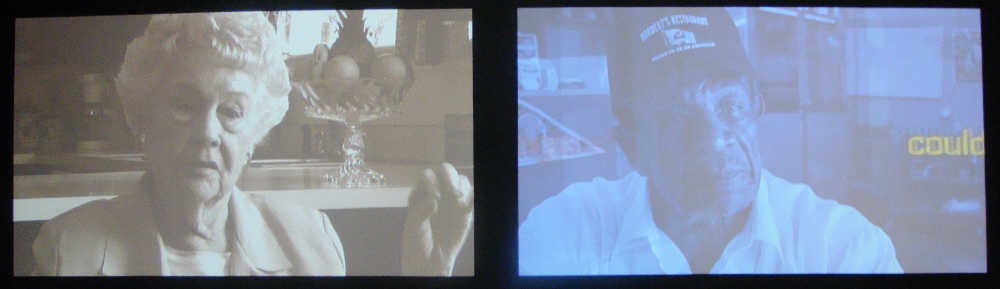
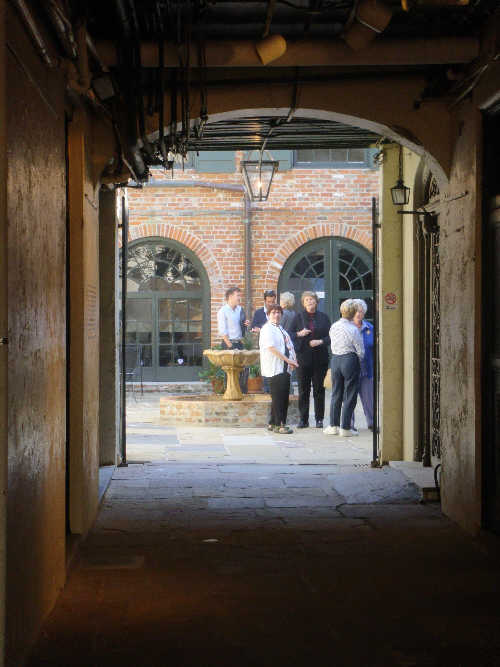
November began with our taking our friend, Rosie Harris, to see Roseangelo Renno's Prospect.1 art installation in the French Quarter. This installation is the final product of the interviews which Roseangelo had videotaped with Rosie speaking in Cajun French about her life growing up along Bayou Lafourche in Galliano. I drove into the Quarter and dropped Del and Rosie off on a corner of Royal a half-block away from the exhibit, and had to drive to the levee-side parking area to park the car and walk back. By that time the two gals were talking to a group of people across the street from the 520 Royal location. Roseangelo showed up shortly thereafter and Del, Rosie and I went in to view the entire performance piece. The interviews comprised five people, two local black people who spoke Creole French, and three local Cajuns who spoke Cajun French. The two screen arrangement with B&W images in yellow tint on the left and blue tint on the right worked very well. With a short 10 second overlap, the blue image speakers spoke and on the other yellow screen their words were written in both French and English. The speaking screen then alternated as each new speaker began. One could hear the difference in Cajun and Creole and read the words in both French and English as they spoke, a great way to listen and learn to recognize French words being spoken and build up my impoverished French vocabulary. My parents, like so many of my generations's parents in South Louisiana's Cajun country, spoke French to each other, especially when they didn't want us kids to know what they were saying.
After we hugged Roseangelo goodbye, I suggested we eat some oysters at Felix's Oyster House on Iberville. We each had a dozen plus an extra dozen for Del. Rosie said it was the first time in her 88 years of life that she had eaten oysters in an oyster house, though she ate them at home a lot as a young girl in Galliano.
My dad, Buster used to open oysters by the sack, especially during the time he was working temporarily as a carpenter down in Buras, Louisiana, the home of some of the largest and saltiest oysters in the state. I can remember eating them when my mouth was only a few inches higher than his knee as he held an oyster shell to my lips and decanted its succulent contents into my mouth, sometimes depositing an oyster so large that I had to bite off half of it before I could get the rest into my mouth.This month I have been listening to lectures by Professor Brooks Landon on, "Building Great Sentences." Have ordered two books on his recommendation, "Steering the Craft" by Ursula LeGuin and "On Being Blue" by William Gass. Professor Landon, even though I'm only halfway through his course, has already influenced my writing, especially during the post-review phase of editing I call, "playing with sentences", the time when I read my own writing several days after the initial copy-editing phase, read it as if I were reading someone else's writing. Listening to Landon's lectures led me to sculpture cumulative sentences in my review of "Into the Silent Land", making it easier to read, to convert my old sentences into fresh, surging structures of motive force and power, able to pull readers through to my points.
Ever played golf? Remember when you took lessons for the first time, and suddenly your game of golf went from bad to worse? Every time you picked up a club, instead of merely swinging the club, you were concentrating on whether your elbow was straight, your eyes stayed down on the ball, your back swing was high enough, etc., resulting in a complete inability to hit the ball cleanly, for a time.
This is a problem when learning something new: how to incorporate to improve your performance rather than detract from it. I experienced a bit of that with Prof. Landon's course. I found it hard to learn how to use those new golf clubs which Prof. Landon presented to me in his Teaching Co. Course, but eventually I found it fun to watch my Titlelist balls fly long and straight, all hooks and slices a thing of the past, right unto the green, next to the hole, ready for a gimme tap-in for an eagle or birdie, every time, every hole, without the efforting of my pre-lesson swings which created the duck hooks or wide slices, just a single, smooth swing, a crisp contact of the ball, and an arching flight to its green-run-up, cup-circling, and PLOP! destiny.Del and my Laptops and PC have been networked since the Geek Squad guy, Joey, had come over and set it all up, but for some unknown reason, I was unable for a couple of weeks to use the Public files on Del's LT, which caused me extra work. I finally contacted Joey by email, and he gave me the exact instructions I needed to restore connectivity over the network: Go to Control Panel on Del's LT, Look at Guest account and turn it back on. Sure enough, the Guest account had somehow been turned OFF and turning it back ON fixed the problem. That problem must have arisen, I suspect, during a weird transition in her system when all her desktop icons disappeared for a couple of days. Finally got them restored, and the Guest account must have moved to OFF during that time. If you need a computer helper on occasion, I can recommend highly the services of Best Buy's Geek Squad.
On the evening after LSU nearly knocked off unbeaten Alabama in over-time, Del and I went to Larry and Maryann Gibbs house in River Ridge where a group of family and friends of Eric Szuter gathered for a memorial service in his honor. Eric was a friend of mine for some 25 years, a graduate of Galambos' Volitional Science, an author whose novel, Unconditional Surrender, I reviewed recently, a Thomas Paine scholar and author, a philosopher, and a friend of many, judged by the size of the gathering. We saw John Gillis, Arnold Smythe, Bonnie Schindler, and many other long-time friends there, and enjoyed listening to the tributes friends paid to Eric's life. He will be missed by all.
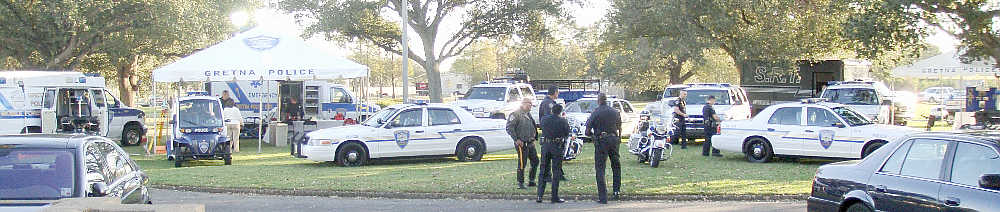
On one Sunday afternoon I watched the Saints demolish Kansas City on TV, and then Del and I got dressed to attend the Gretna Police event at the Timberlane Country Club. All of the off-duty police force was there in uniforms, and equipment to demonstrate their ability to serve and protect us newcomers to the City of Gretna when the annexation of Timberlane Estates becomes official on January 1, 2009.
None of our eight children were coming over for Thanksgiving this year, deciding to stay home and celebrate it with their own families, something which has become more frequent the older their children become. We invited some friends with only distant family to join us for the day, Guntis and Annie, Gail and Jim, and Carol. Plus Del's mom, Doris, was able to come also to round out the table at eight.
My dad, Buster, was scheduled to come, but he got very weak on Monday and was taken to the hospital. The first day they found nothing, but the second day, he was finally strong enough to stand up for an X-ray of his lungs and they found signs of pneumonia. They kept him several more days.On the Saturday after Thanksgiving we invited several friends who couldn't join us for the holiday itself over for some dée;ja mangée; or Cajun leftovers. Del made a fresh green bean casserole, we baked half dozen shrimp-stuffed merlitons, sliced the turkey meat for sandwiches, baked the leftover oyster dressing and sweet potato casserole. For dessert we had the remainder of the Avocado Creme I had made earlier. Ruth and Ted, Carol, Mark, Mal, Sue, and Rosie were here. After they left we drove to my Dad's to take him a meal of turkey and gravy, oyster dressing, and sweet potato casserole. He ate it and agreed that it was much better than hospital food, and how glad he was to get out of the hospital, which he thought for a while he was not going to leave.
Till next month, through the Grace of God, we will return to these pages with more original Photos, Reviews, Cartoons, Commentary, passed-along Cajun jokes, and other things to help make your life worth living to the fullest extent than I am able.
~~~~~~~~~~~~~~~~~~~~~~~~~~~~~~~~~~~~~~~~~~~~~~~~~~~~~~~~~~~~~~
IMPORTANT MESSAGE:
To those Good Readers who are puzzled by How the Moon could be Rising In Front of a Mountain, Click on Photo. To see 161021 photo, Click Here. ALSO: if you are puzzled because you No Longer get our Monthly Reminder, you may have Changed Your Email Address without notifying us. NOTIFY US NOW by a simple Click Here!
Here's the Sting:
You will NOT receive a Monthly Reminder unless you have Re-subscribed under your new address to DIGESTWORLD.If you've already receiving DIGESTWORLD Reminders, ignore this message.
If you're not subscribed, and would like to Subscribe to DIGESTWORLD Reminders to receive one short email a month to inform you of the latest ISSUE, now's a good time. SUBSCRIBE NOW
by Clicking Here.Yes, this message does no good to those who changed their email address without notifying me — but it can alert those of you who are going to change your address.
If you've changed or are planning to change your email address, Click Here to SEND NEW ADDRESS. (Alternate way is to copy into your Browser this URL: http://www.doyletics.com/subscrib.htm )
EASE OF VIEWING NOTES:
NOTE: For Internet Explorer Browsers, DIGESTWORLD is best viewed at 100% Zoom and the Window's width sized so that Digest Archives lines are single-spaced, just barely. Adjust Window width so that Mountains almost touch the Archive Numbers, especially if you find some Photos overlapping text.PHOTO CAPTIONS (CURSOR FLYOVER ISSUE RESOLVED):If you have been enjoying the photos in DIGESTWORLD, but have wondered who or what you were looking at, you will now be able to hold your cursor still over the photo and the photo's description will appear. (Test on Butterfly-Crab Image at Right.) We spend a lot of time writing these photo captions and hope you will read them. All the Archived Issues have been updated to provide descriptions when your cursor rests for a second on a photo. Note that older Reviews have not been updated. If you haven't finished reading text when description disappears, move cursor away and back on photo to finish. We thank you for your patience and hope this pleases you.
New Quotes Added to quotes.htm this month:
- Life is short and therefore precious, and we should all keep the company of the best people we can find, both in life and in books.
~~~ Charley Reese US writerFive Mystical Authors:
1. Carlos Castenada's
Tales of Power .
In the first book in this series, Teachings of don Juan, Carlos was led into new realities by ingesting jimson weed, peyote buttons, and psilocybe mushrooms. In the second book, A Separate Reality, don Juan focused on getting Carlos to learn "seeing." In the third book, Journey to Ixtlan, Carlos was introduced to a plethora of techniques such as erasing personal history, death as adviser, becoming accessible to power, the mood of a warrior, the gait of power, not-doing, and the ring of power. In this book, Carlos becomes a witness to acts of power, learns about the tonal and the nagual, and receives the sorcerer's explanation.
Early in the book don Juan tells Carlos that he doesn't have "enough power yet to seek the sorcerer's explanation." If you analyze his statement you find some interesting presuppositions: "not enough power" presupposes Carlos has some. The qualifier yet presupposes that Carlos will acquire it later. The words seek the sorcerer's explanation presuppose that, one, there is a sorcerer's explanation and, two, it is something that Carlos can and should seek. When I finished a week long hypnosis seminar with Richard Bandler back in 1981, I realized in no uncertain terms that if I expected hypnosis to be preceded by someone waving a pendulum in front of my face, I could expect to remain in the consensual trance of our culture indefinitely. Those four above presuppositions will act on Carlos as four very powerful post-hypnotic suggestions to seek and find the sorcerer's explanation during the course of this book. Carlos' response to the trance induction by don Juan is to ask for more information, what Milton Erickson would call ratifying the trance state.
[page 14] "Then there is a sorcerer's explanation!"
"Certainly. Sorcerers are men. We're creatures of thought. We seek clarifications."
"I was under the impression that my great flaw was to seek explanations."
"No. Your flaw was to seek convenient explanations, explanations that fit you and your world. What I object to is your reasonableness. A sorcerer explains things in his world too, but he's not as stiff as you."So, naturally, Carlos must acquire more personal power and then he will "slide with great ease into the sorcerer's explanation." To demonstrate the requirement for personal power, don Juan lowers his voice a bit and utters what he calls "the greatest piece of knowledge anyone can voice."
[page 17] "Do you know that at this very moment you are surrounded by eternity? And do you know that you can use that eternity, if you so desire?"
Carlos is even more confused than he was before, and considering the two new presuppositions that he was hit by, it's no wonder. How long does it take for one to recover from a presupposition? [Matherne's Rule #39] Carlos was speechless, and don Juan stared him and continued:
[page 17] "You didn't have this knowledge before," he said, smiling. "Now you do. I have revealed it to you, but it doesn't make a bit of difference, because you don't have enough personal power to utilize my revelation. Yet if you did have enough power, my words alone would serve as the means for you to round up the totality of yourself and to get the crucial part of it out of the boundaries in which it is contained.
Next Carlos was asked about his "dreaming" experiences. This was a practice that don Juan had suggested to Carlos which involved finding one's hands while one is dreaming. When the sight of his hands changed into something else, Carlos was supposed to shift his glance to any other element in his surroundings. This constituted what don Juan called "dreaming." Then he was led to walking with eyes slightly defocused without any internal dialogue. Internal dialogue, don Juan told him, "is how you stayed grounded." Shutting off that internal dialogue was necessary to becoming a sorcerer. Carlos went for a short walk in this manner, the “gait of power,” and when he reported that he encountered a man and a huge bird, don Juan corrected him.
[page 25] "If you want to be accurate in sorcerer's terms, but very ridiculous in your own terms, you could say that tonight you had an appointment with a moth. Knowledge is a moth. "
Carlos began an extended exercise in "seeing" during which he brought some 32 friends before him as he and don Juan sat in the night of the desert. Each one appeared in colors and configurations that were unique. Eligio's form seemed to leap out at him, something a talented apprentice might be able to do. Then don Juan asked Carlos to call don Genaro, "the real McCoy." Carlos went in his "seeing" mode again and reported,
[page 43] "The golden bubbles engulfed me and then in one of them I saw don Genaro himself. He was standing in front of me, holding his hat in his hand. He was smiling. I hurriedly opened my eyes and was about to speak to don Juan, but before I could say a word my body stiffened like a board, my hair stood on end and for a moment I did not know what to do or say. Don Genaro was standing right in front of me. In person!"
What took Carlos aback was that he and don Juan had been alone for a long time and don Genaro was supposed to be in central Mexico. When Carlos shared his astonishment at don Genaro popping up out of nowhere, the two sorcerers broke out into raucous laughter. Carlos was completely unable to explain how the clothes that he saw in his vision of don Genaro in the "golden bubble" matched exactly the clothes he later appeared in the flesh wearing.
Carlos had learned that he had just met don Genaro's double. At one point he asked don Juan, "Are you yourself or are you your double?" and don Juan replied, "My double." Carlos was terrified. Don Juan said, "I'm just kidding." This constant keeping of Carlos off balance went on whenever don Genaro and don Juan were around, almost as if it were for their amusement.
Don Genaro told Carlos about several episodes of "dreaming" — the first one happened as don Genaro was picking up plants in the mountains and laid down to take a nap.
[page 68] "I heard then the sound of people coming down the hill and I woke up. I hurriedly ran for cover and hid behind some bushes a short distance across the road from where I had fallen asleep. While I hid there I had the nagging impression I had forgotten something. I looked to see if I had my two sacks of plants. I didn't have them. I looked across the road to the place where I had been sleeping and I nearly dropped my pants with fright. I was still there asleep!"
Seemed that don Genaro had forgotten to take his body along. The process of "dreaming" is intimately connected with that of the double, as Carlos found out when a similar thing later happened to him. "The double is a dream." Maybe that's who Carlos called when he conjured up Genaro from his home in central Mexico, he called his double. Sometimes the explanations of the events are weirder than the events themselves, e. g.:
[page 82] . . . if you had not gotten lost in your indulging, you could have known that you yourself are a dream, that your double is dreaming you, in the same fashion that you dreamed him last night.
Carlos was always writing down things in his notepad, something don Juan and don Genaro teased him about all the time. His description of the world, the one he wrote down on his pad, and the one he kept going in his head as internal dialogue were both reason-based descriptions, descriptions based in what Rudolf Steiner called the Intellectual Soul. But to put will into thinking is the hallmark of the Consciousness Soul at work. In the next passage, don Juan seems to be talking specifically about the power of the Consciousness Soul with its will over the Intellectual Soul with its reason.
[page 101] "We, the luminous beings, are born with two rings of power, but we use only one to create the world. That ring, which is hooked very soon after we are born, is reason, and its companion is talking. Between the two they concoct and maintain the world.
"So, in essence, the world that your reason wants to sustain is the world created by a description and its dogmatic and inviolable rules, which the reason learns to accept and defend.
"The secret of luminous beings is that they have another ring of power which is never used, the will. The trick of the sorcerer is the same trick of the average man. Both have a description; one, the average man, upholds it with his reason; the other, the sorcerer, upholds it with his will. Both descriptions have their rules and the rules are perceivable, but the advantage of the sorcerer is that will is more engulfing than reason.
"The suggestion that I want to make at this point is that from now on you should let yourself perceive whether the description is upheld by your reason or by your will.
In the middle part of the book, don Juan introduces Carlos to the tonal and the nagual, which are pronounced ton-nahl and nah-wahl. The tonal is the left-brain, reason-based, descriptive parts of social humankind — think of it as consisting of maps at all levels of maps. The nagual is the territory, the pure What Is Going On [WIGO] of Alfred O. Korzybski, for which no map will ever be sufficient. Each level of map is at least one level of abstraction separated from the WIGO. Don Juan says at one point, "It is the nagual that is responsible for creativity." Naturally what we can get from the tonal is only more description, but from the nagual we can extract the exciting possibilities that we call by the name creativity.
At one point don Juan and don Genaro simultaneously talked into Carlos's ears, don Juan into his right ear, and don Genaro into his left ear. In Bandler and Grinder's early seminars they would sometime use this "double-induction" technique, with one talking in one's left ear and the other into the right ear. Or they would simply alternate talking, sometimes talking over one another, to the entire audience and we would experience a splitting of our left and right brains similar to what Carlos experienced with the two dons.
[page 184] After that my perceptions became dull. They either lacked precision, or they were too many and I had no way of sorting them. The next batch of discernible apperceptions were a series of sounds that happened at the end of a long tubelike formation. The tube was myself and the sounds were don Juan and don Gernaro, again talking to me through each of my ears. The more they talked the shorter the tube became until the sounds were in a range I recognized. That is to say, the sounds of do Juan and don Genaro's words reached my normal range of perception: the sounds were first recognizable as noises, then as words yelled, and finally as words whispered in my ears.
In the end of the book, one early evening don Genaro was lying on the ground, moving his arms and legs as if he were swimming. Don Juan said he was hugging the Earth, and that "Only the love for this splendorous being can give freedom to a warrior's spirit; and freedom is joy, efficiency, and abandon in the face of any odds." He then reminded the two new warriors, Carlos and Pablito, that "twilight is the crack between the worlds, the door to the unknown" and swept his hand over the northern edge of the mesa on which they were standing saying, "This is the plateau in front of that door." With those words don Juan and don Genaro faded away behind them as Pablito held Carlos' forearm and they said goodbye to each other. Then, in a moment like in "Butch Cassidy and the Sundance Kid" they began running together and jumped from the northern edge of the mesa into the door to the unknown as the book comes to an end with this sentence:
[page 287] I felt his arm holding me as we jumped and then I was alone.
2. Jane Roberts's Unknown Reality, Volume 1

Today is tomorrow, and present, past,
Nothing exists and everything will last. —
Jane Roberts, page 1.Frequency was an interesting 2000 movie on many levels. If you watch the movie, you can see the multiple changes occur in the present 1998 time of John's life as he has a conversation over a ham radio with his dad living in 1968. Each time one of those changes occurs in his life, John is the only one who is aware that a change has happened. No one believes him if he tries to explain how things used to be before that dramatic change. Now imagine that in this lifetime, you are communicating with your parents some 30 thirty years in the past and they are acting on the information you receive. Each time they act, your life changes, and neither you nor they remember how it was before the change. If that is the way life truly operates, you would not be the wiser, and neither would anyone else. This might sound a little crazy and far-fetched, but it is consonant with what Seth and Jane Roberts wrote about thirty years ago in The Education of Oversoul 7 and The "Unknown" Reality. They called it probable pasts, presents and futures. To get a flavor of how those operate, watch Frequency. To get an understanding of how this aspect of your reality works, read The "Unknown" Reality, Volumes I & II.
When I first read "Unknown" in 1979, I had not yet begun the practice of making comments in the margins of books and providing a date glyph with the comments. When I re-read "Unknown" in 1984, I had begun and many of my comments in this review stem from the notes from that second reading. Those marks in the margins are a communication from a past me to a present me: my 44-year-old me talking to my 60-year-old me.
What makes Jane Roberts' books so amazing is the tri-fold level on which they are written. First, in any book that has "A Seth Book" on the cover, as this one has, the major portion of the book contains a verbatim transcription of Seth sessions, i.e., sessions in which Jane Roberts in deep trance spoke as Seth. Her husband did the transcription, first in shorthand, and then typed up the material. The second level comprises the Introduction, interspersed notes, eleven Appendixes and an Epilogue that her husband Robert Butts wrote to provide background to the production of the books and inside information about what happened during the sessions that he was transcribing. The third level comprises the comments that Jane herself makes about the material that she is channeling through Seth. Jane's comments are interspersed in Butt's notes, etc.
As noted by Butts in his Introduction, Seth led off with this hint at the structure of time in his 14th session way back in 1964:
[page 10] '... for you have no idea of the difficulties involved in explaining time to someone who must take time to understand the explanation.'
One gets the idea that our limited experience of time makes it extremely difficult for us to comprehend its true nature, like a fish trying to understand the reality of water. After reading what Howard Margolis has to say about the barriers that Hobbes and Boyle had coming to a mutual understanding of the "ocean of air" that we humans live in, I'm not at all surprised that we would have difficulty understanding the ocean of time that we likewise live in. Somehow, in movies such as Back to the Future and Frequency we break open the tender shell of time and lay out its structure for all to see. Lacking, as we do, the ability to see our machinations as John was able to in Frequency, we believe that they do not exist, up until now.
In the book next to this next quote, I noted in the margin that Seth was pointing to his intention to create many unanswered questions. Since I wrote those words in 1984, I can now pinpoint my understanding of the "power of an unanswered question" as pre-dating that time. See Matherne's Rule #25: What is the power of an unanswered question?
[page 11] "No book entitled The "Unknown" Reality can hope to make that reality entirely known. It remains nebulous because it is consciously unrealized. The best I can do is to point out areas that have been relatively invisible, to help you explore, actually, different facets of your own consciousness . . . I am well aware that the book raises many more questions than it presents answers for, and this has been my intent . . ."
Below is another great quote by Seth, one that I would agree with wholeheartedly. From the 590th session, Chapter 22, Seth Speaks:
[page 13] "You are not fated to dissolve into All That Is. The aspects of your personality as you presently understand them will be retained. All That Is is the creater of individuality, not the means of its destruction."
This speaks to a point that Rudolf Steiner makes in many places: that the "I" or our individuality is given to us in freedom. It is the essence of our freedom, rightly understood, and it can only be destroyed by our own inattention and negligence over several lifetimes.
My fundamental hypothesis about life is that if there is a process one human being could do, then we all can do it, and are doing it all the time, out of our awareness. If we apply that to Jane Roberts' processes as described in her books, we get a hint of our own capabilities. Here's how Seth says it in his Preface:
[page 22] Jane Roberts's experience to some extent hints at the multidimensional nature of the human psyche and gives clues as to the abilities that lie within each individual. These are part of your racial heritage. They give notice of psychic bridges connecting the known and "unknown" realities in which you dwell.
Reading the above quote, I get a sense of why the word "unknown" is in quotes in the title and wherever it appears in this book: Seth is pointing out that it is not really unknown, but only appears to be unknown, up until now. It certainly becomes less "unknown" in the process of reading and re-reading this book of his.
[page 23] Here, I wish to make it clear that this book will initiate a journey in which it may seem that the familiar is left far behind. Yet when I am finished, I hope you will discover that the known reality is even more precious, more "real," because you will find it illuminated both within and without by the rich fabric of an "unknown" reality now seen emerging from the most intimate portions of daily life.
In the next passage Seth's probable or incipient selves remind me of what Everard Polakow in his book The Soular System calls Planets or orbiting selves. Also of what Piero Ferrucci calls subpersonalities in his book What We May Be.
[page 45] Within the entire identity there may be, for example, several incipient selves, around whose nuclei the physical personality can form. In many instances one main personality is formed, and the incipient selves are drawn into it so that their abilities and interests become subsidiary, or remain largely latent. They are trace selves.
How does one get all these peripheral selves lined up?
[page 46] In terms of energy, intent is stabilizing. There is a center to the self, again, that acts as a nucleus. The nucleus may change, but it will always be the center from which physical existence will radiate. Physically, intent or purpose forms that center, regardless of its reality in terms of energy.
Thus we have intent as the center of our being and subordinate selves that try to express themselves in all directions. In the margin of this next passage, I drew a flower with a center and petals growing from that center in what was to become for me the symbol for the Self with its subpersonalities.
[page 55] You grow probable selves as a flower grows petals.
At this moment, 5:57 PM Central Standard Time on December 12, 2000, I am typing these words and experiencing my "moment point." Note how the concept of "moment point" helps explain the power of the limitation eraser, which some of you may not have heard about, up until now. Here's Seth definition of the phrase "moment point": [Note: Seth directed Butts many times to underline for emphasis certain words and phrases, as shown in the next passage.]
[page 56] In your terms — the phrase is necessary — the moment point, the present, is the point of interaction between all existences and reality. All probabilities flow through it, though one of your moment points may be experienced as centuries, or as a breath, in other probable realities of which you are a part.
In Steiner's view, anything less than free will is unacceptable — to him, freedom and spiritual activity are one and the same thing. To be lured away from freedom by Luciferic or Ahrimanic spirits is to defeat our own best interest, rightly understood. Given the choice of becoming the moral automatons of Lucifer or the automatic amoral beings of Ahriman, we can do no better than to rise above their illusions of the false alternative, and seek some unpredictable solution offered by neither. [See ARJ: Angels by Rudolf Steiner.]
[page 59] Anything less than complete unpredictability will ultimately result in stagnation, or orders of existence that in the long run are self-defeating. Only from unpredictability can any system emerge that can be predictable within itself. Only within complete freedom of motion is any "ordered" motion truly possible.
One of the most difficult things to comprehend is how a plant is able to grow from a miniature seed or bulb. Think back to Frequency, the movie, in which John, some thirty years in the future, converses with his father over the radio and tells him how to fix some problems that exist in John's time as he knows it. According to Seth, this process is not only possible, but happens all the time, without our conscious knowing, and makes up a large part of what he calls the "unknown" reality in which we live.
[page 79] Go back to our bulb and flower. In basic terms they exist at once. In your terms, however, it is as if the flower-to-be, from its "future" calls back to the bulb and tells it how to make the flower. Memory operates backward and forward in time. The flower — calling back to the bulb, urging it "ahead" and reminding it of its (probable future) development - is like a future self in your terms, or a more highly advanced self, who has the answers and can indeed be quite practically relied upon.
This reminds me of how I used to add a year to my wife's age each year. She didn't like it, but unconsciously I was assisting her to communicate with the person that she was becoming. I wrote in the margins of page 80, these words: "Our God that we pray to for guidance and answers may be our future self who gives us the best answer for our self now! Who would object to a deterministic universe in which everything always and all ways worked out for the best? EAT-O-TWIST!" [Everything Allways Turns Out The Way It's Supposed To]
If "memory operates backward and forward in time" as Seth says above, then it's possible to remember the future. One day my daughter called me to say that she put a ring on her finger and got this incredible feeling. I suggested that perhaps she was "remembering the future." I explained that the reaction she got was due to her remembering the many years that she will have that ring on her finger in the future. With a few weeks, due to a series of interesting circumstances, her husband of seventeen years gave her that same ring as an engagement ring — a ring that they had never been able to afford before. Like my daughter's ring appeared from future onto her finger in the past to create its future existence, so also does the human grow from a fetus:
[page 88] The fetus grows into an adult, not because it is programmed from the past, but because it is to some extent precognitively aware of its probabilities, and from the "future" then imprints this information into the past structure. . . . From your platform of poised now-experience, you alter both the past and the future, and that alteration, that change, that action, causes your point of immediate sense life.
Our body, in other words, is like a building being renovated, it is reacting to future as well as past activity in its living present moment. We, as inhabiters of our body, have been carefully taught that our consciousness exists within our flesh, and those beliefs keep us from daring to view our body from a standpoint outside of it, up until now. (Page 94)
[page 111] Your consciousness and neurological prejudice blind you to the full dimension of physical activity. The true implications of physical action are not as yet apparent to you.
Such as the true nature of teaching in which the communication flows from one mind to another is not apparent to us, up until now. The teacher's lesson plan and her subsequent flow of words in front of the classroom are merely roadmaps for the speaker to ensure that her internal pathway of thought is followed by her and her students. When those aspects all come together the teacher becomes a tuned transmitter of thoughts and the learners become resonating receivers of those thoughts. Thus a Teacher, so Also a Learner.
This nature of teaching and learning came to me in an episode when I was reading to my wife, Del, and my mind wandered as I continued to read without any change of tempo or tonality. She was no longer able to follow me, and stopped me to ask what those words meant. Until that time, she was receiving my direct thoughts as I followed the lesson plan and spoke. When I thought of a change to the lesson plan as I was reading the canned lesson plan she received that thought and became confused as it did not match or illumine the words I had spoken. It was then that I first discovered that, "... the importance of written words is the thought paths that they carry us and others along" as we say them; that a teacher's lesson plan is to ensure that she thinks the right thoughts as she gives her lesson to the students the next day. To ensure that she does not merely recite words empty of thoughts broadcasting from them. Lacking this understanding, we live but on the surface of things, subject only to sensory data and those pale images of the sensory data, materialistic scientists would have us believe are the meager impact of our thoughts, up until now. Seth talks about that subject thus:
[page 126] Again, you live on the surface of the moments, with no understanding of the unrecognized and unofficial realities that lie beneath. All of this, once more, is tied in with your accepted neurological recognition of certain messages over others, your mental prejudice that effectively blinds you to quite valid biological communications that are indeed present all of the time.
From Seth in this book, I learned that the plans of architects are "precognitive events inserted from a probable future into the present." (page 140) I learned that my "thoughts and feelings are quite as real" as my cells, and that my "desires go out from me in time in all directions." But Seth is also speaking to you, dear Reader. Listen to his voice:
[page 140] On the one hand as a species your present forms your future, but in even deeper terms your precognitive awareness of your own possibilities from the future helps to form the present that will then make that probable future your reality.
Our thoughts and feelings are quite real, but as a physicist I was taught to distrust feelings and trust diagrams. Seth must have taken some of the same physics courses I did by the sound of what he says about diagrams:
[page 221] But most physicists do not trust felt answers. Feeling is thought to be far less valid than a diagram. It seems you could not operate your world on feelings — but you are not doing very well trying to operate with diagrams, either!
As the indigenous Southern philosopher, Pogo, once said, "What's so bad about the blind leading the blind? The seeing been leading the seeing all these years and see where that got us." What does this all mean? It means that when we use our instruments to probe reality, we can discover a reality that exists at the same level as our instruments. With our man-made instruments we are like the blind being led by the blind.
[page 226] Ultimately your use of instruments, and your preoccupation with them as tools to study the greater nature of reality, will teach you one important lesson: The instruments are useful only in measuring the level of reality in which they themselves exist. Period.
What is the level in which we ourselves exist? Is not that level deeper or greater than the level of our paltry instruments for measuring the sensory world? Can we not do something that our instruments are unable to do, namely, to communicate with the present and the past? Are we not ready to discard the folly of Francis Bacon and our five hundred years's fall into materialistic distrust of our greater faculties as human beings? I, for one, am ready.
One last quote from this amazing book, this time from "A Brief Epilogue" by Robert Butts, Jane's husband. It is a Seth quote from the 742nd session, April 16, 1975:
[page 287] "Empty houses are psychic vacancies that yearn to be filled. When you move, you move into other portions of your selfhood."
It's been fifteen long years since I last read this book, and a lot of amazing things have happened to me. I moved into an empty house during that time and into other portions of my selfhood. I began to write reviews of every book when I finished reading it. I published several books of poems and my first book of reviews and essays. I wrote my first novel. I began to read and study the books and lectures of Rudolf Steiner in earnest and for the first time discovered a true spiritual scientist, someone who had already done in his life what I was forming a plan to do in my life. And going back through this work of Seth, Roberts, and Butts, I have come to realize that the "unknown" reality that Seth writes about is the same reality that Steiner was able to experience and write and talk about in his almost 6,000 lectures between 1898 and 1925. If you have read Steiner and not Seth, or vice versa, you are in for a treat as you discover the insights of the other writer for the first time. This is as good a book as any with which to begin your journey. Read on.
3. Antoine de Saint-Exupéry's
Wisdom of the Sands
When I first read this book, apparently I missed reading Walter Fowlie's wonderful Introduction. Reading introductions, prefaces, forewords, and acknowledgments of books is an acquired taste, similar to eating the crust of bread slices — it's not for the young. In this passage Fowlie explains the process of the book:
[page ix] A young chieftain, un jeune caïd, the protagonist, is being gradually instructed by his father, who was the founder of the empire and who is in full control of the inhabitants. The young caïd is taught to discern which moral and behavioral factors elevate, and which degrade the people. He learns to recognize those aspects of civilization that strengthen the empire, and those that may cause its decline.
Straight away on page 3, the father's homily to his son begins with the theme of "pity led astray." He talks of how he pitied beggars and even sent his doctors to heal their sores. Then one day he "discovered that beggars cling to their stench as to something rare and precious."
[page 3] For I had caught them scratching away their scabs and smearing their bodies with dung, like the husbandman who spreads manure over his garden plot, so as to wean from it the crimson flower. Vying with each other, they flaunted their corruption, and bragged of the alms they wrung from the tender-hearted. He who had wheedled most likened himself to a high priest bringing forth from the shrine his goodliest idol for all to gape at and heap with offerings. When they deigned to consult my physician, it was in the hope that hugeness and virulence of their cankers would astound him. And how nimbly they shuffled their stumps to have room made for them in the market places! Thus they took the kindness done them for a homage, proffering their limbs to unctions that flattered their self-esteem.
If the process of the book is homily, the theme is citadelle — the home, the fortress, the castle in which we dwell. That "inner courtyard" that we build up around our selves, "as the cedar builds itself upon the seed."
[page 13, 14] For I perceived that man's estate is as a citadel: he may throw down the walls to gain what he calls freedom, but then nothing of him remains save a dismantled fortress, open to the stars. And then begins the anguish of not-being. Far better for him were it to achieve his truth in the homely smell of blazing vine shoots, or of the sheep he has to shear. Truth strikes deep, like a well. A gaze that wanders loses sight of God. And that wise man who, keeping his thoughts in hand, knows little more than the weight of his flock's wool has a clearer vision of God than [anyone]. Citadel, I will build you in men's hearts.
[page 15] For I have lit on a great truth: to wit, that all men dwell, and life's meaning changes for them with the meaning of the home.
And now we come upon the theme within the theme: the meaning of things. Antoine de Saint-Exupéry wrote this entire book about the meaning of things. This theme is like sand flowing through the hourglass of this wonderful book — the sand of the hourglass has no meaning in itself, the meaning in us, what meaning we make of the flowing sand. This review of Citadelle gives me a chance to place my hand into the hourglass of time and allow me to share with you, dear Reader, some grains of sand that flow through my fingers.
In the story of his father's house, the process of homily, the citadel in which men dwell, and the meaning of things all come together with a flourish. The son is led to understand his father's house as he contemplates its destruction. The son comes to see the value, the meaning, of his father's house, whose walls were the constraints his father had shaped for the son to come to know himself. Those walls, which after his father's death, were doomed — when some dolt came and questioned the meaning of things.
[page 18] That is why I hate irony, which is not a man's weapon, but the dolt's. For the dolt says to us: "These practices of yours do not obtain elsewhere. So why not change some of them?" As who should say: "What obliges you always to house your harvest in the barn and the cattle in the shed?" But it is he who is the dupe of words, for he knows not that something which words cannot comprehend. He knows not that men dwell in a house.
As the story unfolds, one cannot help but remember the 1960s when so many questions were asked about our culture, when so many young people demonstrated against old traditions, and when so many beautiful structures were laid in ruins to be replaced by concrete parking lots and the ilk.
[page 18, 19] And then his victims, now that the house has lost its meaning for them, fall to dismantling it. Thus men destroy their best possession, the meaning of things: on feast days they pride themselves on standing out against old custom, and betraying their traditions, and toasting their enemy. True, they may feel some qualms as they go about their deeds of sacrilege. So long as there is sacrilege. So long as there still is something against which they revolt. Thus for a while they continue trading on the fact that their foe still breathes, and the ghostly presence of the laws still hampers them enough for them to feel like outlaws. But presently the very ghost dissolves into thin air, and the rapture of revolt is gone, even the zest of victory forgotten. And now they yawn.
[page 19] On the ruins of the palace they have laid out a public square; but once the pleasure of trampling its stones with upstart arrogance has lost its zest, they being to wonder what they are doing here, on this noisy fairground. And now, lo and behold, they fall to picturing, dimly as yet, a great house with a thousand doors, with curtains that billow on your shoulders and slumbrous anterooms. Perchance they dream even of a secret room, whose secrecy pervades the whole vast dwelling. Thus, though they know it not, they are pining for my father's palace where every footstep had a meaning.
And where in that palace is this meaning to be found? Surely not in the bricks, the stones, the tiles that comprise the palace, because if the owner were to dismantle the palace into a pile of brick and stones, "he would not be able to discover therein the silence, the shadows and the privacy they bestowed." But rather it is in the heart and soul of the architect who dreamed of and built the palace. This is the author's song to the human spirit.
[page 21] I, the architect; I, who have a heart and soul; I, who wield the power of transforming stone into silence. I step in and mold that clay, which is the raw material, into the likeness of the creative vision that comes to me from God; and not through any faculty of reason. Thus, taken solely by the savor it will have, I build my civilization; as poets build their poems, bending phases to their will and changing words, without being called upon to justify the phrasing of the changes, but taken solely by the savor these will have, vouched for by their hearts.
The book theme has moved from the citadel, to the meaning of things, to the "I" or human spirit that infuses the world with its aliveness and creativity. One cannot speak of such things without soaring thoughts and magniloquent words; one cannot speak of such things unless one writes as eloquently as Antoine de Saint-Exupéry.
He speaks of how the breast beam of one's ship groans when the storm tosses one's ship about and how the Earth itself groans when an earthquake tosses one's house about: "Only behold today how that which should be silent is giving tongue." And when the Earth begins to speak, what is it that men are fearful for?
[page 26] We trembled, not so much fearing for ourselves as for all the things we had labored to perfect, things for which we had been bartering ourselves lifelong. As for me, I was a carver of metal, and I feared for the great silver ewer on which I had toiled for years; for whose perfection I had bartered two years of sleepless nights. Another feared for the deep-piled carpets he had rejoiced to weave. Every day he unfurled them in the sun; he was proud of having bartered somewhat of his gnarled flesh for that rich flood of color, deep and diverse as the waves of the sea. Another feared for the olive trees he had planted. But, Sire, I make bold to say, not one of us feared death; we all feared for our foolish little things. We were discovering that life has a meaning only if one barters it day by day for something other than itself. Thus the death of the gardener does no harm to the tree; but if you threaten the tree the gardener dies twice.
If we follow his line of thought we must come to the conclusion that whatever one spends one's life doing, whatever one barters one's life for is important in itself for that very reason: it is an investment into which we have poured our most precious asset, our hours.
[page 30] So it is with the object of the barter; and the fool who thinks fit to blame that old woman for her embroidery — on the pretext that she might have wrought something else — out of his own mouth he is convicted of preferring nothingness to creation.
For Antoine de Saint-Exupéry there is only love for the craftsman and disdain for those who surround themselves only with luxuries bought from merchants, those who give nothing of themselves to life.
[page 30] No love have I for the sluggards, the sedentaries of the heart; for those who barter nothing of themselves become nothing. Life will not have served to ripen them. For them Time flows like a handful of sand and wears them down.
As my own parents aged, they were never sedentary; always their hands were full of something to do. For my mother it was knitting booties, sewing quilts, making pine needle baskets, crocheting centerpieces, or painting the duck decoys my dad carved. For my dad, when he wasn't carving his decoys of Tupelo Gum wood, he was carving up the ground to plant okra, potatoes, corn, bell peppers, squash, cucumbers, and tomatoes. I thought of my dad poring over his wood burning tool for hours as he etched the feathers into the bare wood of his otherwise finished decoy when I read this passage from this book:
[page 33] I saw, too, my one-legged cobbler busy threading gold into his leathern slippers and, weak as was his voice, I guessed that he was singing. "What is it, cobbler, that makes you so happy?" But I heeded not the answer; for I knew that he would answer me amiss and prattle of money he had earned, or his meal, or the bed awaiting him — knowing not that his happiness came from his transfiguring himself into golden slippers. . .
As I read further into this book, I became the caïd, the young chieftain being instructed by the older chieftain Saint-Exupéry and his words burned into me like the feathers burning to life under my own father's wood-burning tool. With each page I turned, another fiery thought was burned into me.
[page 52] If you wish them to be brothers, have them build a tower. But if you would have them hate each other, throw them corn.
[page 70] What you do, you stablish; and that is all. If when progressing towards a certain goal, you make-believe to move towards another, only he who is tool of words will think you clever. We do not deceive the tree; it grows as we train it to grow — and all else is words that weave the wind.
[page 73] 'Tis the art of reasoning that leads men to make mistakes.
[page 79] Then your temple will draw them to it like a magnet and in its silence they will search their souls — and find themselves!
[page 97] That alone is useful which resists you.
[page 98] . . . the living tree clutches the earth and molds it into flowers.
Some of the lessons the great chieftain gave to his son was about his generals and his police. These I found most instructive and would like to share them with you. First the generals of his army:
[page 90] Thus I made answer to my generals when they came and talked to me of "Order," but confused the order wherein power is immanent with the layout of museums. . . . my generals hold that those things only are in order which have ceased to differ from each other. Did I let them have their way, they would "improve" those holy books which reveal an order bodying forth God's wisdom, by imposing order on the letters, as to which the merest child can see they are mingled with a purpose. My generals would put all the A's together, all the B's and so forth; and thus they would have a well-marshalled book; a book to the taste of generals.
Years ago I discovered that when one holds a question unanswered in one's mind for a time, sooner or later the answer rises into consciousness as if it had been there all the time and needed time for it to arrive. Answering such a question immediately with one's conscious mind substitutes a pale simulacrum for the true answer that else arrive later. I expressed this idea in Matherne's Rule #25 which says, "What is the power of an unanswered question?" In this next passage I discovered the power of unasking a question or discovering that a question was essentially a meaningless question and not worthy of asking in the first place.
[page 129] For it has been brought home to me that man's "progress" is but a gradual discovery that his questions have no meaning. Thus when I consult my learned men, far from having found answers to last year's questions, lo, I see them smiling contentedly to themselves because the truth has come to them as the annulment of a question, not its answer.
We have all argued our positions with others and have usually found no resolution in the argument, only bad feelings on both parts, up until now. The author offers us this worthy advice.
[page 136] Thus I would have you refrain from wranglings — which lead nowhere. When others reject your truths on the strength of facts averred by them, remind yourself that you, too, on the strength of facts averred by you, reject their truths, when you fall to wrangling with them. Rather, accept them. Take them by the hand and guide them. Say, "You are right, yet let us climb the mountain together." Then you maintain order in the world and they will draw deep breaths of eager air, looking down on the plain which they, too, have conquered.
[page 152] Confuse not love with the raptures of possession, which bring the cruellest of sufferings. For, notwithstanding the general opinion, love does not cause suffering: what causes it is the sense of ownership, which is love's opposite.
[page 154] Then take today as it is given you, and chafe not against the irreparable. "Irreparable" indeed means nothing; it is but the epithet of all that is bygone. And since no goal is ever attained, no cycle ever completed, no epoch ever ended (save for the historian, who invents these divisions for your convenience), how dare you affirm that any steps you have taken which have not yet reached, and never will reach, their consummation, are to be regretted? For the meaning of things lies not in goods that have been amassed and stored away — which the sedentaries consume — but in the heat and stress of transformation, of pressing forward, and of yearnings unassuaged.
[page 161] For you can only give what you transform, as the tree gives the fruits of the earth which it has transformed. The dancer gives the dance into which she has transformed her walking steps.
The last story is about the chieftain's police officers, who "in their lush stupidity" have confronted him and insisted that they have discovered a sect responsible for the downfall of the empire. So the chieftain asked them, "And how do you know that these men are working in concert?"
[page 330] Then they told me of certain signs they had noticed, showing that these men formed a secret society, and of certain coincidences in the things they did, even naming the place where they held their meetings.
When the chieftain asked how this secret society was a danger to the empire, they told him of their crimes, rapes, ignobility, and their repellant appearance. The chieftain did not dispute their claim of a dangerous secret society, instead he followed the advice given above in the quotation from page 136 and invited them to climb the mountain together.
[page 331] "Well," I said, "I know a secret society that is still more dangerous, for no one has ever thought of fighting against it."
"What is it, Sire?"
And now they were agog with eagerness; for the police officer, being born to use his fists, wilts if there be none on whom to ply them.
"The secret society," I answered, "of those men who have a mole on the left temple."
As his policemen protested that they had seen no signs of such meetings, the chieftain claimed that made them all the more dangerous. But as soon as he will denounce them in public, they will be seen banding together. Then a former carpenter coughed and spoke up saying he knew a man who had a mole on his left temple who was "honest, gentle, open-hearted" and was wounded defending the empire. The chieftain said they should waste no time on exceptions.
[page 332] Once all the men who bear that mark have been traced out, look into their past. You will find they have been concerned in all manner of crimes: from rapes and kidnappings to embezzlement and treason, and public acts of indecency — not to mention their minor vices such as gluttony. Dare you tell me they are innocent of such things?"
The policemen shook their fists in anger and cried, "No, no!" But the carpenter spoke up and questioned what if one's father, brother or kin had a mole on the left temple. The chieftain's anger rose once more.
[page 332] "More dangerous still is the 'sect' of those who have a mole on the right temple. And, in our innocense, we never gave them a thought! Which means they hide themselves yet more cunningly. Most dangerous of all is the 'sect' of those who have no mole on their faces, for clearly such men disguise themselves, like foul conspirators, so as to do their evil work unnoticed. So, when all is said and done, I can but condemn the whole human race — since there is no denying that it is the source of all manner of crimes; rapes and kidnappings, embezzlement and treason and public acts of indecency. And inasmuch as my police officers, besides being police officers, are men, I will begin my purge with them, since 'purges' of this sort are their function. Therefore I order the policeman who is in each of you to lay hold of the man who is in each of you, and fling him into the most noisome dugeon of my citadel."
As the policemen were going out, the chieftain asked the carpenter to stay and dismissed him from his police, saying that "the carpenter's truth . . . is no truth for police officers."
[page 333] "If the code sets a black mark against those who have a mole on the back of the neck, it is my pleasure that my police officers, at the mere mention of such a man, feel their fists clenching. And it is likewise my pleasure that your sergeant major weighs your merits by your skill in doing an about turn. For had he the right to judge for himself he might condone your awkwardness because you are a great poet. And likewise forgive the man beside you, because he is a paragon of virtue. And likewise with the man next after him, because he is a model of chastity. Thus justice would prevail. But now suppose that, on the battlefield, a swift and subtle feint, hinging on an about turn, is called for, then you will see my troops blundering into each other, hugger-mugger, and the enemy profiting by their confusion to wipe them out! And much consolation will it be to the dying that their sergeant major thinks well of them! Therefore I send you back to your boards and planks, lest your love of justice, operating where it is misplaced, lead one day to a useless shedding of blood."
In a nutshell, in the police or the army you gotta have men about you that are good at doing about faces.
We have learned in this booklong homily about pitying a beggar, about tearing down a palace, about how places have meaning, and about the meaning of things. These things we learned as the sands of wisdom poured through the hourglass of this book. When the last grain of sand flowed past the neck of the hourglass, the chieftain closed his homily to his son thus: "This morning I have pruned my rose trees."
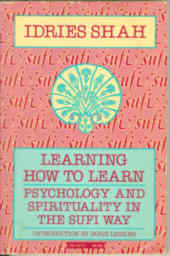
4. Idries Shah's Learning How To Learn
Take warning from the misfortunes of others, so that others need not have to take warning from your own.
— Saadi, Rose Garden, 13th Century~^~
With this quote from Saadi, the author Idries Shah lays down the theme of this book. Using the traditional Sufi method of "question-and-answer", Shah gives us a representative sample of "a hundred conversations" in which he answers questions asked him in a mailbag of over forty thousand letters from all over the world. Many of the answers come in the form of humorous tales, so anyone without a sense of humor is cautioned to stop reading at this point.
[page 21] Not only do humorous tales contain valuable structures for understanding. Their use also helps to weed out people who lack a sense of humor. Sufis hold that people who have not developed or who have suppressed their capacity to enjoy humor are, in this deprived state, also without learning capacity in the Sufi sphere.
When asked "What can you do about imitators?" referring to so-called Sufi groups that have sprung up in the West, Shah answered with this joke:
[page 21] It is said that a small boy was faced with an examination question: 'What is rabies and what can you do about it?' He wrote as his answer: 'Rabies is Jewish priests, and there is nothing you can do about it!'
These Sufis are Sufists, not Sufis, and there is nothing that you can do about it.He tells us that the only way one can do anything about the imitation is to spread information about the real. And he reminds us of the words of Jalaluddin Rumi, who said that "false gold only exists because there is such a thing as the Real . . ." And he offers the "Analogy of the Fur Jacket".
[page 22] In Fihi ma Fihi we find the allegory of the jacket. 'In Winter,' says Rumi, 'you look for a fur garment, but when summer comes you have no time for it, it is an encumbrance. So it is with imitations of real teachings. They keep people warm until time comes when they can be warmed by the Sun. . .'
Many people are baffled by the manner of Sufi teaching — they want the kind of logical coherence they have been taught is important and they do not find it in Sufi teachings. In other words they have a logical way of thinking they cannot get away from — a way of thinking that prevents them from understanding the Sufi way of thinking. They think within a box that the Sufis as a habit think outside of. The Sufis have a metaphor or saying for this: 'However fast you run, or however skillfully, you can't run away from your own feet.' (Page 26) The Sufis see these people looking for institutions with enrollment forms, requirements, objectives, etc., i. e., institutions with some form of visibility. Shah answers people who desire such study institutions:
[page 29] You started your question with the matter of the visibility of study institutions. But the world itself, as well as special attitudes, properly understood, constitute the Sufi school. Remember the words of Maghribi, who said to a monkish individual: 'What you are seeking in your retreat/I see clearly in every road and alleyway.'
In the words of Saadi, if a man full of imagined knowledge and arrogance went to visit the sage Koshyar, he would likely hear, 'You may think yourself wise, but nothing can be put into a full pot.' Learning how to learn, Shah tells us, must begin with emptying oneself of what we think we already know. As Hafiz said, 'You yourself are your own barrier — rise from within it.' (Page 32)
Some questions people ask are really foolish and such questions require a wise man to give an answer that sounds just as foolish, such as when someone asked Nasarudin what his house was basically like.
[page 53] In reply he brought this man a brick, saying: 'It is just a collection of these.' What the fool may do without realizing it is foolish, the wise man may have to do or say in order to show how unthinking the question is.
On the matter of secrecy, the Sufis know the importance of the open secret of the "Purloined Letter" — the letter that everyone was searching for was laid out in the open on the top of the desk where no one bothered to look for it. Shah says, "Many 'secrets' are best kept by the denial of any secret, or by people appearing, as Sufis often do, to be people of simplicity and ordinariness. The advantage of this to the Sufi is that it relieves him of the need to avoid or combat secret-seekers: they regard him as superficial or 'ordinary'." (Page 64)
On the assumption that conditioning is necessary for education, Al-Ghazzali pointed out:
[page 149] But the assumption that all human education, training and development must be done by these methods is as unnecessary as to imagine, say, that because a tomato can be force-ripened that there is no other way for a tomato to ripe.
On the matter of greed, Shah tells us that "Greed is the cause of loss and of the inability to profit from apparent gain." The greedy person who wins a huge lottery soon finds himself besieged by offers to make more money with the result that he is soon worse off than before he won the lottery.
Scholars and Sufis make an excellent contrast, and the nature of a Sufi can refer to anyone who does something without the academic credits that allow scholars to recognize other scholars.
[page 216] Sufis never have followed scholars, though they have frequently equaled or excelled scholars in scholarship.
Sufis can do this because they do not regard scholarship as an end but as something useful: with the advantages and limitations corresponding to this function. Scholars, quite often, do not show signs of understanding that there is anything beyond scholarship, and therefore they are incapacitated — while they remain at this stage — from being able to have a higher objective. One must always have an aspiration higher than one's actual status in order to rise, even in an existing field.
Such scholars, because they cannot move beyond their conception of scholarship, are driven to believe and to practice two things:
1. They tend to make themselves believe that scholarship is of. the highest nature among things and that scholars are a high, even special, product with some kind of property-interest in truth or even a peculiar, perhaps unique, capacity to perceive it. The historical records of scholars in this respect, not to mention their individual experiences in being refuted by events, do not daunt them.
2. Because they know inwardly that this posture of theirs is not true, those of them in the appropriate field are compelled to resort to the study of the work, of their opponents (the Sufis). This is why scholars study the works of Sufis, but Sufis do not have to study the works of scholars, as one Sufi has cogently remarked.Two such scholars compelled to study their opponents come to mind: Henry Bauer, who tried to debunk Velikovsky in his book, Beyond Velikovsky, and Richard De Mille, who tried to debunk Carlos Castaneda in his book, "Don Juan Papers". Neither of these authors have anything original to say, but they sell books that purport to tear down true scholars.
Most modern people in the West make fun of those primitive people who go to their local shamans or witch doctors for help. Shah points out what happens when modern medicine enters the world of those primitive people.
[page 254] In parts of the world it is still customary for someone who has taken a pill given to him under modern medical doctrine to take it to the local magician to have it made 'really potent' by means of a spell.
Modern people would be much less likely to deride these primitives if they realized the power of the spells they themselves are put under a hypnotic spell every time they visit their own modern medical doctor. Richard Bandler told me this story of a man in San Francisco who was told by his doctor that he had an uncurable disease. It was treatable, however, and he would remain healthy as long as he took the medicine the doctor prescribed for him. To impress upon the man (an interesting way of putting it), the doctor told him, "You will have to take this medicine everyday, or you might as well jump off the Golden Gate Bridge." The man remained healthy for years until one day his doctor informed him of a new drug which would cure his disease as soon as he begins taking the new drug. And sure enough, his disease was cured and the man no longer had to take any drug at all for his disease. But a strange thing happened: the man found himself late at night walking around in the direction of the Golden Gate Bridge. He went to Bandler who under hypnosis helped the man recover what the original doctor had told him, "You will have to take this medicine everyday, or you might as well jump off the Golden Gate Bridge." The man had been placed under a potent hypnotic spell by the first doctor unbeknownst to the man or the doctor. Once he was released by the hypnotist of the spell, he resumed a normal life.
People mostly ignore the agency of spiritual beings who intercede in the events of the world. And yet, everyday things happen that cannot be explained any other way. This next story, "Who Guards the Coat", demonstrates the deeper reality that underlies the affairs of human beings. Habib Ajami went to the river for a bath and left his coat lying on the ground.
[page 262] Hasan of Basra was passing and saw it. Thinking that someone should look after this property, he stood guard over it until Habib returned.
Hasan then asked Habib whom he had left looking after the coat.
'In the care' said Habib, 'of him who gave you the task of looking after it!'This next passage deals with the relationship between a teacher and a student. Below is the question followed by the complete answer given to it. After reading this conversation, I penned in the margin the phrase, "Thus a Teacher, So Also a Learner." This encapsulated my understanding that in any teaching-learning situation, the teacher must learn from the learner as much or more as the learner learns from the teacher. A teacher continues to teach willingly and happily only so long as the teacher is learning something from the learners. When the teacher stops learning, the teaching stops. If the teacher goes through the motions of teaching anyway, the learners suffer, unable to learn anything while matching with a teacher who is not learning anything at the same time.
[page 290, 291]
Q: Is it enough to associate with a man of knowledge to acquire some of it? Does the Teacher not need the Student?A : You must remember instances, at least, when you have not said anything and everything in your mind.
Have you ever thought about the people whom you may know who do not discuss with you things which they know, even though such things might be of abiding interest to you?
You may 'know a man well', even meet him every day of your life, 'share his opinions', exchange ideas. At the same time, you may have no conception of his possession of certain knowledge and even of his capacity to pass it on if the conditions are correct.
He may not seem an enigma to you; but he may be as deeply concealed as anything on earth.
The conception that one knows all about a person because of shared experiences and the exchange of confidences is not a true one. It is based upon the misconception that people cannot avoid communicating whatever they are discussing with one another.
Knowledge does not automatically 'brush off', any more than it can be transmitted by words alone; neither is it to be conveyed by training of any ordinary kind.
You cannot, therefore, learn real knowledge merely by associating with someone who has it — especially if you do not even know that it is there, and if you are not focused correctly to learn.
Someone or something has first to impart to you how to perceive the presence of knowledge. Without preparation there can be no teaching.
As to the need of the Teacher, the great teacher Habib Ajami in his Lawaih , says (Essay XXI) 'The Absolute does not stand in need of the relative, except for its manifestation, but the relative needs the Absolute for its very existence.' Similarly, the teacher is to be regarded as more important than the student in the situation of learning.
That is to say, the Teacher is so to be regarded by the learner. The Teacher himself may regard the learner as more important, but that is a matter for the Teacher, and there is no point discussing his attitudes when the conversation is about learning and not teaching.Thus Idries Shah shows us, to paraphrase Habib Ajami quotation above, "The Teacher does not stand in need of the students, except for the manifestation of teaching, but the students need the Teacher for their very existence." If the Teacher is to teach, students are required. If students are to learn how to survive in the world, a Teacher who is also a learner is required. Thus a Teacher, So Also a Learner.
5. Hazrat Inayat Khan's The Alchemy of Happiness
What is alchemy, what does it have to do with happiness, and why is this man with a weird name writing about it? And why did I buy all of his dozen and a half books and read them cover to cover, sometimes, like this one, multiple times?
[page 12] Happiness cannot be bought or sold, nor can you give it to a person who has not got it. Happiness is your own being, your own self, that self that is the most precious thing in life. All religions, all philosophical systems, have in different forms taught man how to find it by the religious path or the mystical way; and all the wise ones have in some form or another given a method by which the individual can find that happiness for which the soul is seeking. Sage and mystics have called this process alchemy.
The alchemists' search for the philosopher's stone that will turn base metals into gold was actually a search for a process that will turn an unhappy person into a happy one, rightly understood. Gold is the color of light. Humankind's search for light has led to a search for gold. Just as those who cannot afford pure gold for their jewelry have accepted base metals covered with a thin layer of gold, so those who seek for the spiritual light have accepted pure gold as a substitute, up until now. Khan summarizes it thus, "It is the longing for true gold that makes man collect the imitation of gold, ignorant that the real gold is within."
[page 15] When the juice of the herb of divine love is poured on the heart, warmed by the love of his fellow-men, then that heart becomes the heart of gold, the heart that expresses what God would express. Man has not seen God, but man has then seen God in man, and when this happens, then verily everything that comes from such a man comes from God Himself.
Hazrat Inayat Khan was a Cambridge educated Sufi who spoke and wrote flawless English, and his writings contain a well of spirituality whose depths have never been plumbed. It is a well to which I returned for nourishment many times on my journey, and I am here returned to this refreshing oasis and pleased to be able to share it with you, dear Readers. If you are thirsty for something in your life, stay awhile and drink of the refreshing draughts of life-giving water that we will dip together in the shade of these stately palms. It is quiet here, sit awhile. Enjoy the peace.
[page 18] In order to find peace one leaves one's environment which troubles one, one wants to get away from people, one wants to sit quietly and rest. But he who is not ready for that peace would not find it even if he went to the caves of the Himalayas, away from the whole.
At the time that I first read the above quote, I had a friend in my life who was planning to leave for a cave in the Himalayas, and I shared that quote with him. I looked at the large one bedroom apartment he was living in with a high ceiling and loft and said, "This could be your Himalayan cave in which you could find peace."
[page 29] Animals and birds all experience peace, but not mankind, for man is the robber of his own peace. . . . Man lives in a continual turmoil, in a restless condition, and in order to seek for peace he seeks war; if this goes on we shall not have peace till every individual begins to seek peace within himself first.
On page 35 he tells the story of a young robber who went to a sage for a blessing. When the sage asked what his occupation was, he said he was an unimportant robber. The sage gave him his blessing and the robber went out and was more successful than before. When the robber returned the sage complimented him on his success and said, "I am not yet satisfied with your work." So the young robber went out and recruited accomplices and was more successful than ever before. Always when he returned the sage suggested that he ought to form a larger group of robbers. Finally the sage suggested that the young man take his small army and push out the Moghul invaders from their country. The young man was on his way to becoming the head of an empire. Had the sage told the young man to get a job in a factory, the Moghuls might have remained indefinitely. One cannot nurture in someone else something that does not have a seed planted already. With that seed one can be a criminal or a king.
When one meets a river in one's path, one can sink to one's doom, swim across, or walk across the top of the water. This is the lesson of the miracle of Christ walking upon the water.
[page 38] Those who are drowned in life's misery are those who cannot get out of it; they are tied down in the depths of life; they cannot get out and they are miserable there; they are the ones who sink. Then there are others who are swimming; they are those who strive through the conflicting conditions of life in order some day to reach the shore. There are, however, others who walk upon life. Theirs is the life which is symbolically expressed in the miracle of Christ walking upon the water. It is like living in the world and not being of the world, touching the world and not being touched by it.
A lot of words have been thrown at the subject: What is art? Is it our attempt to imitate nature? To make something beautiful? Obviously there is no one answer as some art resembles nothing found in nature, and some art is distinctively not beautiful. So, what is art?
[page 44] Some believe art is inferior to nature. But that is not so. Art completes nature; in art there is something divine, for it is God Himself who through man completes the beauty of nature, and this is called art. In other words, art is not only an imitation of nature, art is an improvement upon nature, be it painting, drawing, poetry, or music. But the best of all arts is the art of personality.
When we came into our present body, we brought our individuality, our immortal "I", with us. In this lifetime, this individuality has a personality to develop. "Personality is an improvement on individuality," Khan says. As we are each an evolving individual, our evolution involves the shaping of our personality. And, like anything else we craft with our hands, the final product will testify to our care and skill. People can decide whether to become a painter or a poet, a musician or a sculptor, but everyone has a personality and, like it or not, is engaged in a work of art that all can see in one's personality. Given the choice of a spouse with a beautiful face or a beautiful personality, many choose the former to their lasting regret.
It is the differences we find in people that make the world interesting. And yet we live in a world in which the founding principles of democracy seems to be "everyone is equal".
[page 47] It seems a very kind idea that everybody is equal; but when you tune the piano with all the notes at the same pitch there is no more music. This wrong conception of democracy is like tuning the whole piano to the same note; then the music of the soul becomes dull. It is more an obsession with democracy than democracy itself. Real democracy is raising oneself to a higher ideal . . . of being equal on a higher plane instead of being ignorant.
"When the spirit of aristocracy has evolved sufficiently, it becomes democracy. Then the person thinks, 'I am the equal of any person in the world; there is no person lower than I'. But if a person says, 'There is no person higher than I', that is not democracy." (page 55) Those who noisily proclaim the virtues of democracy to any who will listen should heed the following advice of Khan, "Silence raises the dignity of the wise and hides the stupidity of the foolish." By learning silence, one may come to learn gentleness, that attribute that Khan calls the first step to the art of personality.
[page 48] Gentleness is the greatest power of all. Gentleness is like the power of water: water is purifying, and if there is a rock in the path of a stream of water it will surround the rock; it will not break it, for water is pliable, and so is the one who is gentle. Gentleness in the long run will always purify everything.
Once he was on a train next to a soldier, and trying to find some commonality in their diverse views, Khan told him, "Well, we are brothers!" and when the military officer was severely offended by such a thought, Khan quickly responded, "I forgot. I am your servant, Sir." He tells us, "The foolishness of the man blazed like fire; I put water on it and extinguished it. I did not diminish myself; we are all servants of one another; and it pleased and satisfied him."
The next story (page 50) sounds like a maneuver that the famous hypnotherapist Milton Erickson could have done. A woman came to Khan and complained that every day when her husband comes home from work, they have a quarrel. Khan responded by giving her some candy mints he called "magnetized sweets"; he instructed her to keep them in her mouth the moment her husband came home every day. After ten days she returned for more of those marvelous "magnetized sweets," that had returned harmony to her and her spouse's lives. What did the trick was that she was unable to talk when her husband came home because of the magnetized sweets in her mouth. He was able to get himself back in tune and harmony returned to their lives.
There are those who extol self-effacement as a virtue — they should hear what Khan has to say about that. "When the individual has no personality he can annihilate nothing; there must be something first. If a person started in life with self-effacement he would never become a self. What would he efface? Effacing comes afterwards. First he must be a self, a real self that is worth being." To efface is to rub out, to eliminate one's self, like what Khan did with the soldier when he said, "I am your servant, Sir." To make light of a tense situation often involves self-effacement, as the tenseness stems from one or both parties heavily involved in their selfhood. For that reason humor is an excellent tool for reducing tension and bringing both parties to harmony.
[page 58] What Omar Khayaám has called wine is the amusement one gets by looking at the phenomena of life, which lifts one above the worries of life. One will always find that the most evolved sages can be amused; that is why they are pleasant to meet and to speak to. Worrying comes from self-pity and fear; and fear is made of the clouds of ignorance; the light will dissolve it. Humour is the sign of light; when the light from above touches the mind it tickles the mind, and it is the tickling of mind which produces humour.
Khan tells that fear is like a red lantern that shine on all we see and everything it shines on becomes red and frightens us. It was this insight that led Franklin Delano Roosevelt to proclaim that, "The only thing we have to fear is fear itself." Where does this fear come from?
[page 64] All one says, does, and thinks comes from an impulse; one end of it is in ones' own mind and the other end is in the mind of God.
If you think about it, God is like a communication plenum or nexus where everyone is connected to everyone else. In a football stadium a few years ago, several people reported getting sick and the authorities discovered the problem was some bad soda. They announced over the PA system for people to stop drinking the bad soda. Within minutes three hundred others became sick. An epidemic was on hand apparently. The authorities did a closer inspection on the soda and found out it was wasn't the soda after all. They made that announcement and all the three hundred suddenly began to feel well again. The very process of fear can create the thing feared. We are all interconnected to each other through God, who gave us an individuality, an "I", by means of which we can receive the light to dispel the fear, but it requires an effort on our part. That effort on the part of our "I" in this lifetime we call personality.
One of Matherne's Rules has the cryptic acronym EAT-O-TWIST in it. It stands for Everything Allways Turns Out The Way It's Supposed To, which is easier to say than to explain. Lucky for me, Khan gives me a hand up with the following quote:
[page 67] If one is afraid of someone who may harm one, then one inspires that person to do harm. If one distrusts someone, and thinks that one day that person will deceive one, he will certainly be inspired to do so; but if one has trust, the power of that trust may some day turn even an enemy into a friend.
Back on page 20, Khan said, "In reality the soul is not mortal, but if the soul believes in mortality it is just like being mortal." Attitude is supreme in the realm of the spirit world. Khan likens our attitude to a ticket to a train that we must show at the gate. The conductors don't care about one's occupation or ancestors, they simply say, "Ticket please!" and if we have the ticket we get aboard.
What is a flood but a river that has moved out of its channel? "Attitude," Khan says, "forms a channel for effort, and a right attitude makes a channel for a right effort." (page 70) And that right attitude must extend in time so that one does not lose patience before the desirable condition is brought about. We are like the "string of an instrument tied at both ends; one is the finite and the other the infinite." If we are conscious of the finite, we are tuned to the finite, and we will be weak, limited, and powerless. Having the right attitude Khan likens to being tuned to the infinite, which will pull us through the trials and tribulations of life.
In the world of egos, Khan says, "There is a sword in every hand, both in that of the friend and in that of the enemy. The friend kisses before he strikes; there is no other difference." One might call this the struggle of life, the battle of egos.
[page 90] Struggling with oneself is like singing without an accompaniment. Struggling with others is the definition of war, struggling with oneself is the definition of peace.
Why must life be a struggle? If we do not struggle with the river, we are carried downstream; only if we struggle can we reach the safe harbor of the shore. Khan says that his murshid (teacher) gave him this verse, "When I feel that now I can make peace with my self, it finds time to prepare another attack."
[page 94] That is our condition. We think that our little faults, since they are small, are of no consequence; or we do not even think of them at all. But every little fault is a flag for the little self, for its own dominion. In this way battling makes man the sovereign of the kingdom of God. Very few can realize the great power in battling with and conquering the self.
The psychological process of projection is so pervasive that it escapes our attention most of the time. And yet, every time that some does something that we dislike intensely, it is as if our sovereign becomes angry because it is reminded of the petty suzerain, the little ego in us, who behaves in the same manner in other contexts. I call that the "mirror whammy" and I remember well the first time that I encountered it. During one of my first computer jobs, I was chatting during a break with colleague named Gary. The big show on television at the time was "Lost in Space" and it featured this whiny Dr. Smith. I was telling Gary how much I disliked this man's constant whining. Gary looked at me and said, "Sometimes the one who vexes us is our greatest teacher." I was aghast! How could this miserable creature have anything to teach me, much less be doing something that I was doing out of my awareness. My utter shock was a definite signal to me, one that I could not mistake, that there must be some truth in what Gary told me. I had been paralyzed in mid-sentence by the mirror whammy! After that wake up call I began to observe the mirror whammy at work in myself and others, e.g., one day, Mary Worth in her comic strip expressed the very strong opinion, "I abhor opinionated people!" When I found this next passage by Khan, I recognized that he was talking about the same process.
[page 95] When we blame another person, when we dislike somebody, we overlook the same element in ourselves. There is no soul in the world who can say, 'I have not this in me'. . . . For instance the little child cannot help loving. If a thief comes, or a robber, the child wants to love him and smiles at him. The child is from heaven, the thief is from earth. There is no place for him there; that is why he is no thief to the child.
Where is this "heaven" that Khan talks of?
[page 96] It is in the heart of man. As soon as one begins to consider the feelings of another, one begins to worship God. One might say that it is difficult to please everyone. No doubt it is. It is more difficult still if one has in oneself the inclination to please everyone.
This is a delicate distinction. How does one please everyone and maintain one's equanimity? One doesn't please everyone, is the short answer. But that calls for another story. In this one the murshid with his mureeds (pupils) arrived at a village peasant's home where the peasant had enthusiastically prepared a great sumptuous meal for the travelers. All of the travelers, murshid and mureeds had take a vow of fasting, and yet the murshid sat down and ate with relish. The mureeds thought all kinds of bad thoughts about their teacher.
[page 96] After dinner was over and they went out the pupils asked, 'Did you not forget the vow of fasting?' 'No,' was the murshid's answer, 'I had not forgotten. But I preferred breaking the fast rather than the heart of that man who with all his enthusiasm had prepared the food.' . . . God is love; and the best form of love is to be conscientious regarding the feelings of those with whom we come in contact in everyday life.
There is a wonderful episode in the original Star Trek series in which a huge asteroid-sized ship has the Enterprise star ship in its thrall and has given it an ultimatum to surrender in ten minutes or be blasted into space dust. Spock has checked the data and found no way to escape their fate. The engineer Scotty cannot generate enough thrust to pull free. The doctor McCoy is standing by helpless. They look puzzled when Captain Kirk announces to the alien commander that they have a cache of Corbomite aboard. This Corbomite has the effect of deflecting back any force directed at them and increasing the force. To Kirk, it was a bluff, but its effect was to cause the alien vessel to release the Enterprise. If they had resisted the alien ship, they would have been destroyed by its overwhelming firepower, but instead Kirk used the "Corbomite Maneuver."
[page 102] There is the word of the Bible, 'Resist not evil'. Sometimes evil will come like fire thrown by a person into the mind of another. A fire then starts in that mind which had been without it, and in reaction it too expresses the fire. To resist evil is to send fire in answer to fire; in other words to partake of the fire that comes from another. But by not partaking of it one casts the fire out and the fire falls on the person who threw it.
There was a popular song. You know what a popular song is — it's a song that expresses a condition that is prevalent in society and so many people identify with it and buy copies of it that it takes on the title "popular song". This song I'm thinking of had a line in it, "You left me just when I needed you most." If we understand that "needing" was a process that the partner didn't like, it's easy to see how the separation happened at the peak of the needing. But look at this aspect of the situation: the ending of the relationship was the worst time of all in the relationship. Both of them allowed the needing to become increasingly bad in the present and neither liked it. Khan reminds us that our present will be our future, what we do in the present will be increased in the future. Unless we find a way to eliminate such processes as "needing" and harmonize our life in the present, the future will be even bleaker for us than the present. To "need" someone is wish to have the other person provide for us what we are not willing to provide for ourselves. To make our end the best experience of all we must take a step in the right direction each of moment in our present.
[page 125] The most essential thing, therefore, is to harmonize in such a way that by centralizing our thought within ourselves, by finding our real self, the future may become harmonized. There is a prayer in the East: 'We thank Thee, God, for all we have experienced; the only thing we ask is make our end the best experience of all."
When I studied NLP back in the 1970s I learned a process for removing phobias from people and ourselves. It was simple quick and easy and I enjoyed practicing my new process. Then one day, I heard Richard Bandler say that it was possible to run the process backwards and install a phobia. As I puzzled about how to do such a thing, he told me, "But there are experts out there all over installing phobias all the time, who don't even know they're doing it. Now you have the tools to notice when they do it." That just heaped bafflement on top of puzzlement for me, but slowly over time, I became aware of the phobia-mongers as I came to call them. They are people who tell you things in such a way that if you felt happy before, you no longer feel happy afterwards, and you can carry this unhappiness around with you for weeks or years. In this next passage Khan calls them "robbers".
[page 159] The robbers who go into other people's houses to steal are few in number, but there are many robbers of happiness, and they seldom know that they are robbing others of their happiness. The robber of happiness is more foolish than the robbers who go after wealth, for when they are successful they at least get something; but the robber of happiness never gets anything. He only gives sorrow to others.
This next story is about a robber and about a man who learned about trust. Khan says that an important step on the spiritual path is to learn to trust and trust really deeply.
[page 164] There is a story of a great Sufi who in his early life was a robber. Once there was a man traveling through the desert in a caravan and he had a purse full of coins. He wanted to entrust them to someone because he heard that robbers were about.
He looked around and some way off he saw a tent, and a man was sitting there, a most distinguished looking man. So he said, "Will you please keep this purse, for I am afraid that if the robbers come they will take it." The man said, "Give it to me, I will keep it." When the traveler came back to the caravan he found that robbers had come and taken all the money of his fellow-travelers, and he thanked God that he had given his purse to someone to keep. But when he returned to that tent he saw all the robbers sitting there and among them was this most dignified man dividing the spoils. He realized that this was the chief of the robbers and thought, "I was more foolish than all the others, for I gave my money to a thief! Who can be more foolish than that!" And he was frightened and backed away. But as soon as the thief saw him he called to him and said, "Why are you going, why did you come here?"
He said, "I came here to get my purse back, but I found that I had given it to the very band from which I wanted to protect it". The chief said, "You gave me your purse, is it not so? You entrusted it to me, and it was not stolen from you. Did you not trust me? How can you expect me to take it from you? Here is your purse, take it." This act of trustworthiness impressed the robbers so much that they followed the example of their chief. They gave up robbery. It moved them to the depths of their hearts to feel what trust means. And in his later days this chief accomplished great spiritual work. This shows that by distrusting people we perhaps avoid a little loss, but the distrust that we have sown in our heart is a still greater loss.
When I was young I thought like a child and acted like a child. I was sure of myself and my opinions and ready to share them with anyone who would listen. As I grew older I learned and became a little wiser with the effect that I became less sure of myself and less likely to afflict my opinions on others. I had learned that my opinions could change with the advent of new knowledge and all I could really say is, "This is the way I feel about the matter, up until now." Every moment brings me the possibility of a change of opinion that can wash away a lifetime of wrongly held opinions. To complete St. Paul's thought, "When I grew up, I put away my childish things."
[page 190] The foolish man is ready to teach you without a moment's thought, ready to correct you, ready to judge you, ready to form an opinion about you. But the wiser a man is the more diffident he is to form an opinion about you, to judge you, to correct you. What does this mean? It means that whatever man possesses in a small degree he thinks he has much of, but when he possesses more he begins to feel the need and the desire for perfection, for completion.
I remember a story about a learned professor from a Western university who went to China and expressed an interest in learning about the culture of the region. He was invited to a tea ceremony by an Eastern sage. The old Chinese man poured the tea into the professor's cup and when it reached the brim, he kept pouring, pouring, the tea filled the saucer, and he kept pouring. The hot tea spilled from the saucer and scalded the professor's hand and he yelled, "Stop! Can't you see the cup's full already?" The sage looked at him and said, "Yes. One cannot pour more tea into an already full cup, can one?" The professor had brought his thoughts and his opinions like a full tea cup into the meeting with the sage and there was no room for the learning for which he claimed to be searching. He needed the empty cup of a beginner, of a child, to have a chance to receive some new tea from the sage. Maybe the professor learned a lesson. Maybe he didn't. Life gives us lessons, but we must do the homework.
There is a flip side to the already full cup, and that is the cup that can never be filled.
[page 190, 191] There is an ancient story that a king wanted to grant a dervish his desire. And the desire of the dervish was to fill his cup with gold coins. The king thought that it would be the easiest thing in the world to fill the cup of the dervish; but when they tried to fill it it proved to be a magic cup: it would not fill. The more money was poured into it, the emptier it became. And the king was very disappointed and disheartened at the thought that this cup could not be filled. The dervish said, 'Your Majesty, if you cannot fill my cup you only have to say so, and I shall take my cup back. I am a dervish, and I will go, and I will only think that you have not kept your word.' The sovereign, with every good intention, with all his generosity, and with all his treasures could not fill that cup. And he asked, 'Dervish, tell me what secret you have in this cup; it does not seem to be natural. There is some magic about it; tell me what is its secret.' The dervish answered, 'Yes, your Majesty, what you have found out is true; it is a magic cup. But it is the cup of every heart. It is the heart of man, which is never content. Fill it with whatever you may, with wealth, with attention, with love, with knowledge, and all there is. It will never fill, for it is not meant to be filled. Not knowing this secret of life man goes on in pursuit of every object, or any object he has before him, continually. And the more he gets the more he wants, and the cup of his desire is never filled.'
The heart of man is the cup that can never be filled. The Western professor in the first cup story had closed off his heart — he had imagined that he knew the right way to learn new things — the oriental sage's teachings could find no place in his heart. Thus the tea overflowed because of the blocked off heart. The overflowing teacup gave the professor an image in his external world of his internal world, the blockage in his heart, and the effect it would have on his ability to learn anything truly new. What had the power to block up, to fill his heart was not truth, but fact — which is but the shadow of truth.
[page 193] There is a great difference between fact and truth. Fact is a shadow of truth. Fact is intelligible; but truth is beyond comprehension, for truth is unlimited.
Facts are based on words, and words that describe facts are subject to interpretation and disagreement. To some the words of the Bible describe facts, and these facts some people interpret differently than others and this leads to disputes between religions. Words are maps, and Alfred O. Korzybski said that "the map is not the territory, it cannot represent all the territory." Truth cannot be contained by words. The fish of truth will always slip through the seine net of words. Hazrat Inayat Khan, a Sufi, tells us how Sufism holds words.
[page 197] Sufism avoids words, words from which differences and distinctions arise. Words can never express the truth fully. Words promote argument. All the differences between religions are differences of words.
A famous bandleader of the 20th Century was Lawrence Welk. On his weekly television show, he started off every musical number of his orchestra with these words, "Uh ONE and Uh two!" A strong accent followed by a weak accent. Power without knowledge is dangerous; knowledge without power is useless. How does one avoid both of these dead ends?
[page 203] What one should do is this: if one takes one step in power, one should take another step in knowledge, and then there will be balance, then one's life becomes rhythmic. Just like the accent in musical two-four time: there is the strong accent, and then comes a weak accent. Now there is power, then there is thinking.
One develops one day in knowledge, one day in power, and from this rhythmic pacing from day to day, one comes to know one's object in life and becomes steadfast its attainment. Only then does one become dependable. People who are undependable are like a branch that moves in the slightest breeze. Khan says, "Even the birds are frightened to sit upon a moving branch." (page 205) An example of an undependable or moving branch is a mass belief. In one year the Czar of Russia was held in high esteem, in the next year he was executed and all symbols of his reigns were trod underfoot. It is always a short step from mass belief to mass mischief.
Mass belief is the first step in belief according to Khan. It is a moving branch. The next step is the belief in authority. Another moving branch. The next higher step is the belief in reason. "This, however, also has its limitation. Since reason is the slave of the mind, reason is as changeable as the weather; reason obeys our impressions." Also a moving branch. The fourth belief is the highest belief - that belief which is conviction so that nothing can ever change it.
[page 212] When there is no conviction there is nothing. The secret of healing, the mystery of evolving, the power of all attainment, and the way to spiritual realization, all come from strengthening of that belief which is a conviction, so that nothing can ever change it.
Have you ever tried to light a fire in a forest using a flint? No matter how many or how large a spark you create the tinder never seems to catch fire for more than an instant. But if you create a sizable spark and blow as hard as you can, and keep blowing soon you will have a warm and blazing fire. Conviction is like that nourishing breath when it is poured upon an idea.
[page 234] And if he will keep this idea before him and blow on the spark of mastery by constant contemplation, then one day that flame will rise and his life will become clear and his power will indeed be great.
I didn't grow up with any models for making business deals. My parents were blue collar workers and never got into any retailing business. As a result I was always looking for something free, some way to get more out of a deal than the other person did. I was missing an essential point, the essential point of a good business deal — both parties to the deal must profit. In Khan's words, it is in accordance with the law of reciprocity that each must give more than they take from any deal. Does this seem impractical to you? If it does, it is because of a certain danger that may lurk within you.
[page 238] The danger in this law is that a person may value most what he himself does and may diminish the value of what is done by another. But the one who gives more than he takes is progressing to the next grade.
We are taught a standard of cleanliness and hygiene by parents, teachers, and friends and we strive to follow those guidelines in our lives. Wouldn't it be nice to have a similar standard of inner purity so that we may recognize truth when we encounter it? Khan gives us one.
[page 243] There is, however, a standard of inner purity of which the principle is that anything in speech or action which causes fear, brings confusion, or gives a tendency to deception, extinguishes that little spark in the heart, the spark of trueness which only shines when the life is natural and pure.
An obsessive concern for external cleanness is the projection of or sign of inner uncleanness, and the end result is illness.
[page 244] For all harsh judgments and bitterness towards others are like poison; to feel them is exactly the same as absorbing poison in the blood: the result must be disease. First disease in the inner life only, but in time the disease breaks out in the physical life; and these are illnesses which cannot be cured. External cleanliness does not have much effect upon the inner purity; but inner uncleanness causes disease both inwardly and outwardly.
About halfway through this review my wife and copy editor, Del, read what I'd written and said, "I really like how you've strung these together." "Yes," I said, "like a string of pearls." A string of pearls in which I merely selected the pearls and provided the string. And now I'm ready to complete the journey by attaching the end to the beginning of the string of pearls. Life is like that string of pearls, eventually it closes the circle and attaches the end to the beginning.
[page 259] Rumi gives a good explanation of this in his Masnavi where he says, 'What is it in the reed flute that appeals to your soul, that goes through you, pierces the heart?' And the answer is: it is the crying of the flute, and the reason of its crying is that it once belonged to a plant from which it was cut apart. Holes were made in its heart. It longs to be reunited with its source, with its origin. In another place in his book Rumi says, 'So it is with everyone who has left his original country for a long time; he may roam about and feel very pleased with what he sees, but there will come a moment when a strong yearning rises in his heart for the place where he was born.'
Rumi has just described my life. I left my native state of Louisiana and roamed about from coast to coast and was pleased with everything I saw. But there came a moment when, like that reed, I felt a crying need to return to my native soil, to re-attach myself to the earth from which I sprouted. Where are you in your journey, dear Reader? Are you still roaming about, pleased with all you see? Have you started thinking about a return home? Are you the artist who paints the plan you have laid out in your mind? Or are you the artist who takes suggestions from the painting as you go on painting? Listen to the music of the flute that is your individuality as you string the pearls of your life together. These are the jewels that no matter where you carry them with you in this world will accompany you into the next world in freedom and light.
~~~~~~~~~~~~~~~~~~~~~~~~~~~~~~~~~~~~~~~~~~~~~~~~~~~~~~~~~~~~~~
Movies we watched this past month:
Notes about our movies: Many of the movies we watch are foreign movies with subtitles. After years of watching movies in foreign languages, Arabic, French, Swedish, German, British English, Russian, Spanish, Italian, Japanese, Chinese, and many other languages, sometimes two or three languages in the same movie, the subtitles have disappeared for us. If the movie is dubbed in English we go for the subtitles instead because we enjoy the live action and sounds of the real voices so much more than the dubbed. If you wonder where we get all these foreign movies from, the answer is simple: NetFlix. For a fixed price a month they mail us DVD movies from our on-line Queue, we watch them, pop them into a pre-paid mailer, and the postman effectively replaces all our gas-consuming and time-consuming trips to Blockbuster. To sign up for NetFlix, simply go to http://www.netflix.com/ and start adding all your requests for movies into your personal queue. If you've seen some in these movie blurbs, simply copy the name, click open your queue, and paste the name in the Search box on NetFlix and Select Add. Buy some popcorn and you're ready to Go to the Movies, 21st Century Style. You get to see your movies as the Director created them — NOT-edited for TV, in full-screen width, your own choice of subtitles, and all of the original dialogue. Often you get the Director's Cut Edition which adds back excellent footage that was cut from the theater releases.Hits (Watch as soon as you can. A Don't Miss Hit is one you might otherwise ignore.):
P. S. Look for HD/DVD format movies which are now available from NetFlix.“The Last Legion” (2007) shows us the sword of the one destined to rule and the magician who lived to tell the tale. A gripping tale at many levels.
“Oliver Twist” (1948) A dark tale in B&W about a young kid orphaned at birth and dependent on the kindness of strangers all his life. A very young Alec Guinness in a masterful disguise and performance as Fagin and an even younger Anthony Newley as the Artful Dodger. Another David Lean masterpiece. He wrote the screenplay and directed.
“Foyle’s War: White Feather” (2003) We are backfitting the early Foyle’s war episodes after catching the last one. Wonderful period pieces in WWII England. The Dunkirk evacuation seen from a seashore village figures in this one about Nazi sympathizers in England expecting invasion any day after Belgium falls. Best episode so far. A DON’T MISS HIT !
“Mrs Lambert Remembers” (1991) and forgets a lot while she drives off with 9 yr-old grandson Jared, one step ahead of social services. Can she ever return home and keep her promise to him that he will never be alone again? Ellen Burstyn & Walter Matthau star.
“He Knew He Was Right” (2004) Anthony Trollop’s novels seem filled with nice ladies, and trollops, too, as this one is. The husband is sent into madness by the seemingly untoward behavior to his wife of her godfather, a notorious roué and womanizer. Things go downhill for his marriage while his wife’s sister plus best his friend Hugh and his sisters contemplate marriage. A DON’T MISS HIT !
“Expelled: No Intelligence Allowed” (2008) A very funny and insightful look at the world of intelligent design by Ben Stein. This man is funny when he is just walking down a street. He drags us around as he documents the story of scientists kicked out of working and teaching positions because they simply asked if intelligent design were a possibility which an intelligent scientist ought to consider. Apparently that is not an intelligent thing to do if you wish to keep your job. Ever wonder if the world of science were run by atheists? This movie gets rid of the “if”. A DON’T MISS HIT !
“The Man Who Never Was” (1995) begins with this poem: “Last night I dreamed a deadly dream/Beyond the Isle of Skye/I saw a dead man win a fight/And that dead man was I, I think.” A true story of how a dead man helped the Allies invade Sicily in WWII. Clifton Webb stars in this “mission impossible” thriller. A DON’T MISS HIT
"Foyle's War: Set 1: Disc 3: A Lesson in Murder (2003)" D. C. Foyle closes a confession faster than Brenda Leigh Johnson in this one, but there are many loose ends to be tied up before this one is over.
“Tess” (1980) when her rummy father discovers their name is d’Urberville, a noble family name, Tess’s life changed from a happy farm girl to the extremes of manual labor alternated with elegant life. Hardy gives us a strong dose of the dual-standard of behavior for men and women in his time. Tess’s life is ruined after a forced indiscretion and her husband rejects her after owning up to his own indiscretions before marriage. Another man who “knew he was right” but subsequently was proved very wrong. A Dr. Zhivago-type epic.
“Serendipity” (2001) with John Cusack as the Prince of Serendip and Kate Beckinsale as his fated lover. They meet, fall in like, but leave it to fate to get them back together as they pursue their respective married engagements to other people. Can Fate survive such a challenge and ever get them back together? A DON’T MISS HIT!
“Iron Man” (2008) Robert Downey, Jr. has grown up and overcome his demons in this fine movie where he stars as an Iron Man with a soft heart. This comic book movie is not joke. A DON’T MISS HIT ! ! !
“Good Luck Chuck” (2007) Hilariously funny and insightful. Chuck has every young man’s dream: serial sex with beautiful girls volunteering, lining up, just to have sex with him, one time! But the emptiness of such relationships leaves him searching for a way out when the Penguin Lady stumbles upon him. Can love conquer sex? Put the kids to bed early and watch out for the triple feature. A DON’T MISS HIT ! ! !
“Just Like Heaven” (2005) is what the floral garden looked like to the hassled intern who dreamed of it during a catnap while working 29 hours straight in a hospital. What her body needed was a three months’ rest and someone to love. Her karma ran into a truckma, and she got both. A spiritual love story touchingly portrayed by Reese Witherspoon and Mark Ruffalo. A best ever for both of them. This will warm your heart and enlighten your knowledge of the spiritual realities of human life which transcends the world of medicine. A DON’T MISS HIT ! ! ! ! !
"Foyle's War: Set 2: Disc 1 Fifty Ships" (2003) The key to solving the mystery was not the key, but the key fob. Another enjoyable evening in the south of England in the early days of WWII with Chris and Sam.
“Made of Honor” (2008) Patrick Dempsey juggles his Maid of Honor duties and tosses the Groom for a loop in the indoor Scottish Games.
“Moliere” (2007) a French version of “Shakespeare in Love” in which Moliere must adopt a disguise as a priest and chooses the name “Tartuffe” which leads to the kind of humorous insanity which results in his famous comedic triumph. A DON’T MISS HIT ! ! !
“Before the Rains” (2007) in the time of Raj, a plantation owner builds a road to new spices and spices his life with his native housekeeper. When absent spouses discover the ruse, all their good intentions cannot build a road to happiness before the rains come.
“Priceless” (2006) A “Pretty Girl” in reverse. Audrey Tautou wants to . . . She would like to find . . . And Jean, he wants to . . . he would like to find . . . and what they find is priceless. As is this movie! A DON’T MISS HIT ! ! ! ! !
“Transsiberian” (2008) A gripping mystery plays itself as two Americans ride the train the frozen Siberian taiga expanse. Russians say, “You can get ahead in the world by lying, but you cannot go back.” Na Zdorovie!
“Incident in a Small Town” (1994) set in 1953 in which a man returns from WWII to his wife who didn’t want him and his 12 yr old son who thought he was dead. Harry Morgan as the mother’s estranged father (a judge); Walter Matthau as his law partner. They become ensnared in a rape-murder trial. Marvelous period piece, wonderful drama.
“The Family Man” (2000) Nicholas Cage and Tea Leoni go domestic with each other in this one, showing why you can’t have a high-powered career and a real family at the same time.
“Then She Found Me” (2007) Helen Hunt is found by birth mother Bette Midler and the plot thickheadens on four parts with Broderick and Firth as the estranged husband and new boyfriend. Midler stars and Hunt founders, but love wins out in the end.
"Foyle's War: Set 1: Disc 3: A Lesson in Murder (2003)" D. C. Foyle closes a confession faster than Brenda Leigh Johnson in this one, but there are many loose ends to be tied up before this one is over.Misses (Avoid At All Costs): We attempted to watch these this month, but didn't make it all the way through on most of them. Awhile back when three AAAC horrors hit us in one night, I decided to add a sub-category to "Avoid at All Costs", namely, A DVD STOMPER. These are movies so bad, you don't want anyone else to get stuck watching them, so you want to stomp on the disks. That way, if everyone else who gets burnt by the movie does the same, soon no copies of the awful movie will be extant and the world will be better off.
“Cocaleros” (2007) was a movie about an election on the night of an election we chose not to vote for or against the winner thereby making him not our President, as the people of Bolivia ought to have done as well. Now they are stuck with a left-wing radical as their President. Sound familiar?
“Confessions of a Superhero” (2007) A wannabe movie about wannabe stars which asks the question, “Was Superman the son of Sandy Dennis?” or was his filial claim as bogus as his uniform?
“The Hard Easy” (2005) is hard to like and easy to hate. Nothing that a good script, good music, good acting and a completely different story couldn’t solve. Crooks bungle a jewelry heist and kill each other off while destroying the movie.Your call on these — your taste in movies may differ, but I liked them:
“Plenty” (1985) of Nothing. Disjointed script leaps from one part of Streep’s life to another. Great period piece about WWII, great actors — lousy script & direction.
“Eagle vs. Shark” (2007) this quirky comedy pits two quirky people against each other — girl selects a boy she’s interested in, and he’s mostly interested in revenge against a guy who bullied him years earlier. In the fight, the bully shows up crippled in a wheelchair and apologizes for mistreating the “Eagle”, but the Eagle beats him with sticks, knocks him out of the wheelchair, only to have the bully beat him up, again. The Shark girl waits for the Eagle to come back to her and he does.
“Coral Reef Adventure” (2003) originally filmed for IMAX theaters, and now on BluRay, our first every HD BluRay DVD at home. Spectacular film footage and less than spectacular preachy science narration. If you turn the sound off during the drab scenes of dying reefs, the show becomes, on BluRay, a DON’T MISS HIT. Other than that it remains, on the basis of depressingly flawable scientific logic driven by a pessimistic view of life, a Your Call.
“Catch and Release” (2007) is a strange romantic comedy about a man who dies a day before his wedding, leaving his fiancee who caught him, having to release him, never appearing in the movie, not even in flashback. Meanwhile a lot of other catching and releasing goes on, and the movie trudges to an uncertain ending.
“Run, Fat Boy, Run” (2007) This movie begins with running, the hero running away before his wedding to his pregnant fiancee starts, and ends with running, the hero running in a marathon to win back the mother of his son.
“My Best Friend’s Wife” (2001) — an update of 1969's “Bob & Carol & Ted & Alice” in which two bored couples see concupiscence as a cure-all, until it happens. Can friendship and marriage survive planned infidelity?
“Seraphim Falls” (2007) leftover battle from unCivil War between Peirce Brosnan and Liam Neeson. Can forgiveness be found short of death? Inquiring minds have to wait till the end of the movie to find out.
== == == == == == == == == == == == == == == == == == == == == ==
4. CAJUN STORY:
== == == == == == == == == == == == == == == == == == == == == ==Our gardening friend Cindy gave us the raw material for this Cajun joke.Boudreaux and Broussard went fishing in Lake Cataouatche, hearing that big specks were biting, anxious to get their lines into the water and start reeling in the fish. Speeding along the shore of the shallow lake, their outboard motor hit a stump in about ten feet of water, popped off the transom, and fell into the ten feet of water.
Broussard decided that he go to the bottom and bring up the motor. He dove into the water right away, and Boudreaux watched through the clear water as his friend reached the motor. He saw Broussard pulling frantically on the starter rope, apparently deciding the best way to get the heavy motor up to the boat was to start the motor and let it power itself to the top of the water.
Boudreaux, looking down into the water watching his friend pulling over and overa again on the starter rope, shook his head. He mumbled aloud, “Mais, dat dumb Broussard — he should know better dan dat. De outboard motor won’t start dat way. Ah got to told him everyt’ing!”
Finally, Boudreaux leaned over the side of the boat, banged on the gunwales to get his friends attention, put his hands around his mouth, and shouted aloud in frustration, “You got to choke it first! CHOKE IT!”
== == == == == == == == == == == == == == == == == == == == == ==
5. RECIPE of the MONTH for December, 2008 from Bobby Jeaux’s Kitchen:
(click links to see photo of ingredients, preparation steps)
= = = = = = = = = = = = = = = = = = = = = =Simple SyrupBackground on Simple Syrup :
Consisting only of sugar and water, what could be more simple than Simple Syrup? But it must appear daunting to many people or else: Why would we find it for sale in Liquor stores and Specialty shops? My first introduction to the making of the convenient liquor was in 1956 when I worked during the summer at a Dairy Queen. Simple syrup was used as the base for all of our fruit toppings: pineapple, strawberry, etc. Do you recall the tall cylindrical metal containers which milk was delivered in bulk, perhaps you remember the six-foot tall milk dispensing machines, and actually saw someone remove an empty container and install a full one? Those were the size containers which our ice cream mix was delivered in, and we kept a couple of empty ones to make Simple Syrup in. When I first saw it being made, I was incredulous. The owner filled the can with granulated sugar, to the very top, and then began pouring steaming water into it. Gallon after gallon of water disappeared into the full container, as much water as the can itself contained. All the sugar went into solution. It seemed a miracle to me. And it may seem the same to you when you read the instructions below.
Ingredients
1 pint, quart, or liter of boiling water
1 pint, quart or liter of granulated sugar
Preparation
To make one pint, quart, liter or gallon of Simple Syrup, use an equivalent amount of sugar and water.
Bring water barely to boil.
Cooking Instructions
Place sugar in slightly larger container to prevent spillage.
Bring water barely to boil.
Slowly pour water into sugar. A slight bit of stirring at the end will speed the process and help all the sugar to dissolve. The result is shown here. Note a slightly larger volume of Simple Syrup than the amount of water used. Allow Simple Syrup to cool and place in refrigerator till needed. Will keep indefinitely, much as any jam or preserve.
Serving Suggestion
Use in Mint Juleps, in Ice Tea, or any cold drinks that you wish to sweeten, especially if they are already cold. The sugar will stay in solution and blend perfectly with the cold drinks. Add to fresh fruits to make a topping for ice cream sundaes, etc. We added citrus acid to our fruit toppings as a preservative and you can do the same by squeezing a tsp of lemon juice when making a topping you wish to keep for a week or so.
Other options
I keep a pint size of Simple Syrup handy in my fridge and use it for many things. When my fig preserves came out too dry one year, a couple of tablespoons of Simple Syrup corrected the situation without thinning out the syrup or flavor. It is truly a handy ingredient to have around in numerous situations. And so easy to make, there's no need to purchase some at a premium price, plus if you run out, all you need is water, sugar, heat, and a little time to replenish your stock.
== == == == == == == == == == == == == == == == == == == == == ==
6. POETRY by BOBBY from Future Book of Pirate Poems:
= = = = = = = = = = = = = = = = = = = = = =The Frigate Grey Ghost
Where’er the wind roars —
cross Maldives to Seychelles
round Cape Horn to the blustery Azores,
From the Antipodes to the frigid Poles
cross twenty-four time zones,
This is the ship, the Frigate Grey Ghost,
Which scatters men’s bones.With mugs of Madeira or Portuguese Rum
Or mugs of warm rain in the scuttlebutt room —
From Maine to the Barbary Coast,
Let all Pirates now join in a toast:
Refrain:From out of the mists, from out of the fog,
“There be Ships most elusive,
but none of them close —
For the Frigate we sail
be the Mighty Grey Ghost!”
From out of God knows where
Comes the Frigate Grey Ghost
and its Captain Robespierre.At the helm of the Ghost
Steers its Captain who boasts:“With me Letters of Marque
We sail over the shallows and over the depths
And escape from the gallows
If ever we’re caught!
“So, raise the top-gallants — Me Hearties! — the mains and the royals!
Lay into the wind till the seawater boils,
Plot me a path straightway to the coast.
There’s a ship to be boarded for profit and fun,
And no one outruns the Frigate Grey Ghost!“Raise the black flag of Camellia and Rose
— The Red of the Blood
and the Black of the Night —
That tops our ship’s mast wherever she goes!“So pull out the wedges and run out the guns —
We do battle with many and win over most
For no ship can escape the Frigate Grey Ghost.”Refrain:
“There be Ships most elusive,
but none of them close —
For the Frigate we sail
be the Mighty Grey Ghost!”
== == == == == == == == == == == == == == == == == == == == == ==
7. REVIEWS and ARTICLES for December:
= = = = = = = = = = = = = = = = = = = = = =And for my Good Readers, here’s the new reviews and articles for this month. The ARJ2 ones are new additions to the top of A Reader’s Journal, Volume 2, Chronological List, and the ART ones to A Reader’s Treasury.
1.) ARJ2: The Journal of Henry David Thoreau, Vol. 12, March 1859 to November 1859 by Henry David Thoreau

As I opened the twelfth journal of Henry David Thoreau's fourteen volume set, suddenly made aware that my journey through his journals was coming to a close. I developed a deliberate plan to read the remaining three volumes as close as possible to the days on which he wrote them. By doing so, I would be able to compare the differences in climate between New England, where Thoreau was abroad walking through his native Concord, and my native New Orleans, where I would be, on most days, sitting comfortably on my swing as I read from his journal. As you read this review, I invite you to accompany Henry and me on an abbreviated journey through 1859, to take time to consider his thoughts, my thoughts, and to gaze upon photos of the flora and fauna he observed along his way, thanks to the wonders of the Internet today which allows one to find photos by merely typing in the Latin-name of a plant or animal.
This next passage prompts me to modify my dictum Thus a Teacher, So Also a Learner to read "Thus a Reader, So Also a Hearer!" Thoreau is referring to the process of reading aloud to an audience, and how important the job of hearing is in the transference of information and intelligence.
[page 9, 10] March 3. Talk about reading! — a good reader! It depends on how he is heard. There may be elocution and pronunciation (recitation, say) to satiety, but there can be no good reading unless there is good hearing also. It takes two at least for this game, as for love, and they must cooperate. The lecturer will read best those parts of his lecture which are best heard. Sometimes, it is true, the faith and spirits of the reader may run a little ahead and draw after the good hearing, and at other times the good hearing runs ahead and draws on the good reading. The reader and the hearer are a team not to be harnessed tandem [RJM: one horse in front of the other], the poor wheel horse supporting the burden of the shafts, while the leader runs pretty much at will, while the lecture lies passive in the painted curricle [RJM: two-wheeled carriage for two horses] behind.
Thoreau gives us the image of the lecture as written on the page at the podium as lying passive while the lecture reader and the hearers in the audience must share the load. Neither one should have to carry all the load of a wheel horse, the rear horse in a tandem harness, nor be allowed to run at will like the lead horse. He argues for a side-by-side harnessing of the two horses. But he has another metaphor for us involving unloading of barrels of molasses at a depot and rolling them up an incline. The lecturer has brought his sweets to the podium and deserves a helping hand to finish his delivery, i.e., a good hearing by the audience.
[page 10] March 3. I saw some men unloading molasses-hogsheads from a truck at a depot the other day, rolling them up an inclined plane. The truckman stood behind and shoved, after putting a couple of ropes one round each end of the hogshead, while two men standing in the depot steadily pulled at the ropes. The first man was the lecturer, the last was the audience. It is the duty of the lecturer to team his hogshead of sweets to the depot, or Lyceum, place the horse [RJM: a frame or ramp], arrange the ropes, and shove; and it is the duty of the audience to take hold of the ropes and pull with all their might. The lecturer who tries to read his essay without being abetted by a good hearing is in the predicament of a teamster who is engaged in the Sisyphean labor of rolling a molasses-hogshead up an inclined plane alone, while the freight-master and his men stand indifferent with their hands in their pockets. I have seen many such a hogshead which had rolled off the [ramp] and gone to smash, with all its sweets wasted on the ground between the truckman and the freight-house, — and the freight-masters thought that the loss was not theirs.
But he is not done with his metaphors, finishing with a flourish of drawing water out of the well and cider through a straw. All of these metaphors I have witnessed being played out at my club during various kinds of lectures over the years, from the long push up the incline by the lecturer to an audience not interested in the topic, to spontaneous overflowing of a lecture whose subject was in a bubbling ferment.
[page 10, 11] March 3. Read well! Did you ever know a full well that did not yield of itsrefreshing waters to those who put their hands to the windlass or the well-sweep? Did you ever suck cider through a straw? Did you ever know the cider to push out of the straw when you were not sucking, — unless it chanced to be in a complete ferment? An audience will draw out of a lecture, or enable a lecturer to read, only such parts of his lecture as they like. A lecture is like a barrel half full of some palatable liquor. You may tap it at various levels, in the sweet liquor or in the froth or in fixed air above. If it is pronounced good, it is partly to the credit of the hearers; if bad, it is partly their fault. Sometimes a lazy audience refuses to cooperate and pull on the ropes with a will, simply because the hogshead is full and therefore heavy, when if it were empty, or had only a little sugar adhering to it, they would whisk it up the slope in a jiffy. The lecturer, therefore, desires of his audience a long pull, a strong pull, and all pull together.
On March 4, 2008 my wife and I were in our mountain cabin which had been covered by several inches of snow the previous evening. The next morning I was sitting in front of a roaring fire in the hearth reading the passage below. It didn't rain that day, stayed clear, not keeping us from meeting some friends in town for lunch, who were delayed behind a snowplow. Like Thoreau's snow this spring snow of Arkansas was blindingly white and melted quite rapidly.
[page 11] March 4. Began to snow last evening, and it is now (early in the morning) about a foot deep, and raining.
To Thoreau the perfect New England sound is the cawing of the crow. This is typical of him, to choose the most mundane of things and raise it as an epitome.
[page 11, 12] March 4. We heard only the jay screaming in the distance and the cawing of a crow.
What a perfectly New England sound is this voice of the crow! If you stand perfectly still anywhere in the outskirts of the town and listen, stilling the almost incessant hum of your own personal factory, this is perhaps the sound which you will be most sure to hear rising above all sounds of human industry and leading your thoughts to some far bay in the woods where the crow is venting his disgust. This bird sees the white man come and the Indian withdraw, but it withdraws not. Its untamed voice is still heard above the tinkling of the forge. It sees a race pass away, but it passes away not. It remains to remind us of aboriginal nature.Near Hosmer Spring, he finds the leaves of some Ranunculus repens showing, and later ponders on the mystery of life in plants. He claims that most scientists view and explain only the surface of things while the flowing out processes of the plants are ignored. Particularly bitter is his comparison of science to a grub worm who destroys what it invades.
[page 23] March 7. The mystery of the life of plants is kindred with that of our own lives, and the physiologist must not presume to explain their growth according to mechanical laws, or as he might explain some machinery of his own making. We must not expect to probe with our fingers the sanctuary of any life, whether animal or vegetable. If we do, we shall discover nothing but surface still. The ultimate expression or fruit of any created thing is a fine effluence which only the most ingenuous worshiper perceives at a reverent distance from its surface even. The cause and the effect are equally evanescent and intangible, and the. former must be investigated in the same spirit and with the same reverence with which the latter is perceived. Science is often like the grub which, though it may have nestled in the germ of a fruit, has merely blighted or consumed it and never truly tasted it. Only that intellect makes any progress toward conceiving of the essence which at the same time perceives the effluence.
In this next passage, Thoreau and a friend are sitting on Money-Diggers' Hill, which I imagine must refer to a prominent site where the legendary pirate, Captain Kid, was reputed to have buried a large treasure of gold. What they found was, interestingly, a common type of goldenrod.
[page 33] March 10. We sit in the sun on the side of Money-Diggers' Hill, amid the crimson low blueberry shoots and withered Andropogon scoparius and the still erect Solidago arguta (var. the common) and the tall stubble thickly hung with fresh gleaming cobwebs. There are some grayish moths out, etc.; some gnats.
Then he sees a bluebird in an apple tree, listens to its call, and waxes poetic about this beautiful "angel of spring".
[page 34] March 10. The bluebird on the apple tree, warbling so innocently to inquire if any of its mates are within call, — the angel of the spring! Fair and innocent, yet the offspring of the earth. The color of the sky above and of the subsoil beneath. Suggesting what sweet and innocent melody (terrestrial melody) may have its birthplace between the sky and the ground.
The New England accent with the hard "R" sound takes some getting used to as I found when I moved to the area around Boston in the 1970s. One quickly becomes accustomed to the "pawk the caw in the Hawvawd yawd" routine, and can even vow never to speak that way, but what if your friend's name is Marge, and everyone else pronounces her name as "Mawge"? If you do not adopt that pronunciation, Marge might not turn her head in a crowd when you call to her. Here's a rare occurrence of humor in his journals, based on the unusual way of saying a word with an "R" in it:
[page 38] March 11. My mother says that she has been to the charitable society there. One old jester of the town used to call it "the chattable society."
Thoreau muses in this next passage over his being a trapper in his mind.
[page 82, 83] March 25. A score of my townsmen have been shooting and trapping musquash and mink of late. . . . They are gone all day; early and late they scan the rising tide; stealthily they set their traps in remote swamps, avoiding one another. Am not I a trapper too, early and late scanning the rising flood, ranging by distant wood-sides, setting my traps in solitude, and baiting them as well as I know how, that I may catch life and light, that my intellectual part may taste some venison and be invigorated, that my nakedness may be clad in some wild, furry warmth?
What does Thoreau do for entertainment other than think and walk around looking at things in the woods? Well, he is a collector of arrowheads, which in his time could be found lying around on the top of the ground after a recent rain in many places. To him they were as pretty as butterflies and he did not need to run after them with a net. Note his usage of the vi, repair in the sense of its OF root, repatriate, to return to some spot. Also that a collyrium is an eye salve or eyewash. Having spent several days poring into bare earth searching for quartz crystals in the Coleman mines in Arkansas, I can attest that it acts as a healing eyewash to one's eyes. The wrestler, Antæus, when thrown to the ground by Hercules, would recover his strength, and could not be beaten that way.
[page 88, 89] March 28. It is now high time to look tor arrowheads, etc. I spend many hours every spring gathering the crop which the melting snow and rain have washed bare. When, at length, some island in the meadow or some sandy, field elsewhere has been plowed, perhaps for rye, in the fall, I take note of it, and do not fail to repair thither as soon as the earth begins to be dry in the spring. If the spot chances never to have been cultivated before, I am the first to gather a crop from it. The farmer little thinks that another reaps a harvest which is the fruit of his toil. As much ground is turned up in a day by the plow as Indian implements could not have turned over in a month, and my eyes rest on the evidences of an aboriginal life which passed here a thousand years ago perchance. Especially if the knolls in the meadows are washed by a freshet where they have been plowed the previous fall, the soil will be taken away lower down and the stones left, — the arrowheads, etc., and soapstone pottery amid them, — somewhat as gold is washed in a dish or tom. I landed on two spots this afternoon and picked up a dozen arrowheads. It is one of the regular pursuits of the spring. As much as sportsmen go in pursuit of ducks, and gunners of musquash, and scholars of rare books, and travelers of adventures, and poets of ideas, and all men of money, I go in search of arrowheads when the proper season comes round again. So I help myself to live worthily, and loving my life as I should. It is a good collyrium to look on the bare earth, — to pore over it so much, getting strength to all your senses, like Antæus. If I did not find arrowheads, I might, perchance, begin to pick up crockery and fragments of pipes, — the relics of a more recent man. Indeed, you can hardly name a more innocent or wholesome entertainment.
He saw arrowheads as the thoughts of ancient inhabitants of the American continent, and immune to the rages of time. Like all our earthly possessions collected arrowheads pass through us temporarily on their way back to the earth from which we extracted momentarily. His thoughts on arrowheads suggests to me a poem:
There's a poem
In an arrowhead
As sure as there's
An arrowhead in the earth.There's a worm
In the earth
Which passes earth
Through itself.There's an arrowhead
In the earth
Which the earth
Passes through itself.Here, in condensed form, is Thoreau's paean to the arrowhead passing through the earth on its flight to eternity. It might be titled, "The Arrowhead Talks Back."
[page 91-93 ] March 28. Time will soon destroy the works of famous painters and sculptors, but the Indian arrowhead will balk his efforts and Eternity will have to come to his aid. They are not fossil bones, but, as it were, fossil thoughts, forever reminding me of the mind that shaped them. I would fain know that I am treading in the tracks of human game, — that I am on the trail of mind, — and these little reminders never fail to set me right. When I see these signs I know that the subtle spirits that made them are not far of, into whatever form transmuted. . . .
This arrow-headed character promises to outlast all others. The larger pestles and axes may, perchance, grow scarce and be broken, but the arrowhead shall, perhaps, never cease to wing its way through the ages to eternity. It was originally winged for but a short flight, but it still, to my mind's eye, wings its way through the ages, bearing a message from the hand that shot it. . . . They cannot be said to be lost or found. Surely their use was not so much to bear its fate to some bird or quadruped, or man, as it was to lie here near the surface of the earth for a perpetual reminder to the generations that come after. . . . When you pick up an arrowhead and put it in your pocket, it may say: "Eh, you think you have got me, do you? But I shall wear a hole in your pocket at last, or if you put me in your cabinet, you heir or great-grandson will forget me or throw me out the window directly, or when the house falls I shall drop into the cellar and there I shall be quite at home again. Ready to be found again, eh? Perhaps some new red man that is to come will fit me to a shaft and make me do his bidding for a bow-shot. What reck I?"Later, on May Day, he muses about those who go to Colorado or California, yearning for the riches to be found by panning in gold-laden rivers and streams. Instead he dreams of Concord and its arrowhead-laden fields.
[page 175] May 1. I feel no desire to go to California or Pike's Peak, but I often think at night with inexpressible satisfaction and yearning of the arrowheadiferous sands of Concord. I have often spent whole afternoons, especially in the spring, pacing back forth over a sandy field, looking for these relics of a race. This is the gold which our sands yield.
There are no plastic flowers in vases or wax fruit in fruit bowls in my home. There is "a wearisome monotony", as Thoreau would say, about such frozen artifacts which merely sit there and would not change at all but for the dust they gather upon their surface. But dare to fill vases with fresh flowers and bowls with fresh fruit and every visitor knows immediately that there is life about the house. Behind the effort of preparing the fresh flowers and fruit, "the motive is not economy but satisfaction."
[page 96] March 28. When we look at our masterpieces we see only dead paint and its vehicle, which suggests no liquid life rapidly flowing off from beneath. In the former case — in Nature — it is constant surprise and novelty. In many arrangements there is a wearisome monotony. We know too well what we shall have for our Saturday's dinner, but each day's feast in Nature's year is a surprise to us and adapted to our appetite and spirits. She has arranged such an order of feasts as never tires. Her motive is not economy but satisfaction.
One of the bane of modern life has been the increasing prevalence of white bread, made from wheat by milling away all of the nutrients in the outer shell of the wheat kernel, cut by machines into nice uniform slices with no holes through which jelly or jam can drip in children’s sandwiches, and produced cheap enough for everyone to afford it. This so-called boon was decades in the future during Thoreau's time, when only rich people could afford white bread and the poor had to make do with their brown bread made from whole grain wheat. We see today a surge of consumer interest again in the brown breads, and now, these are slightly more expensive than the white bread. The folly of the poor wanting something just because the rich can have it, irrespective of whether it is good for them, is ever with us.
[page 97] March 28. Brown is the color for me, the color of our coats and our daily lives, the color of the poor man's loaf.
In another fine example of his use of irony, Thoreau asks if we might investigate the contents of a Celine Dion's stomach to determine if she were worthwhile keeping around because of the injurious bugs she ate from a garden. Silly as that sounds, this kind of thinking pervaded the nineteenth century legislatures and continues in many yet today. The Great Egrets were slaughtered by the thousands in the early twentieth century, their numbers decimated simply to add colorful plumes to the hats of society ladies. Gaining legal protection from such folly, only a century later these majestic birds have rebounded so well, that they can be found strutting around my garden, eating anoles and insects from the grass.
[page 124] April 8. When the question of the protection of birds comes up, the legislatures regard only a low use and never a high use; the best-disposed legislators employ one, perchance, only to examine their crops and see how many grubs or cherries they contain, and never to study their dispositions, or the beauty of their plumage, or listen and report on the sweetness of their song. The legislature will preserve a bird professedly not because it is a beautiful creature, but because it is a good scavenger or the like. This, at least, is the defense set up. It is as if the question were whether some celebrated singer of the human race — some Jenny Lind or another — did more harm or good, should be destroyed, or not, and therefore a committee should be appointed, not to listen to her singing at all, but to examine the contents of her stomach and see if she devoured anything which was injurious to the farmers and gardeners, or which they cannot spare.
Carpe Diem! cries Robin Williams in a classroom as the English professor in "The Dead Poets' Society" and soon we can hear that cry reflected off the walls of all other kinds of less literature rooms. Thoreau has his own style for telling us to Seize the Day, namely "Take time by the forelock!"
[page 159] April 24. Nothing must be postponed. Take time by the forelock. Now or never! You must live in the present, launch yourself on every wave, find your eternity in each moment. Fools stand on their island opportunities and look toward another land. Thee is no other land; there is not other life but this, or the like of this. Where the good husbandman is, there is the good soil. Take any other course, and life will be a succession of regrets. Let us see vessels sailing prosperously before the wind, and not simply stranded barks. There is no world for the penitent and regretful.
In another bit of synchronicity, I observed a marsh hawk in flight over my area on the same day I read in Thoreau's journal about a man shooting a pair of marsh hawks, a hundred and forty-nine years earlier, in a time when there were no laws against shooting such birds which prey in your chickens. The marsh hawk I saw was slate gray with fine white markings, a truly elegant bird. I have yet to photograph one as they rarely seem to land or perch in accessible places near me.
[page 197] June 2. I hear that Farmer shot on the 28th ult. two marsh hawks, male and female, and got their four eggs, in which the young were moving.
Another bird which I have never seen, to my knowledge, is the cuckoo. Thoreau apparently saw many of these around Concord and knew of people who collected their eggs.
[page 201] June 13. My rail's egg of June 1st looks like that of the Virginia rail in the Boston collection. A boy brought me a remarkably large cuckoo's egg on the 11th. Was it not that of the yellow-billed? The one in the collection looks like it. This one at B. is not only larger but lighter-colored.
"Row, row, row your boat/Gently down the stream/ Merrily, merrily, merrily/Life is but a dream" goes the childhood ditty. Going down the stream a bit or camping down aways on a neighbors lawn adds spice to the adventure because we are far from the familiar sights and sounds of our own stream or backyard. It is a dreaming we do when we are awake as well as asleep, as Thoreau points out to us.
[page 296] August 26. All our life, i. e. the living part of it, is a persistent dreaming awake. The boy does not camp in his father's yard. That would not be adventurous enough, there are too many sights and sounds to disturb the illusion; so he marches off twenty or thirty miles and there pitches his tent, where stranger inhabitants are tamely sleeping in their beds just like his father at home, and camps in their yard, perchance. But then he dreams uninterruptedly that he is anywhere but where he is.
On September 3, 2008 I was reading the next passage as Hurricane Gustav roared over our home, knocking down fruit, limbs, and entire trees along its path. Meanwhile, exactly 149 years earlier, Ralph Waldo Emerson had a large windfall of choice pears on his property.
[page 313] Sept. 3. A strong wind, which blows down much fruit. R. W. E. sits surrounded by choice windfall pears.
Will Rogers, great American humorist and political commentator said that he never felt safe while Congress was in session. Thoreau seldom talks politics, but he was unable to restrain himself when the clerk at the hardware store threw him a straight line.
[page 317] Sept. 8. I went to the store the other day to buy a bolt for our front door, for, as I told the storekeeper, the Governor was coming here. "Aye," said he, "and the Legislature too." Then I will take two bolts," said I.
Wit and Thoreau were mostly strangers, if we mean by that only making funny sayings, which he seldom did, to my knowledge. Yet, here is another example about a woman who swears upon her very life in which Thoreau strikes a witty Wildean note.
[page 329] Sept. 15. When an Irishwoman tells me that she wouldn't tell a lie for her life (because I appear to doubt her), it seems to me that she has already told a lie. She holds herself and the truth very cheap to say that so easily.
Ah, Thoreau, there are times he reminds me a bit of Will Rogers, as in this anecdote when he was asked to help pay for a statue to Horace Mann.
[page 335] Sept. 18. Dr. Bartlett handed me a paper today, desiring me to subscribe for a statue to Horace Mann. I declined, and said that I thought a man ought not any more to take up room in the world after he was dead. We shall lose one advantage of a man's dying if we are to have a statue of him forthwith. This is probably meant to be an opposition statue to that of Webster. At this rate they will crowd the streets with them. A man will have to add a clause to his will, "No statue to be made of me." It is very offensive to my imagination to see the dying stiffen into statues at this rate.
We, you and I, dear Reader, have finished a dozen volumes of Thoreau's Journals spanning the years, 1837 through 1859, the first Journal covering the ten years from 1837 to 1847 and the second picking up again in 1850. Along the way we walked to the woods and back out again many times together. Often we were accompanied by Ellery Channing, the ubiquitous C., and other times it was only I or you, the solitary Reader, to whom Henry confided his discoveries in nature or his innermost thoughts. Henry, we must call him because by now we have known him longer than most of our long-time friends. Never once has he alienated himself from us because of some imagined slight, or some favor he asked, but we were unable to oblige, rather, he has remained a true and steadfast friend, and we dread already the goodbye-saying which faces us a mere two years hence. Yes, thereafter we may read his words again, but never with the same freshness and surprise of first discovery, a first discovery I have delighted in sharing with you these many years. By all means, read the full review linked below, and stay tuned.
Read the Review at:
http://www.doyletics.com/arj/tjr12rvw.htm2.) ARJ2: A Short Story of American Destiny, 1909 — 2009 by Kevin Dann

There is no reason for me to disguise my friendship with the author of this fine book of history, whose other books, Bright Colors, Falsely Seen and Lewis Creek Lost and Found, I have read, enjoyed, and reviewed. Kevin Dann brings an amazing synergy of hard-brain and soft-brain thinking(1) to his writing on whatever subjects he chooses, whether it be synaesthesia as in the former book or natural history as in the latter. On any given day when he is not lecturing to college students on history, he may be found in a library, studying the history of some region or some event, or he may be walking along paths in the woods, a modern-day Thoreau, inspecting and recording the regions surrounding the Appalachian Trail or Lake Champlain's shores.
"Look at a map of the northeast," Dann directs us, adding,
[page 2] ". . . you will see that the Queen City on Lake Champlain, and the Great Island at the mouth of the Hudson River, are indeed linked, by a long, watery north-south line that only barely breaks in the middle, somewhere between Lake George and Saratoga, where the two watersheds diverge from one another. One might picture that geographical union and independence as an image of the historical union and independence of Europe and America."
Our human body has a meeting of two watersheds at its mid-line, the two rivers of nerves which flow to each hemisphere of the brain, the right brain more suited to processing diffusive soft-brain inputs, the left-brain more suited to the sharply defined hard-brain concepts. As a region of geographical union and independence, the mid-line of the body covers those areas where all the important things of life occur: smelling, tasting, eating, talking, kissing, and copulating, just to mention a few. Essentially this is where all the fun happens. Laughing is a process whose very existence owes to the confluence of the two brain hemispheres. When inputs provided to each side of the brain are sensible — to the respective side — but mutually contradictory to each other, the body quickly balances the contradictory nerve impulses, provided by each side and meeting at the midline, by the process known as a gut-wrenching belly laugh.
[page 2] My narrative is predicated on a revolutionary way of conceiving of History, and of Time, and so may seem to diverge too far from acceptable norms of narrative about the past. It shares with orthodox historical narrative, however, the central premise that one can recover from the past real truths that can help us understand the present. It also shares with the Champlain and Hudson-Fulton celebrants a love of anniversaries, even if it differs dramatically from their sense of what we are commemorating.
Orthodox historical narrative can assemble the hard-brain facts and theories for us from the past, but only soft-brain thinking of the kind Dann brings to the fore can recover truths flowing from the future by a process of thinking fed by feeling. One can in fact remember the future, but only if one will pay attention to feeling inputs which arise from seemingly unimportant events in the present which later turn out to be very important events in the future. "Love at first sight" is a way we have of talking about one example of remembering the future. The feeling we have upon meeting someone with whom we will spend the rest of our life comes to our soft-brain as a time wave from the future, which our hard-brain is not capable of expressing, but is very real nevertheless.
In Dann'a list of World's Fairs and Expositions, you will notice a gap of 17 years between 1876 and 1893. About halfway between the Philadelphia and Chicago Expositions was the famous 1884 Cotton Exposition. That fair was followed a century later by the Louisiana World's Fair in New Orleans.
[page 25] Like the series of world's fairs that had inspired them — from the Centennial Exposition in Philadelphia (1876); the World's Columbian Exposition at Chicago (1893); the Pan-American Exposition in Buffalo (1901); Louisiana Purchase Exposition in St. Louis (1904) the Champlain Valley and Hudson Valley historical celebrations were grand attempts to manifest and inculcate industrial America's Myth of Progress.
New Orleans, the Queen City of the South, was a prominent world city in the 19th Century, serving as the primary European immigration point to the interior of the Mississippi River watershed in the days after steamboats and before railroads made travel from the port of New York possible into the interior of the country. Cotton and sugar were major exports to all parts of the world from New Orleans. The Cotton Exposition left behind as its legacy the large public park, Audubon Park, which was created after the Exposition to honor John James Audubon, a prominent naturalist and painter of native species which now populate a section of his eponymous park. The World's Fair in 1984 left behind in New Orleans a greatly expanded living area, retail area, and convention area dockside along the Mississippi River.
Meanwhile, back in 1909 while the Champlain celebration was going on in the USA, far away in Cassel, Germany, an obscure Austrian philosopher and mystic was answering the question, "What really happened during the Baptism by John?" In short, my answer is that Jesus of Nazareth became infused with the Christ spirit, and became thereby the first Christian. Baptism by water became the accepted mode for humans thereafter to become Christians. As Jesus had the name "Christ" attached to him, so also do we at baptism have a name attached to us which belonged to an earlier Christian, usually that of a saint, to ensure the name is a Christian name.
[page 28, 29] Steiner made it quite clear to his listeners that this event — the appearance on Earth of Christ — was the "turning point in time," the most important event in all of Earth history: "The Christ-event must be regarded as the most momentous of all events in the whole evolution of mankind, an event which provided an entirely new departure to the whole evolution of our earth." Steiner's answer to his own question about the Baptism focused on the occult physiology of the human being, the "subtle body" hidden from physical vision, but revealed to those like himself whose spiritual vision allowed them to see beyond the material world. In this lecture series, Steiner focused particularly on the "etheric body," the non-physical but coherent principle that gave shape — and life — to the human physical body. He reported that, at the moment of the Baptism in the River Jordan, the etheric body of Jesus — along with its two higher members, the astral body and Ego — had been lifted up into the spiritual world in order to host the descent of the Christ. All of John's baptisms were a form of spiritual initiation; by putting the baptized person in a state close to death, John allowed the baptismal candidate to journey to the spiritual world, to experience its reality, so that upon reuniting his subtle and physical bodies he had the shattering sense of himself as a spiritual being.
A great Being such as the Christ, which humans had spent eons worshiping as the Sun Being, could only live in a human body for about three years, before the body would self-destruct, as if burnt up by the rays of the Sun from within. Rightly understood the external torture of Jesus's tormentors and scourgers accompanied a far greater torment from within his body, which by then had given residence to the Christ Spirit for over three years and was unable to last much longer. This helps us to understand the events in the Garden of Gethsemane when Jesus was praying and he "sweated blood". Sweating of blood is a sure indication that his body was in severe inner chaos. If you, dear Reader, don't believe in a Sun God, perhaps you are unaware of the long history the existence of a god in our Sun has, and a multiple of names, a few of them delineated for us by Steiner. Note a different name is associated with each of the first four cultural epochs, Indian, Persian, Egypto-Chaldean, and Greco-Roman. In this the fifth epoch, we call the Sun Being, Christ Jesus or Jesus the Christ, sometimes abbreviating the later to Jesus Christ.
[page 29] The Baptism of Jesus of Nazareth allowed the descent into a physical body of the Sun Spirit, and in Steiner's exposition, this great spiritual being had been known to each successive leading human civilization on Earth. Known as "Vishva Karman" to the ancient Indians thousands of years ago; as "Ahura Mazdao" to the ancient Persians; "Osiris" to the Egyptians, and as "Apollo" to early Greeks, this Sun Spirit had waited to come to Earth in a physical body until a time when it was absolutely necessary in order for human civilization to continue.
The connection of Rudolf Steiner to the Archangel Mi-cha-el began at his birth when he was bleeding and thought unlikely to survive very long so the midwife carried the baby to the St. Michael Church to baptize him before he died. (Page 33) When Rudolf Steiner later turned 18 years old, it was 1879, the year of his majority, and the year of the beginning of the first reign of Mi-cha-el the Archangel since the Mystery of Golgotha, Christ's dying on the Cross as a human being, the first God ever to do so and the greatest act of redemption in the evolution of the Earth and our cosmos.
Meanwhile, back in Manhattan the Hudson-Fulton Celebration was in full swing, a pageantry dedicated to portraying history and progress. The floats were conjured up and constructed by a team from New Orleans whose metier was building Carnival floats. Perhaps as a result this Celebration ended with a "Carnival Parade" on the last Saturday of the event.
The description of the parade below is sharply reminiscent of many New Orleans Carnival parades which snake through the narrow streets of the Crescent City early Spring of every year, even in the Spring after Katrina. In fact, it is thought that the parades of 2006, coming so soon after the devastating storm and flooding, helped the city to revive by buoying up the spirits of its residents, many of whom were still living hundreds and thousands of miles away from the parades as evacuees from the storm.
Many outsiders who watch Carnival parades in New Orleans may, like the author, only see juvenile, oceanic fantasies, but those fantasies act at the deepest levels in the psyches of the residents of the city and help them to face and overcome any and all obstacles, doing so with verve and a sense of fun and delight, much like Orpheus playing his lyre before Pluto.
[page 41] The Carnival Parade did not repeat the Historical Parade's pretense at a continuous narrative, and yet the concluding floats uncannily expressed the deepest layers of the city's psyche. Float # 44 was a scene of sexy mermaids cavorting at the bottom of the sea; Float #45 showed fairies at play with butterflies; Float #46 captured the moment when the Prince discovered Cinderella's slipper; in Float #47, Orpheus played his lyre before Pluto. The final float sported Uncle Sam receiving the crown heads of Europe. For all of the bluster about "progress," the collective unconscious of the great island city kept regressing into juvenile, oceanic fantasies.
Interesting how things first appear metaphorically and a century later morph into reality. Those "Electric" notebooks of 1908 at the University of Vermont were blank paper notebooks with "ELECTRICITY" written on their covers and images of a woman telegraph operator. Today, a century later the notebooks are laptop computers powered by electricity which communicate instantly via wireless to the entire world in seconds, and look at any student using one and they will appear to be spellbound.
As a native of New Orleans, I was struck immediately by the similarity of the Kakewalk of UVM and the New Orleans Mardi Gras celebration, both occuring in mid-winter, early spring time. This editorial from a student newspaper about the Kakewalk could have been talking about Mardi Gras groups called "krewes" in the New Orleans area. Also note the British spellings of "labour" and "centre" which have been Americanized in the century since then into "labor" and "center".[page 60] Anyone searching for Mephistopheles in Burlington in 1909 would not have had to look farther than the classrooms at the University of Vermont (UVM). The most popular student notebooks of the day were "Electric" notebooks. The cover illustration showed a pretty young woman telegraph operator, and behind her, in a sort of dream image, were electric poles and lines, leading to a brightly lit street lamp, from which emanated the word "E-L-E-C-T-R-I-C-I-T-Y." While their parents had been devotées of Spiritualism, mesmerism, animal magnetism, and phrenology, the typical American college student in 1909 was instead spellbound by the wonders of electricity. Electricity was modern manitou, some essence that could not be seen, smelled, or touched, and yet miraculously animated things.
[page 64] UVM's mid-winter masquerade was a grand unveiling of the mythological heart of middle class New England circa 1900. The parade of sorcerers, demons, and wild men, red and black, was a much more telling pageant than the Champlain Tercentenary's, for these caricatures spoke plainly of those elements which caused this community the greatest anxiety. An editorial in the student newspaper in the early 1900s declared about Kakewalk: "All this expense, and time, and labour, may not contribute greatly to the accumulated wisdom of the world, but it helps to knit together, in a centre of common interest, the various student groups." What truly knit together the students, faculty, and Burlington community was their entanglement in a mental fabric that conflated slaves, women, Indians, magicians, and devils.
In the exoteric and esoteric branches of Christianity we find examples of man's hard-brained thinking embodied in Peter's Church and of man's soft-brained in John's mystical stream which flowed underground for centuries before arising like a freshet of spring water under Steiner's skillful dowsing.
[page 89] In his 1909 lecturing activity, Steiner had often spoken of how, at the Transfiguration, Christ stood between the Old Testament figures of Elijah — embodying strength — and Moses, who embodied wisdom. Steiner's exegesis of the Bible always was mindful of a similar threefold arrangement in the New Testament; Christ's stance between the disciples Peter and John was an image of two different streams of Christianity — the exoteric church of Peter, which has tended to harden into static, imprisoning dogma; and the esoteric church of John — the mystical, revolutionary stream that had stayed mostly subterranean for nineteen centuries, but with the end of the Kali Yuga and Rudolf Steiner's appearance as a spiritual teacher, had come into the open.
In murder mysteries, we often find that the spirit of the victim returns to haunt the murderer. Since being able to see a spirit requires an ability to enter the spiritual world, there must be something which happens when someone commits a murder which opens the murderer to perceptions of the spiritual world. Steiner revealed the type of bonding that takes place between the murderer and the victim:
[page 95] The spiritual effect of these murders, according to Steiner, was that the sacrificial victim's soul was driven away from the Earth, into the realm of Lucifer — the Eighth Sphere. At the same time, the "initiate" — i.e., murderer — was bound to the victim, and could receive knowledge from the spiritual world.
Steiner said in many places that "evil is a good out of its time." How can we even think that a ritual sacrifice is a good in any time? Christ Jesus offered up his body to be sacrificed on Golgotha. He was nailed to a cross and hung there until he died in accordance with a ritual of the time. He did this one time, in the "fulness of time", for all Men, and for all time. After this Deed on Golgotha, there was no need for this deed to be done again. The Aztecs saw the sacrifice as an offering to their God as surely as the participants in the Sacrifice of the Mass see the Body and Blood of Christ Jesus offered as an honored oblation.
[page 108] Duran stated that when the Spaniards severely criticized the sacrificial rite, the Aztecs made "indifferent or sarcastic remarks". They insisted that the sacrifice of human beings was "the honored oblation of great lords and noblemen. They remember these things and tell of them as if they had been great deeds."
What drives the world is as much the invisible as the visible things which happen, like what can happen when one reads the Gospel of Luke and is filled with warmth and peace. Dann connects the work and study of the first group in the United States studying Rudolf Steiner's spiritual science in New York City at the time of the Champlain-Hudson Celebrations.
[page 131, 132] In 1909, the group would probably have been studying Rudolf Steiner's latest work, just published in New York, Initiation and Its Results. They would not have known that on September 26, Steiner had given the last lecture in a series of ten devoted to the Gospel of St. Luke. In the penultimate chapter of that lecture, Steiner says:
More than any other document, the Luke Gospel, if fully understood, fills human souls with the warm love that allows peace to dwell on earth as the most exquisite reflection of divine mysteries. Revelations must be reflected on earth, reflected back into the spiritual heights. If we acknowledge spiritual science in this sense, it will reveal the mysteries of divine spiritual beings and spiritual existence, and the reflection of these revelations will dwell in our souls as love and peace, the most exquisite earthly reflection of what streams down to us from the heights."Revelations must be reflected on earth, reflected back into the spiritual heights"; after he began his career as spiritual teacher in 1900, Rudolf Steiner enacted this service every day of his life. His life and teachings — nowhere yet was this more true than in these ten lectures on Luke — were a spectacular example of the great truth that there is no end to revelation, and that working consciously with sublime spiritual truths is a deed of service to the spiritual world as well as to humanity.The long and short of Kevin Dann's "Short Story of American Destiny" is that the 400th anniversary of the Hudson-Champlain events is coming up in 2009, and Kevin will be a tour guide to the region for some lucky few locals and visitors. Here is your invitation, and having been on such spontaneous guided tours with Kevin myself, I can heartily recommend you join him.
[page 156] We'll meet on some shingled Lake Champlain or Hudson River shore, or in a meadow of ripening timothy overlooking these historic waters, or perhaps at one of the many monuments mentioned in this book, and swap stories. You can tell me what you love most about your corner of your valley, and perhaps show me that Tercentenary commemorative medal your grandfather gave you, and I'll teach you the eurythmy movements to accompany the meditation above. And when the smoke blows off from the 400th anniversary fireworks, we can know that there is a Sophianic community running from the northern headwaters of Lake Champlain to the mouth of the Hudson that is telling and making new stories of American destiny. I look forward to meeting you.
The author takes a view that invisible things are as important to destiny as the visible things usually accorded as governing destiny, as if the spiritual forces were the steering currents of events in the physical world. An anniversary is an example of an invisible thing which acts as a driving force on the people of a region, who, by commemorating the original event by a large celebration, are building the forces for an even greater future for themselves and their offspring. Join Kevin Dann in his peregrinations along Champlain's shore, raise a toast of Champlain to Hudson, or lacking the resource to travel to the Northeast, read this book and join the celebration in the spirit when 2009 rolls around.
You have now read an even shorter story of A Short Story of American Destiny, read the full review by clicking the link below, or better yet, order yourself a copy of the book and read it in its entirety. It may be a historical occasion for you.
Read the Full Review at:
http://www.doyletics.com/arj/american.htm3.) ARJ2: Raising Black Flags — Original Poetry By and About Pirates by Stephen Sanders, etal

"Avast, me Hearties! Grab ye a mug of hot grog and a keg to sit on; stow yer cheers and open yer ears, fer Blackbead be wanting yer attention within. 'E's brought us some poems both feisty and wise, of Pirates be taking the plunder and prize, of leave taking and home coming, of angels and mermaids, and sirens besides, of hellions betrayed and mutineers flayed, of wannabe Pirates and landlubber friends — Hoist yer grog, Rummies, the voyage begins!"
With those words of introduction to this book of Pirate Poetry, Captain Robespierre, who came out of nowhere, disappeared once again, leaving me the task of telling you about Blackbead's work. Perhaps I should let the intrepid Blackbead, whose ship the Adventure out of sight of the land came bearing these ditties for reading or singing or shouting aloud, tell you in his own words how this journey began:
[facing page of Table of Contents] In the year 2008, a bold band of brave and hardy souls set sail on a journey born of hope and with the twin goals of glory and gold! These seafaring poets and artists, in honor of the spirit of the group, named their vessel the "Adventure" and set out to make their mark upon the pirate genre and do what they could to inspire their readers with tales full of the legends and lore of buccaneers, privateers, mermaids, sirens, and a life at sea. You are invited to sign articles and become a member of the crew! Enjoy these works and may they bring alive in your own visions of the swashbuckling world of the PIRATE!
About this time you'll be wanting to read a bit of this pirate lore in whimsical form, and you needn't worry about waiting too long. But lest you think this all too confused, there is something I must desperately do — give you some advice from Her Nibs, Rumba Rue, "Blessed are those who can laugh at themselves, for they shall never cease to be amused."
Take fer instance, "The Homecoming of Danny Fry" in which Fry bursts into a pub in the village of Tween and boasts these words penned by Stephen Sanders aka Blackbead:
"I've sailed with brigands, black, brown, and white;
I've drunk whole wine kegs dry;
I've taken gold prizes from the Spanish and the French;
And I've cheered as me guns let fly."Gradually the ale-filled pubsters began to recognize the salty pirate as one of their own, returned from the seas, Danny Fry. His effect on them was electric, galvanizing them with a sheen which will never leave them, no matter how mundane their daily lives may seem:
With laughter and smiles and friends arm in arm,
We all stumbled off into the morning light,
But none of us cared as we faced our red-eyed day:
Because of Danny, we'd all become pirates that night!Perhaps ye might like to do the Morris dance with Flora along the Straits of Dover, who dances betimes with her Captain upon the other shore! Or sip a mug of Jasmine tea on the veranda at sunset in the red glow of the sinking Sun, knowing all things will pass and "only the sea will last." Or stand "the last watch", whispering goodbye to Kittye as she slips down to her "last salty kiss". Or look upon the ravishing Mermaid, who waits with salty tears for her Pirate's arms. Or the Siren who waits by moonlight and ocean wave for her own Pirate brave. Or "coiling a rope" and "trimming a sail to a perfect pitch" during the middle watch of blackest night with Stephen, "los momentos mas solitarios en la vida de un barco," Yanira Colon-Torres, tells us in Spanish, "the loneliest time in the life of the ship." Or swing wooden swords with the pirate's son in springs and neaps till his da' comes to take him aboard as a man, "to sail the rowdy ocean", to "see the sights there be to see", to "drink rum in foreign ports", together again.
Be Ye humming, "Tis a pirate's life for me" yet? Nay? Well, refill yer pipe and give me a light, we'll blow some smoke together. There's a Spanish galleon, a slaver, no doubt, with sickness on deck and below, and a chest of gold dust waiting for us. Grab Ye a line and we'll swing aboard, and take for me bos'n the Captain's green coat. Raise a toast of rum with me fer the loss of me mate Kilkallen who stole the heart of Desiree and never returned to the sea. "To never see the ocean, the glimmer of the sea? To never sail upon a ship, oh that couldna be me," Pamala wails in her bluesy soprano. "Nay! Tis the pirate's life for me!"
But there's a Bright light ahead, if "ye want to be a pirate, and sail the seven seas, taking ships with chests of gold and bringing admirals to their knees!" But things can dim over time, as J. L. Bright appends, "It's a sad life I've led, one I'd not do again, sailing under jolly rogers both black and red. I hope ye've listened and learned my hard lesson: If you have, ye'll stay home in yer bed."
Stay off the decks of the Sabre during the midnight watch, Stephen warns ye, for there's a Spanish senorita waiting to snatch you and whisk you away into the silvery moonlight over the sea. "She walks the deck at midnight, flaming hair and a gown of mist, her face a mask of fiery rage, her hand an icy fist."
Better to "slip away into the night to share a dance all alone with Rana" but tis Stephen's Rana and ye must find a Rana of yer own. Ye'll later "feel the warmth and the weight of her breast on yer chest," as ye recall that "moment of intimacy in a river of time." But ever — a pirate or a sailor, after they've rested, will soon be chanting, "Tis a sailor's life for me, ohhh off to the high ole sea!" with Kittye Williams or hoisting a toast to the high and mighty or the hoi polloi with the polished lyric by Melody Sanders, "Nobles and lords have a standard to keep, and must drink in their own company, but a pirate can drink with the high and the low: It's a pirate's life for me!"
For Gabrielle the belle of the Pirate Ball, for the good sailors below from Cardiff, Portsmouth, and Wicklow, for the galley cook stuck on a strand eating his weeviled stew, for the firebrand betrayed who sits by the fire remembering her days of "rollick and ire", for the old sea captain who visited one night to comfort his son and faded from sight, for the smell of the ocean, the pitch of the deck, we sign up aboard a slovenly wreck and don dead men's clothes and wear tattered rags, jest for the chance to be Raising Black Flags!
So, raise a mug to Blackbead and to his motley crew, homeward bound they may be, but drink ye their words inscribed on the page, and soon ye'll be feeling the deck and the pitch, cheering for booty and prize, hauling and heaving with sweat in yer eyes. Ye'll be scanning the horizon for the Spanish and French sitting dead in the water all begging for boarding, then drinking and wenching when you're back on the shore, and soon ye'll be yearning fer sailing once more. Avast me Hearties! Look down on the plowman, his zigs and his zags, Tis only this freedom can raise our black flags!
Read the Review at:
http://www.doyletics.com/arj/blackfla.htm= == == == == == == == == == ==
I hear often from my Good Readers that they have bought books after reading my book reviews. Keep reading, folks! As I like to remind you, to obtain more information on what's in these books, buy and read the books — for less information, read the reviews.
== == == == == == == == == == == == == == == == == == == == ==
8. COMMENTARY:
= = = = = = = = = = = = = = = = = = = = = =In this section I like to comment on events in the world, in my life, and in my readings which have come up during the month. These are things I might have shared with you in person, if we had had the opportunity to converse during the month. If we did, then you may recognize my words. If I say some things here which upset you, rest assured that you may skip over these for the very reason that I would likely have not brought up the subject to spoil our time together in person.1. Padre Filius Watches a Truck Go By:
Padre Filius, the cartoon character created by your intrepid editor and would-be cartoonist, will appear from time to time in this Section of the Digest to share us on some amusing or enlightening aspect of the world he observes during his peregrinations.
This month the good Padre spots a sign on a Cow Manure Delivery Truck.
2.Comments from Readers:
- LAST EMAIL from Warren Liberty plus one from the Future:
Warren Liberty, who died this past month, was a wonderful friend of mine, a lifelong friend of Doyle P. Henderson, and a long-time user and supporter of the nascent science of doyletics. I loved showing him and his wife Corinne around my favorite city when they visited New Orleans many years ago. A couple years later he flew to New Orleans to attend the Doyletics Conference held here. The email below was the last one I received from him. He died about a week later.[[ Subject: Re: [doyletics] Genetic & doyletic Engineering: Trans-generational Doylic TransNow, about the image of the Email below:
Date: Sun, 26 Oct 2008 16:18:12 -0700
From: Warren Liberty [liberty@spirit.net]
~^~ Archives: http://lists.topica.com/lists/doyletics/read ~^~
The 'World-Wide Doyletics List' is devoted to dialogue among doyletics users and researchers.Dear Bobby,
You did this one very well.
Keep up the good work.
Old Friend
Warren Liberty]]At age 80 plus, Warren had trouble learning computers. I would occasionally get emails from him that went like this: "Where did the doyletics List go?" "Why don't I have access?" "Can't find you." Email and computers were a constant challgenge, but he never gave up.One day over four years ago, I received an email dated with the correct day and month but set about 8 years in the future. He had somehow changed the year in his PC to 2011, as you can read on the Date: line of the Email. I helped him to correct his PC's date over long distance, living as he did in Ukiah, California.
Then I proceeded to remove all the emails with the wrong date as they would stick at the top of my email software's Inbox window for many years, as I always kept the most recent emails at the top of the Inbox for convenience. When I got ready to remove the last email dated 8 or so years in the future, I stopped, thought about it a bit, and decided that I would enjoy seeing Warren Liberty's up tempo post each morning at the top of my Inbox. Plus it was a sure marker to me that I had read all my emails when I came to Warren's. Three years after making that decision I wrote this email to Warren on St. Patrick's Day, 2006:
[[Dear Warren,
In case you don't know it, I think about you every day when I sit down to read my emails. My Inbox is organized "most recent emails first" and your email from the year 2011 naturally stays at the top. That email, like you, has become an old friend. It keeps me from having stranger's email appearing whenever I open my emailer.
I've attached the photo of what I see as proof.
Have a great St. Patrick's Day!warm regards,
Bobby]]EMAIL from Marleny in Florida, asking to be subscribed to the Good Mountain Press Digest:
Sign me up!This is wonderful. Thanks!
MarlenyEMAIL from Max at the Center for the Study of The Great Ideas, Chicago:
We have recently made an exciting discovery — three years after writing the wonderfully expanded third edition of How to Read a Book, Mortimer Adler and Charles Van Doren made a series of thirteen 14-minute videos on the art of reading. The videos were produced by Encyclopaedia Britannica. For reasons unknown, sometime after their original publication, these videos were lost.When we discovered them and how intrinsically edifying they are, we negotiated an agreement with Encyclopaedia Britannica to be the exclusive worldwide agent to make them available.
I cannot over exaggerate how instructive these programs are — we are so sure that you will agree, if you are not completely satisfied, we will refund your donation.
Please go here to see a clip and learn more:
http://www.thegreatideas.org/HowToReadABook.htmEMAIL from Del's cousin Lawrence Clark aka Winterhawk, a "new" Redman:
Dear Bobby and Del,I just finished reading Bobby's review of Thoreau's Vol 12 and how Thoreau also enjoyed searching for arrowheads. The arrowhead photo [RJM: See photo above in Thoreau Blurb.] was quite a surprise for me, some in the photo I still have, several others I've given away.
I thought I'd forward a write up on my field notes from last August during an archaeology project. My intent was to share mostly with the project leaders and volunteers. Sadly, no arrowheads were found on this trip, but then hiking the wilderness with other good people will always be a successful trip.
EMAIL from Ken Rogers:
I’m very pleased to have discovered your work through your wonderful review of Kristina Kaine’s book, your explanation of doyletics, and your introduction to the work of Galambos.Thanks very much. I look forward to reading everything you’ve written regarding human consciousness.
EMAIL from Blackbead the Pirate re my review of his Raising Black Flags book:
By gum and by gar, ye be a silver-penned devil, to be sure! An excellent, excellent bit of praise for a book full of rum-pots, pirates, and rogues! Seriously, mate, thank you from the bottom of my heart! Knowing that someone like you enjoyed these pieces is more important to me than the sums we collect for the printin' thereof! With any luck at all, we'll be reading these pieces to the masses at PyrateCon!!The book, Raising Black Flags, is selling well after only two months! Not bad for a bunch of amateurs who are just casting bread on the waters, so to speak! But it is friends like you who open their doors to us and then "throw us out their windows" that truly help us reach our goal!
Till we sit and sip together again!
BlackbeadEMAIL our daughter-in-law Kathryn in Bloomington, IN
Here's a few pictures from this past week at Kerr Creek. The leaves are now falling rapidly.Rob & I spent the weekend cooking. We made a black bean chipotle chili with avocado/lime salsa for the annual chili cookoff at Timber Ridge. It was so good . . . we actually won.
I hope you are all doing well and have a great week.
Love, Kathryn
EMAIL, etc., Title
3. Primary Thieves and Architects
In a Letter by the Editor of Architectural Digest, September 2008, Paige Rense called for the formation to protect architects and designers similar to the one for protecting animals, an ADSPCAD. This letter resulted in an enormous number of letters from architects. I'd like to quote a few passages from several of them (AD, Dec. 2008) to show how the theft of ideas of architects and designers (primary thievery) show up. In a country which protects secondary property (homes, cars, physical possessions), we have no pervasive means of protecting primary property (ideas), up until now. The ADSPCAD may help by advertising the problems, but only re-forming the way people think about ideas will ultimately stem primary theft in its many forms. See "Sic Itur Ad Astra" for details on the various forms of property and an operational definition of freedom which, commonly accepted, would stem the widespread theft of primary property.
"There are those who see our entire presntations and go off and do it themselves," John Peters IrelanSometimes even the richest of clients are primary thieves. In this next example we get an example of the lack of quality primary thieves subject themselves to:"Years ago we were asked to present for approval one accurately documented room for a palace before being engaged for the entire project. After receiving no response to our presentation, we learned that many of the finest talents in the deign world were also asked to submit similar presentations, all for different rooms in the same palace. Each room was created without ever engaging one of the designers. In the end, the lack of continuity must have made it all seem bewildering." Craig Wright4. Home Grown Foods and Oysters
Why do home grown vegetables taste better than those at the market? Surely large farms can produce healthier plants than a home garden, providing more fertilizer, systematic watering, consistent weeding, stronger hybrid plants and seed, etc. And yet, the 8X8 foot plot in the backyard produces better tasting vegetables. Have you ever wondered why that is so? I held that as an unanswered question for many years. I noticed it first in the vegetables from my dad's garden. The bell peppers, the tomatoes were savory and delicious, and nothing at the supermarket or local farmer's markets come compare.
Why is that I wondered? How could the taste be better, consistently so, and across a variety of plants? Then I began reading the Anastasia books, and in them she revealed that plants modify themselves to the planter's body's needs. Plants act as a doctor, for the person who seeds them, plants them, weeds them, when they subsequently eat them. If a large farm grows only corn and the farmer's family buys the rest of its produce elsewhere, they only get but marginal benefit from their corn.
How does this work? The sweat from one's arms, the oils in one's hands, the chemicals released from one's body through its pores all stimulate the seed, the growing plants to modify the proteins slightly so as to provide whatever the body in lacking as indicated by the chemicals it releases. In other words, the plants act as a doctor to diagnose what is missing and write a prescription to correct the deficiency, the prescription is decoded by the plant as a pharmacist who transposes the genes of itself plant factory to provide the "medicine" called for in its fruit and vegetables. If the person who helped plant, weed, and harvest the crop eats the produce, they will get the benefit of custom-designed food to keep them healthy! This cannot happen from any farm, no matter how organic, or free of pesticides, or growth stimulants it claims to be, only a small home garden can provide this healthful boon and only the farmer and family members who help in the garden.
What does this have to do with taste? If plants are able change their structure to help keep animals and humans healthy, does it not make sense that humans can tell if a plant is good for them? What what is the major way we get information about a plant? Taste. Yes, smell, too, but often smell is just a concomitant signal which tells us it's okay to taste it and then the smell augments our enjoyment of the food. Given two tomatoes: one grown in a distant farm and one grown by the one who planted, weeded, and harvested, which one will taste better? The one which is healthier for the one who grew it. That was the answer to my question held so long unanswered.
Buster, my dad, has always like oysters. My earliest memory of him was standing at his knee as he sat opening a sack of oysters. He'd hand me an oyster shell full of a large suculent oyster, which I would slurp into my mouth, chomp on a bit, and swallow its delectable flavor. Recently he has developed an inordinate desire for oysters. They must taste better to him now than any other food because whenever one of his offspring takes him out to dinner or lunch, he always orders oysters on the half shell. Last week when Del and I took him to Kenner Seafood, where everyone knows him, he downed two dozen plus two oysters for his lunch. My unanswered question, "Why is Dad eating so many oysters?" came to me in an article datelined Houma, Louisiana (a small seafood town where he and I were born) in the New Orleans Times-Picayune newspaper in November. "Oysters contain fat compounds called ceramides and researchers at Louisiana State University say the substance could help treat and prevent cancer."
"You could eat the oysters raw or cooked," Jack Losso, a LSU AgCenter researcher, said. "But you can't grill them with those popular countertop grills that discard the fat. The ceramide is in the oil, which is lost when you use a tilted grill."
The other factor in Buster's recent desire to eat oysters is that, at age 91, he is healthy, but has some incipient prostate cancer cells remaining from his prostate which was removed a decade or two ago. Rather than suffer the side effects of chemical or hormone treatment, he has decided with his doctor's permission to forgo them. At the same time, he has developed this innate desire to eat oysters whenever he can. Once again, we see the wisdom of the human body taking care of itself by the simple expediency of making taste better the very food which the body most needs at this time.
From my 11/12/2008 email to Kevin Dann:
Kevin,I'm going to keep the two new photos you sent. The larger one is usable, but let me take a wild guess that votre cherie Francine did not take that one. Good serious look, but the one by Francine has you looking into Readers's eyes as though you love them. So it stays on the review.
I learned years ago this process of the way you look in a photo depends on how you feel about the person taking the photo. Haven't come up with a Matherne's Rule about that, up until now.
My daughter Carla never seemed to age. Then one year at 30, she sent me a photo of her in a formal gown she was trying on for a Ball. She LOOKED GROWN UP! How come, I thought.
As I pondered the matter, I realized that it was rare for me to see her in a photo NOT taken by her daddy. When I took the photo, she looked like an ageless teenager. In the gown someone else took the photo and she looked 30 her real age.
Second piece to the puzzle: At my dad's 80th birthday, my brother's granddaughter Mindy wanted to take photos with my digital camera. I was finished with my photo-taking of the event, so I let her take the photos. The one she took of her grandpa, my brother David, was incredible. I never saw David smiling like that! He was smiling at his beloved grand-daughter. Likewise the photos of everyone whose photo she took that day.
That's how I knew it wasn't Francine who took the photo,
Bobby6. Ford Innovation in Manufacturing
Thanks to Ann Kadak Keller for sending this link to me, Nov, 24, 2008Have you noticed how rarely UAW supports innovation in automobile manufacturing? Instead, by forstalling innovation in the manufacture of automobiles in the USA, the UAW has the Big Three in a death grip which neither will survive. Meanwhile, back in the jungle, the jungle of Brazil, Ford and Innovation are proceeding apace. View this report: http://info.detnews.com/video/index.cfm?id=1189
Suppliers for auto components work side-by-side in the huge automated Ford plant, the type of plant Ford would like to build in the USA, but is stopped by the UAW. Unions, supported by a coercive USA bureaucracy, are corroding further a Rust Belt which is collapsing to dust before our eyes.
== == == == == == == == == == == == == == == == == == == == ==
9. CLOSING NOTES:
= = = = = = = = = = = = = = = = = = = = = =Thanks to all of you Good Readers for providing the Chemistry which has made this site a Glowing Success. — Especially those of you who have graciously allowed us to reprint your emails and show photos of you and by you on this website — you're looking good! As of June 1, 2019, it enters its 20th year of publication. The DIGESTWORLD Issues and the rest of the doyletics website pages have received over 21.6 MILLION VISITORS ! ! !
We have received over ONE MILLION VISITORS per Year to the Doyletics Website since its inception June 1, 2000, over twenty years ago. Almost 2 million in the past 12 months. We are currently averaging about 150,000 visitors a month. A Visitor is defined as a Reader who is new or returns after 20 minutes or more has passed. The average is about one visitor for every 10 Hits.
IMPORTANT NOTES about DIGESTWORLDtm Our DIGESTWORLD came into existence years before Facebook and all the other social media which interrupt people's schedules many times a day. All our photos, reviews, cartoons, stories, etc, come to you via a link inside of one short email Reminder at the beginning of each month. We hope you appreciate how we let YOU choose when to enjoy our DIGESTWORLD Issues. To Get a Monthly Reminder, Click Here .
We especially want to thank you, our Good Readers, in advance, for helping our readership to grow. NOTE our name is now: DIGESTWORLD. Continue to send comments to Bobby and please do create links to DIGESTWORLD issues and Reviews on LinkedIn, on your Facebook page, and on other Social Media. When you copy any portion of a webpage or review, please include this text: "Copyright 2018 by Bobby Matherne".
Email your friends about the reviews, the handy doyletics Speed Trace, the Household Hints, the cartoons, the Cajun jokes, the recipes, the poems, and the photos in all the DIGESTWORLD Issues archived on our website. Urge them to subscribe to the DIGESTWORLD Reminder so they won't miss a single issue!
The Subscription Process SIMPLE: no Reply Confirmation is required. An email to the Editor with your First and Last names is all that's required. There is never a charge for viewing any page on our website; nor for any of the guidance we offer to people using the FIRST AID KIT or asking for help with doyletics in any other areas.
For those who are able to contribute to the site we offer a year's subscription for receiving the DIGESTWORLD Monthly Reminders for $50.~~ NOTE: DIGESTWORLD is a Trademark of 21st Century Education, Inc. ~~ The cost of keeping this website on-line with its 300 Gbytes of bandwidth a month is about $50 a month. Thank you, our Good Readers, for continuing to patronize our advertisers when they provide products and services you are seeking as you visit any of our web pages. Remember the ads are dynamically displayed and every time you read even the same page a second time, you may find new products and services displayed for your review. Our reviews, digests, tidbits, etc, all our webpages act as Google magnets to bring folks to the website to learn about doyletics and frequent our advertisers, so they support one another in effect.
We wish to thank all Good Readers who have made a contribution to the doyletics.com website! Special thanks go to Chris and Carla Bryant in Corpus Christi and Gary Lee-Nova in Canada!We welcome your contributions to the support of the website and research into the science of doyletics. To obtain our street address, email Bobby at the address found on this page: http://www.doyletics.com/bobby.htm and we will send it to you. Every $50 subscription helps toward keeping this website on-line for another month. If you can't send money, at least show your support by sharing your favorite Issue of DIGESTWORLD and Reviews with a friend.
You can read a description of how to do a Speed Trace (either in English or Spanish):Learn to Do a Speed Trace Here

Or Watch Bobby extemporaneously explain How to Do a Speed Trace on Video:
To make a connection to the Doyletics website from your own website, here's what to do. You may wish to use the first set of code below to link to the site which includes a graphic photo, or to use the second set of code for a text-only link. Immediately below is how the graphic link will look on your website. Just place this .html in an appropriate place on your website.
<CENTER> < — with graphics link — >
<A HREF="http://www.doyletics.com/index.htm">Learn to Do a Speed Trace Here<BR>
<IMG SRC="http://www.doyletics.com/doylepb.gif" width="309" height="102" border="2" TITLE="Learn to Remove Doyles — all those Unwanted Physical Body states of fear, depression, migraine, etc." ALIGN=middle><A/></CENTER>
<CENTER> < — text only link — >
<A HREF="http://www.doyletics.com/introduc.htm">Learn to Do the Speed Trace at doyletics.com <A/>
</CENTER>Check out the new additions to the Famous and Interesting Quotations at:
http://www.doyletics.com/quotes.htm== == == == == == == == == == ==
My reviews are not intended to replace the purchasing and reading of the reviewed books, but rather to supplant a previous reading or to spur a new reading of your own copy. What I endeavor to do in most of my reviews is to impart a sufficient amount of information to get the reader comfortable with the book so that they will want to read it for themselves. My Rudolf Steiner reviews are more detailed and my intention is bring his work to a new century of readers by converting his amazing insights into modern language and concepts.
== == == == == == == == == == ==The Good Mountain Press Digest is mailed monthly to:
Friends and associates
Individuals who have expressed interest in the Digest
Persons who have subscribed at the Digest Subscription Page.Please Don't Bug Us 
Nothing BUGS US more than losing Hale-and-Hearty, Ready-to-Read Good Friends from the DIGESTWORLD Reminder List.
So we've made it easy for Good Readers who have changed their Email addresses and Friends who would like to begin receiving the DIGESTWORLD Reminder at the first of each Month:
IT'S EASY to RE-SUBSCRIBE or SUBSCRIBE:
CLICK HERE!
As of August, 2011 we have begun using a Contact Manager with an Email Merge feature which allows us to send personalized Emails to everyone in our Contact List. You can receive the colorful Email containing the DIGESTWORLD Reminder beginning with "Dear [Your First Name]". It is important that we have your First Name, so if the name you are addressed by in your Reminder is not your first name, please notify us of the name you wish us to use. For convenience you can send a quick email to give us your name by Clicking Here. To Contact Bobby, his Email address is visible on this page.
NOTE: As of 2018 the Topica.com List messages are NO LONGER READABLE!
Please do your part by letting us know of any email address change so that you may continue receiving the DIGESTWORLD Reminders. Most of our Readers come from folks who don't get these Reminders, but we offer the DIGESTWORLD Reminder as a service to our regular Good Readers. To send us your new email address, CLICK HERE! .
If you discovered this page by a Google Search and want to SUBSCRIBE NOW
If you have enjoyed a particular issue, let us know, especially around the first of each month when those "lost soul" messages are bugging us, Send us a quick email by Clicking Here!
Simply Click the Link at right to send an Email Request: SUBSCRIBEIf you have a friend or two that you think would enjoy reading the DIGESTWORLD, suggest they view the current DIGESTWORLD Issue and perhaps they'll decide to Subscribe.To unsubscribe from the DIGESTWORLD Reminder List:
Click Link at right to send a Blank email to: UNSUBSCRIBEIf the above links which provide canned emails don't work on your system, you can send a Subscribe/Unsubscribe request to the address found on this page: http://www.doyletics.com/bobby.htm Please include your first and last name when Subscribing.
== == == == == == == == == == == == == == == == == == == == ==
10. GRATITUDE — in Three Easy Steps:
= = = = = = = = = = = = = = = = = = = = = =
Maintaining a website requires time and money, and apart from sending a donation to the Doyletics Foundation, there are several ways you can show your gratitude and support our efforts to keep doyletics.com on-line.
One would be for you to buy a copy of my Dolphin Novel, The SPIZZNET File. Books May be ordered in hardback or paperback form from Xlbiris the Publisher here:
online: http://www.xlibris.com/TheSPIZZNETFILE.html
email: orders@xlibris.com
The best source at the best price is to order your copies on-line is from the publisher Random House/Xlibris's website above.
Two would be for you to use the Google Search Engine for your web searches or to find an item on doyletics.com website. New reviews will have a place to do a Google Search at the top and the bottom of the reviews. Just enter a search phrase in the box below to do a Search. Note you can check whether to Search just this site or all websites.
Three would be for you to let us know you like us by Subscribing to our monthly Reminder. One short email each month with a link to our Latest DIGESTWORLD Issue will keep you apprised of our latest reviews, photography, poetry, Cajun stories, recipes, Movie Blurbs, Travels, and even more! Simply Click Here: Subscribe Me!
Thank you in advance!
~~~~~~~~~~~~~~~~~~~~~~~~~~~^~~~~~~~~~~~~~~~~~~~~~~~~~~~
LIKE US? To Receive a Monthly DIGESTWORLD Reminder, Click the Link to Send Email Request: SUBSCRIBE
NOTE: Place Cursor over a photo for a few seconds to read text description.
All the tools you need for a simple Speed Trace
IN ONE PLACE.== == == == == == == == == == == == == == == == == == == == == ==
== == == == == == == == == == == == == == == ==
22+ Million Good Readers have Liked Us
22,454,155 as of November 7, 2019
Mo-to-Date Daily Ave 5,528 Readers
For Monthly DIGESTWORLD Email Reminder:
Subscribe! You'll Like Us, Too!
== == == == == == == == == == == == == == == ==
Any questions about this DIGESTWORLD ISSUE, Contact: Bobby Matherne
CLICK HERE TO OPEN OUR FIRST-AID KIT. Does your Face sometimes resemble the Faces Below? If so, Click on the Faces or Flags to Dig into our First Aid Kit.
To follow Research in the science of doyletics, Read our Monthly DIGESTWORLD Issues.
Click Here to get Monthly Reminder.
For Copies of Reviewed Steiner Books, Click on SteinerBooks Logo below.
Visit Bobby's Other Reviews, Articles, and Essays
Books are Lighthouses Erected in the Sea of Time
Counselor?
Visit the Counselor's Corner for Suggestions
on Incorporating Doyletics in Your Work.
e-mediatelytm is a Trademark of 21st Century Education, Inc. Prototyped 2000.