
LIKE US? To Receive a Monthly DIGESTWORLD Reminder, Click the Link to Send Email Request: SUBSCRIBE
NOTE: Place Cursor over a photo for a few seconds to read text description.
== == == == == == == == == == == == == == == == == == == == == == == 
All the tools you need for a simple Speed Trace
IN ONE PLACE.
== == == == == == == == == == == == == == == == == == == == == == ==
~~~~~~~~~~~~~~
~~~~~~~~ In Memoriam ~~~~~~~~
Patrick Swayze (1952 - 2009) ~~~~
~~~~~~~~ [ Films: "Ghost", "Dirty Dancing" ] ~~~~~
~~~~~~~~~~~~~~
~~~ GOOD MOUNTAIN PRESS DIGEST #09c Published December 1, 2009 ~~~ == == == == == == == == == == == == == ==
Quote for the Christmas Month of December:Paradox is always at the level of metaphor, never reality.
— Bobby Matherne , from 2003 review.== == == == == == == == == == == == == == == == == == == == == ==
By Subscription only.== == == == == == == == == == == == == == == == == == == == == ==
Editor: Bobby Matherne, Asst. Editor: Del Matherne
[To Contact Editor Click Here!]
To Subscribe, Click Here or copy into your Browser
this URL: http://www.doyletics.com/subscrib.htm
To Unsubscribe, see bottom of Digest.
©2009 by 21st Century Education, Inc, Published Monthly.
To Read All of Bobby's Writings Click Here!
~~ Click on Heading to go to that Section (Allow Page First To Fully Load). ~~
THE GOOD MOUNTAIN PRESS DIGEST #09c, December 2009 Archived Digests
Table of Contents1. December's Violet-n-Joey Cartoon
2. Honored Readers for December
3. On a Personal Note
4. Cajun Story
5. Recipe of the Month from Bobby Jeaux’s Kitchen: Crab Salad
6. Poem from Flowers of Shanidar:"Christmas Cards"
7. Reviews and Articles Added for December:8. Commentary on the World
- ARJ2: Act One — An Autobiography by Moss Hart
9. Closing Notes - our mailing list, locating books, unsubscribing to Digest
10. Gratitude== == == == == == == == == == == == == == == == == == == == == ==
THE GOOD MOUNTAIN PRESS DIGEST #09c == == == == == == == == == == == == == == == == == == == == == ==
ARCHIVED DIGESTWORLD ISSUES ON THE WEB ~ ARCHIVED DIGESTWORLD ISSUES ~ 2000: INAUGURAL YEAR: Jun #1 Jul #2, Aug #3, Sept #4, Oct #5, Nov #6, Dec #7
2001: Jan #8, Feb #9, Mar #10, Apr #11, May #12, Jun #13, Jul #14, Aug #15, Sep #16, Oct #17, Nov #18, Dec #19
2002: Jan #20, Feb #21, Mar #22, Apr #23, May #24, Jun #25, Jul #26, Aug #27, Sep #28, Oct #29, Nov #30, Dec #31
2003: Jan #32, Feb #33, Mar #34, Apr #35, May #36, Jun #37, Jul #38, Aug #39, Sep #40, Oct #41, Nov #42, Dec #43
2004: Jan #44, Feb #45, Mar #46, Apr #47, May #48, Jun #49, Jul #50, Aug #51, Sep #52, Oct #53, Nov #54, Dec #55
2005: Jan#051,Feb#052,Mar#053,Apr#054,May#055,Jun#056,Jul#057,Aug#058,Sep#059,Oct#05a,Nov#05b,Dec#05c
2006: Jan#061,Feb#062,Mar#063,Apr#064,May#065,Jun#066,Jul#067,Aug#068,Sep#069,Oct#06a,Nov#06b,Dec#06c
2007: Jan#071,Feb#072,Mar#073,Apr#074,May#075,Jun#076,Jul#077,Aug#078,Sep#079,Oct#07a,Nov#07b,Dec#07c
2008: Jan#081,Feb#082,Mar#083,Apr#084,May#085,Jun#086,Jul#087,Aug#088,Sep#089,Oct#08a,Nov#08b,Dec#08c
2009: Jan#091,Feb#092,Mar#093,Apr#094,May#095,Jun#096,Jul#097,Aug#098,Sep#099,Oct#09a,Nov#09b,Dec#09c
2010: Jan#101,Feb#102,Mar#103,Apr#104,May#105,Jun#106,Jul#107,Aug#108,Sep#109,Oct#10a,Nov#10b,Dec#10c
2011: Jan#111,Feb#112,Mar#113,Apr#114,May#115,Jun#116,Jul#117,Aug#118,Sep#119,Oct#11a,Nov#11b,Dec#11c
2012: Jan#121,Feb#122,Mar#123,Apr#124,May#125,Jun#126,Jul#127,Aug#128,Sep#129,Oct#12a,Nov#12b,Dec#12c
2013: Jan#131,Feb#132,Mar#133,Apr#134,May#135,Jun#136,Jul#137,Aug#138,Sep#139,Oct#13a,Nov#13b,Dec#13c
2014: Jan#141,Feb#142,Mar#143,Apr#144,May#145,Jun#146,Jul#147,Aug#148,Sep#149,Oct#14a,Nov#14b,Dec#14c
2015: Jan#151,Feb#152,Mar#153,Apr#154,May#155,Jun#156,Jul#157,Aug#158,Sep#159,Oct#15a,Nov#15b,Dec#15c
2016: Jan#161,Feb#162,Mar#163,Apr#164,May#165,Jun#166,Jul#167,Aug#168,Sep#169,Oct#16a,Nov#16b,Dec#16c
2017: Jan#171,Feb#172,Mar#173,Apr#174,May#175,Jun#176,Jul#177,Aug#178,Sep#179,Oct#17a,Nov#17b,Dec#17c
2018: Jan#181,Feb#182,Mar#183,Apr#184,May#185,Jun#186,Jul#187,Aug#188,Sep#189,Oct#18a,Nov#18b,Dec#18c
2019: Jan#191,Feb#192,Mar#193,Apr#194,May#195,Jun#196,Jul#197,Aug#198,Sep#199,Oct#19a
To Receive a Monthly DIGESTWORLD Reminder — Click Here.
== == == == == == == == == == == == == == == == == == == == == ==
1. December Violet-n-Joey CARTOON:
== == == == == == == == == == == == == == == == == == == == == ==For newcomers to the Digest, we have created a webpage of all the Violet-n-Joey cartoons! Check it out at: http://www.doyletics.com/vjtoons.htm Also note the rotating calendar and clock that follows just to the right of your mouse pointer as you scroll down the page. You'll also see the clock on the 404 Error page if you make a mistake typing a URL while on the doyletics.com website.
The Violet-n-Joey Cartoon page is been divided into two pages: one low-speed and one high-speed access. If you have Do NOT Have High-Speed Access, you may try this Link which will load much faster and will allow you to load one cartoon at a time. Use this one for High-Speed Access.
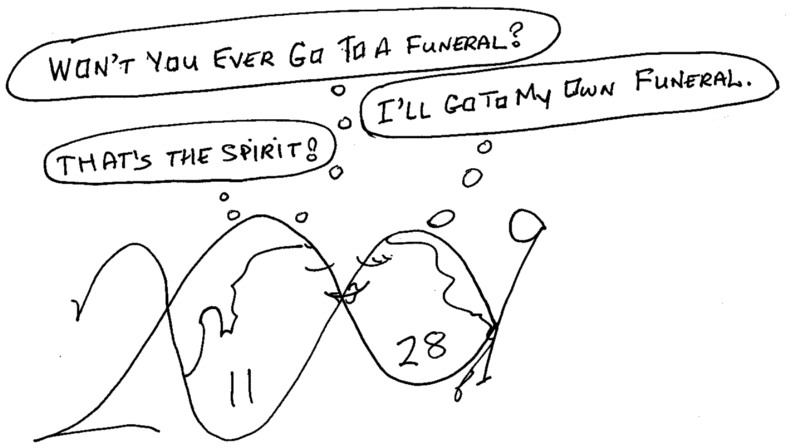
This month Violet and Joey learn about Who Goes to Funerals.
#1 "Who Goes to Funerals" at http://www.doyletics.com/images/112809jv.gif
== == == == == == == == == == == == == == == == == == == == == ==
2. HONORED READERS FOR December:
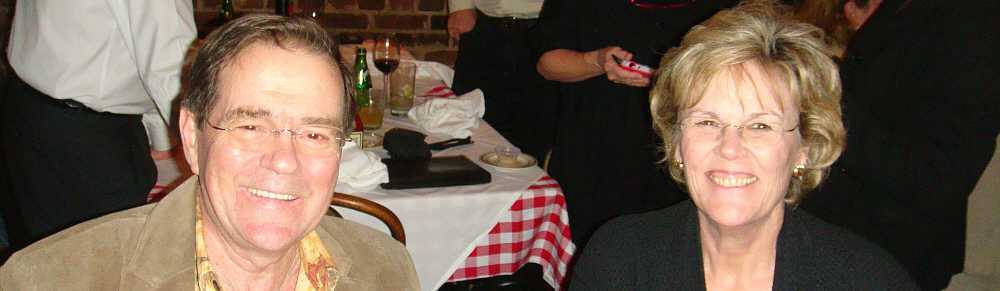
== == == == == == == == == == == == == == == == == == == == == ==Each month we take time to thank two of our good readers of Good Mountain Press Digest, books and reviews. Here's our two worthy Honored Readers for this month. One of their names will be in the TO: address line of your email Digest notification. Our Honored Readers for December are:
Ruta Graf in Hollywood, CA
Suzanne Potier in Baton Rouge, LA
Congratulations, Ruta and Suzanne !
== == == == == == == == == == == == == == == == == == == == == == == == == == == == == == == == == == == == ==
3. ON A PERSONAL NOTE:
== == == == == == == == == == == == == == == == == == == == == == == == == == == == == == == == == == == == ==
Out Our Way:THE MOVE
The first day of November marked the last night we slept in the Roadhouse as we began our move and were able to sleep in the Drivehouse on Nov. 2 even though not all our things had been moved. We had improvise for pillows, for example. We had only the large screen working in the new Timberlane Screening Room, but the others would get connected before the end of the month. This was a month full of service people coming in to deliver, install, drill holes in, wire up, patch up, paint, wallpaper, fix, check out, hang up, climb on top of, estimate, haul away, dig up, bulldozer over, re-sod, plant, weed, sweep out (our chimney), set up, and inspect. Plus our real estate lady who brought documents to sign, papers to read, and things having do with the sale of the Roadhouse which was scheduled for Nov. 9. Every day brought at least three people by. Some days I can recall interacting with about 17 people who were helping us get things done. They all got their work done under my (and Del's) overseeing, but my work never got done because almost all of my available time was required every single day to ensure the job got done. As a result, my only chance to complete a review for this Digest was to take my LT and head down to my club for a full day while Del took care of the service people. With a LT, my book, and a WI-FI connection, I was able to write undisturbed for almost seven hours and finish my review of Moss Hart's Autobiography, appropriately entitled, ACT ONE. This will be my only review for the months of October and November, but I'm hoping to get back to a more normal schedule as the major work of the home and office move settles down.
I still have a new Uninterruptible Power Supply and HP Color Laser Printer to install and many connections to make between devices in the Screening Room, plus two new bookcases coming in to supplant the ones already filled to overflowing.
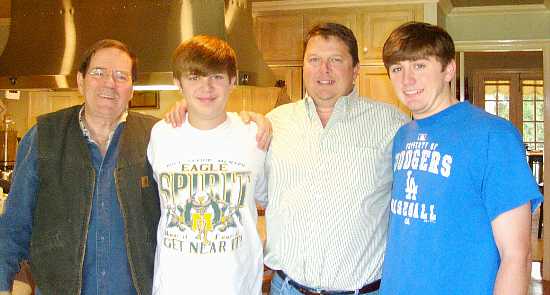
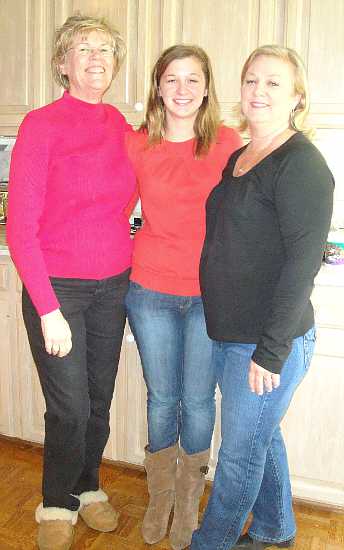
We got ready in time for two guests from Lubbock who visited us near end of month. And for three of our offspring who brought along spouses and their offspring for a large Thanksgiving Day dinner in our new Dining Room. The newly moved chandelier survived its electrical relocation and is situated in the new Dining Room inside of being a head-knocker in our office as it was in the first two weeks or so. We have two-sided curtains hung over the open space going into the Screening Room and over its french doors. It looks like a real movie theater entrance now. My surround sound loudspeakers are temporarily hung, but are playing just fine. Much of the month has been spent trying to figure what needed to be first, doing it, and postponing anything that absolutely didn't have to be done until later.
NOVEMBER 2:
Mad house moving day. We kept going around showing what stuff to move and what to stay. We threw away what we didn't want moved. By about 1 pm, they were ready to take load to Drivehouse. They began moving things in. By end of day, we had bed & linen but no pillows or feather bed.
Joe was my favorite moving man. Wiry black man with a great sense of humor. When alarm went off down the street as they were moving stuff out of the RH, he said, "Uh, oh, black man taking TV!" We laughed. Later I told him about the guy whose house was broken in during Katrina and when he got home, the large screen TV was gone. Three weeks later he had the pool drained and the TV was on the bottom of the pool — over the guy who was leaving with it! Joe roared at that. Another mover, Chris, helped me remove stuff like loudspeakers and wires with his tool kit. We slept in Drivehouse for first time this night, exhausted. Never saw Del so busy and non-interruptible before. She did a great job getting everything ready for the moving day and executed the move perfectly. Sent me to Subway for 4 Black Forest Ham and Swiss poboys and Cokes for the guys. Then told them to come back to finish the job the next day, which they did quite easily. That night Del and I went out on a date to Houston's Restaurant on St. Charles Avenue. We dressed up and had a great time. Back home we started watching "TR: the American Experience" about Teddy Roosevelt, but got sleepy and checked in about 8:30. Early mornings about 5 am or earlier and hitting the sack about 8 pm were the rule for this month which explains why we watched so few movies compared to other months.
We set off the security alarm several times during the month by mistake. Del and I each set off the alarm one morning by forgetting that it had to be reset before we could go out of the house. We learned. The police were gracious, almost seemed glad for something to break the monotony of their shift. Everything in the house that didn't work or had burnt out was a challenge and we surmounted many challenges with all the new things in our new home.
The overhead fixtures in the upstairs bathroom needed to have new bulbs. Figured out how to pull down the cover plate to change the bulbs. We finally located and installed the dust ruffle on our bed.FIRST WEEKEND
Saturday was the Hurwitz-Mintz Warehouse furniture sale and Del and I needed furniture to fill out our new home. We bought a single bed sleeper sofa for my upstairs office or study, which will also be the occasional Guest Bedroom, GB3. Also bought a double bed frame to replace the broken head board from the Roadhouse's Guest Bedroom which is going into GB1. Bought a table and four chairs for additional seating for family dinners and for a workspace in between those times. Four curved wooden stools. Kids should like them. We searched all over the huge furniture store and finally found a light colored wood end table to go between the two Broyhill chairs in the Living Room.
We got back just in time to let in the two Cuban natives (one in America only 7 years — came by raft with Uncle and Aunt) to float the sheetrock repairs from the new lighting installations in the kitchen and dining room.
As soon as they left our son John came with his sons Kyle & Collin. Del kept the grandsons busy while John and I watched the LSU game in which LSU beat Alabama but the officiating crew threw the game to Bama, my opinion. Very similar to Florida game in many ways. Can't beat a football team when they have 15 men on their side and you have only 11 on your side. My brother Steve and his wife Jan showed up on cue — at a critical moment of the game. They were dropping off my dad while they attended a church function nearby with two of their grand-daughters. Got a comfy chair for Dad and he watched the rest of the game with us. After the game was over, John left, and a Godfather movie came on. In one poignant moment, Dad and I watched the end of Godfather where Michael is getting his instructions from his 90-year-old dad. We watched as Marlon Brando played out the last scenes of the Godfather's life. I told Dad, "Marlon Brando playing someone as old as you are." He seemed to recognize Brando's name, but apparently did not recognize him in the old age make-up. We watched as Brando plays out the dying scene in the vegetable garden with his grandson about Collin's age. After the game Del and I drove Buster to Mimosa St. and waited for him to get ready for bed. Mostly he took care of himself with me waiting to see if he needed help. He's seems to becoming more coherent and more capable even as his legs are having trouble supporting him. With the cane and walking thingie, he does fine. Then Del drove us home and we went to bed almost as soon as we got there. Exhausted. In many ways, this was a typical day during this very long and tiring month.
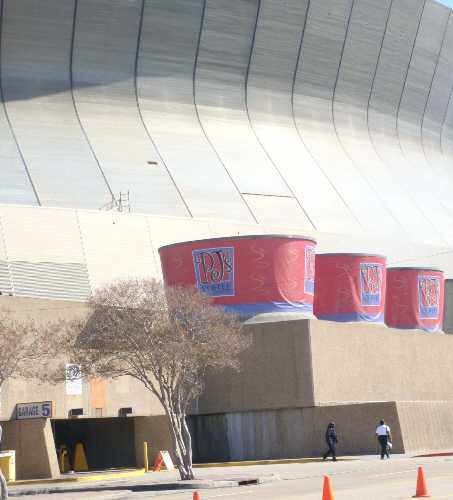
Sunday was a more relaxing day as my friend Gus accompanied me to the Saints-Panthers football in the Superdome. The Saints won a tough game whose outcome was only determined in the final seconds. Most fun and exciting Saints game and football game I ever attended. Folks were on their feet yelling from first down rather than third down when Carolina had the ball and the defense was floating on a euphoria of crowd noise the entire game.
SALE OF ROADHOUSE
We had two offers on the 217 Timberlane Road house within a week of putting it on the market. Our agent Glennda brought us the first offer from an oriental couple who wanted to pay cash for it and asked for a closing date of Nov. 2. That made our heads spin as the movers were not due until that date, so we asked it be moved to Nov. 9. They agreed and wanted the doggie door gone. I spent a frantic day removing the doggie door I had installed for Steiner some 12 years previously and patching back in the wood I took away.
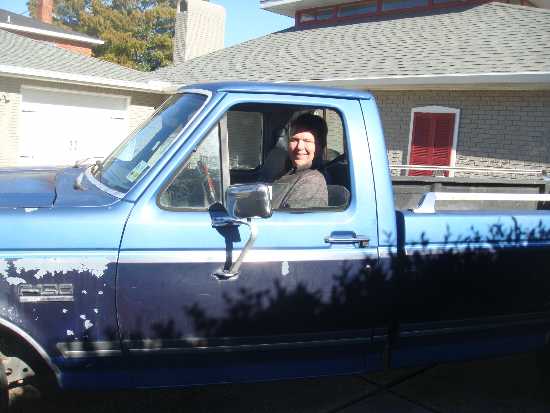
Then we discovered that the cash they wanted to use required someone to repay a loan and that repayment was not forthcoming. On the day that Glennda came to see us with the cancellation to sign, she brought us another offer. I call her "Warp 10 Glennda" because as any Star Trek fan knows, no one goes faster than Warp 10. The second one was from a lady who had loved our house for many years, but had not gotten her offer to Glennda in time, so Glennda told her she'd get first crack if the first offer fell through. Betty, the new buyer, has been a delight to work with and has become a friend. I offered her the use of Babe, our Blue Ox (Ford F-150), to use for her move as she is only moving a block and a half as we did. After we closed on time, Del and I decided to celebrate by going to the Bon Ton Restaurant in downtown New Orleans for a great meal. We had been trying to think of a place to have dinner with Ed and Jo Anne from Lubbock when they came to town and we decided that the Bon Ton would be the perfect place. In addition, we knew that Burt and Renee would also like it because we have had dinner with them there previously.Over dinner we mused over the resolution we had made to forgo our annual Crystal Cruise in 2010 because of the expenses of having two houses for some indefinite time while the Roadhouse was on the market. With it selling so fast, we decided to pay ourselves a generous commission for the quick sale and sign up for a cruise. The one we chose was a Fall Color cruise in the Northeast.
IDA DECLARE
Nothing like a little wind event to help you prepare for a big blow. Hurricane Ida was a tropical storm and caused only a few 30 to 40 mph winds in our area, but it was enough to blow some shingles off our Drivehouse roof. We called a roofing specialist and he informed us that the roofing job done after Katrina was shoddy. The nail guns drove the nails completely through the shingles and only the glue was holding the tiles on the roof. Plus he uncovered evidence that large limbs had landed in several places on the roof and crushed sheeting which had not been replaced. Those places were not accessible for viewing from the attic because the dormer rooms ceilings were under them.
There was no flashing placed under two of the dormers, the roof vent was installed incorrectly and the chimney flashing needed replacement. The worse was the possibility of major damage if heavy winds came and ripped off major portions of the shingles, so we decided to do a roof replacement. This came at a lucky time because Del and I were talking about what color to paint the shutters. Neither of us care for the dark green shutters and two of them must be repaired or replaced anyway. We decided after much deliberation on a gray roof and gray shutters, which will also match the new curved concrete driveway we are planning. Thanks, Ida!LEFT HAND SCREWED
Our new house lacked a built-in wooden chopping board, so we ordered one, and it arrived this month. I opened the Crate&Barrel Kitchen Cart with the Parawood chopping block top and assembled it. It was packed beautifully and the assembly went smoothly until it came time to install the metal cylinder which supports the single shelf inside the cart. Instead of a simple push-in pin, they had created a thread-in bolt for each of the four corners of the shelf to sit on. Simple enough, or so it seemed until I tried to screw in the bolts. The two on the right inside of the small cabinet went in just fine. And even the front bolt on the left inside. Very tight quarters and the two bolts on the left really needed a left-handed person to screw the bolt in. It wasn't hard to do the turning of the bolt once it was threaded, but getting the thread started really needed a left-hander. My left hand has a thumb which had thirteen stitches from a saw cut when I was fifteen and its tip is slightly deadened. The fourth shelf bolt, a smooth cylinder of metal with screws on the bottom refused to be screwed into its spot.
My left hand couldn't get it threaded and my right hand could not bend in those tight quarters to align it and thread it. I tried for an hour. It really required threading the bolt with one's left hand in very constricted quarters, not an easy thing to do. Del tried for 15 minutes. Miguel, a painter working on the dining room ceiling, was confident he could do it, and tried for ten minutes. I took it over and tried to drill a hole in its top, no avail. Then I found a bolt and nut which a similar bolt fit into, put the nut in a vise, and with vise grip pliers I forced-threaded the smooth shelf bolt to re-align the threads of the crossed-threaded section. Then I got it threaded and it went right in. Took me as long as the rest of whole assembly just to thread a bolt that could have worked just as well if it slid in instead of threaded in!CITRUS ORCHARD: FIVE LADIES AND TWO GENERALS
One of the jobs for Babe was to haul my citrus trees from Becnel's in Belle Chasse to our north yard area where our orchard is going. I got a gardener helper to dig the holes for the line up and bought the trees and hauled them to the Drivehouse.
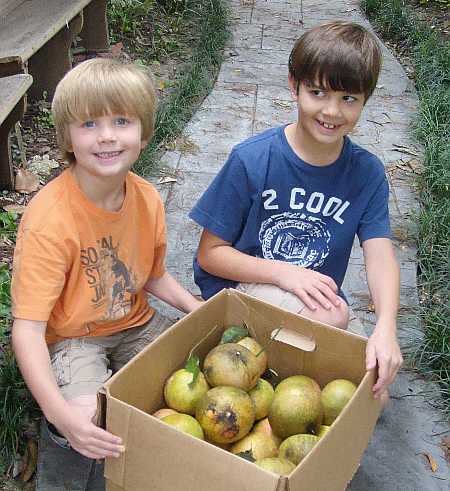
I had calculated how far apart the trees should be by measuring my 15-year-old orchard at the Roadhouse. I put a little flag where each was to go and explained to him how deep and wide I wanted the holes dug. When he had one hole ready, I filled it with water and let it diffuse into the surrounding ground. When the water had settled down, I filled the bottom of the hole with Bio-Dynamic mulch I had hauled over from the Roadhouse. Then we set the tree, each about five feet high, in the hole and shoveled garden soil and sand into the hole, covering finally with more mulch. Then I named each of the trees. The navel orange trees were Washington Navels, so I named one General Washington and the other one General Lee (Generally Navel). The two ruby red grapefruit trees I named one Ruby and the other one Red. The two satsumas I selected based on the fact that the delicious free samples the check out counter of Becnel's were this variety, a Japanese variety, so one of them I named, Okawa, and the other Osawa. The lemon was named simply Ms. Meyer.Next to the citrus orchard a bit to the south will be the vegetable garden and I had the sod dug up for it and merged into the B-D mulch and garden soil. It will be allowed to decompose over the winter and be ready for a spring garden. I ran Tilly, my tiller, through the garden and removed most of the chunks of Bermuda grass roots.
In addition, I bought a couple of pittosporum bushes and planted them in a spot where they will eventually hide the garbage cans from the street, similar to what we did at the Roadhouse. The cactus I saved from the Fairfield Avenue re-opening will stay with Betty at the Roadhouse, but I brought the small 2 foot high piece I saved and transplanted at the Drivehouse to the front edge of the new garden Del had dug for us. It will fit in nicely with the two palm trees which we saved from the original planting.
STEINER TO BE A DADDY, TVs ON, AROOO!
Heard from our son Jim in Beaumont that Steiner may be a Daddy real soon. One of the Schnauzer ladies at the "Best Little Whorehouse in Texas" went into heat and the diaper they had put on her "fell off" and Steiner was on her like a flash. Our Mighty Dog! Arooo!
I worked on the Screening to get it ready for the Saints game. It is still in dire straits with only a few things working right. Can't play HD on WEGA1 like I used to be able to. More work. Go back to original wiring diagram and start over. At least we were able to watch the Saints game on plasma with other stuff on periperal TVs.
Watched AMC's new version of "The Prisoner" in HD. Not that good. Del seemed to like it, but didn't understand it. Not understanding is something that pervaded the Prisoner. "Understanding" is the MacGuffin of the Prisoner series. It's searched for, but never found.
A few days later, I decided that the only way I could proceed on finishing the Screening Room was to install the Bose Surround Sound speakers. That entailed a trip to the Roadhouse to retrieve the speaker wires, which I did. I spent the afternoon on my knees wiring the speakers for the Bose Theater Surround Sound into the amplifier. Sounds good.
Need to screw speakers into the wall for permanent placement yet. At night we watched two spectacular movies, our best double feature in months: "Whatever Works" (2009) and "The Maiden Heist" (2008). These are truly fun movies and worth a look or two.TWO FUNERALS AND NO WEDDINGS
Two friends I first met in the 1950s died this month. Sidney Montz, Jr. and Mickey Bordelon. Sidney I met and was close friends with when I lived on Mimosa Street a half block away from his house. Mickey lived on Giuffrias Street in Metairie one house away from my girl friend. I met him about 1957 at garage parties for the Giuffrias Street gang. Some ten years later, Mickey and I used to play handball together and he became a long-time pest control man for our home on Marcie Street and later our Timberlane Roadhouse, up until he retired. See my tributes at the bottom of this Digest to my two friends who, while departed in the flesh, remain very much alive in the spirit.
SAINTS, TIGERS, AND HORNETS
Why couldn't these teams have cooperated with our move and played so pitifully that I wouldn't have had to interrupt getting the new house fixed up to watch their games? Noooo, instead all three are playing well. The Saints the best of the three, sporting a 10-0 record as I close out my Personal Notes. Can they go all the way? It will be fun watching to see if they can do 19-0. This is the year that everyone in this area has been waiting for — this is the next year when the Saints are going to be great — it is here and it's a wild ride for the team and the fans.
The LSU Tigers just finished a 9 - 3 season, finishing in the Top Twenty, going to the Capitol One Bowl (most likely), with a chance for another 10 win season still in front of them. It's been a wild ride and it's not over. The Tigers are banged up but now have a chance to heal up for the bowl game and go out like champs.
The Hornets started off so poorly that Jeff Bowers fired Byron Scott and took over the coaching himself. Two sparkling rookies were going flat on the bench and by throwing them into the game, are showing themselves as the stars that led Bowers to bargain for them in the draft. Darren Collison and Marcus Thornton are averaging about 35 points a game together. Collison is becoming a DC2 to supplement our CP3 (Chris Paul) who is sidelined due to ankle sprain. Chris is coaching these rookies from the bench and making them better. Should be an interested run for a playoff spot. The Hornets are beginning to win again.
SOCIETY FOR BIBLICAL LITERATURE, BON TON AND BON TEMPS
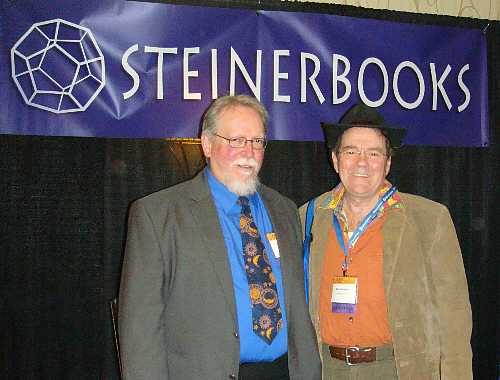
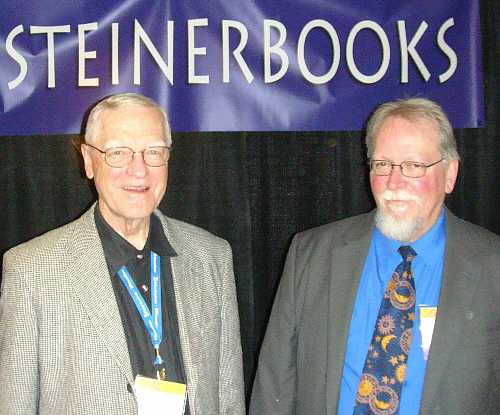
Every year on the weekend before Thanksgiving the SBL Conference is held in some major city around North America. A few years back Del and I drove to the Conference in Toronto, Canada to attend with our friends from Lubbock, Texas, Ed and Jo Anne Smith. This year they came to New Orleans for the Conference and we invited them for drinks at our new home. We also invited some mutual friends, Renee and Burt Lattimore to join us here and then we all six went to the Bon Ton Restaurant and had a Bon Temps (good time) together. It has great food and ambience and it showed off its best for us on this Friday before Thanksgiving. On Saturday and again on Monday I went to the Conference and spent some time with Jens Jensen from Montreal who was manning the SteinerBooks booth. He and I email each other during the year whenever I have a new Rudolf Steiner book review completed and he links the place on the SteinerBooks website where the book is offered for sale back to my review page and I link from the book of the review to the same page.
People who read the book blurb on SteinerBooks and want more information about a book can read my review. People who read my review and want to buy the book which I recommend for every serious reader can go directly to SteinerBooks to buy the book. It was great having time to just converse with Jens about various topics of mutual interest. I accompanied Ed to one session he was interested in about the Nag Hammadi library and amazed to find Elaine Pagels chairing the separate presentations. I read her book about 30 years ago, the "Gnostic Gospels".SURVIVING THANKSGIVING
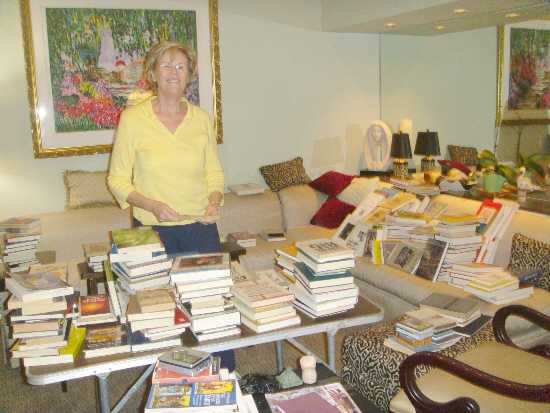
With three of our kids coming for Thanksgiving Day dinner, Del and I worked furiously to get the rest of the Non-Fiction books shelved downstairs. We discovered that we would run short of space, so I quickly bought another 4 shelf bookcase and assembled it to keep the sorting and book shelving from being slowed down. When the day before Thanksgiving arrived we were still lacking book shelf space, so we hid the books in several cabinets and made plans for two more large bookcases to be built.
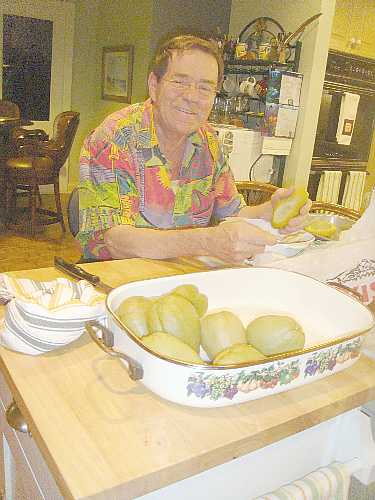
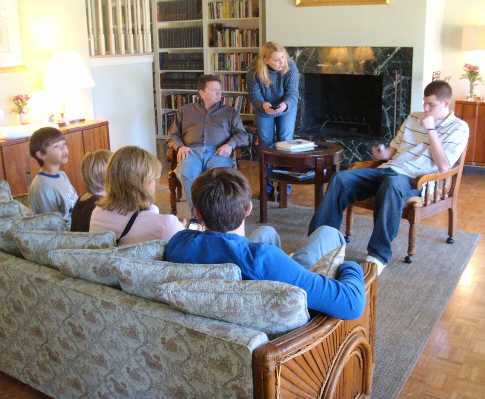
This was a great trial run for our new home and guest bedrooms. The house and all the guests survived, including Del's mother Doris, and all left happy and well-fed with turkey, oyster dressing, gravy, shrimp-stuffed merlitons, crawfish leeks tarts, potato casserole, dirty rice, chocolate cake, pecan pie, pralines and divinity fudge among other things. Our grandson particularly loved having a "hill" in the backyard to roll down their bodies and the bocce balls. The Macy's Parade was on in the newly hooked up Screening room with its five large screens and then followed the football games with the Lions and other traditional Turkey Day games. It was a great family time and well worth the three days of cooking for me which led up to it. Hope all of you had a great Thanksgiving!
TILL NEXT DECADE, the TWENTY-TEN'S
That's it for another month of Digest. Till next month, next year, next decade, January 1, 2010, when, God willing, we will return with a new Digest for you to enjoy — designed, written, and published in our fully-equipped and expanded new home, library, and office space. It's only December 1st, but Christmas Day is coming soon. Hope your Christmas is the most Merry ever. Make it a great month for yourself, your family, and friends, wherever you are, and finish off the rest of the somewhat disappointing ending of the decade of the "Oh, Oh's" in Grand Style ! ! !
~~~~~~~~~~~~~~~~~~~~~~~~~~~~~~~~~~~~~~~~~~~~~~~~~~~~~~~~~~~~~~
IMPORTANT MESSAGE:
To those Good Readers who are puzzled by How the Moon could be Rising In Front of a Mountain, Click on Photo. To see 161021 photo, Click Here. ALSO: if you are puzzled because you No Longer get our Monthly Reminder, you may have Changed Your Email Address without notifying us. NOTIFY US NOW by a simple Click Here!
Here's the Sting:
You will NOT receive a Monthly Reminder unless you have Re-subscribed under your new address to DIGESTWORLD.If you've already receiving DIGESTWORLD Reminders, ignore this message.
If you're not subscribed, and would like to Subscribe to DIGESTWORLD Reminders to receive one short email a month to inform you of the latest ISSUE, now's a good time. SUBSCRIBE NOW
by Clicking Here.Yes, this message does no good to those who changed their email address without notifying me — but it can alert those of you who are going to change your address.
If you've changed or are planning to change your email address, Click Here to SEND NEW ADDRESS. (Alternate way is to copy into your Browser this URL: http://www.doyletics.com/subscrib.htm )
EASE OF VIEWING NOTES:
NOTE: For Internet Explorer Browsers, DIGESTWORLD is best viewed at 100% Zoom and the Window's width sized so that Digest Archives lines are single-spaced, just barely. Adjust Window width so that Mountains almost touch the Archive Numbers, especially if you find some Photos overlapping text.PHOTO CAPTIONS (CURSOR FLYOVER ISSUE RESOLVED):If you have been enjoying the photos in DIGESTWORLD, but have wondered who or what you were looking at, you will now be able to hold your cursor still over the photo and the photo's description will appear. (Test on Butterfly-Crab Image at Right.) We spend a lot of time writing these photo captions and hope you will read them. All the Archived Issues have been updated to provide descriptions when your cursor rests for a second on a photo. Note that older Reviews have not been updated. If you haven't finished reading text when description disappears, move cursor away and back on photo to finish. We thank you for your patience and hope this pleases you.
New Stuff about Website: Five Reviews of Anthropology Books
For our grand-daughter Katie Gralapp who is discovering anthropology at LSU for the first time.
1. Kenneth Good'sInto the Heart — One Man's Pursuit of Love and Knowledge Among the Yanomama
The cover of the book leads the reader to suspect the book is about a trip into the heart of the Amazon, which it is, but even more. Kenneth Good is the anthropologist that took the trip up the Orinoco River to study an isolated tribe of people never encountered by whites before, the Yanomama people of the Hasupuweteria village. His plans to study the little people took on an immediate comic aspect when they spent all their time studying him and his strange foreign ways. He built a work area and building outside the shapono or tribal communal hut to allow him to work undisturbed, but this kept him from getting exactly the kind of information he needed about their daily living habits. He began his protein studies by weighing everything the Yanomama ate, and they cooperated with willingly, although they thought him strange. "Nabuhs," they said, using their name for foreigners, "not smart. They don't even drink the ashes of their dead relatives."
He had difficulty learning the language because the Y.'s spoke quickly and would seldom repeat a word slowly enough for him to mimic it with any accuracy. It was like trying to learn English in New York City from a local taxi driver. Children were a big help because they would gladly repeat a word over and over for him. Finally he located an adult that would speak slowly and teach him the language. This was his first break-through, and the informant, he called him, "Red," became his first Yanomama friend.
With some language ability under his belt, he moved into the shapono to become an integral part of the community, which he decided would be a requirement for him to complete his close-up study of their family life. He hung his hammock in a vacant spot around Red's hearth and soon discovered that night-time in the shapono is a time for public speeches and other outward displays of emotions.
After several weeks of acclimation, he found he could easily get eight hours sleep by staying in his hammock for twelve hours like the Yanomama did.One of the Yanomama girls grew up over the eight years he studied the village life and he finds himself accepting a betrothal to her, a year or so from her onset of menses. He leaves for a trip to German to study and when he returns, she is a woman and soon moves her hammock next to his. In a move that initially shocked the shapono residents, she began sleeping in his large two person hammock with her husband.
By the middle of the book, the Yanomama had moved into Ken's heart and he was deeply in love with Yarima, his wife. The second half of the book deals with his trials as he attempted to remain in the Amazon with her and later as he tried to take her with him to the states. During their marriage ceremony before a judge in Pennsylvania, she asked him to tell the judge, "that even if you become sick, I will still be your wife. If you cannot leave your hammock, I will go down to the river and get you water. I will harvest plantain and roast them for you. I will care for you and do all these things for you even when you are old. Even then I will be your wife."
The judge said, "I take it that means, 'yes'."
2. Marlo Morgan's Mutant Message Down Under
Discover the Wisdom of an Ancient Culture:
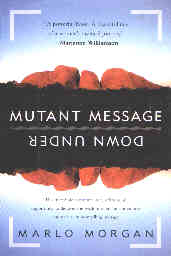
The mutant down under is the author herself, who undergoes a three-month walkabout across the Australian Outback and creates this lovely story that restores the Aborigines to their proper role as the Real People of the continent.
Are the Aborigines untruthful and cowardly? Do they possess poor memory? Is their sense of smell undeveloped? Do they have no willpower? Do they suffer pain less than others? Do they have no works of art or history? During her trek the author debunks the myths held by newcomers to the Real People's continent.
The journey began as a jeep ride to what the author expected would be another rubber chicken lunch and an award presentation for her good works with the Aborigines. After a six-hour trip into the desert, she was deposited with a tribe of Aborigines outside a metal building and asked to don a simple garment for a cleansing ceremony. She watched as her clothes, gold watch, rings, shoes and undergarments were held over a fire by a woman of the tribe with a big loving smile on her face. She's cleansing them, too, she thought, and as she watched, to her horror, the woman dropped them into the flames. Part of her cleansing, it seemed, was to include complete separation from the artifacts of the mutants.
Then to her chagrin, after some preliminary comments about her passing the cleansing rite, the entire tribe, her jeep driver and all, began walking into the desert. With only the choice of trying to retrace the long jeep drive through trackless desert alone or following them into the desert, she set out with them on the walkabout carrying her only possession in the world at the time, a rock she had selected during the cleansing ceremony. A rock she was told, "may save your life ."
Walking in the desert barefoot in 110 degrees over thorny spinifex (beach grass), her feet became a bloody red mass in which the red-painted toenails seemed to disappear into the color of her feet. "Focus your attention elsewhere" they told her. She remembered giving similar advice in her healing ministry and followed it as best she could. At the first stop, one of the women applied some oils from native leaves and her pain eased. She slept on the ground, ate grubs, ants, crocodile, kangaroo, and whatever other food the region provided them in response to their daily prayer to the earth for food.
When the black flies covered her body, crawling inside her nostrils and ears, she felt herself going mad. The others just stood there and let the flies have their way. The elder of the tribe explained to her that the flies were cleaning the very crevices that she would need to be able to breathe during the hottest days of the desert sun, and to hear clearly. Without clear nostrils, she would have to open her mouth to breathe and would likely die from dehydration.
Slowly she began to grasp the wisdom of the Real People. One day she was told it is her turn to take the lead. She didn't feel ready to solo, but they made it clear that it was up to her. The tribe would live or die depending on the decisions she made in the next few days. For three days they traveled with no food and no water.
Soon her throat refused to open and in desperation she asked inside herself for help. A voice said, "There is the rock." She placed the sacred rock, her only possession in her mouth. Soon moisture began to form in her mouth, and she could breathe again. Immediately thereafter she stumbled upon a pool of water and, as they drank joyously, a huge desert lizard walked by to volunteer for their supper feast.They arrived at a secret cave, their destination, and she discovered the history of the Real People written on the cave walls in beautiful pictorial artworks. They admitted her into the crystal temple which was used for weddings and sacred rites. She read on the wall that the elder of the tribe, Regal Black Swan, was born on the same day as she was, on the other side of the world, and that they had been destined to meet after fifty years, so that she could become the messenger of the Real People to the outside world.
Whether one chooses to believe that this fictional account actually happened to the author or was pieced together from Aborigine folklore, one must accept that she has portrayed a powerful image of the powers of the original people of a great continent, powers that we can discover in the Real People in every one of us, if we dare to look within from now on.
3. Carol O'Biso's First Light — A Magical Journey
One hundred and seventy-four wooden objects will be flown from New Zealand to the USA and back, living ancestors of the Maori people of New Zealand, led by Pukaki, the god who guided the rainbow arc of boats from Haiwiki to the islands of New Zealand over 700 years ago. Their escort will be a girl from America, who will take them away from their native land for the first time ever: our intrepid author, Carol O'Biso, jogger, art expert, and registrar of the American Federation of Art.
An unlikely scenario for an adventure story, much less for a magical adventure, but such is the fare O'Biso has spread for us in this Maori feast. The art pieces are alive in the minds of the Maoris, she discovers, and a ceremony must be conducted over every piece before it is allowed to leave its resting place. In a crowded hall the Maori intone their wailing songs of farewell, their speeches, their concerns for the return of their beloved ancestors while this girl sits, listens, and is not allowed to make a speech or response - not because she is taking away the statues, but because she is female.
The lights go off mysteriously, the electric drills break, the truck's battery catches fire, a blizzard hits St. Louis, a heat wave New York City, and the statues consult with Carol. Step by step she allays their fears and keeps her promise to return them safely to their native land.
When the statues return home, so does Carol — but her new home is New Zealand, not New York as before the magical journey. New Zealand, a place where one musters sheep or they die. Their coats are bred for fast-growing wool and must be sheared yearly or they will fall over from the weight of their wool in a rainstorm and die, unable to get back on their feet. Searching for eight lost sheep on a sheep ranch, Carol experiences an activity for the sake of itself, saving the lives of eight sheep. And just as she saved the lives of 174 ancestors by returning them to their native land, she saves her own life by returning herself to her new, adopted native land of New Zealand.
4. Edward Marriott's The Lost Tribe — A Harrowing Passage into New Guinea's Heart of Darkness

What if you were a journalist and heard about a lost tribe in the mountain wilderness of New Guinea? What if you flew there to visit the tribe, asked permission of the authorities and were turned down? What would you do? What Marriott did was organize a trip to visit the lost tribe on his own. A trip that involved a destination no one was sure of, over a path nobody in his makeshift native crew knew for sure how to follow to find a tribe that didn't want to be found and were likely to be very dangerous if they were found. One might think that Marriott would have been luckier to have returned home without finding the tribe, but then there wouldn't be a book, would there?
He found the tribe, well, he found the empty village that the tribe left behind as soon as he appeared. In a couple of days he found a missionary, curiously named Herod, who had a makeshift church and a congregation that preferred to hide in the jungle instead of come to church when the white skinned man appeared. But soon the Liawep, a tribe that only appeared to the outside world two years earlier, came out bit by bit to meet the white man, always asking what the white man wanted through the native interpreters.
The Liawep were only 79 strong and their only clothes were leaves. Their diet was taro and yams dug from the jungle. They had no medicine and were only discovered because an elder was dying and his grandson, Kohi, walked for days to the nearest civilization to get help. What he got instead was a taste of civilization and he didn't return until the grandfather had already died. Soon a lot of people wanted to find the lost tribe, to convert them to their brand of christianity, to write about them in their journals and anthropological field notes.The word "liawep" means small tribe and there were two small tribes that it might refer to. One was about a days' walk and the other about six to eight days.
Marriott's informants didn't know which one he wanted to meet, but they thought it was the one farther away. If they found the one that Herod was administering to, then they would know it was the right tribe. Eight days might not seem like a long time for a walk in the jungle, but this jungle was anything but flat. They spent most of their days climbing up almost vertical sides of the mountain, ankle deep in mud. When they reached level areas there was usually a precarious walk across a rickety bridge held together with jungle vines spanning a raging torrent many feet below. Sometimes the bridge wasn't high off the river, but dipped down several feet into the swollen, rushing waters.When Marriott and his crew reached the village, he found a rather meek folk, and nothing of the fierce warriors who never lose a battle that he'd heard about. Finally he befriended Fioluana who told him the Liawep's secret about their mountain:
[page 159] "Before Peter Yasaro came, we still fight our enemies, we praise the mountain. We praise it before we go and fight. Then we win the fight; the mountain tells us when to fight and when to stay at home. We yell out the names of our enemies. Our enemies have heard about our mountain. They are frightened of it."
After some time, Marriott began to understand the Liawep and their relationship to the jungle.
[page 179] For me, the jungle was the dark unknown, a place without markers, with not beginning and no end. For the Liawep, it was home. But more than this, it had become the landscape of their mind. The jungle floor was littered with meaning. The gurgle of the brook across a plate of pebbles was a child spirit's laughter; the papery crumble of leaves was another spirit's skin, shed in a hurry; birdsong was the calling of the other world. The Liawep, ever wary of my curiosity, dropped this much inadvertantly.
On the day before they planned to leave, Fioluana and the hunters were off on a hunting trip, and Marriott's crew was packing when a large thunderstorm with lightning bolts flashing rolled through the Liawep village. One of the large bolts split open the hut sheltering Fioluana's wife and four children, killing all but the baby and leaving them covered with white ash on the floor of the hut. Marriott was in shock, but his crew had a practical consideration: they wanted to leave before Fioluana got back with the hunters. They feared that the angry hunters would not understand anything but that it was the white man's fault that the mother and three children had been killed and covered in white ash. They left the next morning and met the hunters about halfway down the mountain as they were returning all happy from their successful hunt. The hunters gave them a pig to eat and headed for their village without being informed as to what to expect when they arrived there.
The ending will await your reading, dear Reader, but the fact that the book exists gives you a strong clue that the author survived the ordeal. He broached the deepest part of the Papua Guinea jungle and returned to tell about it. He found the lost tribe and went away leaving a path of destruction in his wake like so many other well-meaning explorers. Would the Liawep family have been destroyed by a lightning bolt from the angry mountain if he had not set foot in their village? No one will know, but Marriott will spend many years wondering.
5. Edward T. Hall's An Anthropology of Everyday Life
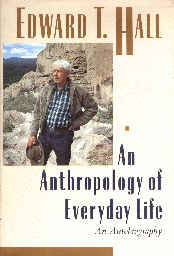
This is not the story of an anthropologist looking at everyday life, but the story of a man who became an anthropologist after many years of looking at patterns in his everyday life. He claims to have noticed that he was more interested in the digging crews when he was working as an archaeologist than the digging, and soon switched to cultural anthropology. His first book, The Silent Language deeply affected me when I first read it in the 1960's — his cogent explanations of the patterns of metacommunication that transcended verbal language opened a door to a new reality for me — one that is as exciting today as it was then.
In his childhood in New Mexico he studied impressionist painting and soon learned that "every part of a painting affects every other part." The adding of a dab of color to a painting can change the color of the dab and all the other colors already on the painting. It was a metaphor for what happened when he was later assigned to build earthen dams with the Hopi and Navajo tribes. This dab of white skin on a field of red skins were both changed by his presence.
On a trip to Europe to visit his mother he noted how the German trains ran tightly and smoothly on the track and were always right on time. The French trains, however, swayed from side to side and ran late. He was far more observant about the hidden cultures of the continent than the French who confiscated German trains after World War II only to find them useless on the French tracks.
In Truman's Point IV program he trained staff at the Foreign Service Institute in communicating with the natives in the many foreign cultures they were being shipped out to. Much more than verbal language, he taught them to speak the "silent language" of the hidden culture, without knowledge of which, their carefully laid plans would be ineffective. Being successful in a pioneering field is a hazard fraught with dangers today in America and was even more so in the fifties. All the FSI anthropologists were fired at one time in response to the McCarthy hearings and they were replaced with bureaucrats who taught the staff standard, culturally accepted language skills.
He quotes his friend David Rioch several time, and one of the best is, " What you see is what you intend to do about it." This was his comment on the biases inherent in our perceptive apparatus.
I am glad that Ned took the time to write about his life before it becomes so fast that he "reach(es) a velocity sufficient to overcome the pull of the earth and fly off into the unknown." With Ned there, however, it won't stay unknown for long.
~~~~~~~~~~~~~~~~~~~~~~~~~~~~~~~~~~~~~~~~~~~~~~~~~~~~~~~~~~~~~~
Movies we watched this past month:
Notes about our movies: Many of the movies we watch are foreign movies with subtitles. After years of watching movies in foreign languages, Arabic, French, Swedish, German, British English, Russian, Spanish, Italian, Japanese, Chinese, and many other languages, sometimes two or three languages in the same movie, the subtitles have disappeared for us. If the movie is dubbed in English we go for the subtitles instead because we enjoy the live action and sounds of the real voices so much more than the dubbed. If you wonder where we get all these foreign movies from, the answer is simple: NetFlix. For a fixed price a month they mail us DVD movies from our on-line Queue, we watch them, pop them into a pre-paid mailer, and the postman effectively replaces all our gas-consuming and time-consuming trips to Blockbuster. To sign up for NetFlix, simply go to http://www.netflix.com/ and start adding all your requests for movies into your personal queue. If you've seen some in these movie blurbs, simply copy the name, click open your queue, and paste the name in the Search box on NetFlix and Select Add. Buy some popcorn and you're ready to Go to the Movies, 21st Century Style. You get to see your movies as the Director created them — NOT-edited for TV, in full-screen width, your own choice of subtitles, and all of the original dialogue. Often you get the Director's Cut Edition which adds back excellent footage that was cut from the theater releases.Hits (Watch as soon as you can. A Don't Miss Hit is one you might otherwise ignore.):
P. S. Look for HD/DVD format movies which are now available from NetFlix.“The Maiden Heist” (2008) a whimsical, poignant, thoroughly funny look at three art lovers enthralled by three artworks for many years having to deal with their works disappearing from their daily view. Christopher Walken, Morgan Freeman, and Bill Macy in a menage a trois heist. A DON’T MISS HIT ! ! !
“Whatever Works” (2009) Larry David spews Woody Allen dialogue with a verve, such as “Death by cultural shock” in this tour de force. A DON’T MISS HIT ! ! !
“Encounters at the End of the World” (2007) Werner Herzog narrates and shoots these incredible Blu-Ray images of the South Pole and its amazing environs, both above ground and under the ice shelf.
“The Quiet Man” (1952) John Wayne as a quiet man with a fighting past he tried to hide until he had to fight to keep Maureen O’Hara as his wife. A DON’T MISS HIT ! ! !
“Role Models” (2008) a wacky look the world of energy drinks and big brothers. When the Minotaur climbs the horse statue, the two buds must become Bigs to escape jail time, and the Littles give them all they can handle.
“Persepolis” (2007) A young Iranian girl grows up in 1978 and when revolution breaks out is sent to Paris for safety. Movie shows her returning and recalling the memories which led her to leave and now to return to an Iran not much better or worse than the one she left.
“The Proposal” (2009) Guy marries female boss so she won’t be deported. Sandra Bullock pulls this jaded plot to new heights with a great acting job as two newlyweds begin to fall in love. Is there love after marriage? Movie increases the hope for such a boon. A DON’T MISS HIT ! ! !
Misses (Avoid At All Costs): We attempted to watch these this month, but didn't make it all the way through on most of them. Awhile back when three AAAC horrors hit us in one night, I decided to add a sub-category to "Avoid at All Costs", namely, A DVD STOMPER. These are movies so bad, you don't want anyone else to get stuck watching them, so you want to stomp on the disks. That way, if everyone else who gets burnt by the movie does the same, soon no copies of the awful movie will be extant and the world will be better off.
“Sukiyaki Western Django” (2007) A Clint Eastwood western gone Japanese Samurai-crazy.
Your call on these — your taste in movies may differ, but I liked them:
“Nobel Son” (2007) starring Alan Rickman as a pompous physics philander who won a Nobel Prize by primary theft and his bastard son returns to avenge the theft by kidnaping his half-brother who goes into collusion with him until a Minor accident puts the avenger out of commission and City goes back to crazy ward.
“Cat Dancers” (2007) sad story about a menàge à trois ripped apart by a white tiger. Survivor tells the story of how he lost his two lovers, Gary and Joy.
“How the Garcia Girls Spent Their Summer” (2005) namely, falling in love, from 17 to 75, daughter, mother, and grandmother all rocking on the ground, in the car, and in bed. A slow movie, most of it foreplay.
“Evergreen” (2004) Young love faces the reality behind the facade of happiness as young girl escapes poverty of her home to find a poverty of love in her boy friend’s beautiful home.
“The Order of Myths” (2008) A documentary of Mobile’s Mardi Gras traditions showing the harmonious racial relations which mirrors those of New Orleans.
== == == == == == == == == == == == == == == == == == == == == ==
4. CAJUN STORY:
== == == == == == == == == == == == == == == == == == == == == == This one I adapted from one forwarded to me from my second cousin Suzanne Potier of Baton Rouge.
Boudreaux was working for an archaeologist on a desert expedition, Doctor Porrier. Boudreaux’s job was securing the equipment and supplies on the camels, cooking, and setting up the tent and camping equipment each night.
One night Boudreaux woke up and said, “Hey, Doc! Wake up!”
“Yes, Boudreaux, what is it?” the bleary-eyed professor asked.
“Ma sha, look at dat sky, what you see?”
“Millions of stars.”
“And wat dat told you?” Boudreaux asked insistently.
The professor sat up, thought for a minute, and said, “"Astronomically speaking, it tells me there are millions of galaxies and potentially billions of planets. Astrologically, it tells me that Saturn is in Leo. Time wise, it appears to be approximately a quarter past three in the morning. Theologically, mother nature is all-powerful and we are small and insignificant. Meteorologically, it means we will have a beautiful day tomorrow. So, what does it tell you, Boudreaux?”
== == == == == == == == == == == == == == == == == == == == == ==
5. RECIPE of the MONTH for December, 2009 from Bobby Jeaux’s Kitchen:
(click links to see photo of ingredients, preparation steps)
= = = = = = = = = = = = = = = = = = = = = = Crab Salad
Background on Crab Salad: One wonderful thing about living in New Orleans is the abundance of fresh seafood, such as this lump crabmeat handpicked from blue crabs caught in Lac des Allemands near here. Add some creole mustard, mayo, a little fresh basil leaves, slice an avocado, top with sprouts and in fifteen minutes you have a tasty treat. Recipe for two servings.
Ingredients
1 lb Lump Crab meat
2 TBSP Mayonnaise
1 TBSP Creole Mustard
1 ripe Haas Avocado (Calif or Mex.)
Alfalfa Sprouts
Fresh basil leaves (or dried)
Fresh ground black pepper and sea salt
Preparation
 Peel avocado, halve, and slice each half into about 4 pieces. Chop basil and any optional ingredients such green onions, bell pepper, garlic.
Cooking Instructions
Mix together the sauce: mayo, mustard, basil, and seasonings. Blend in the lump crabmeat.
Serving Suggestion
Place half of avocado slices in bottom of each bowl, place about half of the crabmeat mixture over the avocado in each bowl. Garnish with the sprouts as show in above photo. Serve cool or room temperature.
Other options
Add chopped boiled egg, garlic, bell pepper (red and green if available) to the sauce. Place pimento stuffed olives and toasted stone-ground bread as special treat.
== == == == == == == == == == == == == == == == == == == == == ==
6. POETRY by BOBBY from Flowers of Shanidar:
= = = = = = = = = = = = = = = = = = = = = =
Christmas Cards
The businessman sees the article
and the brand new taxes sent him reeling
He gets a big strong dose
of what I call paper feelings.The lonely maid receives a letter
from a loved one far away
The words make her feel much better
the paper feelings make her day.The grade school boy's report card
flies into his mother's hands
The paper feelings start her gladly
making college plans.Birthday, Valentine, and Christmas cards
all bolster our self-esteem,
But without the paper feelings
what would they ever mean?== == == == == == == == == == == == == == == == == == == == == ==
7. REVIEWS and ARTICLES for December:
= = = = = = = = = = = = = = = = = = = = = =And for my Good Readers, here’s the new reviews and articles for this month. The ARJ2 ones are new additions to the top of A Reader’s Journal, Volume 2, Chronological List, and the ART ones to A Reader’s Treasury. NOTE: these Blurbs are condensations of the Full Reviews sans footnotes and many quoted passages.
1.) ARJ2: Act One — An Autobiography by Moss Hart

"ACT ONE" — nothing is more exciting than the first time one types those fateful words on the top of a blank sheet of paper. This is the story of Moss Hart's childhood — how he arrived at that day and the tortuous path his life took on the way to success as a playwright. He dedicated this book to his wife, Kitty Carlisle, saying, "The book that she asked for." Knowing that Kitty was a New Orleans' lady, I hoped to read something about her life with Moss, but was disappointed as the book ended before he met his lifelong love. The title says it all, but I had to read this book to understand what happens in Act 1 is developed further in Act 2 and brought to a crisis in Act 3 which is resolved as the play ends. Clearly Kitty didn't arrive till sometime in Act 2 and stayed until the curtain fell on Act 3 for this great playwright when he died in 1961.
Moss Hart grew up in a poor section of the Bronx, in a family ruled over by his domineering grandfather. As Moss defined it on Page 8, his family was "a dictatorship ruled over by its sickest member". For many years the closest he ever got to Broadway was riding the subway under the famous street with his family to visit relatives in Brooklyn, until one fateful day, his boss at the music store where he worked every afternoon made an unusual request of Moss.
[page 4] "Do you think," he said, while I was still in the doorway, "your mother would let you go downtown alone, just this once? I need some music for tomorrow's lessons. All you have to do is to get off the subway at Times Square, walk two blocks west to Schirmer's pick up the music, and then get on the subway again. Do you think she would let you do it? I don't want you to go without telling your mother."
Moss had no intention of asking or telling his mother. He quickly picked up the music the next day and hurried to see the street of his dreams, Broadway. He was not disappointed, at first. He saw vendors selling confetti, noisemakers, and paper streamers and horseback policemen pressing the throng back from the street to the sidewalks.
[page 5] In that first breathless look it seemed completely right somehow that the glittering Broadway of my fantasy should be as dazzling as this even in broad daylight, but what I took to be an everyday occurrence was Broadway waiting to celebrate the election of either Charles Evan Hughes or Woodrow Wilson as the next President of the United States. I had merely stumbled into a historic moment. It was the first of many disappointments inevitable to the stage-struck, and after helplessly try to push my way through that solid mass of humanity, I got into the subway again and rode glumly back to the Bronx.
This illustrates one of the events "impaled in childhood like a fly in amber" which he says leads to the "temperament, the tantrums and the utter childishness of theater people in general". (Page 7) In the science of doyletics, the events which happen to us under the age of five are impaled in us, not as a lifeless fly in amber but as a living bodily state or doyle which can be relived ever after upon arrival of an appropriate stimulus. These living doyles are the source of the tantrums and temperament of everyone, not just theater people. The noun we apply to these outbreaks, childishness, is rather appropriate because they are replicas of pre-five-year-old behavior. Childlike is behavior we like; childish is behavior we dislike, but both are living childhood events impaled in the limbic structure of our brain before five, ready to fly into action within us at a moment's notice, without our being aware of the reason or origin.
Moss's Aunt Kate was the person most responsible for his love of theater, and in many ways she was the star of ACT ONE of his own life. Many years later Moss sat and watched "A Streetcar Named Desire" and was taken aback to see his long-dead Aunt Kate appearing on the stage in the persona of Blanche Du Bois. Aunt Kate possessed "a touching combination of the sane and ludicrous along with some secret splendor within herself" just as Tennessee Williams' heroine did. Moss was only seven at the death of his grandfather who supported Aunt Kate. With the loss of income from the grandfather, Moss's family continued to have Kate living with them and supporting her as well. As befits Blanche, the dire straits of the family did not deter Aunt Kate from continuing to spend her meager money going to plays.
Moss Hart had two driving forces in his early life, a goad and a goal. Poverty was the goad and Broadway was the goal. I suppose my family was poor, but frankly we never thought about or talked about it, we simply lived on the money we had and squeezed as much as joy as we could from our life. Yet, being poor inculcated a way of life, a way of thinking which rears itself in me yet today. When something needs to be done around the house, no matter how small or how large, my first thought is how to do it myself using only materials already in my possession. I always feel great after a small repair in which I used some "raw material" (what others might call junk) from the garage which has sat waiting for a decade to be pressed into use. Being poor also meant that we seldom were supervised in our play, rarely had baby sitters, instead I was the baby sitter of choice from the time I was about 9 years old or so. That freedom was a boon to us that rich kids with their nannies, tutors, and other care givers lacked. Clearly achieving Moss's goal of Broadway success would alleviate the pressure from the goad that poverty in the Bronx provided. He said, "My feet were embedded in the Upper Bronx, but my eyes were set firmly toward Broadway." (Page 28)
The poverty of my childhood was in a small town on the Mississippi River directly across from New Orleans, Westwego. In a sense, it was the Bronx. To get to the bright lights of Canal Street and theaters and shows of the French Quarter required a long bus ride and a ferry ride across the great river. Westwego was a tough neighborhood to grow up in. There were kids who were in reform schools by 15, and some of them returned to the block I lived on. There were guys in school carrying switchblade knives and always a fight on the school grounds every week or so. Like Moss, I wasn't a tough guy and couldn't afford a switchblade even if I wanted one, which I didn't.
I loved to read books. I played Little League baseball for a couple of years, but couldn't find a position on the baseball field that I felt comfortable with or was good at. Never hit a home run and couldn't dependably catch a long fly ball in right field where I was relegated to playing. I preferred poetry to pitching, fishing to football, and science to soccer. I can relate to Moss's sentiments about his own lack of toughness, and I always wished I were a strong, tough guy like those teenage thugs or football jocks in Westwego but I never cared to take the steps to make myself part of their cult of toughness.The person who furthered Moss's goal for Broadway was his Aunt Kate who soon began taking him to plays with her every time she went. They invariably sat in the upstairs gallery, until one fateful day after Moss began earning money as an office boy for Mr. Pitou a producer of plays.
[page 53] It was not until we reached the theater that either of us spoke, and as we walked into the lobby, Aunt Kate instinctively turned toward the steps leading up to the gallery. Without a word I took her arm and steered toward the orchestra door, and as we handed our stubs to the usher I said, "From now on we sit in the orchestra." For the first time that evening she smiled; and the sight of Aunt Kate sweeping through the orchestra doors, just as I had imagined she would, was magical. In a moment everything was forgotten and forgiven by both of us in the glory of sitting "down front." Aunt Kate sailed down the aisle like a great ship coming into port and sank into her orchestra seat, with a quiet sigh of being home at long last. It mattered not a bit to either one of us that we were almost alone in the theater, for the play was one of the most notorious failures of the season and people could not be enticed into the theater even with free tickets. We sat there with vast empty spaces all around, utterly oblivious and content.
When his first play went on the road, Moss experienced his first time going into a room of his own. I grew up with four brothers, sleeping in a bed with three of them when I was young and later with one of them. We lived in a poverty similar to Moss's and I recall what a treat it was to be away at college and to have a room with a bed of my own for the first time. I couldn't afford a dormitory room to myself, but the library of Louisiana State University had just installed listening rooms where you could check out classical music LPs and sit in a room alone to listen to them. Often I didn't play the music and just sat studying in the silence of a room of my own.
[page 68, 69] When I settled into my room at the hotel in Rochester, I sat for a long moment on the bed drinking in a joyous sense of privacy that I had never before experienced. I would sleep alone in a room that night for the first time in my life. I did not know until that moment how starved I had been for privacy, what a precious refreshment to the spirit it is; there is no such indulgence in the realms of poverty, and only those who have lived without it can know what a prime luxury privacy is.
The events of the world all happen at the same time, as if the world were a play being directed by some off-stage director who has proclaimed that things will be running smoothly in this scene and everything will go awry in the next. Moss observed that effect in the course of getting plays produced: a good play brought smoothly running things and a bad play brought kinks and rough edges everywhere. All plays are thought to be good plays, but the rough edges were a sign of impending doom invariably. His first play, The Beloved Bandit, was the latter kind of play and the only money the Bandit took was from the pocket of the angel who invested in the play. Its opening in Chicago was a disaster, clearing the seats of the critic Ashton Stevens and the rest of the audience before the end of ACT ONE.
Moss returned home, having lost his job as playwright, as office boy, and when he got home found out that he had lost his best friend, Aunt Kate. Incredibly his next job was in acting, playing an old man, just as Dustin Hoffman did early in his career when he played a 121-year-old Indian in "Little Big Man."
One day, Lucky Eddie stepped out of the elevator door one day and into Moss Hart's life. It seems to me that chance is how karma is revealed to us, but never understood at the time it appears, and Moss's karma appeared to him as Edward Chodorov that day. A few weeks later he was helping Eddie direct plays for a summer theater. Moss became Sancho Panza to Eddie's Don Quixote and followed him to the windmills at breakneck speed. Soon Moss was casting a play and directing actors. He makes a point about an actor being like a horse — which brings to mind a great line from the 2008 movie, "Easy Virtue", in which the heroine, an early female auto racer, expressed her disdain for horses via automotive metaphor, "They have unreliable steering and undependable brakes."
[page 121] In some measure an actor is rather like a thoroughbred horse — he knows at once if the rider is afraid of him, and immediately he senses this, he take the bit in his teeth and the rider is never really in control of him again.
Like a jockey on a thoroughbred or a captain at the helm of a ship, a director must get control early of the cast of a play and never let go, no matter what. Right or wrong, he is still the captain and must never second-guess himself or show indecisiveness in front of his crew.
Any writer knows from experience that when a piece of writing is finished, it will seem trite and uninteresting or so good it requires no further attention — if one reads it immediately after one finishes writing it.
For myself, I must put it aside a day or two. I must wait long enough so that, when I do read it, it's as if I were reading someone else's work and I can appreciate it where it's good and correct it where it's not. If I don't wait long enough for it to gestate, whatever I read seems good, and my reading is a waste of my time. When my writing switched from the dead tree route to the live pixel route on the Internet, I no longer had galley proofs to pore over and I needed to find a way to handle that. Soon I discovered that once I published my work to the Internet and anyone, anywhere in the world, could be reading it, I suddenly felt the juices flowing through me as I re-read my work, and small glitches jumped off the monitor screen at me and screamed to be fixed immediately before someone in Bangladesh reads it! Moss describes in his book how the process worked for him.Being a playwright is unlike any other profession. Whether one is a surgeon, a lawyer, a plumber, the problems may be different but the skills they require are basically the same, making incisions, applying the law, replacing a faucet. Moss explains about his profession:
[page 167] The problems of one play are not the problems of another, and the very mistakes that have been avoided in the previous play bear no relationship to mistakes that must be sidestepped in this present one. Unlike the surgeon who knows exactly where he must make the incision and tie off the blood vessels, or the lawyer who has legal precedents on which to base his case, the playwright confronts in each new play an operation that has never been performed before, or a brief that is being written for the time in the history of legal annals.
With each new play the playwright is a Columbus sailing uncharted seas, with the unhappy knowledge that those unfriendly Indian tribes — the critics and the public — will be lining the shores at the end of the voyage waiting to scalp him, even if he survives the mutiny.Moss met George Kaufman who agreed to work on his play with him. They made a curious couple and Moss admired him a lot, especially the way he used indifference as a weapon. I learned this process myself from Harry Boyd who has incorporated his way of expressing it into Boyd's Law, "You only have leverage in a situation when you want something less than the other person." Boyd discovered this process by doing therapy. He exercised leverage by disdaining any suggestion by his clients that he wanted them to get better. If he wanted it, they made sure he didn't get what he wanted. Until they wanted change more than he did, it wouldn't happen. I learned that doing therapy is like engaging in a tug-of-war: if you dropped your end of the rope, the client had to stop fighting you and that was the first step to deep and pervasive change. Reading Moss talk about Kaufman's indifference helped me to realize that indifference is the key to leverage — one must be sincerely indifferent about an outcome to maintain leverage in a situation.
[page 287] Indifference can be a wonderful weapon — whether it is used as ammunition in a warfare between lovers or as a mask of timidity and shyness, for behind that mask of disdain and unconcern lay the diffident and modest man whom it never entered my mind to be afraid of.
Moss Hart learned to love collaborating with George Kaufman and wrote about the loneliness of being a writer. For myself, being alone is never loneliness, but rather an alive solitude, and one that I love.
George Kaufman hated hearing any plaudits about himself, and even though Moss had been forewarned, he couldn't leave a work session at George's apartment without thanking or praising him. George would only raise a finger as a gesture of farewell and head to the bathroom and turn the water on so he couldn't hear Moss's babbling. Trying to rush Moss through a lunch one day, George said, "If you take larger bites, we could finish the third act in a week."
[page 308] He was right to the exact day. A week later he typed "The curtain falls on Act Three" and quickly dashed into the bathroom to escape what he correctly surmised would be a few grandiloquent words from me to set the occasion more firmly in his mind. This time, evidently suspecting a whopper, he turned not only the washbasin taps on full, but the bathtub faucets as well, and began to take off this shirt and tie. He smiled and lifted one finger farewell, knowing it was impossible even for me to make a speech to a man who was stripping down to get into a tub.
It was the night of his play. Moss admits that he rarely hears people laugh at his plays, he is always listening ahead to the next line or the next scene when laughter may not come. Another reason is the exercise routine he follows during a play when laughter does occurs as he describes in this passage about his first collaboration with George Kaufman who always paces back and forth at the back of auditorium, never looking at the stage, only the floor, and listening intently, something Moss learned to emulate, trying to avoid George, an ominous figure like Frankenstein roaming back and forth in the dark past him.
[page 329] Aline MacMahon made her entrance and a second or so later, with her third line, the entire audience broke into a roar of laughter. It marked the first time I had ever heard an audience laugh at something I had written.
I stopped dead in my tracks as though someone had struck me hard across the mouth, and the Lobster Newburg resting fitfully in my stomach took a fearful heave and turn. I was near the stairway fortunately, and I raced down to the men's room, making it only just in time, and there I remained for the next fifteen or twenty minutes. I could hear applause and knew that the first scene had ended, and could tell by the other kind of applause that Blanche Ring had made her entrance in the second scene, but I dared not go upstairs. Each time I tried to leave I got only as far as the bottom of the stairway, and then returned to be sick again.
Finally, in the middle of the second scene, I could bear it no longer. The audience was laughing almost continuously now and it was intolerable not to be able to drink it all in. I raced up the stairs and for a few seconds stood gaping at the stage, grinning foolishly and then breaking into delighted laughter myself as the audience laughed.
I might have stayed that way for the rest of the act, or indeed the whole show, but for the figure that loomed up suddenly beside me and interrupted his pacing just long enough to remark thinly, "There were plenty of places where they didn't laugh while you were doing whatever the hell you were doing." He made a grenadier-turn and was off like a whippet to the opposite side of the theater. Thoroughly ashamed o myself, I resumed my own pacing; and we passed and repassed each other without a word until the curtain fell on the end of the first act.With that we let the curtain fall on ACT ONE. Our stomach contents are still intact, we have not had to run downstairs to the men's room, we have stayed to enjoy the laughs which Moss Hart provided for us, sprinkled liberally among the "brown poverty" of his early life and the lugubrious summer theater catastrophes in the Catskills. We yearn now for ACT TWO, but alas there will be none, or at least not one to be written out in script for us. It was a solitary performance which Moss and Kitty enjoyed together in the privacy of their lives, a privacy which Moss so earnestly worked toward and so richly deserved.
Read the Unabridged Review at:
http://www.doyletics.com/arj/actonemh.htm= == == == == == == == == == ==
I hear often from my Good Readers that they have bought books after reading my book reviews. Keep reading, folks! As I like to remind you, to obtain more information on what's in these books, buy and read the books — for less information, read the reviews.
== == == == == == == == == == == == == == == == == == == == ==
8. COMMENTARY:
= = = = = = = = = = = = = = = = = = = = = =In this section I like to comment on events in the world, in my life, and in my readings which have come up during the month. These are things I might have shared with you in person, if we had had the opportunity to converse during the month. If we did, then you may recognize my words. If I say some things here which upset you, rest assured that you may skip over these for the very reason that I would likely have not brought up the subject to spoil our time together in person.1. Padre Filius listens to Sports Announcer on Radio this Month:
Padre Filius, the cartoon character created by your intrepid editor and would-be cartoonist, will appear from time to time in this Section of the Digest to share us on some amusing or enlightening aspect of the world he observes during his peregrinations.
This month the good Padre hears Breaking News on the Radio about an Athlete.
2.Comments from Readers:
- EMAIL forwarded to me by cousine Suzanne Potier:
Hummingbird Nest, two pennys' width with eggs and young.- EMAIL forwarded to me by Joy Paolo:
View of San Francisco and Bay Area from a modern passenger-carrying blimp.- EMAIL from Vermontan Kevin Dann:
Bobby,Well, I just took a stroll round your world by reading the latest edition of the Digest, and two things leaped out at me, beside the sheer amazement at your FULL life:
1) you & Del look more and more like each other every year and
2) that you sent Steiner to live in a whorehouse!It's apple pressing time here, and we had a song to make the pressing go easier.
I'm about to go for a stroll to see if I can memorize this poem I've always loved. I know that for you Cajuns, this seasonal poem won't have the same bite, but I'm sure you can conjure your memories of New England to see how it speaks to us Yankees.
"November" by Thomas HoodNo sun — no moon!
No morn — no noon!
No dawn — no dusk — no proper time of day —
No sky — no earthly view —
No distance looking blue —No road — no street —
No "t'other side the way" —
No end to any Row —
No indications where the Crescents go —No top to any steeple —
No recognitions of familiar people —
No courtesies for showing 'em —
No knowing 'em!No mail — no post —
No news from any foreign coast —
No park — no ring — no afternoon gentility —
No company — no nobility —No warmth, no cheerfulness, no healthful ease,
No comfortable feel in any member —
No shade, no shine, no butterflies, no bees,
No fruits, no flowers, no leaves, no birds,
November!
EMAILs about Missing Digests for Nov:
From Corpus Christi, TX: Bobby,
I love our new pier. I just fought the biggest most beautiful Redfish I've ever seen. It got around me and under the pier and snapped my 12# test so I'm switching to 20#. Carla and I are having Black Drum and Sand Trout for dinner.
I didn't get a November digest and didn't find it in the website. Que pasa? Go Saints! ChrisFrom Louisville, KY (after a phone led me to send her another invite): OK, Bobby, please check to see if I did subscribe to you again! I think I did. Betty
[NOTE: Both Chris and Betty are now signed up and will receive their Digest Reminders each month from now on. Are you signed up? If you're not receiving your Digest Reminder, Subscribe Now: Send Blank email to gmpdigest-subscribe@topica.com that's all there is to it. You will have to acknowledge that it was you who sent it and some people may have missed that step. It's a necessary step to avoid someone adding your name from some other computer without your knowledge.]EMAIL from Andrew in New York:
Hi Bobby,I do enjoy reading all of your Digests and hope you and your family are doing well.
Warmly,
AndrewEMAIL from Kathryn in Indiana:
Original Thanksgiving Proclamation is a Good reminder of what Thanksgiving is really about.General Thanksgiving By the PRESIDENT of the United States Of America A PROCLAMATION WHEREAS it is the duty of all nations to acknowledge the providence of Almighty GOD, to obey His will, to be grateful for His benefits, and humbly to implore His protection and favor; and Whereas both Houses of Congress have, by their joint committee, requested me "to recommend to the people of the United States a DAY OF PUBLIC THANSGIVING and PRAYER, to be observed by acknowledging with grateful hearts the many and signal favors of Almighty GOD, especially by affording them an opportunity peaceably to establish a form of government for their safety and happiness:"
NOW THEREFORE, I do recommend and assign THURSDAY, the TWENTY-SIXTH DAY of NOVEMBER next, to be devoted by the people of these States to the service of that great and glorious Being who is the beneficent author of all the good that was, that is, or that will be; that we may then all unite in rendering unto Him our sincere and humble thanks for His kind care and protection of the people of this country previous to their becoming a nation; for the signal and manifold mercies and the favorable interpositions of His providence in the course and conclusion of the late war; for the great degree of tranquility, union, and plenty which we have since enjoyed;-- for the peaceable and rational manner in which we have been enable to establish Constitutions of government for our safety and happiness, and particularly the national one now lately instituted;-- for the civil and religious liberty with which we are blessed, and the means we have of acquiring and diffusing useful knowledge;-- and, in general, for all the great and various favors which He has been pleased to confer upon us.
And also, that we may then unite in most humbly offering our prayers and supplications to the great Lord and Ruler of Nations and beseech Him to pardon our national and other transgressions;-- to enable us all, whether in public or private stations, to perform our several and relative duties properly and punctually; to render our National Government a blessing to all the people by constantly being a Government of wise, just, and constitutional laws, discreetly and faithfully executed and obeyed; to protect and guide all sovereigns and nations (especially such as have shown kindness unto us); and to bless them with good governments, peace, and concord; to promote the knowledge and practice of true religion and virtue, and the increase of science among them and us; and, generally to grant unto all mankind such a degree of temporal prosperity as He alone knows to be best.
GIVEN under my hand, at the city of New York, the third day of October, in the year of our Lord, one thousand seven hundred and eighty-nine. (signed) G. Washington
Source: The Massachusetts Sentinel, Wednesday, October 14, 1789
3. Two Favorite Sons of Gretna: Lash LaRue and Mel OttLash LaRue
In 1970 I was living in Anaheim, California and my favorite morning radio show was Dick Wittington's "Sweet Dick" program, which I woke up to each weekday and drove to work over the 5 mph bumper-to-bumper Santa Ana Stew-way to my office in the City of Commerce. He kept me laughing all the way to work with his ingenious phone calls to various people around the world. He did a series of calls to garden shops asking if they had bare root roses. If they answered "Yes" he pleaded with them to cover up the bare roots as they looked obscene, effecting the voice of a fundamentalist preacher. One year, he decided America needed a hero and he went on a quest to find Lash Larue, the famous Hollywood actor who starred in Westerns corraling bad guys using his flashing and cracking black whip. He eventually located Lash and had a Lash Larue film festival which I sadly missed as my budget for listening to Sweet Dick was morning rush hour.
But I garned by a mail a WANTED: Lash Larue poster that Dick had printed and discovered during the search that Lash was born in Gretna, Louisiana, the place I have called home for the past twenty years.Mel Ott
The second favorite son of Gretna is Mel Ott who played baseball for the New York Giants for many years during those halycon days of the Dodgers & the Yankees and their famed Broadway World Series games. Probably after those days because I don't recall seeing Mel Ott play baseball. My baseball watching started about 1953 when I used to watch Dizzy Dean and Peewee Reese broadcasting the Saturday baseball games when I went to pay my bill for my newspaper route. There was a barroom adjacent to the collection room and I would stop in for a cold rootbeer and watch the two baseball greats bantering back forth. Dizzy was the greatest baseball commentator ever and he and Peewee fit together like Johnny Carson and Ed MacMahon. Well, I was driving through downtown Gretna this month and paused to take a photo of Mel Ott's bronze statue situated in the neutral ground (median for you ferrigners) of Huey P. Long Avenue. I could swear that's a wad of terbaccy in his left jowl as he swings for all his might at some invisible ball pitched his way.
4. Sidney Montz (1938 - 2009)In 1955 I was rooted up from all my friends in Westwego and dumped into the wilderness that was Mimosa Park. Sidney quickly became a bright light in my life, the older brother I never had. He introduced me to Beethoven, Tchaikovsky, and LSU football, among other things, and I never felt lonely again with Sidney's inner sanctum (his bedroom) a block away where we talked about the greater things of life. The seeds Sidney planted in my mind are still sprouting and growing today.
Thanks, Sid! Your spirit will remain with me.
Love,
Bobby
In 1957 I began dating a girl who lived on Giuffrias Street in Metairie, one house away from Mickey and Ella Mae Bordelon, with whom her parents were good friends. About 8 years later she and I had married and moved back to Metairie and I rekindled my friendship with Mickey and began playing handball with him at the New Orleans Athletic Club. We played in the non-air conditioned courts in the summer and we sweated away buckets of perspiration in a hour or so of handball. Mickey was about 17 years older than I was and yet he moved well enough that we were fairly evenly matched. After handball we dove into the icy cold saltwater pool at the NOAC and then sat in the air-conditioned bar drinking Dixie Beers to replenish our "electrolytes", usually so much so that a long afternoon ensued when I arrived back home. Mickey was our pest control expert and he taught me a lot about termite treatments for our homes over the years since. At Mickey's funeral service Fr. Frank from St. Christopher's Catholic Church said, "Mickey made the world a little better because he was here." Amen to that!Mickey, I pray that your spirit will ever remain with me and all your family and friends as an ever present help in need, just as you were when in the flesh. I will ever miss your great smile and sense of humor.
Go well, dear Friend!
== == == == == == == == == == == == == == == == == == == == ==
9. CLOSING NOTES:
= = = = = = = = = = = = = = = = = = = = = =
Thanks to all of you Good Readers for providing the Chemistry which has made this site a Glowing Success. — Especially those of you who have graciously allowed us to reprint your emails and show photos of you and by you on this website — you're looking good! As of June 1, 2019, it enters its 20th year of publication. The DIGESTWORLD Issues and the rest of the doyletics website pages have received over 21.6 MILLION VISITORS ! ! !
We have received over ONE MILLION VISITORS per Year to the Doyletics Website since its inception June 1, 2000, over twenty years ago. Almost 2 million in the past 12 months. We are currently averaging about 150,000 visitors a month. A Visitor is defined as a Reader who is new or returns after 20 minutes or more has passed. The average is about one visitor for every 10 Hits.
IMPORTANT NOTES about DIGESTWORLDtm Our DIGESTWORLD came into existence years before Facebook and all the other social media which interrupt people's schedules many times a day. All our photos, reviews, cartoons, stories, etc, come to you via a link inside of one short email Reminder at the beginning of each month. We hope you appreciate how we let YOU choose when to enjoy our DIGESTWORLD Issues. To Get a Monthly Reminder, Click Here .
We especially want to thank you, our Good Readers, in advance, for helping our readership to grow. NOTE our name is now: DIGESTWORLD. Continue to send comments to Bobby and please do create links to DIGESTWORLD issues and Reviews on LinkedIn, on your Facebook page, and on other Social Media. When you copy any portion of a webpage or review, please include this text: "Copyright 2018 by Bobby Matherne".
Email your friends about the reviews, the handy doyletics Speed Trace, the Household Hints, the cartoons, the Cajun jokes, the recipes, the poems, and the photos in all the DIGESTWORLD Issues archived on our website. Urge them to subscribe to the DIGESTWORLD Reminder so they won't miss a single issue!
The Subscription Process SIMPLE: no Reply Confirmation is required. An email to the Editor with your First and Last names is all that's required. There is never a charge for viewing any page on our website; nor for any of the guidance we offer to people using the FIRST AID KIT or asking for help with doyletics in any other areas.
For those who are able to contribute to the site we offer a year's subscription for receiving the DIGESTWORLD Monthly Reminders for $50.~~ NOTE: DIGESTWORLD is a Trademark of 21st Century Education, Inc. ~~ The cost of keeping this website on-line with its 300 Gbytes of bandwidth a month is about $50 a month. Thank you, our Good Readers, for continuing to patronize our advertisers when they provide products and services you are seeking as you visit any of our web pages. Remember the ads are dynamically displayed and every time you read even the same page a second time, you may find new products and services displayed for your review. Our reviews, digests, tidbits, etc, all our webpages act as Google magnets to bring folks to the website to learn about doyletics and frequent our advertisers, so they support one another in effect.
We wish to thank all Good Readers who have made a contribution to the doyletics.com website! Special thanks go to Chris and Carla Bryant in Corpus Christi and Gary Lee-Nova in Canada!We welcome your contributions to the support of the website and research into the science of doyletics. To obtain our street address, email Bobby at the address found on this page: http://www.doyletics.com/bobby.htm and we will send it to you. Every $50 subscription helps toward keeping this website on-line for another month. If you can't send money, at least show your support by sharing your favorite Issue of DIGESTWORLD and Reviews with a friend.
You can read a description of how to do a Speed Trace (either in English or Spanish):Learn to Do a Speed Trace Here

Or Watch Bobby extemporaneously explain How to Do a Speed Trace on Video:
To make a connection to the Doyletics website from your own website, here's what to do. You may wish to use the first set of code below to link to the site which includes a graphic photo, or to use the second set of code for a text-only link. Immediately below is how the graphic link will look on your website. Just place this .html in an appropriate place on your website.
<CENTER> < — with graphics link — >
<A HREF="http://www.doyletics.com/index.htm">Learn to Do a Speed Trace Here<BR>
<IMG SRC="http://www.doyletics.com/doylepb.gif" width="309" height="102" border="2" TITLE="Learn to Remove Doyles — all those Unwanted Physical Body states of fear, depression, migraine, etc." ALIGN=middle><A/></CENTER>
<CENTER> < — text only link — >
<A HREF="http://www.doyletics.com/introduc.htm">Learn to Do the Speed Trace at doyletics.com <A/>
</CENTER>Check out the new additions to the Famous and Interesting Quotations at:
http://www.doyletics.com/quotes.htm== == == == == == == == == == ==
My reviews are not intended to replace the purchasing and reading of the reviewed books, but rather to supplant a previous reading or to spur a new reading of your own copy. What I endeavor to do in most of my reviews is to impart a sufficient amount of information to get the reader comfortable with the book so that they will want to read it for themselves. My Rudolf Steiner reviews are more detailed and my intention is bring his work to a new century of readers by converting his amazing insights into modern language and concepts.
== == == == == == == == == == ==The Good Mountain Press Digest is mailed monthly to:
Friends and associates
Individuals who have expressed interest in the Digest
Persons who have subscribed at the Digest Subscription Page.Please Don't Bug Us 
Nothing BUGS US more than losing Hale-and-Hearty, Ready-to-Read Good Friends from the DIGESTWORLD Reminder List.
So we've made it easy for Good Readers who have changed their Email addresses and Friends who would like to begin receiving the DIGESTWORLD Reminder at the first of each Month:
IT'S EASY to RE-SUBSCRIBE or SUBSCRIBE:
CLICK HERE!
As of August, 2011 we have begun using a Contact Manager with an Email Merge feature which allows us to send personalized Emails to everyone in our Contact List. You can receive the colorful Email containing the DIGESTWORLD Reminder beginning with "Dear [Your First Name]". It is important that we have your First Name, so if the name you are addressed by in your Reminder is not your first name, please notify us of the name you wish us to use. For convenience you can send a quick email to give us your name by Clicking Here. To Contact Bobby, his Email address is visible on this page.
NOTE: As of 2018 the Topica.com List messages are NO LONGER READABLE!
Please do your part by letting us know of any email address change so that you may continue receiving the DIGESTWORLD Reminders. Most of our Readers come from folks who don't get these Reminders, but we offer the DIGESTWORLD Reminder as a service to our regular Good Readers. To send us your new email address, CLICK HERE! .
If you discovered this page by a Google Search and want to SUBSCRIBE NOW
If you have enjoyed a particular issue, let us know, especially around the first of each month when those "lost soul" messages are bugging us, Send us a quick email by Clicking Here!
Simply Click the Link at right to send an Email Request: SUBSCRIBEIf you have a friend or two that you think would enjoy reading the DIGESTWORLD, suggest they view the current DIGESTWORLD Issue and perhaps they'll decide to Subscribe.To unsubscribe from the DIGESTWORLD Reminder List:
Click Link at right to send a Blank email to: UNSUBSCRIBEIf the above links which provide canned emails don't work on your system, you can send a Subscribe/Unsubscribe request to the address found on this page: http://www.doyletics.com/bobby.htm Please include your first and last name when Subscribing.
== == == == == == == == == == == == == == == == == == == == ==
10. GRATITUDE - in Three Easy Steps:
= = = = = = = = = = = = = = = = = = = = = =
Maintaining a website requires time and money, and apart from sending a donation to the Doyletics Foundation, there are several ways you can show your gratitude and support our efforts to keep doyletics.com on-line.
One would be for you to buy a copy of my Dolphin Novel, The SPIZZNET File. Books May be ordered in hardback or paperback form from Xlbiris the Publisher here:
online: http://www.xlibris.com/TheSPIZZNETFILE.html
email: orders@xlibris.com
The best source at the best price is to order your copies on-line is from the publisher Random House/Xlibris's website above.
Two would be for you to use the Google Search Engine for your web searches or to find an item on doyletics.com website. New reviews will have a place to do a Google Search at the top and the bottom of the reviews. Just enter a search phrase in the box below to do a Search. Note you can check whether to Search just this site or all websites.
Three would be for you to let us know you like us by Subscribing to our monthly Reminder. One short email each month with a link to our Latest DIGESTWORLD Issue will keep you apprised of our latest reviews, photography, poetry, Cajun stories, recipes, Movie Blurbs, Travels, and even more! Simply Click Here: Subscribe Me!
Thank you in advance!
~~~~~~~~~~~~~~~~~~~~~~~~~~~^~~~~~~~~~~~~~~~~~~~~~~~~~~~
LIKE US? To Receive a Monthly DIGESTWORLD Reminder, Click the Link to Send Email Request: SUBSCRIBE
NOTE: Place Cursor over a photo for a few seconds to read text description.
All the tools you need for a simple Speed Trace
IN ONE PLACE.== == == == == == == == == == == == == == == == == == == == == ==
== == == == == == == == == == == == == == == ==
22+ Million Good Readers have Liked Us
22,454,155 as of November 7, 2019
Mo-to-Date Daily Ave 5,528 Readers
For Monthly DIGESTWORLD Email Reminder:
Subscribe! You'll Like Us, Too!
== == == == == == == == == == == == == == == ==
Any questions about this DIGESTWORLD ISSUE, Contact: Bobby Matherne
CLICK HERE TO OPEN OUR FIRST-AID KIT. Does your Face sometimes resemble the Faces Below? If so, Click on the Faces or Flags to Dig into our First Aid Kit.
To follow Research in the science of doyletics, Read our Monthly DIGESTWORLD Issues.
Click Here to get Monthly Reminder.
For Copies of Reviewed Steiner Books, Click on SteinerBooks Logo below.
Visit Bobby's Other Reviews, Articles, and Essays
Books are Lighthouses Erected in the Sea of Time
Counselor?
Visit the Counselor's Corner for Suggestions
on Incorporating Doyletics in Your Work.
e-mediatelytm is a Trademark of 21st Century Education, Inc. Prototyped 2000.