== == == == == == == == == == == == == == == == == == == == == == == == ==
LIKE US? To Receive a Monthly DIGESTWORLD Reminder, Click the Link to Send Email Request: SUBSCRIBE
NOTE: Place Cursor over a photo for a few seconds to read text description.

All the tools you need for a simple Speed Trace
IN ONE PLACE.
== == == == == == == == == == == == == == == == == == == == == == == == ==
~~~~~~~~~~~~~~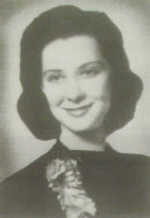
In Memoriam: Edith S. Lawson (1923 — 2006)
From March 6, 2008 Dedication Poster:
In recognition of her service to the Jefferson Parish Library System, where she devoted her life to promoting opportunities that would take people on many journeys and would expand their knowledge and horizons, this facility is hereby renamed the Edith S. Lawson Library in Westwego.~~~~~~~~~~~~~~
~~~ GOOD MOUNTAIN PRESS DIGEST #084 Published April 1, 2008 ~~~ == == == == == == == == == == == == == == == == == == == == == == == == ==Quote for the Beautiful New Orleans Month of April:"April is the cruelest month"
— T. S. Eliot, beginning of his poem, "The Wasteland"== == == == == == == == == == == == == == == == == == == == == ==
By Subscription only.== == == == == == == == == == == == == == == == == == == == == ==
Editor: Bobby Matherne, Asst. Editor: Del Matherne
[To Contact Bobby Click Here!]
To Subscribe, Click Here : http://www.doyletics.com/subscrib.htm
or here: <A HREF="http://www.doyletics.com/subscrib.htm">Click here</A>
To Unsubscribe, see bottom of Digest.
©2008 by 21st Century Education, Inc, Published Monthly.
To Read All of Bobby's Writings Click Here!
~~ Click on Heading to go to that Section (Allow Page First To Fully Load). ~~
THE GOOD MOUNTAIN PRESS DIGEST #084, April 2008 Archived Digests
Table of Contents1. April's Violet-n-Joey Cartoon
2. Honored Readers for April
3. On a Personal Note
4. Cajun Story
5. Recipe of the Month from Bobby Jeaux’s Kitchen: Blackberries on Pound Cake
6. Poem from Flowers of Shanidar:"Riverrun"
7. Reviews and Articles Added for April:8. Commentary on the World
- ARJ2: Krewe — Early New Orleans Carnival by Errol Laborde
- ARJ2: The Energy of Life — The Ringing Cedars Series, Book 7 by Vladmir Megré
9. Closing Notes - our mailing list, locating books, unsubscribing to Digest
10. Gratitude== == == == == == == == == == == == == == == == == == == == == ==
THE GOOD MOUNTAIN PRESS DIGEST #084 == == == == == == == == == == == == == == == == == == == == == ==
ARCHIVED DIGESTWORLD ISSUES ON THE WEB ~ ARCHIVED DIGESTWORLD ISSUES ~ 2000: INAUGURAL YEAR: Jun #1 Jul #2, Aug #3, Sept #4, Oct #5, Nov #6, Dec #7
2001: Jan #8, Feb #9, Mar #10, Apr #11, May #12, Jun #13, Jul #14, Aug #15, Sep #16, Oct #17, Nov #18, Dec #19
2002: Jan #20, Feb #21, Mar #22, Apr #23, May #24, Jun #25, Jul #26, Aug #27, Sep #28, Oct #29, Nov #30, Dec #31
2003: Jan #32, Feb #33, Mar #34, Apr #35, May #36, Jun #37, Jul #38, Aug #39, Sep #40, Oct #41, Nov #42, Dec #43
2004: Jan #44, Feb #45, Mar #46, Apr #47, May #48, Jun #49, Jul #50, Aug #51, Sep #52, Oct #53, Nov #54, Dec #55
2005: Jan#051,Feb#052,Mar#053,Apr#054,May#055,Jun#056,Jul#057,Aug#058,Sep#059,Oct#05a,Nov#05b,Dec#05c
2006: Jan#061,Feb#062,Mar#063,Apr#064,May#065,Jun#066,Jul#067,Aug#068,Sep#069,Oct#06a,Nov#06b,Dec#06c
2007: Jan#071,Feb#072,Mar#073,Apr#074,May#075,Jun#076,Jul#077,Aug#078,Sep#079,Oct#07a,Nov#07b,Dec#07c
2008: Jan#081,Feb#082,Mar#083,Apr#084,May#085,Jun#086,Jul#087,Aug#088,Sep#089,Oct#08a,Nov#08b,Dec#08c
2009: Jan#091,Feb#092,Mar#093,Apr#094,May#095,Jun#096,Jul#097,Aug#098,Sep#099,Oct#09a,Nov#09b,Dec#09c
2010: Jan#101,Feb#102,Mar#103,Apr#104,May#105,Jun#106,Jul#107,Aug#108,Sep#109,Oct#10a,Nov#10b,Dec#10c
2011: Jan#111,Feb#112,Mar#113,Apr#114,May#115,Jun#116,Jul#117,Aug#118,Sep#119,Oct#11a,Nov#11b,Dec#11c
2012: Jan#121,Feb#122,Mar#123,Apr#124,May#125,Jun#126,Jul#127,Aug#128,Sep#129,Oct#12a,Nov#12b,Dec#12c
2013: Jan#131,Feb#132,Mar#133,Apr#134,May#135,Jun#136,Jul#137,Aug#138,Sep#139,Oct#13a,Nov#13b,Dec#13c
2014: Jan#141,Feb#142,Mar#143,Apr#144,May#145,Jun#146,Jul#147,Aug#148,Sep#149,Oct#14a,Nov#14b,Dec#14c
2015: Jan#151,Feb#152,Mar#153,Apr#154,May#155,Jun#156,Jul#157,Aug#158,Sep#159,Oct#15a,Nov#15b,Dec#15c
2016: Jan#161,Feb#162,Mar#163,Apr#164,May#165,Jun#166,Jul#167,Aug#168,Sep#169,Oct#16a,Nov#16b,Dec#16c
2017: Jan#171,Feb#172,Mar#173,Apr#174,May#175,Jun#176,Jul#177,Aug#178,Sep#179,Oct#17a,Nov#17b,Dec#17c
2018: Jan#181,Feb#182,Mar#183,Apr#184,May#185,Jun#186,Jul#187,Aug#188,Sep#189,Oct#18a,Nov#18b,Dec#18c
2019: Jan#191,Feb#192,Mar#193,Apr#194,May#195,Jun#196,Jul#197,Aug#198,Sep#199,Oct#19a
To Receive a Monthly DIGESTWORLD Reminder — Click Here.
== == == == == == == == == == == == == == == == == == == == == ==
1. April Violet-n-Joey CARTOON:
== == == == == == == == == == == == == == == == == == == == == ==For newcomers to the Digest, we have created a webpage of all the Violet-n-Joey cartoons! Check it out at: http://www.doyletics.com/vjtoons.htm Also note the rotating calendar and clock that follows just to the right of your mouse pointer as you scroll down the page. You'll also see the clock on the 404 Error page if you make a mistake typing a URL while on the doyletics.com website.
The Violet-n-Joey Cartoon page is been divided into two pages: one low-speed and one high-speed access. If you have Do NOT Have High-Speed Access, you may try this Link which will load much faster and will allow you to load one cartoon at a time. Use this one for High-Speed Access.
This month Violet and Joey learn about Hugging Strangers.
#1 "Hugging Strangers" at http://www.doyletics.com/images/031608jv.gif
== == == == == == == == == == == == == == == == == == == == == ==
2. HONORED READERS FOR April:
== == == == == == == == == == == == == == == == == == == == == ==Each month we take time to thank two of our good readers of Good Mountain Press Digest, books and reviews. Here's our two worthy Honored Readers for this month. One of their names will be in the TO: address line of your email Digest notification. Our Honored Readers for April are:
David Dial in Los Angeles
Beverly Carroll in New Orleans
Congratulations, David and Beverly !
== == == == == == == == == == == == == == == == == == == == == == == == == == == == == == == == == == == == ==
3. ON A PERSONAL NOTE:
== == == == == == == == == == == == == == == == == == == == == == == == == == == == == == == == == == == == ==
Out Our Way:DETOUR THROUGH DE KALB
We were up early Saturday morning on the First of March to drive to the funeral of Del's last remaining aunt, Lois Legendre Clark Tann, whose beautiful photo graced our In Memoriam section of last month's Digest. Her son, Oliver Tann, had already seen the photo the previous day and thanked me for posting it when I talked to him before the services.
On the trip up we stopped at Crackerbarrel Restaurant for a late breakfast as we knew the funeral would be in the middle of the countryside. I like the pancakes they make with wild Maine blueberries cooked inside them. When I lived in New England, it was my favorite thing to do with the wild blueberries we picked. They were hardly bigger than BB's or buckshot, so they fit nicely into the pancake without having to be chopped up. Only problem is Crackerbarrel insists on serving blueberry syrup with the pancakes, which seems a bit over-the-top. In New England we always used maple syrup over our blueberry pancakes and I never even saw a jar of blueberry syrup. When our pancakes took a long time to arrive, Del and I wondered if it was taking them a long time to catch all those 'wild blueberries'. Del said, 'Yes, and what about the time it takes to put those tiny handcuffs on them!"
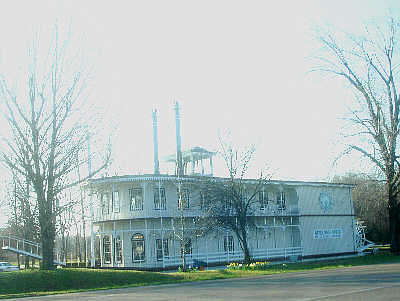
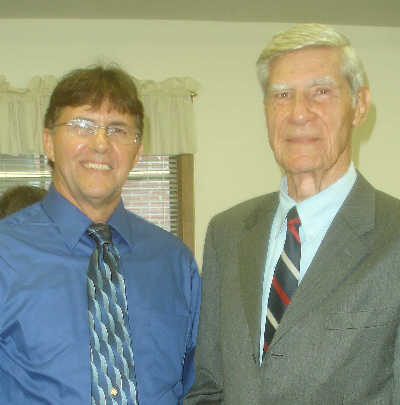
As it turned out, the ladies of the New Hope Methodist Church outside De Kalb had prepared a large banquet for those attending the funeral services, so no one went hungry. Hardy Owen Gordon, the minister, told me that the New Hope Church, has been in existence in this spot since 1830. Even though the area is isolated from any residents, the church was situated on the highest point of the hill with a panoramic view of the surrounding land. The original cemetery was right behind the church where Oliver Tann was buried and Del's Aunt Lois was laid to rest beside him. The service was led by Lois's son, Patrick Clark, and each of the four boys and one girl talked about their mother. In addition there were two visiting ministers present who knew Lois, one from her early church in De Kalb, and one from her later church in Pascagoula.
MIDNIGHT JAZZ IN GREENWOOD
Our plan was drive north to US 82 and then west over the Mississippi at Greenville into Lake City, Arkansas where we would pick up our usual route through Pine Bluff to our mountain cabin in Hot Springs Village. We stopped for the night in Greenwood, MS at the Pest Western Hotel. We thought it was a Best Western until we spend one night there with raucous people thumping and talking so loudly that we could make out entire sentences (some with obscene words) through the walls all the way until 2 am. We hit the sack at 9 pm and kept getting aroused by the obnoxious noise makers. Last time I awoke was about 1 am — I was getting impatient for the noise to stop. Instead of getting out of bed, I decided to start listening to the racket as if it were some modern jazz composition, because that's what it sounded like. If I could compose music, I could have written out the multiple parts. The train whistle when it came by like trombone blast, the people's voices as alto saxophones, their banging as drums, and the counterpoint of background voices flowing in and out and together played by various cornets and trumpets. I now understand modern jazz better than ever, but I still do not like it. About 2 am, the modern jazz riffs finally stopped, and I dozed off to a peaceful sleep. On our bill the next morning, there was no entertainment charge for the music.
We said goodbye forever to Greenwood. We will never stop there again. But Mississippi had another curve to throw our way, the rickety bridge over the river into Arkansas. It looked like Huey P. Long vintage (mid-1930s) by the narrow width of its lanes, but it was two-way bridge of only two lanes with no center divider. We looked longingly to the left at the new interstate bridge that was almost completed construction and wished it had been done already. We arrived at our cabin in the afternoon. We ate out on our deck overlooking Lake Desoto around dusk. At night we filled the large Jacuzzi tub and soaked our travel-weary bones in mountain water. We gathered around the fire I built in the hearth and played Scrabble, our favorite evening activity when we are in the cabin. We save up all our Scrabble muscles for that week in the mountains and after six games, Del and I were tied 3-3. After my being down 3-1, I didn't want to risk moving off the even-tie into the losing column again, so we called it even for the week.
SNOWBALLS and SNOWMEN
On Monday we left our cabin to attend the greeting breakfast. Instead of being greeted with happy felicitations, the greeter announced that she had the flu, that a storm was coming with 70 mph winds which will knock tall pine trees down on our automobiles, that the roads would freeze over from the snowfall and cause auto accidents, that it was past firewood season (so the little bit of firewood was wet and unburnable) and, to top it all off, she explained that it was the skunks mating season and the little buggers would be spraying their foul scent while they mated inside our entrance atriums! Oh, and by the way, she added, the crafts lady has both of her kids sick with the flu, so the stepping stone session will likely be canceled. Those who just had to make a stone should pay in advance anyway. Look, I can't make up stuff like this! This was a real person, a woman in her forties, who is obviously unhappy in many ways, but still had to get out of bed to lay these multiple phobias on the roomful of guests who were starting their first day of vacation! My guess is that the Condo-Nasty is such a stinker herself it is no wonder she got all excited by stinkers who are actually able to find a partner to mate with.
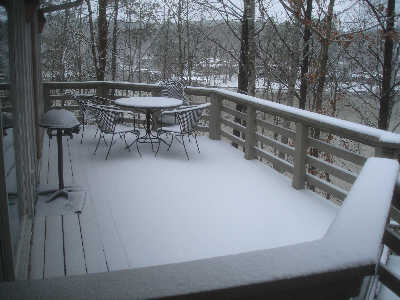
Well, neither of us got the flu. No pine trees fell on our car, in fact, there were no high winds whatsoever. The snow was absolutely beautiful, best snowball making snow I've ever seen or thrown. The roads stayed clear. Our hearth had a roaring fire in it thanks to the extra firewood I had fetched the night before. I started the fire using the shredded paper from our shredder at home which makes excellent kindling. We neither saw nor smelled any skunks, fornicating or not. And, as is our habit, we didn't sign up for any of the crafts. Instead we did what we go to our mountain cabin to do: we enjoyed each other's company, ate good food, played Scrabble, looked out on the lake, visited friends in the area, and generally relaxed for a week.
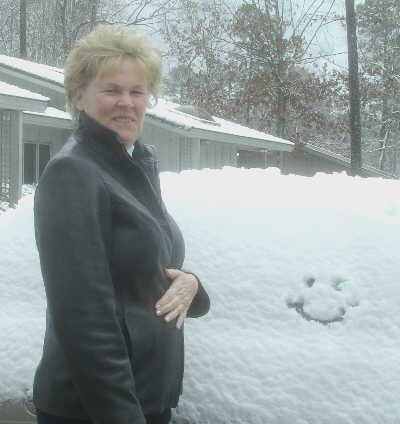
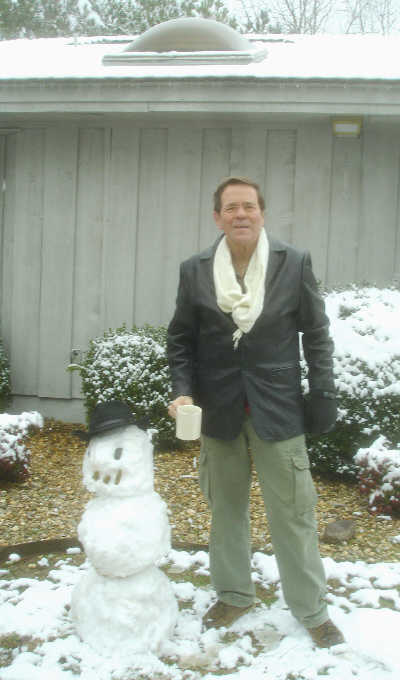
We also did something that Del and I have rarely gotten to do: make snowballs and toss them at each other. Plus we made a snowman. I didn't have carrots or sticks or a pipe, so I use small rocks for his face and placed my hat on his head. At one moment the snowman whispered something which I bent down to hear. It sounded a little like, "Catch me if you can!"
After the lugubrious excuse for a greeter's breakfast, we came back and I set up my laptop with the outboard mouse, keyboard and additional monitor for my week's work. I kept my website statistics updated, answered emails, and wrote in my daily journal, among other things. I had also brought several books to read from. Del watched her new DVD on Tai Chi on her new laptop, and later in the week we watched an Instant Play movie from our NetFlix queue. It was "Lost in Yonkers" (1993) — a
funny movie about two kids parked at the German taskmaster grandma's house and candy store in 1942. A sweet dingbat of an aunt and a scheming Uncle Louie rounded out the cast of adults who orbit the two boys — the boys steal most of the scenes. Funny, poignant wild ride back into the 1940s. Our new HP Pavilion Laptops are great, and with the broadband in the room, I was also able to watch several LSU Baseball games in full screen video.
The next morning there was at least four inches of snow piled on the Cadillac. I used the cabin's broom to brush it away so we could drive down to Hot Springs center to meet George and Annette for lunch at Rolando's Restaurant. After the snowball fights and snowman construction, we came in, and I read from Thoreau's Journal exactly 149 years earlier to the day (I'm reading each day in sync) that "It snowed last night." Just as it had snowed the night before for us — a synchronicity that I would have missed had I not been reading each day on the day of the year that he wrote in his Journal.
FUN IN THE CABIN WEEK
I spend most of my time on my laptop installing new software. Couldn't get my .html editor installed, but was able to upgrade a bunch of review pages using Word Perfect .html templates and Notepad (text editor). Del added contact information into her Outlook on her laptop. I got a notice from Google Calendar that it's possible to synchronize events in your Outlook calendar with the Google calendar, and since Del and I are able to click on and off each other's G-calendar on our own G-calendar, by synchronizing her two calendars, when she adds an event to either of her calendars, it will appear in my Google Calendar within an hour or so. So now I can be, sitting at home while I type these words on March 27, 2008, check where she is. I just did and was informed that she is at a flower show in Harahan. If you haven't checked out Google calendar, let me suggest that you do. It's replaced the blackboard, the paper calendars, and our ACT Contact Manager calendar for most of our events. Easy to sign up, no cost, and you just click to insert a calendar item in the very place you want it to appear. If the event gets moved, simply drag and drop to new day and time and the content of the event also gets changed. Plus the biggest advantage is that you do not have to Back-up your calendar. Google does it for you. In fact, the calendar does not exist in your computer, so that any handy computer, in a coffee shop in Vienna, perhaps, can allow you to check your calendar.
We left the cabin only to have lunch the day after the first snow event. The roads were dry and the hillsides and homes were covered with white. The bare limbs of the trees looked so much like white lace patterns along the highway into Hot Springs. George and Annette were about 20 minutes late because coming in from about 30 miles west of us, they got stuck behind a snowplow. Two hours later after lunch with them, the ground and trees were back to their ruddy and gray tones.
SNOWSTORM REDUX

Our other scheduled event was late in the week, an early 5:30 dinner with Evan, his mother, Joan, and his son, Ian, at Fisherman's Wharf. I had been tracking a winter storm watch on the weather gadget that Vista provides to the side of my LT screen, but the warning was from 6 pm to the next day at 6 pm. I figured we could get back safely before the storm began, given that 24-hr window. I was wrong. The snow began falling at exactly 6 pm and we had to motor back 24 miles over hilly and winding roads with driving chunks of large snowflakes filling our windshield. It was a nerve-wracking and challenging drive to make it back to our cabin safely. Our easy 30 minute trip had become a nightmarish obstacle course, a five-mile stretch of the wide two lane road was under construction, and I had drive with a foot-deep drop off close to the passenger side of the car where the road bed had been scraped away and not yet replaced. Around curves and up and down hills in very restricted visibility. Twasn't no fun, as the locals might say. My biggest concern was making it up that last high hill into the village. Would the road be covered with snow and too slippery to make the grade. Luckily it wasn't and we arrived home, frazzled nerves, but safely home after a wintry adventure in the mountains.
The next morning Del and I got to make snowballs, but we demurred on the snowman bit. We never caught the first one anyway. This was our last day and we had kept it open for our traditional hot baths in the Buckstaff Baths in downtown Hot Springs. Looking at the snow, which was sure to stay around for a couple of days, we decided not to retrace our steps from the night before and we remained in the cabin and blew off the hot baths for this year. That night we packed, so we could leave early the next morning to get to our daughter's house in Alexandria, Louisiana by the early afternoon. We did.
NATCHITOCHES AND NO PJ'S
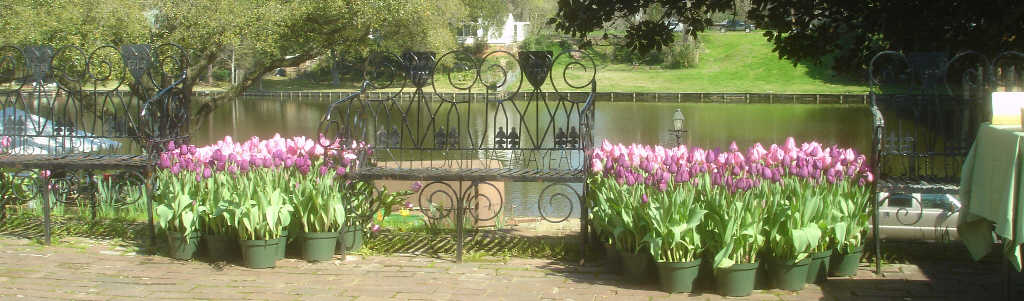
We had planned to stop in the old town of Natchitoches (that's NAK-EEE-TUSH) where there's a PJ's Coffeeshop directly across Hwy 6 from Northwestern State University, but alas, the PJ"s was closed for renovations. We drove downtown, only to find the street overlooking the scenic Cane River was lined with kiosks of artists and tons of blooming tulips in pots alongside the kiosks. We parked the car and walked along the main street which resembles very much the French Quarter with its stores, lacy wrought iron balconies, and cobblestone streets. A sign proclaimed that the town had been receiving visitors since 1714 — almost as long as New Orleans.
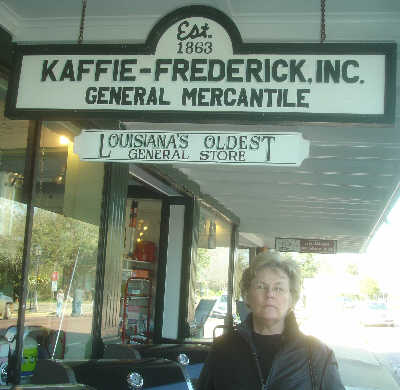
We shopped in Kaffe-Frederick's General Store which is the oldest continually operating store of its kind in Louisiana, going back to 1863 in the same location. It is a living, operating museum, and you can buy toys and items there that you can find almost no where else. On the way out of town we drove across I-49 on Hwy 6 to get gas at a Chevron Gasoline Station, which coincidentally has the best crawfish Natchitoches meat pies for under $2 a piece. We drove to our daughter Kim's house, had supper with them. I drove out to see our grandson Weslee on a baseball field getting ready for his game. Later that night Weslee's younger brother Thomas came back from a Cotillion Dance with some helium balloons and we had fun inhaling the helium and speaking in high voices. We drove home the next day, a Sunday, and it took us only four hours with no traffic. The stopover in Alexandria breaks the ten hour trip to our mountain cabin about in half. Getting home before noon meant we had time to unpack, change clothes, freshen up, and head out to Algiers Point to their Annual Friendship Fest.
ALGIERS POINT FRIENDSHIP FEST
Algiers is part of New Orleans, a small part of it located on the West Bank of the Mississippi River directly across from downtown. The Fest is like a large block party which centers around the Old Point Barroom. The levee acts as an amphitheater for the festivities. A band played constantly in the blocked and painted green street. Lots of Irish and other costumes around. The kids had a cardboard slide fashioned for them out of large disassembled cardboard boxes when formed a chute down the steep levee side. Kids around 2 to 12 would take turns sitting on a small piece of cardboard and slide quickly down the chute to the street level. Lacking an annual snowfall, this was one of the ways we made up for the lack of snow sledding in New Orleans. I recall us riding garbage can covers down a large pile of clamshells several times, a much more hazardous ride if one falls off than the lush green grass on the levee.

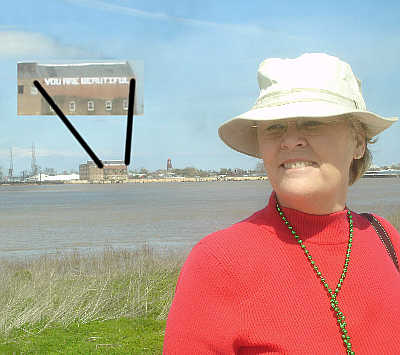
We had packed some drinks, coffee cake, and folding chairs and arrived at Joy's house. We with Joy and John, Gus and Annie walked up the levee and plopped our picnic stuff on the top of the levee which gave us a full view of the band, and the folks dancing down in the street. There was ample food for everyone. Later Nick and Cathy showed up. We had met them at the Mardi Gras breakfast, so we were already old friends, by New Orleans' standards. A band of bagpipers in kilts came by piping. It was amazing to see the pipers marching along and playing and in the background there was the French Quarter, St. Louis Cathedral, and the steamboat Natchez playing on its authentic steam whistle calliope. A large ship motored up river as we came to our picnic spot. On a building just across the river, in the Ninth Ward which was devastated by Katrina, was a sign easily readable a mile away that was painted on an old building, YOU ARE BEAUTIFUL. No doubt it was a tribute to the New Orleans which once was, is, and will be again. We enjoyed the sunny skies, shirt-sleeve weather, the good food, the company of our friends, the music, the dancing, the costumes, the people who came by, and the kids sliding down their cardboard chute. It was hard to believe that just earlier the previous morning we had driven through a winter wonderland of hillsides covered with snow and now we were sitting in shirt sleeves on the levee with the sun on our faces.
GARDEN AS PHYSICIAN
We were back home and the sun was warming the ground, so it was time for me to make rows in the south side of our center garden and start planting. With my discovery of the transposable genes in plants, I have decided to plant a vegetable garden for the first time. It was something my father and his father before him (Hilman and Clairville) both did and every time we visited each of them we were required to take a walk through the garden. I disdained growing vegetables until Anastasia wrote about the "Seed as Physician" and I found that with their easily transposable genes plants could and do adapt to the human being who plants them to adjust their protein structures to provide exactly the nutrient forms which will adjust any imbalances otherwise present in the person's diet from eating foods grown elsewhere. Plants grown by one's own hand absorb the sweat of one's brow and hands and custom-tailor their fruit to keep their grower healthy and long-lived. They become the physician who diagnoses and prescribes as well as the pharmacist who compounds and prepares the physician prescription in a tasty fruit or vegetable.
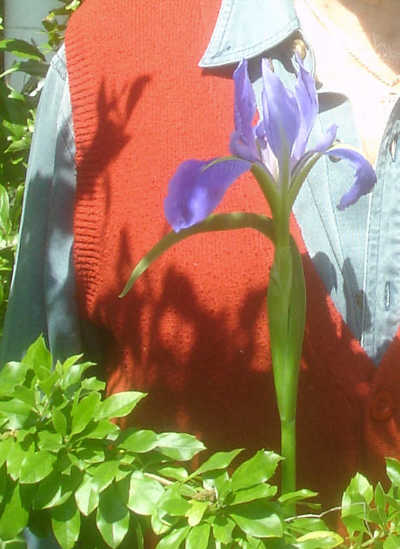
My plan for our vegetable garden was as follows:
From the East Portico looking at garden from middle to the South: Cucumber vines to go up the trellis archway. Okra which will get tall and fruit in the summer months, so they are placed farthest from the morning sun which is full on the garden. Then the eggplants. Put one in the left side of center garden about where the one eggplant plant I experimented with last fall.
Next row heading East towards the morning sun: From left: four bell pepper plants. Then four Creole Tomato plants.
Next row: green beans planted from seeds, which have yet to sprout. May be too early
Next and Last row: radishes, which are fully leafed and showing some red above ground. As a flourish, I sprinkled parsley seed over the rows other than the low-growing radishes. Also sprinkled some marigold seeds to help with the bug control.
Ground was luscious-looking and full of earthworms when I passed the tiller. Should be a great garden this year. A learning garden for sure as the plants have a new gardener to train in how to care for them. I will need to apply some Bio-Dynamic barrel compost later in the Spring. I have already added about half of the B-D mulch from the front mulch bed to the vegetable garden. After finishing the planting, I cut some bamboo canes from the North Portico garden. I trimmed and set them in the earth next to the plants which will require staking: Tomatoes, Bell peppers and Eggplants. Later I will find some wire cages to support their fruit-laden branches.
GRANDPARENTS DUTY WEEKEND

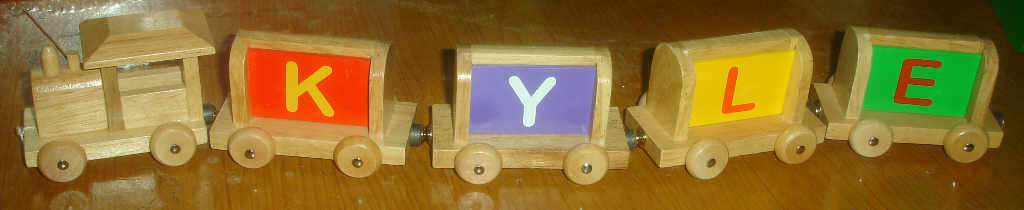
When you have 19 grandkids and 2 great-grandkids as we do, occasionally the scheduled events collide. On the Ides of March, Del attended our grandson Kyle's fifth birthday party in the Baton Rouge area and I had to disappear into the bowels of Metairie to attend a boring Rummel's Grandparent's Booster meeting in order to get tickets for the upcoming Grandparent's Day Mass and luncheon with our grandson, Gabe. He is a first-year freshman at Rummel, a Catholic High School, and we wanted to support him as much as possible. I would have preferred to stay home and work on my review of Energy of Life, but I managed to get back to it as soon as possible. It was a dumb meeting again. I ate several slices of the crawfish leeks tart I brought and not much more. I had decided to practice on the leeks tart as I was planning to take one to the Easter Dinner at Algiers Point and I wanted to get it just right. I returned home with our three tickets to Grandparents Day at Rummel and mailed off Gabe's ticket to him.
I wrote about three or four pages of Energy of Life review during the afternoon before Del got back home from Kyle's party. We ate the rest of the leeks tart for supper. Had popcorn with a movie later. A noon LSU baseball game had been scheduled. Postponed to 3, then to 5, then 7 pm, and then canceled till Sunday for a double header of two 7-inning games in Knoxville. LSU was swept in all three. Allowing hits in two-out situations over and over which did the Tigers in. Hope they learned something from the experience.
EASTER WEEK and SUNDAY FEAST
This month of March marked the official ending of the LSU Basketball season (when the team lost to South Carolina in the SEC tournament) and the beginning of the LSU Baseball season. It's only Paul Mainieri's second year as coach, but all Tiger fans have high hopes that he will return us to being an elite baseball program. The Geaux Zone of LSUSports.net is a bargain at $99 and broadcasts all the home games and some of the away games for baseball. They also broadcast some of the basketball games and one football game a few years ago at Kentucky which CBS took so long to decide to broadcast that TigerVision couldn't get ready to broadcast in time.
 Tiger fans should know about the Geaux Zone. It has had some technical problems, but after early season flaws, it's now possible to watch an entire game in reasonable volume. I play the game on my new LT so that I can work un-hampered or slowed down on my PC next to it. Still have a lot of reviews left to upgrade to Server-Side Includes and that is a repetitive operation which requires little attention away from a usually very slow baseball game. They mesh very well. If I had tech's working for me, it's the kind of work that I would assign them, so I assign myself to do that kind of work while enjoying an LSU baseball game. The Tigers have to do their part to make it a Win-Win situation for both of us!
The other Spring time event for March this year was Easter. The vernal equinox was on a Thursday, the Full Moon on the next day, and two days later was the first Sunday after the first Full Moon after the first day of Spring, otherwise celebrated as Easter Sunday. Those three days being so close together led to the earliest Mardi Gras and the earliest Easter we'll have for the next 200 plus years.
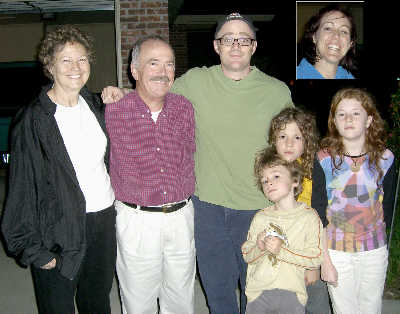
Our son Jim came in with his wife Gina from Beaumont, Texas and we had a pre-Easter lunch here at Timberlane. Del brought her mom, Doris, over and picked up some Po-Boys at DiMartino's and some shrimp potato salad. We had a feast and a nice visit. Gina asked me about doyletics and I helped her trace a food dislike for asparagus. To help, I opened a can of asparagus spears to make sure she had the doyle present as she counted down the time marks. If you're not sure what a speed trace is, that's what she was doing, and you can read about how it works here. After the trace, she ate a couple of asparagus tips and said, "They taste like green beans." That simple statement indicated to me that she had never been able to taste them before, she reviled them so. For the first time she was able to shut off the droning static from her doylic memory, wake up, and taste the asparagus. If you have one food dislike and would like to learn to do a speed trace, that's how simple it is. You can have a confirmed speed trace within minutes, and then go on to trace and erase other sources of doylic static from your life.My friend Brian was to attend the Mass of the Chrism with me on the Tuesday of Holy Week at the St. Louis Cathedral in Jackson Square. If you've ever seen a New Orleans postcard or iconic image with a church in it, chances are you've seen the Cathedral. It is situated on one side of Jackson Square opposite from the river. There is General Jackson rearing his horse on its hind legs right in front of the cathedral. Once a year all the priests from around the Archdioceses of New Orleans come to the Mass of the Chrism at the cathedral to bless the oils using in all anointing sacraments for all parishioners for the coming year. Over 400 priests fill the cathedral for the High Mass and blessing of the oils. It also includes the renewal of the priests vows for the coming year. I have made most of the Masses of the Chrism for about 20 years after I discovered that they were being held. It is a solemn time of prayer for me and I pray for those, especially the sick and dying, who will be anointed by the oils that are blessed in my presence during that Mass.
On Thursday, Del and I signed up for a Mediterranean cruise for later in the year and I had to get a passport photo taken at Walgreen's and mail off my passport renewal. It expires on my birthday in July, but I can't wait till it expires or I might not have enough time to renew it with the passport delays. I took my passport out of its special wallet and laid it on my scanner to scan it before I sent it off into the mail-losing system of the USPS. After placing it on the scanner, I remembered that I had made a copy of the passport as a backup years ago, and I began a search for my back up copy. I found two earlier expired copies and then I remembered the back up copy was in my wallet. So I returned to the corner top where the passport application all filled out lay, ready to be stuffed in the required padded envelope with the new passport photos and the $75 check, but where was the soon-to-expire passport? I called Del to help and we searched all the usual areas where I might have laid the passport down as I searched for the back up copy. Problem was the passport was hiding safely under the opaque cover of the HP scanner. Del and I gave up eventually, and I sat down to write my journal notes for the day. As I got to the part where I described the problem with the missing passport, I remembered placing it on the scanner. I reached my left arm out, lifted the cover, and there it was. Our assumption that I had laid it in a visible location kept us from finding it. I finished the scanning that I had in mind earlier, but didn't re-print the back up copy as it takes too long to get the color printer working right. The passport application is now on its flight to the State Dept and will be ready for our upcoming circumnavigation of Italy (as much as one can sail around the peninsula) from Venice to Monaco. I found out that my brother Paul and his wife Joyce are taking a bus tour of Italy a couple of months before we do a seaside inspection of the same country. We got all the bases covered, to use a baseball metaphor.
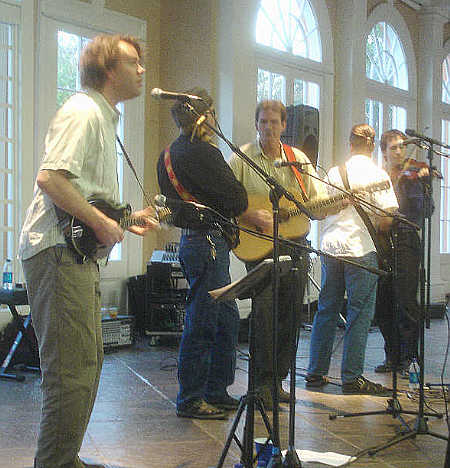
That same Thursday we went to a Twilight Concert in City Park and heard the High Ground Drifters. First time I ever heard a mandolin player carry most of the melodic lines for a bluegrass band. Paul "Willie" Williams is an awesome mandolin player. He plays like Django Reinhardt and accompanies himself at times as well. It was appropriate that the band closed with a rendition of a Django tune. My friend Kevin Dann, a mandolin player from Vermont, listened to Williams band play
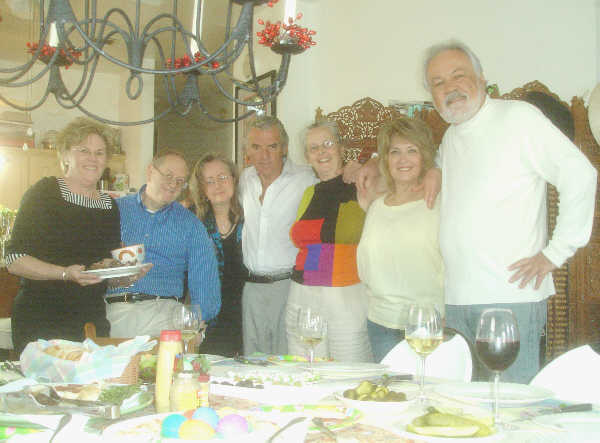
On Easter Saturday while waiting for Jim and Gina to arrive, I had baked a couple of crawfish leeks tarts. Del and I ate some for breakfast and saved one to bake to take to the Easter Dinner at Algiers Point. We were one of three couples who joined Gus and Annie at their home alongside the levee. The table was spread with delicious dishes of all sorts, ham, lamb, casseroles, Italian bread, and various desserts, including a delicious Karo-syrup pecan pie and an Italian Strawberry Trifle. Gus and I sat in the newly redecorated screened porch at the back of the house which has a view of the levee. Sitting there you can hear the Natchez calliope and watch ocean-going vessels passing in the river. I'm sure that later in the Spring with a facing wind, you can smell the river water in the breezes cooled by skimming the surface of the fast flowing Mississippi only a couple of rods away.
BIRD SANCTUARY AND GRASS CATCHER
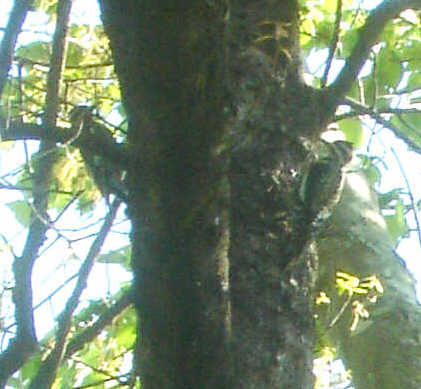
On Good Friday, I spotted a flock of cedar waxwings in the Louisiana Cypress tree off the North Portico side of Timberlane. Could identify the species by the crest on the head of one of them in profile and the size and motion of the flock. There was a squirrel eating something on the limb of the same cypress. They didn't seem to have located the red berries on the South Portico side yet. Then I spotted about six red-headed woodpeckers on the red maple in the northeast corner of Timberlane. I shot a bunch of photos and one mpeg to capture them. They moved very quickly and stayed mostly on the opposite side of the tree when they noticed me move. That made it hard to catch more than two of them in one photo. Then I saw a gorgeous Red-shouldered Hawk with the dramatic black and white striped tail feathers soaring over Timberlane, after some prey no doubt, as evinced by the alarmed cries of several birds in the northwest portico red maple. The hawk did not stay around long enough for a photo op.
Saw one mocking bird and several blue jays around Timberlane that same day. Del spotted a sparrow sprinkling water over itself in our bird bath. Later that afternoon I thinned out the radish sprouts to about an inch apart. Noticed that as I pulled out the torpedo grass, the ground gets aerated. Good thing. Easier to pull out the entire torpedo grass in tilled ground. In hard ground the root remains underground to re-sprout. So tilled ground and assiduous weeding add up to an extirpation of the torpedo grass over the coming years from the vegetable garden. Then I'll need to find some other reason to aerate the ground. Maybe an extra pass of Tillie our tiller through the rows.
My Snapper mower, when I finished the East and West Portico lawns seemed to have its grass catcher drooping to the ground. As I inspected the large U-Shaped Bracket holding the grass catcher's bag, I noticed that a split had occurred where the lower bolt goes through the bracket. It needed to be welded tight or a new bracket purchased. I talked to friend JB about the Gretna Blacksmith Shop and then decided that I'd best check the price of a new bracket. With delivery it came to only $23, so I ordered one and it has already come in and is ready to be installed at my first opportunity.
BIRTHDAY BROTHERS AND FEAST AT TIMBERLANE
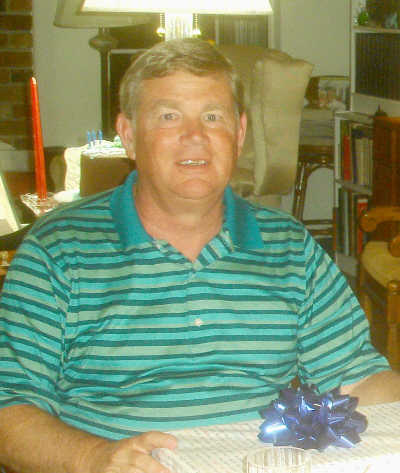
Del's brother Dan came for a visit during the week which his birthday would happen, so Del planned a dinner for Dan and his two local offspring, Randy and Cherie, and their spouses and children. When she mentioned the birthday dinner celebration, I immediately thought of cooking the mahi-mahi I had in the freezer. I usually use redfish in a courtboullion, but any fish with a solid flesh like redfish, black drum, sheepshead, or mahi-mahi would do. That, plus a large mandala salad and a chocolate doberge cake from Gambino's Bakery would make a fit feast for Dan on his birthday. I invited my brother Paul, who share's Dan's birthday, but he had other plans, and his new home in Opelousas makes it a long trip just for a birthday dinner. Doris was supposed to come, but like she has a tendency to, she called Del in the afternoon to say she didn't feel like coming. Del told her that her son was coming to get her and Dan was able to extract her from the assisted-living apartment and get her over to Timberlane for the birthday feast. One of the spouses got derailed — literally — he works for the railroad and had to put in late hours due to a train derailment. He was able to come for some supper but had to leave again right after eating. It was a wonderful evening. It felt good to be able provide a central place where Dan could celebrate his birthday with his mother, sister, two local children and his grandchildren. He's in the process of building a place in downtown old Covington and moving back here from North Carolina within the next year.
BASEBALLS BOUNCING OFF BATS AND BASKETBALLS OFF FLOORS
LSU's baseball season is in full swing by the end of March. They won a series from Arkansas, nearly sweeping the series after two 11-inning games. They're still a year away from a visit to Omaha, I expect, but perhaps they'll host another regional after skipping last year. The big balls are bouncing right for the New Orleans Hornets this year and they are at the top of the Western Conference and leading the Southwestern Division. They are playing even harder as the last dozen games of the season loom ahead and are playing like a top seed for the finals. I've never been through the NBA playoffs with my team in the mix, up until now. With baseballs and basketballs bouncing all over, there are collisions of games happening, but I'm ready for them. When LSU is televising in the Geaux Zone on the Internet and the Hornets are in HD on Cox Sports Channel, I can take my HP Pavilion Laptop and watch the Tigers on my lap and the Hornets on the big screen. This is the first time I've ever been able to double up two games over the Internet and Cable before. When I add in a HD TV with a HDMI cable, the Internet games will be able to display on one of the big screens adjacent to the Cox HD screens. All in due time.
SO LONG FOR NOW . . .
And the time to say goodbye till next time has arrived once again. It's always fun having you visit with us retrospectively each month. Till next month, God Willing and the levees hold even if the River rises above 17 feet on the Carrollton Gauge, we'll see you in these pages powered by the renewable resource of recycled electrons and pixels. May you have many happy April Showers of holy water and family blessings.
~~~~~~~~~~~~~~~~~~~~~~~~~~~~~~~~~~~~~~~~~~~~~~~~~~~~~~~~~~~~~~
IMPORTANT MESSAGE:
To those Good Readers who are puzzled by How the Moon could be Rising In Front of a Mountain, Click on Photo. To see 161021 photo, Click Here. ALSO: if you are puzzled because you No Longer get our Monthly Reminder, you may have Changed Your Email Address without notifying us. NOTIFY US NOW by a simple Click Here!
Here's the Sting:
You will NOT receive a Monthly Reminder unless you have Re-subscribed under your new address to DIGESTWORLD.If you've already receiving DIGESTWORLD Reminders, ignore this message.
If you're not subscribed, and would like to Subscribe to DIGESTWORLD Reminders to receive one short email a month to inform you of the latest ISSUE, now's a good time. SUBSCRIBE NOW
by Clicking Here.Yes, this message does no good to those who changed their email address without notifying me — but it can alert those of you who are going to change your address.
If you've changed or are planning to change your email address, Click Here to SEND NEW ADDRESS. (Alternate way is to copy into your Browser this URL: http://www.doyletics.com/subscrib.htm )
EASE OF VIEWING NOTES:
NOTE: For Internet Explorer Browsers, DIGESTWORLD is best viewed at 100% Zoom and the Window's width sized so that Digest Archives lines are single-spaced, just barely. Adjust Window width so that Mountains almost touch the Archive Numbers, especially if you find some Photos overlapping text.PHOTO CAPTIONS (CURSOR FLYOVER ISSUE RESOLVED):If you have been enjoying the photos in DIGESTWORLD, but have wondered who or what you were looking at, you will now be able to hold your cursor still over the photo and the photo's description will appear. (Test on Butterfly-Crab Image at Right.) We spend a lot of time writing these photo captions and hope you will read them. All the Archived Issues have been updated to provide descriptions when your cursor rests for a second on a photo. Note that older Reviews have not been updated. If you haven't finished reading text when description disappears, move cursor away and back on photo to finish. We thank you for your patience and hope this pleases you.
New Quotes Added to quotes.htm this month:
- Expectations rise with the tide just like boats.
Bobby Matherne, US writer- The only difference I’ve found in Congress between the Republican and Democratic leadership is that one of them is skinning us from the toes up and the other from the ears down.
— Huey Long- The tyranny of a multitude is a multiplied tyranny.
— Edmund Burke- The tendency of democracies is, in all things, to mediocrity.
— James Fenimore Cooper- A demagogue tries to sound as stupid as his audience so that they will think they are as clever as he is.
— Karl Krauss- What gives the new despotism its peculiar effectiveness is indeed its liaison with humanitarianism, but beyond this fact its capacity for entering into the smallest details of human life.
— Robert NisbetNew Stuff on the Internet:
- A Cajun Seven Course Meal (With Cajun Music aussi, naturellement, so put your ears on, Cher! Thanks to Barbara Knobloch for sending this Tidbit along.)
- A LSU Photos from the Past Black & White Vintage Shots of Campus with Horseshoe Tiger Stadium, for example. Thanks to Ginger Thiele for sending this link.)
- New Stuff on Website:
- A Amazing Photos Tidbits Chefs Playing with their FoodThanks to Kiki Butgereit for sending this Tidbit along.)
- My Favorite Zen Reviews:
1. Philip Toshio Sudo's
Zen Computer .
Excerpt from Review:The strangeness of zen and the difficulty of understanding zen are portrayed in the content of the above two cartoons. Philip Toshio Sudo uses the metaphor of the computer to explain zen or the metaphor of zen to explain computers. He calls the book a "Zen Computer" and structures the book as if it were an instruction manual for a 'zen computer' — one which must be booted up during the process of reading the book, as the book is the only incarnation of the zen computer. So read on, boot up, and learn about zen, learn about computing, and learn about yourself.
On the process of booting up a computer, Sudo gives us this brief tutorial:
[page 37] If you are ready to begin the application, it's time to turn on your computer — in computer jargon, to boot up.
With the initial jolt of electricity, the computer starts preparing itself to get up and running, taking inventory of itself, setting switches, installing programs. In essence, the machine has to kick start itself, "pull itself up by its own bootstraps" before it can start working; hence the term boot.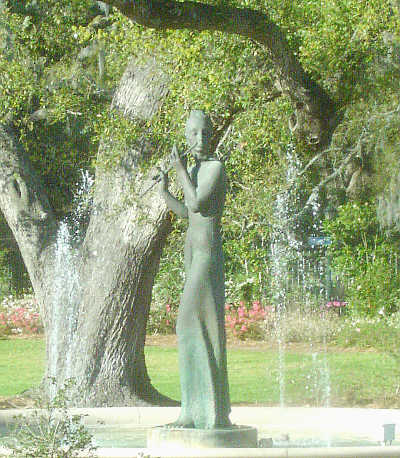
What he says is true, but the essence of bootstrapping — while he promises to share it — he simply glosses over it. Here's the essence of the bootstrapping process, as I understand it. Once you understand the process this way, the reason for the expression used to describe it will be illuminated for you.
1. To start a computer working you need to load a program into it.
2. To load a program you first need to load a program loader.
3. The program loader can then load programs to run your applications.
4. The program loader is a program.
5. How does that program get in?In short: how can you get a program into the computer without a program already inside the computer to load it? It's like lifting yourself by your own bootstraps. Bootstrap Paradox!
In the 1960s our new mini-computers had sixteen switches on the front that corresponded to the 16-bits of two adjacent bytes of computer storage which was its basic unit of storage. When we stored a piece of data into the computer using those switches, we called it "fat-fingering" data into the computer. (This was before we had keyboards and monitor screens for entering data.) To start up a computer back then, we had to fat-finger the bootstrap program into the front panels every time we powered on our mini-computers. Then we could load the program loader and then applications. This process is all automated today using read-only memory (ROM) and hard drives on our present personal computers. ROM holds the bootstrap loader. The boot sector of the first hard drive holds the primitive program loader — which is why your computer will not boot up if that sector is destroyed by a virus or errant program. We may ignore the whole bootstrap process today when all the work takes place behind the scenes of the computer panel, but if we wish to understand how our computers "boot up" we must go behind the scenes and understand the process described by the Hungarian mathematician, János Bolyai, in the quotation that appears at the head of the Chapter "Boot" on page 37:
"Out of nothing I have created a strange new universe."
2. Robert Aitken's A Zen Wave — Basho's Haiku & Zen
A funny and insightful look at Hollywood funeral practices by the Englishman, Evelyn Waugh (EEVE'- LYNN WHAW). A Perennially popular ARJ Review.
Excerpt from Review:
What is a haiku and where did it come from? Aitken tells us its origin in the Introduction.[page 20] Historically, haiku developed from renku, the linked verse form that was popular among leisure classes in Japan from the earliest literate times. One poet would write a line of seventeen syllables, and another would cap that with a line of fourteen syllables. A third poet would add another line of seventeen syllables that would be linked to the first two lines in poetical intention. A fourth poet would cap that, and so on. The result would be a long poem of verses linked with associations shared by the participants, and the movement in imagery, intention, and implication would, when successful, be fulfilling for the entire party.

Haiku very much
One can have a start —
Voila! Zen of art.I thought I knew about haiku before I read this book. Well, I not only learned more about haiku but a lot about the Japanese language and my own language in addition. The haiku above I wrote in the margins of page 15 of the book. It was inspired by the following passage in the Foreword by W. S. Merwin:
[page 13] For art itself is not altogether possible (it is one of the things about it that we prize), and yet it exists, for all that — just as we live not only in the absolute but at the same time in the world of the necessary and the possible.
This book is a work of art by that definition — it doesn't seem possible and yet it exists. The subtitle comes from Aitken's M. A. dissertation title, a work he says he doesn't think to be adequate today but one he learned a lot from writing. The art of doing the impossible sometimes requires a pilot project first. So, where do we start with this review? Let's just jump in.
The old pond;
A frog jumps in —
The sound of the water.

3. Gustie L. Herrigel's Zen in the Art of Flower Arranging
Here is an insightful book on Japanese Flower Arranging. Got time to live beautifully? Read this little book, buy some flowers, and get to work.
Excerpt from Review:

In this delightful book, the wife of Eugen Herrigel follows the tradition of "Zen in the Art of Archery" set by her husband. She discusses her introduction, describes the components of a Japanese flower arrangement, and gives some background and history of the development of flower arrangement from its roots in Zen Buddhism.
As in archery, flower arranging is a solitary art performed in a silent manner. Herrigel performs a service by providing a verbal description for Westerners of a non-verbal Eastern practice. Her goal is to interest her Western readers in studying Japanese flower arranging more than in teaching them how to do flower arranging from the book. She shows the heaven, earth, and spirit components and the male/female aspects of an arrangement so that the average reader can begin immediately to identify these in any arrangement. She illustrates the book with ink drawings of many different flower arrangements in the various styles described in the book.
Since I first read this book, I began arranging fresh flowers in our living spaces each week. Here's an example of one of my arrangements. Thanks, Gustie!
4. Ray Brooks's Blowing Zen

Excerpt from Review:Like Ray Brooks playing a shakuhachi flute Zen piece, I blew right through this book in three short days around Christmas. Brooks began his adventure as a "Zen tourist" — he went to a three-day Zen meditation retreat where he met a man playing the shakuhachi or Japanese Zen flute, which he had never seen before. Ray was looking for the authentic life, but had no idea what that meant for him. His first hint came to him when during a break between excruciatingly painful zazen sessions, he got up to walk around the Zen garden outside.

[page 7, 8] After washing, I set off down a winding, cobbled path, through the flawlessly manicured garden, passing plants and trees that had succumbed to the discipline of a Japanese Zen gardener. Rocks and stones were deliberately placed, some surrounded by a white gravel that had been raked into ripples of perfection. My eyes were drawn to a few rebellious stones that had escaped onto the path. I wondered if the perfection of the raked gravel symbolized an outward perfection of a Zen mind. The stones on the path: unruly thoughts.
Leaving the retreat Ray began to have "Pipe Dreams" in Chapter Two as he imagined himself playing the shakuhachi. He began a quest to find a flute for himself. He located a CD of Katsuya Yokoyama playing the flute and he likened Yokoyama's shakuhachi music to John Coltrane on the saxophone. Ray's introduction to Coltrane was by a salesman in the record store who described his CD A Love Supreme thusly: "Coltrane's blowing the absolute truth."
[page 28] The music I was listening to now was from a completely different genre than Coltrane's Love Supreme, but the similarities were striking. Each possessed exquisite tone color and perfect timing. There was that same intensity and seriousness, that same searching introspection. They were both "blowing Zen."
What Ray Brooks had to say about this review:
Bobby, someone forwarded your excellent book review of Blowing Zen. I can't say I've ever seen a more comprehensive and detailed report on any book. You know, when you have to send in an outline of the book to an agent or an editor it often seems more difficult than the actual writing of the book. I would have been well pleased with what you came up with. — Ray Brooks, California (2003)
5. Shunryu Suzuki 's To Shine One Corner of the World

Excerpt from Review:Chadwick writes in the Introduction, "Suzuki's main teaching was silent — the way he picked up a teacup or met someone walking on a path or in a hallway, or how he joined with his students in work, meals, and meditation. But when the occasion arose to speak, he made an impression. This book is a record of such impressions."
[page 13] A student, filled with emotion and crying, implored, "Why is there so much suffering?"
Suzuki Roshi replied, "No reason."[page 18] Once a student asked Suzuki Roshi, "Why do you have forty-minute zazen periods, when most Zen teachers in America have only thirty? My legs really hurt when I sit for forty minutes. Won't you consider having thirty-minute periods, at least in sesshin?"
Suzuki replied, "That's very interesting. I've been thinking that we should have fifty-minute periods." After a pregnant pause, he added, "But maybe we can compromise. Let's make it forty minutes."
~~~~~~~~~~~~~~~~~~~~~~~~~~~~~~~~~~~~~~~~~~~~~~~~~~~~~~~~~~~~~~

Movies we watched this past month:
Notes about our movies: Many of the movies we watch are foreign movies with subtitles. After years of watching movies in foreign languages, Arabic, French, Swedish, German, British English, Russian, Spanish, Italian, Japanese, Chinese, and many other languages, sometimes two or three languages in the same movie, the subtitles have disappeared for us. If the movie is dubbed in English we go for the subtitles instead because we enjoy the live action and sounds of the real voices so much more than the dubbed. If you wonder where we get all these foreign movies from, the answer is simple: NetFlix. For a fixed price a month they mail us DVD movies from our on-line Queue, we watch them, pop them into a pre-paid mailer, and the postman effectively replaces all our gas-consuming and time-consuming trips to Blockbuster. To sign up for NetFlix, simply go to http://www.netflix.com/ and start adding all your requests for movies into your personal queue. If you've seen some in these movie blurbs, simply copy the name, click open your queue, and paste the name in the Search box on NetFlix and Select Add. Buy some popcorn and you're ready to Go to the Movies, 21st Century Style. You get to see your movies as the Director created them — NOT-edited for TV, in full-screen width, your own choice of subtitles, and all of the original dialogue. Often you get the Director's Cut Edition which adds back excellent footage that was cut from the theater releases.Hits (Watch as soon as you can. A Don't Miss Hit is one you might otherwise ignore.):
P. S. Look for HD/DVD format movies which are now available from NetFlix.“B L A C K” (2005) was the letters of blind-deaf-mute Michelle’s alphabet. Until she met “Tee”, her name for her Teacher, who lives with her for almost 20 years, translating the world for her fingers. Teaching her to speak. From a flailing angry child, she grows into a sensitive college graduate. Those of you who failed one college course and dropped out, watch this one: she failed every course for four or five years in a row before she passed a course. This movie will make you weep or your heart doesn’t beat. If you have even a slightly dis-abled child, you must watch this movie! Helen Keller Plus in spectacular cinematography! A DON’T MISS HIT ! ! !
“The Invisible” (2007) Nick wants to disappear to London, but instead disappears from the planet. Lucy wanted to do one good thing. Perhaps to resurrect the man she killed?
“Atonement” (2007) Briona is an observant little girl, but she is only a little girl who make a BIG mistake and someone is going to pay for it. How will Briona ever find atonement? A DON’T MISS HIT ! ! !
“Rescue Dawn” (2006) Shot down in Vietnam on his first flight, Christian Bales has to endure a prison camp which he treats as a launching pad for his rescue. He leads a motley crew in a plan for escape, but into what? A teeming jungle, rapids, leeches, and dining on a live snake. Hey there, what’s that sound? Can it be a helicopter coming down? A DON’T MISS HIT !
“The Amazing Doctor Clitterhouse” (1938) Amazing B&W movie starring Edward G. Robinson and Humphrey Bogart. EGR plays Dr. who studies criminal mind by becoming one and taking notes on his physiological reactions.
“Emma” (1996) Kate Beckinsale as Emma who knows who loves who for everybody except herself. Kate makes Emma believable as a young lady playing matchmaker.
“The Kite Runner” (2007) Amir is a champion kite flyer like his father, and Hassan, his friend, is the servant’s boy who runs down kites which are cut by Amir. Hassan, with his slingshot, scares off a bully attacking Amir. Years later Hassan’s son finishes the job begun by his father when Amir finishes the job he never could as a boy. No doubt the kites are flying again in Afghanistan. A DON’T MISS HIT ! ! !
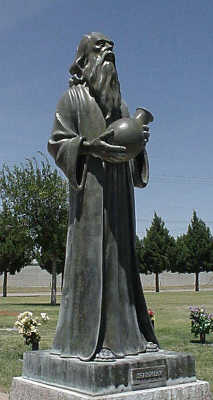 “Gone Baby Gone” (2007) in which top actors who should have known better get involved in a scheme to feign kidnaping a young girl which goes bad. Good cops, bad cops, and a moral private eye make for a gripping movie about guys who’ve lost their grip. Baby, baby, who’s got the baby? Get ready for some tough choices as a viewer.
“The Nativity Story” (2006) A great narrative of Mary and Joseph and their trip to Bethlehem for the birth of their son. Blends the two Gospel accounts into one story. This movie is a must see. It humanizes the fairy tale and let you experience the dusty roads, the bouncing donkey ride, the sweat and strain of labor, the surly Roman soldiers, and the long trek of the three Magi with their gifts. A DON’T MISS HIT ! ! !
“The Da Vinci Code” (2006) Still gripping movie which pulls you through to its enigmatic unraveling of dubious historical facts. Sort of “Name of the Rose” meets James Bond melding.
“The Illusionist” (2006) 2nd Viewing. The magician performs the greatest disappearing act of all — makes himself disappear.
“Away from Her” (2006) Why anyone would want to get away from Julie Christie is beyond me, as it was her husband. She entered an Alzheimer’s facility and her husband was the one suffering, not she. Can there a be a happy ending to Fiona and Grant's forty-year old marriage? Can Fiona and Grant find happiness?
“Jeremiah” (1998) Excellent portrayal of the reluctant Prophet Jeremiah whose words were ignored by the King and led to the destruction of the Temple in Jerusalem by Babylon.
“Lust, Caution” (2007) Spend a couple of hours in the intrigue of Shanghai during the WWII occupation by Japanese forces as a young group of actors decide to kill a traitor to China who’s abetting the Japanese. This requires a female to seduce the target, and we get invited into their bedroom several times. Good late night fare after the kids are tucked securely in their beds or away at summer camp.Misses (Avoid At All Costs): We attempted to watch these this month, but didn't make it all the way through on most of them. Awhile back when three AAAC horrors hit us in one night, I decided to add a sub-category to "Avoid at All Costs", namely, A DVD STOMPER. These are movies so bad, you don't want anyone else to get stuck watching them, so you want to stomp on the disks. That way, if everyone else who gets burnt by the movie does the same, soon no copies of the awful movie will be extant and the world will be better off.
“Grindhouse: Death Proof” (2007) is not Stupidity Proof. Right about the time Kurt Russell rammed his car on purpose and killed five women on purpose in his “Death Proof” stunt auto, we turned it off and discovered by stomping on it that the DVD was not “Death Proof.” A DVD STOMPER ! ! !
“Vacancy” (2007) is what we got instead of a movie. This is horror-ible movie. A night in a cheesy motel in the middle of nowhere where everybody is trying to kill everybody else. A DVD STOMPER! ! !
“Pathfinder” (2006) I re-labeled this dark ‘Action-Adventure’ as ‘Horror’ about the time the 19th head got slashed off and rolled into a pile of bodies. More special effects than story. Slash the DVD and stomp it into the pile of trash. A DVD STOMPERYour call on these — your taste in movies may differ, but I liked them:
 “Factory Girl” (2006) Edie Sedgwick was pulled by Andy Warhol into his “Factory” promising her that she would become the Toast of the Town and she was soon just Toast. When Andy told her mother that he would make Edie famous, she asked him, “What good would that do?” Like a sweepstakes winner, Edie spent her fame and was soon burnt toast. Even fifteen minutes of fame takes a couple of hours to portray and this movie does an excellent job of showing the shallow depths of Andy Warhol’s art and life style.
“Unaccompanied Minors” (2006) and one or two laughable gags. (P. S. After this movie, Lewis Black as Dr. Evil, the evil Airport Director, deserved and got a TV show of his own, "The Root of All Evil".)
“Darjeeling Limited” (2007) Bill Murray was the lucky one — he missed the train. The rest of us had to watch the whole silly and often senseless and humorless movie. Just enough good point to make a Your Call.
“The Cobweb” (1955) with a host of fine actors arguing over whose version of the curtains will rise on the windows of the psychiatric ward: the inmates’, the wife’s, or the chief nurse’s. At one point Gloria Grahame (girl who can’t say no from “Oklahoma”) tells Kerr (Lt. Cabel of “South Pacific”) the difference between the patients and the doctors is that the patients get well. In this cobweb, anything that jiggles one part of the web shakes the whole structure.
“Piñera” (2002) Benjamin Bratt as a Puerto Rican brat, raised in New York City, a Nuyorican who penned his foul-mouthed rap rants in the dirt of the seamy underbelly of the Lower East Side and in his Will he poetically directed his ashes to be spread there.
“The Contractor” (2007) Wesley Snipes tried to out-Bourne Matt Damon with this patterned flick, but managed only the barest Your Call. Script too loose and no long frantic car chases through narrow streets of a European city.
“Darjeeling Limited” (2007) Bill Murray was the lucky one — he missed the train. The rest of us had to watch the whole silly and often senseless and humorless movie. Just enough good point to make a Your Call.
== == == == == == == == == == == == == == == == == == == == == ==
4. CAJUN STORY:
== == == == == == == == == == == == == == == == == == == == == ==Boudreaux was afraid that Marie was not hearing as well as she used to and he thought she might need a hearing aid.Not quite sure how to approach her, he stopped by his doctor doctor to discuss the problem. The doctor told him there was a simple informal test he could do to a better idea about her hearing loss.
"Here's what you do, Boudreaux, stand about 40 feet away from her and in a normal conversational speaking tone see if she hears you. If not, go to 30 feet, then 20 feet, and so on until you get a response."
That evening, Marie was in the kitchen cooking a chicken gumbo, and Boudreaux was in the den. He thoughyt to himself, "Ah'm about 40 foot away. Lemme try what dat doctor said." So he called to the kitchen, "Marie, what's cooking?"
No response.
So Boudreaux moved to closer to the kitchen, about 30 feet from Marie, and axed, "Marie, whatya cookin, Cher?"
Still no response.
Next he moved into the dining room table about 20 feet from his wife and said, still in his normal voice, "Marie, what's dat Ah'm smelling out here?"
Again, no response.
Boudreaus moved closer, right up to the kitchen door, about 10 feet away, and asks, "Marie, Ah'm hungry, me. What's dat you cooking, Cher?"
Again, there is no response.
Finally he walked right up behind Marie. "Marie, what's in dat pot for dinner?"
"Boudreaux, I done told you four times already, it's chicken gumbo!"
== == == == == == == == == == == == == == == == == == == == == ==
5. RECIPE of the MONTH for April, 2008 from Bobby Jeaux’s Kitchen:
(click links to see photo of ingredients, preparation steps)
= = = = = = = = = = = = = = = = = = = = = =Blackberries on Pound Cake
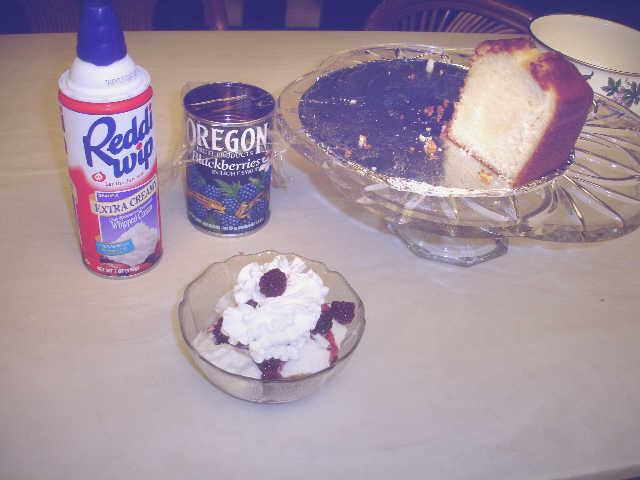
Background on Dessert: This delicious confection can be put together in a moment's notice if you've frozen slices of a delicious pound cake that has been moistened by a solution of simple syrup and almond extract. Always use real whipped cream (never any imitation such as Cool Whip). Notice the beautiful decorative effect which can be easily achieved with the Ready-Whip can.
Ingredients
Pound Cake
Fresh blackberries or dewberries
Ready-Whip Real Whipped Cream
Breyer's Natural Vanilla Ice Cream
Preparation
Slice pound, add ice cream, pour over blackberries in syrup, then decorate with a flourish of whipped cream as shown.
Other options
If fresh blackberries or dewberries unavailable, substitute Oregon blackberries.
== == == == == == == == == == == == == == == == == == == == == ==
6. POETRY by BOBBY from Flowers of Shanidar:
= = = = = = = = = = = = = = = = = = = = = =The title comes from the first word of James Joyce's "Finnegan's Wake".Riverrun
How can I write a poem?
It's not I who cause words to form.When the words come in a torrent
It's not I who am the current.I am not the river but the channel
The words flow through, both wise and banal.The river deserves all the credit
And I will see the river get it.To be a channel's not so tough
As long as you are deep enoughOr else the river overflows its banks
Without so much a "May I?" or a "Thanks."The river may be in control, but what the heck
It's I who gets to cash the check.
== == == == == == == == == == == == == == == == == == == == == ==
7. REVIEWS and ARTICLES for April:
= = = = = = = = = = = = = = = = = = = = = =And for my Good Readers, here’s the new reviews and articles for this month. The ARJ2 ones are new additions to the top of A Reader’s Journal, Volume 2, Chronological List, and the ART ones to A Reader’s Treasury.
1.) ARJ2: Krewe — Early New Orleans Carnival by Errol Laborde

Any veteran of New Orleans Carnival balls knows that there is at least one person you are guaranteed to see before the night is over, and that is the author of this book, Errol Laborde. His perspective on early Carnivals in this city is valuable because he brings his own research into past carnivals together with his vast experience with the Carnivals of the present. And his understanding of the history of Carnival makes his words on the Carnival celebrated a few months after Hurricane Katrina devastated New Orleans so meaningful. In his Preface he writes:
[page 7] Some people argued that the parades should not be held at all, but reason prevailed. Instead of the world getting a message that New Orleans was too battered to even stage its Carnival, it saw instead a city recovering and that still had its spirit. Carnival 2006 was the first big event in the city after Katrina and did much to help New Orleanians believe in themselves. Never has a Mardi Gras celebration meant so much.
Errol lost his home to Katrina and was staying on Julia Street during that Carnival season. He points out that Julia Street and Magazine was the corner from which the Mistick Krewe of Comus began its first parade on February 24, 1857. Standing in that area during the 2006 Carnival was a bittersweet time for him. In this passage you can feel the tug at his heartstrings as the parades passed by and inspired him to write this book.
[page 8] I was blessed to be on Julia Street during the Carnival of 2006 although for the most tragic of reasons. As the New Orleans Carnival approached its 150th anniversary I could hear the drums echo off the same buildings from which they did a century and a half ago. There could be no better setting for going back to the beginning.
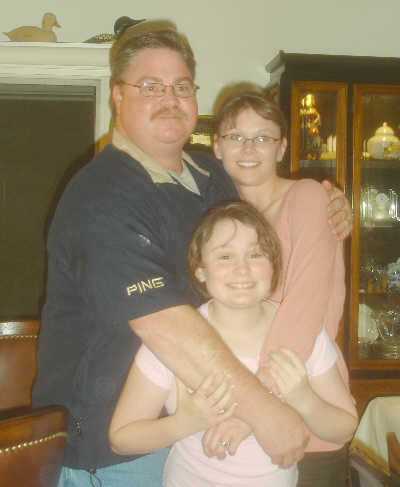
New Orleans began as and has always been a port city so its residents have come here from all over the world. The same was true of the original six men who formed Comus. While the people of Mobile say that the New Orleans Carnival was started by natives of Mobile, that claim obscures more than it reveals about the origin of the New Orleans Carnival.
[page 15] Though the original six are often thought of as being form Mobile, only three, the Ellison brothers and Todd, lived there at some point in their lives, though none was a native of that town. Most of the eight [RJM: Merriam and Churchill joined the six] were Yankees whose activities would transport the New Orleans Carnival from being strictly a French Creole festival to something that would become distinctively American.
The Yankees in this group brought the Mummers tradition of masked marchers from Philadelphia and that was melded with the Mobile form of street parades to create the uniquely American approach to Mardi Gras which grew up in the New Orleans area. In my sixty-plus years experience with Carnival, I have seen the tradition change and continue to grow. New Orleanians live for Mardi Gras. A good Mardi Gras sets the tone for the entire year. Take the 2006 Mardi Gras, which was almost canceled because of Hurricane Katrina, the successful Carnival season was followed by an incredible Saints run for the Super Bowl later in the year.
As natives, we enjoy our Mardi Gras even if no people come from other parts of the country, but when they come (and they do, in droves), it energizes every one of us to show them the best time they ever had. And make them want to come back. Which many of them do, often to stay and become our neighbors in this amazing and unique city. And none of the newcomers to our city had a greater impact than those who banded together to form the Rex organization. They were truly Kings whose legacy remains among us today.
The city and culture that really influenced Carnival was Philadelphia, especially the wide area parades that replaced the miscellaneous neighborhood celebrations after the Civil War. Add to the Mummers influence, the African links, and a Bahamas connection and place them all under the rubric of the French Canadians phrase, Mardi Gras, then mix in a lot of Protestant influence, stir in the Gumbo Pot that is the river city of New Orleans, add Creole seasoning and Cajun Zydeco, simmer for 150 years, and you have modern Mardi Gras on the banks of the Mississippi River.
There were four parading krewes by the beginning of the twentieth century, Comus, Rex, Momus, and Proteus. By the end of the same century, two of the Krewes would no longer be parading. Momus and Comus decided to stop parading in 1992 rather than submit to the draconian city ordinance, a most un-civil ordinance. Comus stopped parading on Mardi Gras night, and that Mistick Krewe is sorely missed yet today. They continue their mystery in their Mardi Gras night Ball where the Royal Courts of Rex and Comus meet to bring the Carnival season to a close. Sadly, also, the satirical antics of the Greek God, Momus, the god of laughter, ridicule, and satire disappeared from the streets of New Orleans.
There is much more to Mardi Gras: the truck parades, the suburban parades, the Krewe of Zulu, the marching bands like Pete Fountain's Half-Fast Marching Band, and the Mardi Gras Indians, among other things, and Laborde covers them all. The one thing he didn't cover, which one cannot really cover in a book is the music of Mardi Gras. One has to hear it, to feel it, to get carried away with it to understand how vital music is to Mardi Gras. In 2008, I woke up at 6 AM on Mardi Gras Day and turned on WWOZ radio and that music poured out of my speakers and my feet began tapping, my legs began moving, and my heart began beating with excitement to the pulsating rhythms, the inimitable rhythms of Mardi Gras, and I knew that there was no place else in the world I wanted to be but in New Orleans on Mardi Gras Day.
Read the Full Review at:
http://www.doyletics.com/arj/krewecom.htm2.) ARJ2: The Energy of Life — The Ringing Cedars Series, Book 7 by Vladmir Megré

The prevailing scientific opinion is that the brain simply records what comes in from the senses and manipulates it, and Man is relegated to being a machine, albeit an ingenious one. Machines, even ingenious ones like the large computers, may be able to win chess games by memorizing and calculating every possible chess move in a given situation, but they are not creative. The hallmark of the full human being is the ability to think and to create. And each one of us possesses that ability, and we each have the freedom to choose how to apply that ability.
Remarkably, that creative ability of human thought is at work whether we choose to use it consciously or not. If we do not choose to use it, it works in the background and creates out of our awareness a world which comes to exactly resemble the sum total of the thoughts which flit unthinkingly through our minds. Every time we suppose that such and such is likely to happen, sooner or later, it happens to us. The unthinking will respond like the hypochondriac who had placed on her tombstone the words, "SEE, I TOLD YOU I WAS SICK!" The problems that persons worry about, the situations they suppose will happen in a certain way, the things they fear will happen, will all eventually happen in some way to them. That should be a warning to all of us to avoid such thoughts, but alas, we live in a world which fills us with phobias day and night, if we sit still and take them in. But we each have a will and we can apply our own thoughts to reducing those incoming phobias to a minimum.
If you really understood that everything always turns out the way you suppose it will turn out, wouldn't you want to have some control over the things you suppose will happen? And what would it take to do that? Simply the energy of thought.

Not only can one's thoughts lead one to end up in a garbage dumpster scrounging for food and things, but it can cause one to remain there, in spite of anyone's help. The author gives an example of such thinking by going unshaven for several days and searching through garbage, soon one of the people he was searching for found him and threatened him with a iron rod to get away from his dumpster. The man's name was Pavel, and after Vladimir plied him with some vodka, they became friends. Obviously Pavel's entire life centered on dumpsters, the best days to search them, what bottles or metals brought the best return as scrap, etc, so Vladimir tried to help Pavel find a paying job. What is Pavel's reaction? He blasts him with this diatribe, "You think I've been drinkin' and not realized what's going on? What's all this business, Creep, about me being hired as a guard, just so's you can take over my dumpsters?"
This illustrates very well the plight of the homeless, who become monomaniacal about maintaining their life style and acting paranoid toward everyone who would try to help them better themselves. When some man gets into such a tight loop about his suppositions about life, it takes a strong bootstrap effort to raise his sights to other possibilities. This is garbage dump thinking. It operates exactly like every other kind of thinking habits one might get into — the world only makes sense when one views it through one's own colored glasses.
Anastasia's grandfather tells a story, a parable, about Ivan who was unhappy with his marriage, found his wife to be a drudge, and asked God for help. God promised to turn the man's wife into a Goddess, and told him he could begin noticing the changes immediately. Suddenly the man began to change how he dealt with his wife and in the process changed his wife into the promised Goddess.
Vladimir saw how Ivan changed his own life, but Grandfather explains that God did have something to do with it. "When?" asked Vladimir.
[page 24] "Back when God gave everything to each of us, when He was contemplating the creation of Man. And explaining everything to the first Man he created. Do you remember God's words from the book Co-Creation? He said, "My son, you are infinite, you are eternal, within you are your dreams of creation."
God used His dreams of creation to create Man and imbued Man with that process of creation. In this parable He set in motion Ivan's dreams to change his wife into a goddess. In other words, the process used by Ivan to change his downtrodden wife into a goddess was to presuppose the very attributes already existing in her that he wished her to have. And being a Man, a full human being, she began to acquire and exhibit those characteristics immediately. Together they both co-created a new reality for themselves. Like God, like Ivan, we can only help others do what we already know how to do.

Anastasia's grandfather tells Vladimir, "Anastasia had imbued human consciousness with the concept of God which Man had been missing all these years." Naturally, Vladimir, hearing these words asks, "What does it consist of?" The answer that he gave can be summarized as, "God has made us as creative as He is."
Before we go any further, let me say that the biblical words that "Man is made in the image and likeness of God" are most often interpreted as saying that we look like God. This has always seemed to me an unlikely meaning to hold. My interpretation at this time is that the phrase "image of God" refers to the image that existed in the mind of God for His new creation, Man, and that the "likeness of God" refers to Man’s having the creative processes like those that God possesses. Image refers to God's design plan for us, and likeness to our creative processes which match the creative processes of God. If we hold the meaning that God's creativity is without limit, then Man's creativity is without limit.
By this analysis we can see that God has made us as creative as He is. Given that, would He not be upset if someone were to plead to Him, "We love You, only give us more of Your goodness. We are Your servants, we are powerless and ignorant, we are stupid. Help us, O Lord!" Would you not imagine that God would displeased to hear one of his creative children, a Man, made alike in power with Him, pleading in such a puerile fashion? On page 43, the narrator comments, "This is how doubts about the perfection of God's creations arose among the elemental beings of the Universe." No doubt that is true.
Vladimir asks, "But who could make such a fool of Man in this way? How? When?" The answer can only be, "Someone alike in power to Man." This must be so as shown by the analysis above that Man is alike in power to God. Therefore it must be Man himself! The answer goes to the heart of why God does not interfere in the affairs of Man. To do so would reduce the very likeness of Man's creative processes to those of God.
[page 44] The priests were the ones who launched mankind down the path of degradation. They took it upon themselves to prove to God that they were capable of controlling all mankind, on the premise that humanity's moanings and torments would force God to enter into a dialogue with them. They counted on this because they know that God never talks with anyone, never interferes in human destiny, that all destinies are determined by the paths human beings themselves have chosen. But if mankind were to be brought to the brink of total destruction, God might enter into negotiations with those leading mankind to that brink — with those influencing people's minds — in order to head off an utter collapse. The premise was that God would do this for the sake of all humanity. Millennia went by. But God did not enter into a dialogue with the priests and did not bring about any new miracles to bring people to their senses. First my father, and later I myself, understood why. If He had done this, if God had interfered in human affairs, then He Himself would have confirmed the speculations on the part of the elemental beings of the Universe that Man was an imperfect creation. But, more importantly, His interference would have ultimately destroyed Man's faith in himself Man would have ultimately ceased discovering the Divine elements within himself and relied solely on help from outside.

The words of anyone who might have expressed such a concept would have been expunged from the writings of the Church's libraries, which were the only extant libraries surviving after the burning of the volumes of Alexandria in ancient Egypt in the time of Julius Caesar. There seems little doubt to me that ideas such as the above would have been held by the Gnostics, but we have but little evidence since the majority of their writings were banished, obliterated, or rewritten to obfuscate their meaning by the priests of the early Church. And now, through the efforts of Anastasia's accelerated thinking, all this is beginning to change very quickly.
What is changing? Anastasia is teaching us to pay attention to the accelerated rate of thinking in our children. For example, a school has been designed, built, and is being run in Russia by children. In this school, children learn subjects in a few weeks that require years in a regular school taught by adult teachers with their comparatively glacial thinking abilities. She says that "even a small child should not be distracted from what he is doing — in other words, the operation of his thought should not be stopped."
The worst thing a parent can give a baby or a growing child is an artificial object designed by an adult! To give them such an object is as bad as forcing the child to take instruction on how to think from a slow adult. No matter how good an adult is, they do not think as fast or clear as children do, if they are not hobbled by constraints placed upon them by well-meaning, but oblivious parents and caregivers, up until now. Rudolf Steiner understood the pedagogical problem of raising small children, and specifically warned against the "beautiful doll" syndrome. He urged parents instead to give a child a sock which they could create into a doll made from their own thoughts, creativity, and desires. The child will cherish that sock doll and gain more from it than from any manufactured "beautiful doll" or "G. I. Joe" action figure.
The way children are raised at home can slow down their thinking, but nothing compared to what happens when they arrive in the public or private school systems. Not only are they prohibited from thinking independently, but those that do are penalized by the grading system designed for children with non-accelerated thinking! Think freely and get bad grades or think like everyone else and get good grades. Is that a choice you would wish for your children? Only a parent who wants for their children the boon they perceive their own life to be would wish such a fate on their offspring. I am most thankful that my parents never once laid such expectations upon me as a child or as an adult. I was the first in my family to go to college, and was part of the first generation of the Matherne and Babin families to go to college. I went to college because I wanted to go to college, and I received no financial support nor encouragement from my parents. What I did receive from them was no discouragement and a model for going after what I wanted and making it happen. I received their likeness.
People should eat the way they breathe, in fact, they should eat what they breathe. What? What nutrition could the air contain other than the energy of oxygen? Well, the pollen from plants for one thing. Pollen? Why, I hate pollen! It makes me sneeze! It irritates my air passages! It gives me asthma! You can imagine the litany of horrors people would create at the idea of getting nutrition from something that they consider to be bane of their existence. One need only watch the briefest television show one night to encounter commercials for medications designed to overcome the effects of pollen. Every weather report casts pollen as the bad guy by displaying the pollen count. If one is breathing pollen in as food, then the higher the pollen count, the more people would like it, but unfortunately, that is not the case, up until now. Pollen is a life-giving substance given to us by God, and by God, we do ill to shun it by staying indoors or taking life-altering medications to overcome it on high pollen count days. The mere fact of treating pollen as a bad thing causes us to become allergic to its presence.
Here is an excerpt from Book 4, Chapter 4, Co-Creation about pollen. Anastasia is answering Vladimir's question, "Pollen? What kind of pollen?" Once again Vladimir took the role of Everyman in asking this question about pollen as someone allergic to pollen might.
[page 72] "Pollen from flowers and grasses, from trees and fruit, which diffused fragrances into the air. Some came from those close by, while breezes brought others from distant places. Back then Man was not distracted from his great works by any problems of finding food. He was fed by everything around him through the air. This was the way it was all designed by the Creator right from the very beginning, so that all life on Earth should strive to please Man, and the air and the water and the breeze would be life-giving, under the impulse of love.
By living in enclosed spaces today, we are not able to breathe the pollen-laden air. Obviously many people are glad about this situation, but only because they do not understand pollen as a life-giving nutrition. By arranging to live in crowded cities and apartment buildings, we end up "breathing instead the dust of our own schemes".
[page 75] When the Man takes his morning walk through his family domain, he breathes its air, and with each breath takes in thousands of invisible particles — plant pollen. The air is saturated with them. Quite alive, they enter the Man, dissolving within him without a trace, nourishing his body with everything he needs. And the air of one's family domain nourishes not only the human body, but feeds the spirit with ethers and accelerates thought.
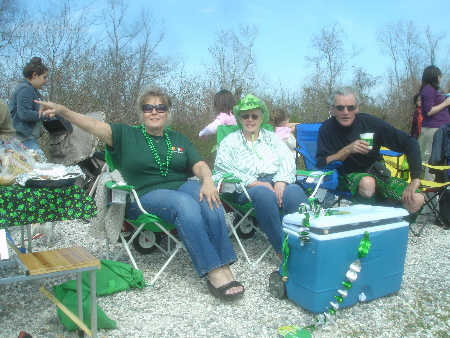
There are books that can explain how a certain machine operates, but there can be no book which explains how an individual, how a Man, chooses to eat what he eats as he walks through his kin's domain. Why he chose those three berries to eat, those flowers to lean over to inhale their fragrance, why he picked that particular grapefruit or orange to eat. Why a particular wild strawberry looked especially inviting and led him to eat it. These are individual decisions and those decisions when added up over a lifetime creates the individual. What I've learned is that food that is good for me tastes better than food that isn't. Vegetables grown with my own hands as I assisted my father in his garden always tasted better than identical looking vegetables at the local market. Until I studied Anastasia's books, this effect was obvious to me, but I lacked a plausible reason for how that might be so. She claims that the plant can act as our physician by changing itself to match our bodies needs when it receives the sweat of our hands, of our brow, or our breathing. When I studied human biochemistry, I found that plants have transposable genes which react with chemicals in the air and soil to modify the set of proteins, etc., that the plant produces. With this bit of materialistic scientific knowledge, I was able to close the loop on the reason my own grown vegetables tasted better to me: because they were better for me!
There is is an amazing story about a young orphan girl named Sonia who is given a hectare of land and how she lives on it during the summer months and later moves to it and becomes a great healer in the region. It illustrates dramatically the power of having a kin's domain, even to a small child. How many orphans could have their lives changed as Sonia had hers? But there is another group of adults who are like orphans, the inmates of our prison systems. They have no space to call their own, often sharing a cell with another prisoner. They primarily learn in prison about criminals and put that knowledge to use to harm society when they are released and soon they are back in prison.
But one prisoner had a different vision for the future, and outlined the plan in a petition to the warden.
[page 225] The convict, whose name was Khodakov, proposed acquiring for the facility a hundred hectares of abandoned or unused arable land, to be surrounded by a barbed-wire fence with a watch-tower at each corner — in other words, taking all due precautions to prevent escapes. On this fenced-in hundred hectares ninety prisoners would be engaged in agricultural labor. The applications of those interested were kept in a file in this green folder.

The progression of approvals for Khodakov's proposal was much more difficult than Sonia's, but the concept he had developed was a proposal that followed all the tenets of the law concerning the proper incarceration of prisoners. It also provided a financial boon for the prison proper because half of the produce from the prisoners farms would be sent to feed the prisoners at the home prison. The remaining half belonged to the individual domain residents in farming prison who could share it with their families or sell it to local food merchants. What tipped the scales for the warden's decision was a new requirement from his superior for him to take a 150 new prisoners, which he had no room for. The new farming prison would hold that number, and there were that many volunteers ready to populate the farms. Each prisoner was allocated a small cell in their own hectare and would be locked in each night and released each morning.
The results were as dramatic as in Sonia's case. Prisoners became land owners, farmers, and they studied the seed and agricultural catalogs. They were able to convince the agriculture experts that they knew how to plant potatoes, corn, tomatoes, etc. The prisoners under Khodakov's guidance had all studied the Anastasia books and learned about the principles of the seed as physician. They knew that the plants would respond to the individual human planter's own biochemistry and produce food designed for his health by reading the bodily fluids and excretions of the planter. The plan was, after much effort and persuasion, finally accepted and it proved to be a bounty for the prison system and a boon for the prison farmers.
The general who had to authorize the new zone visited and was chagrined to find vines growing up the side of the fenced in area. He demanded they be removed as a potential escape route over the fence. One of the zone's officers explained that the flowers fragrance would make any escapee very easy to track down with dogs, and prisoners know that. The general asked how many prisoners have been recaptured by the dogs. The answer was none, because the prisoners, realizing the futility of climbing over the fence haven't attempted an escape in five years.
The general asked why the security guards in the watch-towers then, and is told to protect the zone from the outside world, from the wives of prisoners attempting to get in! Some wives even tried to tunnel under the fence to get in.
As part of Khodakov's original plan when the terms of all the prisoners in the zone were fulfilled, the security fence and watch towers would be dismantled and moved to a new unused area of arable ground to build a new prison zone. The former prisoners would now be voluntary residents of the former prison zone, each living in his own kin's domain and reunited with their wives and family members. They would be making a prosperous living on their own land and would have no wish to ever return to a life of crime. Isn't this the ultimate end of incarceration of criminals? Can anyone think of a more effective and efficient system of accomplishing that end?
The next project, outlined in Chapter Twenty-Seven, "A law for deputies elected by the people", describes how the Representative to the Parliament or Congress are led to live in their own kin's domains, away from the artificial sources of information, and close to the needs of the people they serve. Do you, dear Reader recognize the problem? Our representatives to Congress live in this vicious circle described in this next passage. When you have a closed circle like this, only a stupendous bootstrap effort can break the circle and achieve a release of productive energies. The solution proposed is land. A kin's domain for the deputy or representative to Congress. But with an ingenious design which is detailed in the book. You will need to read the entire chapter to get the full and robust scope of the proposal, but the effect of living in a kin's domain inside of a large community of other domains on the deputies' decisions will change the government and the land for the better.
When money loses its primary importance, deputies will be immune to bribes to make decisions contrary to the well-being of the land and kin's domains. When you live in a self-sufficient environment, what need do you have of government except to defend your land from foreign invaders? And when potential invaders see how successful and self-sufficient you have become in your own kin's domains, they will be more tempted to imitate rather than invade you.
Anastasia's grandfather is the real author of this book, at least the important parts of the book in the first and last chapters. He makes a potent case for returning to the concept of a Motherland in which each person owns a piece of that blessed land and is self-sufficient and happy upon it. Russia is changing today because of Anastasia's ideas. One cannot find good news on the television stations who make money by displaying fear and devastation over the air. One can only find good news in the heart, in the hearth, and in the blessedness of one's own kin's domain. And that is my prayer, my fervent wish for you, dear Reader.
Read the Full Review at:
http://www.doyletics.com/arj/energy07.htm= == == == == == == == == == ==
I hear often from my Good Readers that they have bought books after reading my book reviews. Keep reading, folks! As I like to remind you, to obtain more information on what's in these books, buy and read the books — for less information, read the reviews.
== == == == == == == == == == == == == == == == == == == == ==
8. COMMENTARY:
= = = = = = = = = = = = = = = = = = = = = =In this section I like to comment on events in the world, in my life, and in my readings which have come up during the month. These are things I might have shared with you in person, if we had had the opportunity to converse during the month. If we did, then you may recognize my words. If I say some things here which upset you, rest assured that you may skip over these for the very reason that I would likely have not brought up the subject to spoil our time together in person.1. Padre Filius Reads the Arkansas Democrat-Gazette in Hot Springs this Month:
Padre Filius, the cartoon character created by your intrepid editor and would-be cartoonist, will appear from time to time in this Section of the Digest to share us on some amusing or enlightening aspect of the world he observes during his peregrinations.
This month the good Padre reads a Headline about "haute cuisine" or grand cooking in Rolando's Restaurant.
 2.Comments from Readers:
- EMAIL from Carolyn in Texas:
Hi Bobby,
You and yours always look wonderful and energetic and I look forward to every new issue. It is such a labor of love.Happy Eastertide,
Carolyn- EMAIL Prof. Kevin Dann of SUNY, NY:
Bobby,Where the heck are you that you are playing in such nice snow and here in Plattsburgh (classes delayed until 10 AM opening, so the students are at this moment below my window, slipping and sliding their way to class) we have freezing rain!?
- EMAIL from Hugh Brown, suggesting a Tidbit:
There’s some good to be found in everyone, even if merely to serve as a bad example.- EMAIL from Jim Conley in Texas:
Bobby, you lost me from your list somehow....I miss your newsletter. my ex wife, Fran, who was also a friend of Del's, loves it too.
Thanks. I hope all is well with you and Del and all the kids.
I have not been to N.O. since the storm; I think I'm a chicken...My brother, a minister, has brought kids from his church twice to work there for a week or so....He went into our old house on Vicksburg St. and sent me the heartbreaking photos....
Jim Conley
Warren Easton, class of 1962- EMAIL from Glenn in California:
I bet you are ecstatic about those Tigers.
Congratulations to you
Glenn Martin3. My Librarian, Edith S. Lawson
When I grew up in Westwego, a small town several miles west of where I'm typing these words, my mother took me to the first library there when I was a toddler about 3 or 4, I think. All I can remember is the large colorful dinosaur books. If you think picture books of dinosaurs is a new thing, I can tell you they were on library shelves in the 1940s. That first library was on Sala Avenue in a former shoe store building along what was a bustling downtown area at the time. Later a new building was built on Fourth Street, and by the time I was seven, I was able to walk down Fourth Street from our home on Avenue F to Avenue C where the new library was. And it had a new librarian, a Mrs. Lawson, as her name plate announced. By the time she arrived, I was a steady customer of hers, weekly returning five books and taking out five more books (the maximum allowed).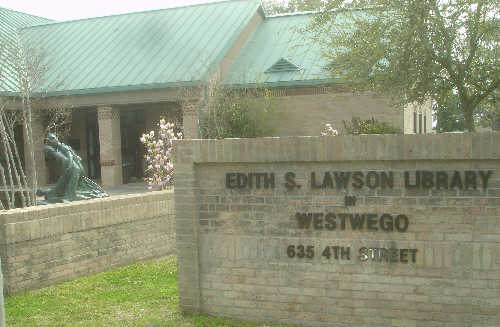
One day I found this picture book which showed the adventures of a cartoon character named Spiro and his adventures inside the human body. It was like "Fantastic Voyage" and I got to imagine being tiny like Spiro and drilling through the skin, swimming along the veins, going through the heart and coming out into the eyeball. I had a great time reading the book, but really didn't understand all those big words, and mostly just followed Spiro around. What was memorable to me was Mrs. Lawson's face when I placed the book on her desk to check it out. She looked at the book, looked at me, and seemed to be pondering a long, hard decision. None of this made any sense to my 8-year-old brain, but I simply waited and finally she stamped the library due date on the card in the back cover of the book and let me take it with my other four books. A decade or two later, I recalled that incident and realized that Spiro was a syphilis virus and the book was about how the virus invades the body and the damage it can cause in the progression of the disease. I think, now looking back, that Mrs. Lawson made the right call, allowing 8-yr-old Bobby, her very regular patron, to take out that book. He was only interested in the imaginative adventures of the cartoon character.
This is the only salient memory I have of Mrs. Lawson, but I loved that lady. Her blonde hair, always smiling face, and gentle disposition charmed me. I may have had a crush on her. She was the one constant woman in my life from age 6 until almost 14 outside of my mother. School teachers generally lasted only a year, but Mrs. Lawson was always there whenever I came to check out and return books. We were friends.

We moved from Westwego when I was fourteen and I thought I would never see Mrs. Lawson again. I moved around the country after my college days in Baton Rouge. The LSU Library was great. Huge arrays of books on every subject. A Hi-Fi room where I could borrow classical music LP's and listen to them in private while reading and studying. But it had no Mrs. Lawson. Every time I checked out books, there was someone else at the counter it seemed. Besides, I had grown up and I bought most of the books I read by then. Only special class assignments, like Sociology, involved me reading books that were only in the library. Heck, I was writing in my own books, something Mrs. Lawson would not have approved of, as it was her job to make sure that her patrons did not deface the Westwego Library books. I basically forgot about Mrs. Lawson over the decades as I moved to Tennessee, California, and Massachusetts before returning to the New Orleans area.
After twelve years of living on the East Bank, across the river from Westwego, Del and I moved to Gretna where we now live, a few miles away from Westwego. There were no real libraries near us, besides I bought all the books I read these days, because as a writer, I found that the best place to make notes on the books I read was in the margins.
That solved the filing problem for my notes! The notes for a book could never get misplaced if they were filed in the book by being written on the pages, and if they were right next to the book material they were referring to, so much the better. So I didn't frequent libraries much at all. But one day, I noticed that they were opening a West Bank Regional Library just a few miles away from us on Manhattan Boulevard. So I went to the Grand Opening. There was our Councilman James Lawson who was officiating the ceremony. He talked about build a brandnew library for Westwego where his mother worked for many years. After the ceremony I introduced myself to him and told him about my favorite librarian, his mother. He was delighted. I asked how his mother was, and he turned to the side and pointed, "Here she is, you can see for yourself." I felt like that little 8-yr-old boy trying to check out a book from my favorite librarian again! I was full of emotion and could hardly speak. I never thought I would ever see Mrs. Lawson again, but there she was in the flesh, that beautiful woman, fully grown, a grandmother now, but just as pretty as I recalled her from my youth.I introduced myself and told her that I was a regular customer of hers in the Westwego Library and wondered if she remembered me. She said, "Yes, you always took out the most books you could. I wondered if you read all those books or just stuck on the top of the icebox for a week." It was so great to see her. Brings tears to my eyes to recall that time. A couple of years later she died, but I only found out afterwards or I would have gone to her funeral. God Bless you, Mrs. Lawson! I never even knew your first name. Up until now. Up until this morning when I came across this item in the morning's Times-Picayune. There in the Gretna Section of the paper was a photo of your son, with the caption: "James E. Lawson talks about his mother, Edith." Under the photo were these words: "A 'Revitalization and Renaming Celebration' was held at the Edit S. Lawson Library, formerly the Westwego Library, on March 6." I have been left cold by most renaming of buildings after politicians, but have been warmed to my heart by this one. No one more deserved to have a Library named after them than you, Edith, if I may call you that, Mrs. Lawson. As it so aptly states on the Dedication Poster for the Westwego Library, you have certainly promoted opportunities that took me on many journeys and expanded my knowledge and horizons at a very young age. God blessed me when you became my librarian. I will always remember you.
== == == == == == == == == == == == == == == == == == == == ==
9. CLOSING NOTES:
= = = = = = = = = = = = = = = = = = = = = =
Thanks to all of you Good Readers for providing the Chemistry which has made this site a Glowing Success. — Especially those of you who have graciously allowed us to reprint your emails and show photos of you and by you on this website — you're looking good! As of June 1, 2019, it enters its 20th year of publication. The DIGESTWORLD Issues and the rest of the doyletics website pages have received over 21.6 MILLION VISITORS ! ! !
We have received over ONE MILLION VISITORS per Year to the Doyletics Website since its inception June 1, 2000, over twenty years ago. Almost 2 million in the past 12 months. We are currently averaging about 150,000 visitors a month. A Visitor is defined as a Reader who is new or returns after 20 minutes or more has passed. The average is about one visitor for every 10 Hits.
IMPORTANT NOTES about DIGESTWORLDtm Our DIGESTWORLD came into existence years before Facebook and all the other social media which interrupt people's schedules many times a day. All our photos, reviews, cartoons, stories, etc, come to you via a link inside of one short email Reminder at the beginning of each month. We hope you appreciate how we let YOU choose when to enjoy our DIGESTWORLD Issues. To Get a Monthly Reminder, Click Here .
We especially want to thank you, our Good Readers, in advance, for helping our readership to grow. NOTE our name is now: DIGESTWORLD. Continue to send comments to Bobby and please do create links to DIGESTWORLD issues and Reviews on LinkedIn, on your Facebook page, and on other Social Media. When you copy any portion of a webpage or review, please include this text: "Copyright 2018 by Bobby Matherne".
Email your friends about the reviews, the handy doyletics Speed Trace, the Household Hints, the cartoons, the Cajun jokes, the recipes, the poems, and the photos in all the DIGESTWORLD Issues archived on our website. Urge them to subscribe to the DIGESTWORLD Reminder so they won't miss a single issue!
The Subscription Process SIMPLE: no Reply Confirmation is required. An email to the Editor with your First and Last names is all that's required. There is never a charge for viewing any page on our website; nor for any of the guidance we offer to people using the FIRST AID KIT or asking for help with doyletics in any other areas.
For those who are able to contribute to the site we offer a year's subscription for receiving the DIGESTWORLD Monthly Reminders for $50.~~ NOTE: DIGESTWORLD is a Trademark of 21st Century Education, Inc. ~~ The cost of keeping this website on-line with its 300 Gbytes of bandwidth a month is about $50 a month. Thank you, our Good Readers, for continuing to patronize our advertisers when they provide products and services you are seeking as you visit any of our web pages. Remember the ads are dynamically displayed and every time you read even the same page a second time, you may find new products and services displayed for your review. Our reviews, digests, tidbits, etc, all our webpages act as Google magnets to bring folks to the website to learn about doyletics and frequent our advertisers, so they support one another in effect.
We wish to thank all Good Readers who have made a contribution to the doyletics.com website! Special thanks go to Chris and Carla Bryant in Corpus Christi and Gary Lee-Nova in Canada!We welcome your contributions to the support of the website and research into the science of doyletics. To obtain our street address, email Bobby at the address found on this page: http://www.doyletics.com/bobby.htm and we will send it to you. Every $50 subscription helps toward keeping this website on-line for another month. If you can't send money, at least show your support by sharing your favorite Issue of DIGESTWORLD and Reviews with a friend.
You can read a description of how to do a Speed Trace (either in English or Spanish):Learn to Do a Speed Trace Here

Or Watch Bobby extemporaneously explain How to Do a Speed Trace on Video:
To make a connection to the Doyletics website from your own website, here's what to do. You may wish to use the first set of code below to link to the site which includes a graphic photo, or to use the second set of code for a text-only link. Immediately below is how the graphic link will look on your website. Just place this .html in an appropriate place on your website.
<CENTER> < — with graphics link — >
<A HREF="http://www.doyletics.com/index.htm">Learn to Do a Speed Trace Here<BR>
<IMG SRC="http://www.doyletics.com/doylepb.gif" width="309" height="102" border="2" TITLE="Learn to Remove Doyles — all those Unwanted Physical Body states of fear, depression, migraine, etc." ALIGN=middle><A/></CENTER>
<CENTER> < — text only link — >
<A HREF="http://www.doyletics.com/introduc.htm">Learn to Do the Speed Trace at doyletics.com <A/>
</CENTER>Check out the new additions to the Famous and Interesting Quotations at:
http://www.doyletics.com/quotes.htm
== == == == == == == == == == ==
My reviews are not intended to replace the purchasing and reading of the reviewed books, but rather to supplant a previous reading or to spur a new reading of your own copy. What I endeavor to do in most of my reviews is to impart a sufficient amount of information to get the reader comfortable with the book so that they will want to read it for themselves. My Rudolf Steiner reviews are more detailed and my intention is bring his work to a new century of readers by converting his amazing insights into modern language and concepts.
== == == == == == == == == == ==The Good Mountain Press Digest is mailed monthly to:
Friends and associates
Individuals who have expressed interest in the Digest
Persons who have subscribed at the Digest Subscription Page.Please Don't Bug Us 
Nothing BUGS US more than losing Hale-and-Hearty, Ready-to-Read Good Friends from the DIGESTWORLD Reminder List.
So we've made it easy for Good Readers who have changed their Email addresses and Friends who would like to begin receiving the DIGESTWORLD Reminder at the first of each Month:
IT'S EASY to RE-SUBSCRIBE or SUBSCRIBE:
CLICK HERE!
As of August, 2011 we have begun using a Contact Manager with an Email Merge feature which allows us to send personalized Emails to everyone in our Contact List. You can receive the colorful Email containing the DIGESTWORLD Reminder beginning with "Dear [Your First Name]". It is important that we have your First Name, so if the name you are addressed by in your Reminder is not your first name, please notify us of the name you wish us to use. For convenience you can send a quick email to give us your name by Clicking Here. To Contact Bobby, his Email address is visible on this page.
NOTE: As of 2018 the Topica.com List messages are NO LONGER READABLE!
Please do your part by letting us know of any email address change so that you may continue receiving the DIGESTWORLD Reminders. Most of our Readers come from folks who don't get these Reminders, but we offer the DIGESTWORLD Reminder as a service to our regular Good Readers. To send us your new email address, CLICK HERE! .
If you discovered this page by a Google Search and want to SUBSCRIBE NOW
If you have enjoyed a particular issue, let us know, especially around the first of each month when those "lost soul" messages are bugging us, Send us a quick email by Clicking Here!
Simply Click the Link at right to send an Email Request: SUBSCRIBEIf you have a friend or two that you think would enjoy reading the DIGESTWORLD, suggest they view the current DIGESTWORLD Issue and perhaps they'll decide to Subscribe.To unsubscribe from the DIGESTWORLD Reminder List:
Click Link at right to send a Blank email to: UNSUBSCRIBEIf the above links which provide canned emails don't work on your system, you can send a Subscribe/Unsubscribe request to the address found on this page: http://www.doyletics.com/bobby.htm Please include your first and last name when Subscribing.
== == == == == == == == == == == == == == == == == == == == ==
10. GRATITUDE - in Three Easy Steps:
= = = = = = = = = = = = = = = = = = = = = =
Maintaining a website requires time and money, and apart from sending a donation to the Doyletics Foundation, there are several ways you can show your gratitude and support our efforts to keep doyletics.com on-line.
One would be for you to buy a copy of my Dolphin Novel, The SPIZZNET File. Books May be ordered in hardback or paperback form from Xlbiris the Publisher here:
online: http://www.xlibris.com/TheSPIZZNETFILE.html
email: orders@xlibris.com
The best source at the best price is to order your copies on-line is from the publisher Random House/Xlibris's website above.
Two would be for you to use the Google Search Engine for your web searches or to find an item on doyletics.com website. New reviews will have a place to do a Google Search at the top and the bottom of the reviews. Just enter a search phrase in the box below to do a Search. Note you can check whether to Search just this site or all websites.
Three would be for you to let us know you like us by Subscribing to our monthly Reminder. One short email each month with a link to our Latest DIGESTWORLD Issue will keep you apprised of our latest reviews, photography, poetry, Cajun stories, recipes, Movie Blurbs, Travels, and even more! Simply Click Here: Subscribe Me!
Thank you in advance!
~~~~~~~~~~~~~~~~~~~~~~~~~~~^~~~~~~~~~~~~~~~~~~~~~~~~~~~
LIKE US? To Receive a Monthly DIGESTWORLD Reminder, Click the Link to Send Email Request: SUBSCRIBE
NOTE: Place Cursor over a photo for a few seconds to read text description.
All the tools you need for a simple Speed Trace
IN ONE PLACE.== == == == == == == == == == == == == == == == == == == == == ==
== == == == == == == == == == == == == == == ==
22+ Million Good Readers have Liked Us
22,454,155 as of November 7, 2019
Mo-to-Date Daily Ave 5,528 Readers
For Monthly DIGESTWORLD Email Reminder:
Subscribe! You'll Like Us, Too!
== == == == == == == == == == == == == == == ==
Any questions about this DIGESTWORLD ISSUE, Contact: Bobby Matherne
CLICK HERE TO OPEN OUR FIRST-AID KIT. Does your Face sometimes resemble the Faces Below? If so, Click on the Faces or Flags to Dig into our First Aid Kit.
To follow Research in the science of doyletics, Read our Monthly DIGESTWORLD Issues.
Click Here to get Monthly Reminder.
For Copies of Reviewed Steiner Books, Click on SteinerBooks Logo below.
Visit Bobby's Other Reviews, Articles, and Essays
Books are Lighthouses Erected in the Sea of Time
Counselor?
Visit the Counselor's Corner for Suggestions
on Incorporating Doyletics in Your Work.
e-mediatelytm is a Trademark of 21st Century Education, Inc. Prototyped 2000.