LIKE US? To Receive a Monthly DIGESTWORLD Reminder, Click the Link to Send Email Request: SUBSCRIBE
NOTE: Place Cursor over a photo for a few seconds to read text description.
== == == == == == == == == == == == == == == == == == == == == == == == == 
All the tools you need for a simple Speed Trace
IN ONE PLACE.
Great Way to show Gratitude for this Digest is to use the above Google Search Engine to Search this Site or the entire Web wherever you find it in the Digest pages.
== == == == == == == == == == == == == == == == == == == == == == == == ==
~~~~~~~~~~~~~~
~~~~~~~~~~~~~~
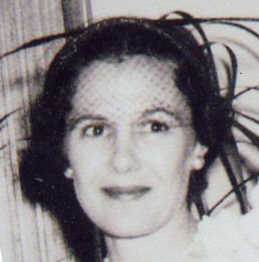
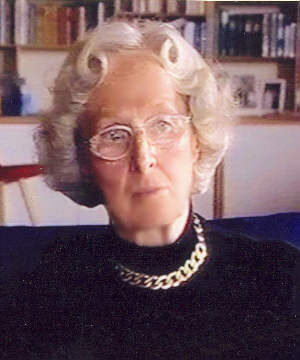
~~~~~~~~ In Memoriam: Wilma Matherne Gueniot (1912-2011) ~~~~
~~~~~~~~ 1955 Photo of Clairville Pierre Matherne's Niece ~~~~~
~~~~~~~~~~~~~~
~~~~~~~~~~~~~~
~~~ GOOD MOUNTAIN PRESS DIGEST #119 Published September 1, 2011 ~~~ == == == == == == == == == == == == == == == == == == == == == == == == == Quote for the Invigorating Month of September:
This is the true joy in life, the being used for a purpose recognized by yourself as a mighty one; the being thoroughly worn out before you are thrown on the scrap heap; the being a force of Nature instead of a feverish selfish little clod of ailments and grievances complaining that the world will not devote itself to making you happy.
— George Bernard Shaw (1856 - 1950)
British Playwright and Philosopher== == == == == == == == == == == == == == == == == == == == == ==
By Subscription only.== == == == == == == == == == == == == == == == == == == == == ==
Editor: Bobby Matherne, Asst. Editor: Del Matherne
[To Contact Editor Click Here!]
To Subscribe, Click Here or copy into your Browser
this URL: http://www.doyletics.com/subscrib.htm
To Unsubscribe, see bottom of Digest.
©2011 by 21st Century Education, Inc, Published Monthly.
To Read All of Bobby's Writings Click Here!
~~ Click on Heading to go to that Section (Allow Page First To Fully Load). ~~THE GOOD MOUNTAIN PRESS DIGEST #119, September 2011 Archived Digests
Table of Contents
1. September's Violet-n-Joey Cartoon
2. Honored Readers for September
3. On a Personal Note
Featured Reviews
Movie Blurbs
4. Cajun Story
5. Recipe of the Month from Bobby Jeaux’s Kitchen: Cherry Bounce
6. Poem "Waking Consciousness" from
Becoming the Archangel Michael's Companions
7. Reviews and Articles Added for September:8. Commentary on the World
- ARJ2: Our Magnificent Bastard Tongue — The Untold History of English by John McWhorter
- ARJ2: Lost in the Barrens — A Novel by Farley Mowat
- ARJ2: A Being So Gentle — The Frontier Love Story of Rachel & Andrew Jackson by Patricia Brady
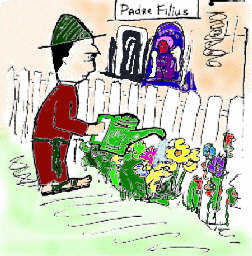
1. Padre Filius Cartoon
2. Comments from Readers
3. Freedom on the Half Shell Poem
4. Doyle Tracing — A Case History
5. The 1884 New Orleans Cotton Exposition
9. Closing Notes — our mailing list, locating books,
unsubscribing to Digest
10. Gratitude== == == == == == == == == == == == == == == == == == == == == ==
THE GOOD MOUNTAIN PRESS DIGEST #119 == == == == == == == == == == == == == == == == == == == == == ==ARCHIVED DIGESTWORLD ISSUES ON THE WEB ~ ARCHIVED DIGESTWORLD ISSUES ~ 2000: INAUGURAL YEAR: Jun #1 Jul #2, Aug #3, Sept #4, Oct #5, Nov #6, Dec #7
2001: Jan #8, Feb #9, Mar #10, Apr #11, May #12, Jun #13, Jul #14, Aug #15, Sep #16, Oct #17, Nov #18, Dec #19
2002: Jan #20, Feb #21, Mar #22, Apr #23, May #24, Jun #25, Jul #26, Aug #27, Sep #28, Oct #29, Nov #30, Dec #31
2003: Jan #32, Feb #33, Mar #34, Apr #35, May #36, Jun #37, Jul #38, Aug #39, Sep #40, Oct #41, Nov #42, Dec #43
2004: Jan #44, Feb #45, Mar #46, Apr #47, May #48, Jun #49, Jul #50, Aug #51, Sep #52, Oct #53, Nov #54, Dec #55
2005: Jan#051,Feb#052,Mar#053,Apr#054,May#055,Jun#056,Jul#057,Aug#058,Sep#059,Oct#05a,Nov#05b,Dec#05c
2006: Jan#061,Feb#062,Mar#063,Apr#064,May#065,Jun#066,Jul#067,Aug#068,Sep#069,Oct#06a,Nov#06b,Dec#06c
2007: Jan#071,Feb#072,Mar#073,Apr#074,May#075,Jun#076,Jul#077,Aug#078,Sep#079,Oct#07a,Nov#07b,Dec#07c
2008: Jan#081,Feb#082,Mar#083,Apr#084,May#085,Jun#086,Jul#087,Aug#088,Sep#089,Oct#08a,Nov#08b,Dec#08c
2009: Jan#091,Feb#092,Mar#093,Apr#094,May#095,Jun#096,Jul#097,Aug#098,Sep#099,Oct#09a,Nov#09b,Dec#09c
2010: Jan#101,Feb#102,Mar#103,Apr#104,May#105,Jun#106,Jul#107,Aug#108,Sep#109,Oct#10a,Nov#10b,Dec#10c
2011: Jan#111,Feb#112,Mar#113,Apr#114,May#115,Jun#116,Jul#117,Aug#118,Sep#119,Oct#11a,Nov#11b,Dec#11c
2012: Jan#121,Feb#122,Mar#123,Apr#124,May#125,Jun#126,Jul#127,Aug#128,Sep#129,Oct#12a,Nov#12b,Dec#12c
2013: Jan#131,Feb#132,Mar#133,Apr#134,May#135,Jun#136,Jul#137,Aug#138,Sep#139,Oct#13a,Nov#13b,Dec#13c
2014: Jan#141,Feb#142,Mar#143,Apr#144,May#145,Jun#146,Jul#147,Aug#148,Sep#149,Oct#14a,Nov#14b,Dec#14c
2015: Jan#151,Feb#152,Mar#153,Apr#154,May#155,Jun#156,Jul#157,Aug#158,Sep#159,Oct#15a,Nov#15b,Dec#15c
2016: Jan#161,Feb#162,Mar#163,Apr#164,May#165,Jun#166,Jul#167,Aug#168,Sep#169,Oct#16a,Nov#16b,Dec#16c
2017: Jan#171,Feb#172,Mar#173,Apr#174,May#175,Jun#176,Jul#177,Aug#178,Sep#179,Oct#17a,Nov#17b,Dec#17c
2018: Jan#181,Feb#182,Mar#183,Apr#184,May#185,Jun#186,Jul#187,Aug#188,Sep#189,Oct#18a,Nov#18b,Dec#18c
2019: Jan#191,Feb#192,Mar#193,Apr#194,May#195,Jun#196,Jul#197,Aug#198,Sep#199,Oct#19a
To Receive a Monthly DIGESTWORLD Reminder — Click Here.
== == == == == == == == == == == == == == == == == == == == == ==
1. September Violet-n-Joey CARTOON:
== == == == == == == == == == == == == == == == == == == == == ==For newcomers to the Digest, we have created a webpage of all the Violet-n-Joey cartoons! Check it out at: http://www.doyletics.com/vjtoons.htm Also note the rotating calendar and clock that follows just to the right of your mouse pointer as you scroll down the page. You'll also see the clock on the 404 Error page if you make a mistake typing a URL while on the doyletics.com website.
The Violet-n-Joey Cartoon page is been divided into two pages: one low-speed and one high-speed access. If you have Do NOT Have High-Speed Access, you may try this Link which will load much faster and will allow you to load one cartoon at a time. Use this one for High-Speed Access.
This month Violet and Joey learn about a Big Wave at Panama City Beach.
#1 "Big Wave at Panama City Beach" at http://www.doyletics.com/images/082611jv.gif

== == == == == == == == == == == == == == == ==
2. HONORED READERS FOR September:
== == == == == == == == == == == == == == == ==Each month we choose to honor two Good Readers of our Good Mountain Press Digest from those all over the World. Here are the two worthy Honored Readers for September, 2011:
Patty Lee in Hollywood
Jane Warner in Tucson
Congratulations, Patty and Jane !
== == == == == == == == == == == == == == == == == == == == == == == == == == == == == == == == == == == == ==
3. ON A PERSONAL NOTE:
== == == == == == == == == == == == == == == == == == == == == == == == == == == == == == == == == == == == ==
Out Our Way:THE BLEAK HOUSE
During August we watched the Charles Dickens novel "Bleak House" and I was surprised to find the eponymous house in the story to be headed by the warmest and most compassionate character of the novel. Our house was a bit bleak this month with various things not working: my Echo Tiller was in the repair shop, both of my PC LCD Monitors were acting up, the Master Bedroom AC broke, the garage door broke, the water line by the meter is leaking, the heavy old BBQ pit was still sitting waiting for someone to take it away, my Digest newsletter List was obliterated by Topica.com outage work, my Urchin logs were dysfunctional, my Family Tree software couldn't take another photo, the shower head in Guest Bath upstair needed replacing, and my new System 7 PC was still in an incubator on life support. At the same time, Del's mom, Doris, who had within two weeks had recently recovered from a serious Staph infection which had her hospitalized and in quarantine for awhile, fell and broke her wrist and her hip, severing her femur just below the hip socket. She had a partial hip replacement and survived the operation. This is how the august month of August began for us. Read on. . .
PERGOLA AND PAVING STONE PATIO
This month brought the paving stone patio to completion. The first day of the month I made a quick trip over to hardware store to get a piece of PVC pipe to place under the paving stone walkway across from our bedroom windows. With that piece of pipe in place, I can run a hose through it to connect to a dripper hose for the SW Patio flower garden. It almost didn't happen. I was driving to PJ's and thinking so hard of whether or not to go to the hardware store, that I had to turn off the Teaching Co. lecture I had on. At the last minute I went straight on Lapalco instead of turning into PJ's. Time was of an essence as Del was waiting for me to come back so she could leave for her hair appointment. Luckily a guy showed me to the PVC section and I saw a remnant of pipe just the right size. Paid cash and after a quick stop for my morning latté at PJ's I arrived home and saw Julio in the driveway, so I rolled down my window and handed him the PVC and he rushed it to the guys in the back and it went right in before the concrete set, triage-style.
With the pergola built and the paving stones in place, the only thing left was for Larry to paint the pergola and the poor guy had a thunderstorm that followed him to the house every day for a week or so. He'd begin working and within an hour or so, the rains would start. Every day. As he was finishing up the final day, I asked if he would install sun screening material if I would get some. He said sure. I went to Sears where I had been told they had some, but no luck. Then to Home Depot and in the Garden Supply area, I found some. Took it home and Larry stapled it in place in under 3 hours. Got all the parts which were needed to shade the kitchen area. I had calculated a temperature difference of 10 degF between the breakfast table in kitchen and the utility room which had a longer roof overhang. Sure enough, after the screening was installed the average temperature in the kitchen cooled by ten degrees. Wonderful.Took me till the end of the month to figure out what to hang under the pergola where there was an hour window of Sun before it set. I visited our good friend Bill Ward who was recovering from surgery. He took me for a walk in his garden and there was a row of ferns hanging and I saw exactly the solution I had been seeking. Hanging ferns will provide screening from the Sun without the inconvenience of a roll-down curtain or any of the other suggestions I've heard or thought of.
FIRST OF MONTH WOES
One of the regular events after I send out my monthly Digest Reminder email on the first of the month is the handful of "OUT OF THE OFFICE" automatic email replies I receive. They are a hassle to me because I have to delete them. But this month NONE! Not a single auto-reply stating that Tom, Dick, and Harry were out of the office! Either none of my Good Readers had taken a vacation this summer or something else was wrong.
It turned out to be the something else: Topica.com had announced an outage from July 27 to 29 and by August 3, they were still down. I kept going back each day, waiting for Topica to come back up. One day I noticed that the Doyletics List was back, but the GoodMtnDigest list was not. I sent out frantic emails toTopica support, but got no replies. What to do?I didn't have a complete list of my Topica.com Digest List. Many of the Doyletics List subscribers are also Digest subscribers, so I sent out a desperation email to them while trying to figure out my next move. Then I decided that my database of Honored Readers was a good source of names to send reminders to, so over the course of a week, I sent out emails about ten BCC's at a time to that list, but at the end of that thankless chore, I still had no permanent solution.
My new System 7 PC is in the process of coming into operation and one of the software packages I had purchased for it was the ACT! Contact Manager. I went to check out something in ACT! and sure enough it has a Mail Merge capability for emails! I found the standard template and modified its colorful banner to say "GOOD MT DIGEST" and tested a two-person merge of mine and Del's email addresses. It worked. Now all I needed to do was to collect my list of 850 subscribers into one group, do an email merge with that Template, and out would go colorful, personalized emails which began with "Dear Tom" and "Dear Dick" and "Dear Sharon" etc. Great! That's ALL!
But I had none of those contacts in ACT! Putting each one would require about a minute or 850 minutes, or about 12 hours — if everything went fine. I soon found that doing 50 took about two hours and completely scrambled my brain. I speeded up the process as I went further, but after two weeks, I had passed the midpoint and still had over 400 contacts left to go. Then a friend explained that I might not be able to do the Email Merge as I planned. At that point I gave up, which for me means praying to my Guardian Angel for help. Two emails begging for help from Topica.com had gone unheeded. And if I spent all my time getting the other 400 names added, I would have no completed Digest to send out to them! Plus the Email Merge might cause me problems with my Email provider!The next morning on a hunch, I went to Topica.com and there was my Digest List, but it showed only one subscriber. I clicked on the Manage Subscribers menu and up came the full list of Topica.com subscribers which had been lost by them for over two weeks! I was grateful and joyful. Immediately I suspended the adding of additional contacts and worked on getting Digest119 ready. My plans are to eventually add the remaining names to my Contact Manager which will give me a bigger set of subscribers and a personalized email to each of them. I will continue to send out to the Topica.com List for the time being until I have assured myself that the Email Merge will work correctly and then it will go out to all subscribers. At that point, I can add Subscribers without the Reply confirmation which Topica.com requires — this has been a goal of mine for two years. I have lost more than half of my Subscribers due to that requirement.
TWILIGHT CONCERT WITH BORDEN AND LULU
One Thursday Del and I worked all morning on clearing out the yard around the new paving stone patio. I took apart the flower table's loose faucet and will get two ring nuts to keep it tight. I put my pole chainsaw together to cut the branches from NW corner cypress tree which were getting too close to the house and soon squirrels could run the roof. Also cut the top branches of NE corner's palm tree closes to house. Next we snaked the cord for pickup truck Babe's battery charger from the outlet near the garage door along the base of the wall, around the new steps, AC wall, back to base of new patio, along the edge of driveway (into the ground a tad), and under the woodpile and thence into the Babe, with none of the extra wire showing as it did before. Much cleaner looking. Moved small round table and chairs onto the Pergola Patio.
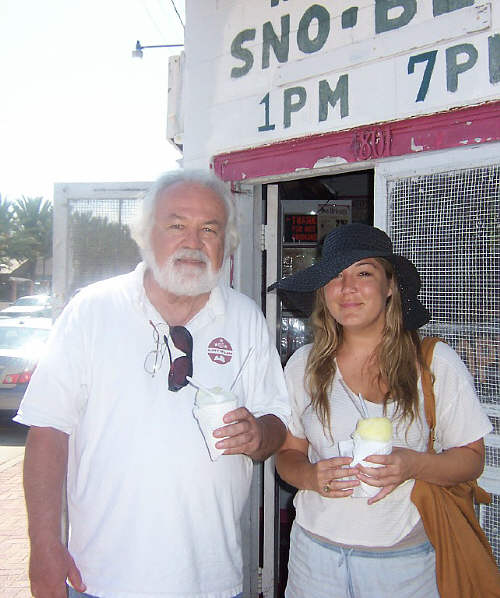
That about wiped me out, and by noon I finally got around to checking emails. Sent out about 50 more Reminders. Took a nap, showered, shaved, and got ready for a Thursday at Twilight Concert featuring Paul Soniat. Decided to check out our new snowball stand in the neighborhood. I really miss Cool Hand Luke's stand where we walked often with our grandkids and they climbed on the trees while we waited in line. Hank DeFelice died last year and we miss his gentle spirit. Drove to the new Snowball stand, only a hundred yards west of where Cool Hand's stood. I had to ring a bell for service. Paul Sumner came speeding out the Jewelry Place next door. That's when I found out Paul has been a hand-craftsman jeweler for over thirty years and the snowballs are helping him to survive during this time of rising gold prices. He invited me to go into the store and look around. Rusty Wingerter came over and introduced himself and I found out he was a nephew of a former friend of mine.
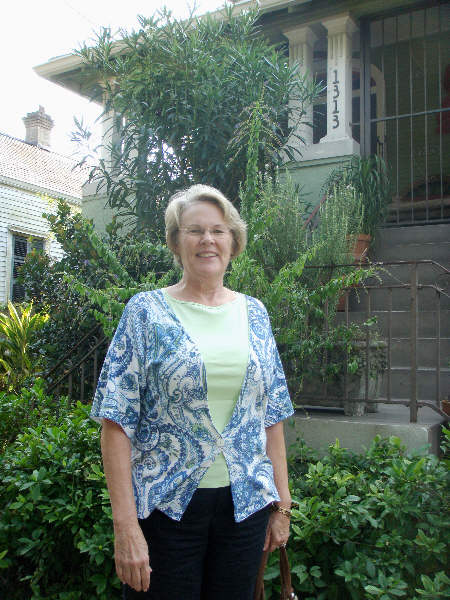
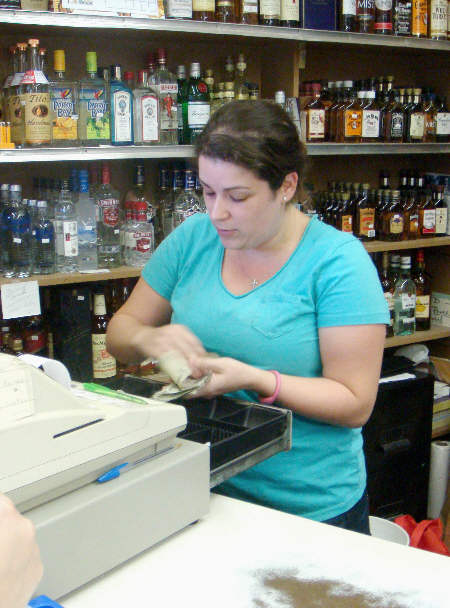
No GNO bridge jam-up at the toll plaza, so we arrived at the City Park area early, and stopped by Terranova's Supermarket to see our grand-daughter Jennifer Terranova. We parked in front of 1313 Mystery Street and I took a photo of Del with the house number clearly visible — this house was originally a double where Doris was living when he first met Dick, Del's dad. Everyone in the store and the neighborhood knows Jenny by name. She said she had thought of me yesterday and was still planning to come by for lunch on Wednesday, her day off. Got a photo of her, gave her a hug and left as the line was filled up again. When we got back to our car, a couple was standing on the porch of 1313 Mystery, so I asked the gal if she lived there, and she said yes. I told her the story about how Del's dad met his wife-to-be for the first time and when she told him her address, he thought sure he'd never see her again, figuring it was a bogus address to put him off. He almost didn't write her. The woman was delighted to hear the story about the house she's living in. It used to be a double, but has been converted into a single house now. Looks great too. And yes, she knows Jenny from the local supermarket which is not much bigger than my Uncle Richard LeBlanc's grocery store in Westwego. He was also a butcher as is Jenny's husband, Anthony Terranova.
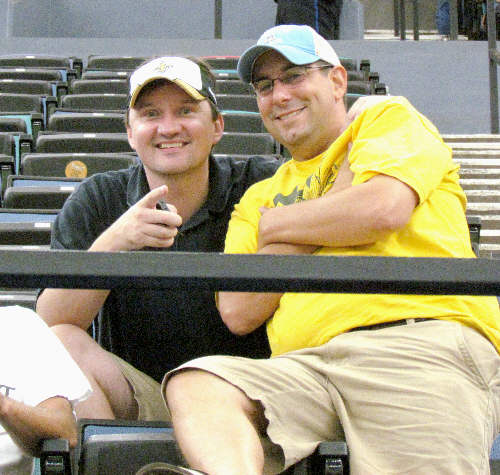
Then we went to Twilight Concert and I sat in two available seats next to a couple while Del was using ladies room and buying stuff to eat and drink. Met David Tidmore and his wife Elizabeth. David said he recognized me and mentioned several clubs in the New Orleans area.
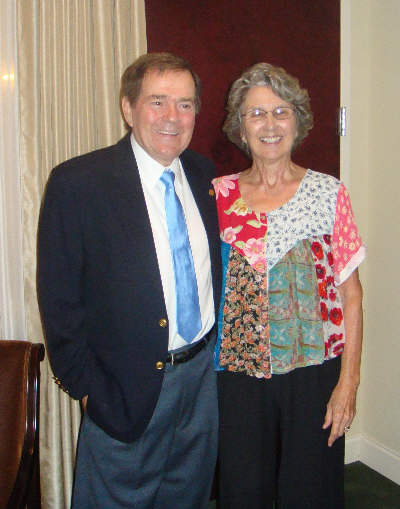
Then they mentioned their son, Christopher, and I realized that these two are Christopher's parents. Christopher and I had a long talk at my club a couple of days earlier. I immediately took a photo of them and we talked and talked. Borden is David's middle name and everyone who knows him calls him that. He usually doesn't introduce himself as Borden, because he often gets, "Pleased to meet you, Gordon" so it's easier to use David at first. His wife is a Villere and knows everyone in uptown area, apparently. She is known best by her childhood nickname, "Lulu", and she is the first Lulu I've ever met outside of popular songs. "Lulu's back in town" is one memorable Lulu of song.I noticed that Bordon would tap me on the shoulder to keep my attention, an old insurance salesman trick, so I asked him, "What kind of sales are you in?" Insurance, all kinds, many places. Still working at 70, his birthday later this year. We found out he had met me or seen me at my club, maybe during our new member reception last year when Christopher was inducted. Borden and Lulu are a delightful couple. We hope to see them at future Twilight Concerts. We look forward to these concerts and consider them as a Jazz Fest that goes from March until October, one session a week, air-conditioned, comfortable chairs, food and drink, and a marvelous Garden to walk in before, during break, and after the concerts. Paul Soniat runs the gardens in the City Park Arboretum in addition to being a musician and sang us a song on this night about being in his Garden.
RIDING THE RIVER
We had watched the comedian called "Tater Salad" one night. He related a story his dad told him about a friend who agreed to ride on horses across a perilous river on a cattle drive with him. That was the sign of a true friend his dad told him, someone who would be willing to "ride the river" with you.
After our patio was finished, Del and I went to Lowe's in the Babe pickup truck and came back with it filled with boxes of the new patio table, four chairs, umbrella and stand, and two park benches. Del happened to pull a $15 off coupon for Lowe's out of her purse, and we just happened to choose the weekend of a Louisiana Sales Tax holiday which saved us another $50, plus we saved $75 delivery charge by taking it home ourselves and $20 per item for assembling it ourselves. Helped pay for filling up the Babe's gasoline tank.
I pulled alongside one of the Brothers Station's gasoline tanks, and when I opened the tank's cover, there were five wasps inside it working on a golf ball-sized nest. What to do? I thought to douse them with gasoline, and that might work, but would waste gasoline. I thought of driving home, but we were in a hurry to get the large patio furniture boxes offloaded and into the house before dark. Instead I chose water. I fetched the Evian bottle from the cab of the truck and splashed the water into the open compartment.
The wasps flew out and I quickly knocked the cover closed. I cleaned front windshield to pass some time while they gave up on returning to their nest. With them safely away, I opened the cover, no wasps, knocked the nest away, and pumped the gas. This was a first time event for me: encountering wasps inside the area around the gasoline inlet valve, probably due to it being so long since the last time we refilled the tank. As we drove away, Del said that she would "ride the river" with me. She's been riding that river with me for over 34 years already.The next day we spent the whole day assembling the table, chairs, and park benches and moving them into place on the new Pergola Patio. It was also the day when painter Larry came over and was finally able to finish his painting without being interrupted by rain. I ran over to get the sun screening and helped him align it and told him where to place it. It was a very busy day, on my feet, up and down step ladders all day. We watched the first Netflix disks of Bleak House and Treme and when we got ready for bed I was exhausted. Suddenly Del came out of the Master Bedroom, announcing that the AC was not on and the room was 83 degrees. I reset the security alarm, picked up flashlight, and walked outside to the AC unit to find it stopped and I smelled a hint that something electrical had burnt. I unplugged master fuse and went back in. Del got the garage fan and I set it up facing into MBR with the Living Room's AC down to 77 and we slept in comfort. We hardly noticed the lack of AC in Bath and Dressing area. I remembered to my chagrin when I discovered our new house would have four Heating and AC units, but this failure of one of the units showed me how valuable it was to have redundant cooling. The first pass through the repair, the AC man replaced a big capacitor that was keeping the cooling compressor from coming on. He jumpered the broken control board to keep the fan running until the new board was to come in later in the month.
The only aggravation was having the AC fan's running continuously for two weeks. At the end of that time, we began to notice a sound of water running, which had been masked by the sound of the AC fan's running, and that sound seems to be a water leak of the mainline by the water meter. The Parish water man showed me there was no water running to our house according to the meter, so the break must be on the parish's side of the line. Del and I are still riding this river as of the end of the month. But it's a minor leak over the southernmost edge of our curved driveway and not an inconvenience.NEW BRANCH OF MATHERNE FAMILY
A couple of years ago, I received an email from Suzanne Potier who said she had discovered we were related. Her maiden name was Gueniot and I did not know any Potiers or Gueniots much less any that I might be related to, so we began to share and discovered eventually that we were second cousins! On the Matherne side. Her mother Wilma was my Grandpa Matherne's niece. Here is some of her first email to me on September 19, 2009, and you could have heard the excitement in her voice, had she been talking.
Hi Bobby — My name is Suzanne Potier — my Grandfather was Adolphe Napoleon Matherne. Born May 10, 1889 in Houma, La. and died March 02, 1920 at the age of 31 years. He was married to Lillian Ruth Lirette (my Grandmother). Adolphe's Father was Adolphe Leopold "Paul" Matherne, and his Mother was Palmire Blanchard. As far as I know, they had 9 children, and Clairville Pierre Matherne was Adolphe Napoleon's brother . Clairville was born February 21, 1891 and died February 11, 1972, at the age of 81. I would be Clairville's Grandniece and 1st cousin once removed to Hilman. I didn't even know my Grandfather's name until a few months ago, and have never seen a picture of him . I was very excited to come across your Tidbits of Memory and see a pic of Clairville. I would hope that you may have some tidbits of memory of my grandfather, and a picture of him and maybe of the whole family. Anything you may have would be great.
Thank you — Suzanne-- P. S. I think we are second cousins !!!!!
Which indeed we are second cousins, but Suzanne and I are each part of a branch of the Matherne family tree that has never met, so far as I have been able to confirm. A couple of my dad's sisters remember Uncle Adolphe, and Grandpa Paul, but that is all. None that I talked to remembered Wilma.
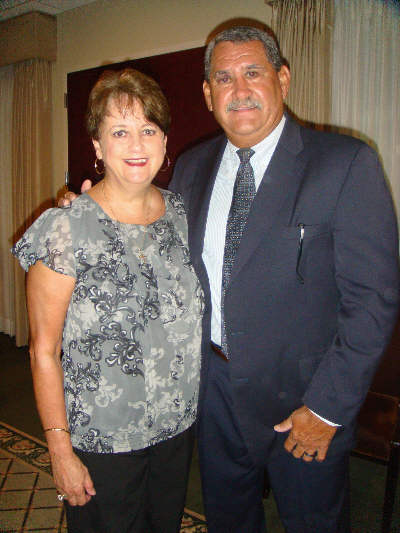
Suzanne and I kept up email correspondence since then, and we still had not met in person, she living in Baton Rouge and I in New Orleans. Till this month when I received an email saying that her mother Wilma Matherne Gueniot had died at age 99. Coincidentally, Wilma was born on my dad's birthday five years earlier than him. I pondered the long drive up to Baton Rouge and was delighted to find that the funeral would be held right outside New Orleans in Chalmette. As I walked into the St. Bernard Funeral parlor where Wilma's family was gathered two ladies came rushing up to greet me, Suzanne and Frances her cousin, my two second cousins. Soon I was introduced to Curtis, Helen, and Charles Matherne. When I was introduced to Curtis's wife, Annette, I was filled with emotion — it was the first Annette Matherne I had met who was not my mother! This was a marvelous family reunion of two disparate parts of the Matherne clan who had never met before. There was a lot of photograph taking by both sides of the clan, so I can actually share a photo or two of myself, who, as the sole photographer, is often left out of photographs.
The funeral mass for Wilma was done by a Catholic priest in the chapel and he quoted a wonderful expression from the famous Indian writer Tagore, "Death is but the blowing out of a candle when dawn is breaking."
After the funeral I visited Harold's Nursery which was on the way back from the funeral home. Had seen Harold Applewhite in the recent New Orleans Magazine and had been hearing about his wonderful nursery from our next door neighbors Connie and Don. I bought a beautiful Butterfly Plant for our yard. The bush was almost 5' high, five or six large branches reaching up from the root ball full of tiny butterfly-shaped blooms. The nursery is lush, full of rows upon rows of healthy plants. Reminds me a bit of Antique Rose Emporium. Got to meet Harold when I was paying for my plant and complimented him on his wonderful nursery.
A LESSON ON EYES
Went to my usual eye doctor for first time since 2005 for a check up. It's been over a year since I stopped wearing eyeglasses except when doing close work. What I've learned from Dr. Viikari's work is that if I had been wearing plus lenses since I began coloring and reading children's books, about five, I would have never been diagnosed as myopic. My so-called myopia was actually pseudo-myopia caused by doing close work without corrective lenses (plus lenses or "reading" glasses). The accommodation strain I put on my eyes from 5 to 17 caused my eyes to be unable to see the leaves on trees. If the doctor had insisted I wear plus lenses, my eyes would have quickly adjusted to seeing those leaves again. Why? Because when I wear plus lenses to do close work as I am doing this second, my eye muscles are relaxed so much that when I take off the plus lenses, I can see the leaves on trees and distant objects! Instead of prescribing plus lenses for doing close work, when I was 17, my eye doctor did what almost every eye doctor does, prescribed minus lenses. The minus lens brings the leaves up as close as my eyes can see without glasses on, say, the distance of a book. This is typical of so-called myopia, you can read without glasses, but your doctor prescribes minus lenses to bring distant objects to the distance of a book before your eyes. Sounds innocuous, doesn't it? I thought so, till I read of the horrors perpetrated upon the eyes of unsuspecting minus lenses users.
What's the alternative to minus lenses for myopia? Well, for true myopia, there's no alternative. But only 1 in 1,000 people have true myopia which an elongated eyeball. But almost 50% of people in this country wear minus corrections on their eyeglasses or contact lenses! Why is that? Pseudo-myopia caused by zealous over-prescription of minus lenses is the answer! For a minor problem which could have been corrected by prescribing plus lenses for close work, millions upon millions of people are subjected to numerous eye-diseases in old age because of minus lens prescriptions.
Look at service academies in the USA: under 20% cadets arrive with myopia and 50% leave after four years with myopia! How can they catch myopia? Those longitudinal statistics reveal the underlying problem as clear as a bell. The amount of close work goes up dramatically in these cadets' schoolwork and their eyes develop eye muscle cramps. Their situation is equivalent to a weight-lifter who becomes muscle bound from too much heavy lifting. The eye cramps remain there under normal eye examinations and increasingly powerful minus lenses are prescribed with each examination. A system of positive feedback is set up, and positive feedback is a deadly condition which results in systemic failure wherever it occurs. For example, resistance in an electric motor goes down as insulation breaks cause a shortened circuit, this causes more heat, which causes more insulation breaks, till finally the motor literally burns up! That is typical of every condition of positive feedback: systemic failure. Systemic failure in the eyes results in blindness, such as from macular degeneration or retinal detachment.
Those muscle cramps show up as vertical frowns, something known as Viikari Syndrome due to the pioneering work on preventing eye muscle cramps done over 50 plus years by the Ph. D., M. D. Ophthalmologist Kaisu Viikari in Turku, Finland. She saw those vertical furrows in the eyes of her suffering patients. "So," you may be thinking, "those furrows may be unnsightly, okay, but no big deal, right?" Yes, BIG DEAL! Those muscle-bound eye muscles are literally squeezing the life out of people's eyes! Analogy: imagine placing a new tennis ball in a vise, squeezing it, leaving it there for 60 years, and come back. What might you find: the surface inside has degraded (macular degeneration), the inside rubber surface has come away from the outside shell (retinal detachment). Click Here to see examples of those vertical frowns.
Our eyes are more complicated than tennis balls: the nerves extending from the eyes, such as the trigeminal nerve, which is the largest cranial nerve and the great sensory nerve of the head and face, are responsible for migraine headaches. Few neurologists ever notice or diagnose that migraine is connected to eyeglass prescriptions, being blithely unaware of the ground-breaking research of Kaisu Viikari, nor are they aware that Dr. Viikari treated over 2,000 cases of migraines from all over Europe, up until now. Those suffering migraine patients came to the one doctor in any specialty who could provide them relief. She adjusted their prescriptions to relieve pressure on their eyeballs and pressure on the important trigeminal sensory nerve.
I expected my doctor might be upset that I was no longer wearing eyeglasses. What I didn't expect was him to lie to me.
During my previous eye examination about six years earlier, my eye doctor said he saw signs of cataracts forming. This time he placed his automatic measuring equipment over each eye and he told me to look at "a balloon in the distance" and pushed a button. Did this for each eye. He was looking through this same machine as it was over each of my eyes and remarked afterward,
"You've had cataract surgery, haven't you?"
"Why do you ask," I said.
"Because your eyes are clear as a bell."
I told him about the eye drops I had been using and suddenly his tone completely changed. I explained to him that my night vision had increased to the point that it felt like I had taken off sunglasses. He basically ignored my reports and immediately put me on another machine and started spouting all kinds of medical jargon which I didn't understand, saying I would have to have cataract surgery later, that he saw this indication or that, "it's inevitable", "do it while you're healthy", etc. I suspect that he was seeing the results of the pieces of incipient cataracts that have been dissolving since I began using the N-acetylcarnosine eyedrops over a year ago. But his mind had shut like a steel trap to new information as he spouted the time-honored dogma of his profession.
As for the improvement of my vision, he discounted it off-handedly by attributing my reduced myopia as due to age-related tumescence of my lens due to the cataracts he had earlier said I didn't have. The lie was this: tumescent means swollen or enlarged. A swollen lens will necessarily increase one's myopia, not decrease it!
The good doctor who I had considered my friend of twenty years then tried to install every kind of phobia he had in his medical bag. Of course, he didn't realize he was trying to install phobias, it is more powerful if he doesn't realize it. Finally he said that he firmly believes preventing myopia is impossible. "It's been tried, didn't work, etc." Basically he repeated what everything that every other eye doctor in the country, almost the whole world, with the exception of Dr. Kaisu Viikari would have said. He basically said what she predicted he would say, because she had heard that kind of report from thousands of her suffering patients for over 50 years! A report from one of her recent patients, Amy, is found in Comments from Readers in this Digest.
SAINTS IN DOME, DORIS IN HOSPITAL
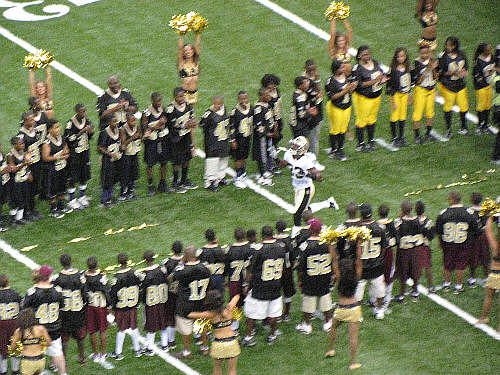
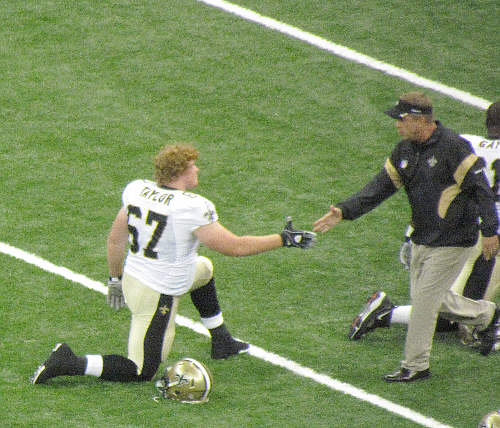
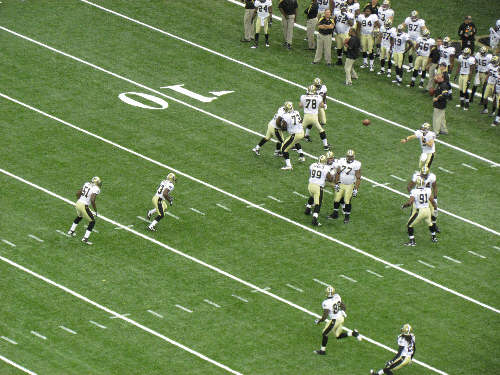
Del decided to visit her kids in Baton Rouge and Alexandria on the night of the first Saints Pre-Season football game in the Superdome. My friend Guntis who usually attends Saints games with me, couldn't come because his daughter Krista was flying in from Hollywood for a visit. So I invited my neighbor Don and he and I drove to my usual parking place and when we got to Champions Square, it was closed, but there were lots of signs of new construction going on. I expect it will all be ready by first regular season game. The Hyatt-Regency will be re-opening in October and I expect its lobby will have an entrance into the Square as well. Lots of activity in the city this Fall. The Saenger Theater is due to re-open as well on Canal Street.
A new streetcar line will soon carry passengers from downtown hotels to the Union Passenger Terminal (railroads & bus terminal), going past the Superdome as well. Saints played very well, stifling both pass and run most of the game. Ten times knocked the QB down, 6 sacks, and two interceptions. Could have been two recovered fumbles which we missed, but we didn't lose the two by Chase Daniel. His 19 yd run was longest of Saints, followed by Bell and Taylor. Joe Morgan ran a punt back for a TD on a magnificent weaving effort.The next morning Del had gone to the Red River Camp with her daughter Kim and while there she received a phone call that her mother, Doris, had fallen and broken her left wrist and her hip. She was in Meadowcrest Hospital, now an Ochsners's facility. Del rushed home and visited her mom in ICU. Over the next day she and her brother Dan discussed the options. The operation offered only a 50-50 chance of survival for her mom, but if she survived, her quality of life would improve. They decided on the operation. Dan flew into town in a rush and forgot to reserve a rental car. The new rules are they can't rent you a car if you don't reserve one ahead of time. So Dan arrived in a large Ford F150 truck as the only vehicle he could find for rent. The operation was successful, but Doris's early recovery was so poor that she was put on palliative care by her doctor and transported back to Our Lady of Wisdom nursing home to her apartment. She has shown some minor improvements in responsiveness and is eating a bit of food finally. Your prayers for Doris are requested during this tough time. I told Del that I was putting her on triple hugs for the duration. When you care enough to give the very best, when there are no words, a hug is the best medicine.
THINGS A'FIXING HAPPENINGS
Finally Tillie, my Echo Tiller, got her release from Paul's Outdoor Equipment Hospital. The instructions for keeping her healthy were as outrageous as they were complicated. Something like this: "Use only fresh fuel. Gasoline without ethanol. Refill tank of tiller each time you use it." Sounds easy, but consider that finding gasoline without ethanol is almost impossible and that the 2-cycle motor requires mixing a 50 to 1 and imagine trying to calculate and measure that for a 19 ounce tank each time it needed refill. Add to that complexity the fact that I only use Tillie about 3 or 4 times a year! I pondered Tillie's health versus my sanity and decided to go the medicine route: give her a strong dose of STA-BIL fuel stabilizer and let nature take its course. She lasted 5 years without special treatments or medicine so perhaps she go ten with the medicine.
Eddie repaired and returned my two LCD rotatable Gateway monitors and they are mostly work fine for now. Some long term solution is needed, but we're good to go for the time being. Called Overhead Door Co. early Monday morning after finding out that they repaired Genie Garage Door openers. They had a repairman on the West Bank already and John showed up an hour or so later. John is about 5' 6", thin and wiry. After trying to heft the heavy door unsuccessfully to get it to open Saturday and Sunday so I could get my car out, when he got out the truck, I looked around for the other three big guys who he needed to help him get that door up. He told me that he often got that look. But he used his tools to release the upward pull by the door spring and proceeded to replace the broken cable with a new one. All done in under 30 minutes for the standard house call of 92 dollars plus 9 dollars for the cable. Door as good as new. The AC man from EXPRESS came with the new control board a week or so later and our bedroom AC is now working normally again. I made a trip to Home Depot and found a new Delta shower head with six jets which looked and worked like the Speakman Anystream which had a broken jet. Installed it in minutes. The hardest item on the list was the heavy, super-heavy BBQ pit which had become an eyesore on the edge of the new Pergola Patio. Several people who said they wanted it, never showed up. Especially after trying to lift the thing up. Five large men couldn't lift the monster, built using heavy metal from an offshore oil platform.
In desperation I called Charlie Graf our firewood man who lives right across the bayou in a large farm area where he mostly sells firewood and raises chickens, goats, and cows. He came over the next day driving his large New Holland with a fork lift on the front, lifted the BBQ monster as deftly as you please, drove it back to his estate, and in minutes, Godzilla had left the premises! Like John with the garage door, Charlie was one-man, one-job and done!Earthlink engineers finished the upgrade and finally got my Urchin Website Usage Logs working by end of month, at least updated on a weekly basis. The water was still leaking, but Jefferson Parish had sent a supervisor to check the leak who said it was on their side of the meter as no water was going to our house at that moment. He promised a crew to fix it soon. Which they did on August 29. He said it was a kinked line which had been restricting our water flow before it developed leak. Now there's a new line in place. See photo below of spout during repair. Del's mom is beginning to eat a bit more. When Kim came to visit she was awake the whole time. It was Kim who discovered the shower head was defective and reported it to me, so I want her to know it's been replaced by a brand-new Delta shower head.
LAST MINUTE ITEMS
This month, my brother Paul and his wife Joyce came for a visit. Our daughter Maureen rode over with her UNO freshman son Gabriel driving her red sporty car (it was an all-day driving lesson, to be followed by his first drive across the 24-mile Causeway bridge. My friend Guntis brought his daughter Krista for a visit one afternoon. Del had to cancel a trip to Cooperstown, NY with our Louisian Tech freshman grandson Weslee because of her mom's condition requiring her presence in town. She did take off for a quick trip to Lafayette where our ULL freshman grandson Sam was having problems and his parents and grandparents weren't available.We have now reached the point in the month when I tell Del, "Don't let anything happen for a few days!" or I have go back and add to the now ready-to-send-out Digest! One of those happened yesterday when I got word that my mom's sister, Clara Babin Barrios, died at age 87 or so. The only remaining child of Peter and Daisy Babin's 12 children is Clara' twin sister, Clarice Babin Bascle. The funeral Mass will be at St. Ann's Church next week.
EVERY GOOD THING MUST COME TO A NEW BEGINNING . . .
The month of August brought us lots of clearing clouds and some more blessed rain for our lawn and gardens in the first half of the month. Another hospital trip, a serious hip replacement, and a couple of funerals, among other things. Dan stayed with us for a couple of days during his mother's operation. Kim came from Alexandria to visit her mother, Del, and her grandmother, Doris. Our new pergola is fully painted and has a sun screen and large ferns hanging down to cool off our kitchen on bright sunny days, and our paving stone patio has new furniture for enjoying a view of the golf course fairway on pleasant mornings and evenings of Summer days. Del new LT is being used and the switchover to my new System 7 is proceeding apace. The Saints are learning as they win and lose pre-season games and they will open against the Super Bowl champs Green Bay in their first game a couple of days before LSU opens against the BCS Championship Game contender, Oregon. Our Fall veggie garden is producing cucumbers and eggplants while volunteer watermelon and cucumber vines are flourishing and cucumbers are the salad du jour. Till October arrives, when cooling breezes descend from up north and our football dreams wake up to reality, God Willing and the hurricanes wend up the East Coast or south of us along the lower Caribbean — whatever you do, wherever in the world you and yours reside, be it in colorful Spring or Autumn, in the Northern or Southern Hemisphere, in the New World or the Old World, remember our motto:
Enjoy the present moment, it's the only Eternity you have and it's given to you for Free!

~~~~~~~~~~~~~~~~~~~~~~~~~~~~~~~~~~~~~~~~~~~~~~~~~~~~~~~~~~~~~~
IMPORTANT MESSAGE:
To those Good Readers who are puzzled by How the Moon could be Rising In Front of a Mountain, Click on Photo. To see 161021 photo, Click Here. ALSO: if you are puzzled because you No Longer get our Monthly Reminder, you may have Changed Your Email Address without notifying us. NOTIFY US NOW by a simple Click Here!
Here's the Sting:
You will NOT receive a Monthly Reminder unless you have Re-subscribed under your new address to DIGESTWORLD.If you've already receiving DIGESTWORLD Reminders, ignore this message.
If you're not subscribed, and would like to Subscribe to DIGESTWORLD Reminders to receive one short email a month to inform you of the latest ISSUE, now's a good time. SUBSCRIBE NOW
by Clicking Here.Yes, this message does no good to those who changed their email address without notifying me — but it can alert those of you who are going to change your address.
If you've changed or are planning to change your email address, Click Here to SEND NEW ADDRESS. (Alternate way is to copy into your Browser this URL: http://www.doyletics.com/subscrib.htm )
EASE OF VIEWING NOTES:
NOTE: For Internet Explorer Browsers, DIGESTWORLD is best viewed at 100% Zoom and the Window's width sized so that Digest Archives lines are single-spaced, just barely. Adjust Window width so that Mountains almost touch the Archive Numbers, especially if you find some Photos overlapping text.PHOTO CAPTIONS (CURSOR FLYOVER ISSUE RESOLVED):If you have been enjoying the photos in DIGESTWORLD, but have wondered who or what you were looking at, you will now be able to hold your cursor still over the photo and the photo's description will appear. (Test on Butterfly-Crab Image at Right.) We spend a lot of time writing these photo captions and hope you will read them. All the Archived Issues have been updated to provide descriptions when your cursor rests for a second on a photo. Note that older Reviews have not been updated. If you haven't finished reading text when description disappears, move cursor away and back on photo to finish. We thank you for your patience and hope this pleases you.
New Quotes Added to quotes.htm this month:
- Life is what happens when you're making other plans.
AnonymousDeath is like the blowing out of a candle at the break of dawn.
Rabindranath Tagore (1861 – 1941)- The smallest good deed is better than the grandest good intention.
— DuguetNew Stuff about Website: Five Favorite Reviews:
1. Samuel Butler's
The Way of All Flesh.
Even after reading this book I hadn't the foggiest of why the title. It seems to hint that everyone goes through what Ernest, the hero of story, goes through and yet most of the story is about the characters that do not change in the course of their live: Theobald, Christina, Joey, Charlotte, Ellen and Overton. Ernest undergoes many transformations, however; he goes from naive schoolboy, to sophisticated clergyman, to disgraced prisoner, to self-sufficient businessman, to happily married, to unhappily married, to happily unmarried, to penniless recluse, to well-endowed gallant and so forth. Certainly Ernest's way was not the way of all flesh, but the philosophical tidbits that Butler drops in at points throughout this embellished story of his own life enlightens us to the universals of life (which I suppose may be called the "the ways of all flesh").
The author pulls us into the story and drags us through the book with the unswerving intent of an oxen team pulling a plow. We marvel at the new and unexpected flora and fauna turned up into the open with each stroke of the plow. And through it all Ernest, muddied and wearied, holds onto the arms of the tiller. It is his life and he develops an inner determination that clears the biggest boulders from his path with dispatch.
He is the ultimate "identified patient" in a family of a perfect father, loving mother, and perfect brother and sister. He must err, he must deviate from their expectations or not live at all. His first excursion from the perfect path was with Pryer when the two new clergymen planned the College of Spiritual Pathology. His first visitation to his selected converts is hilarious (albeit it sad). He ends up being converted by each person he visits in turn - the last one, a Miss Maitland, converts him into a prisoner.
In prison he finds the resolve to defy his parents to their face and begins to treat his life as a do-it-yourself job and does well — making mistakes in just the right way that befits his chronological age at the time. This is undoubtedly the perfect book for not-so-perfect teens in our time.
2. Brian Bates' The Way of the Actor

This is an enjoyable book. Bates seems to understand that this is also the way of the shaman and gives many examples of parallels. In one episode he recalls that during a color visualization exercise he saw a bright turquoise color surrounding a pupil. When the exercise was over the student said he was concentrating on the color blue. In several other exercises he leads students through out-of-the-body experiences. One student floated out under the door of the RADA (Royal Academy of Dramatic Arts), walked down the stairs out the front lobby, and floated to the top of the building. When Brian suggested he try flying from the top of the building, the student said he wanted to come back and reversed his steps back into his body.
The book is filled with comments by well-known movie stars: Charlton Heston, Liv Ullman, Marlon Brando being his favorite sources. The stars' descriptions of their subjective processes comprise a wealth of information compiled in one place by Bates from many different sources. One would have to read multiple autobiographies to get the gems that Bates presents in synoptical order for us in this book.
The practical exercises in observing and exploring the self, others and the world will be useful in various kinds of group work. The face exercise goes: "feel someone else's face with one hand and your own face with the other hand to compare the faces on a kinesthetic level (to avoid the visual preconceptions or maps we have ingrained in us). The other exceptional exercise is, "look at a person's face and draw it without looking at the drawing (only the face) until finished."
Another idea for a guided meditation came from his description of magical dwarves that amputate body parts and replace them with new body parts. That could be developed into a guided fantasy in which a person imagines his entire body being rebuilt according to his desires. Once his fantasy body is rebuilt, the idea is the that the actual body will follow.
A fourth exercise is, "let your 'body' expand to fill a large room and then explore the space as the inside of yourself."
The way of the actor seems to be the way of the shaman and the way to create magic in the world both on and off the screen.
3. Dan Millman's The Way of the Peaceful Warrior
A fascinating book, particularly so if you are hearing the anecdotes of the peaceful warrior, "Socrates" for the first time. Unfortunately for me I wasn't. There were one or two that were new to me, such as the story about the old woman, who seeing a mother lion crushed several hundred feet below her on a cliff side, threw herself over the side so that the lion cubs would not die from starvation. The others were re-runs from other books such as the overflowing teacup one. Socrates illustrates this one by overflowing the gas tank of a customer he was servicing, which seems less prudent than spilling a little tea to make a point. On the whole, the retread of the many stories gave the book the flavor of a constructed story rather than a true story as it is purported to be.
The story line is: Socrates is a midnight shift service station operator of non-specified ethnic origin, about 92 years old, when he meets the author. Millman is a student of gymnastics at UC Berkeley. Socrates impresses Millman by jumping to the roof of the station and back down, takes Dan on as a student, and begins midnight to 5 AM lessons. The subjects range from meditation and diet to advanced gymnastics and along the way Socrates is supplanted by a young female athlete named Joy.
When Socrates didn't have a handy story to illustrate a point, he'd grab Dan by the temples in the middle of walking through Berkeley and suddenly Dan would be in another world dying in the middle of the desert, his body turning into dust, years passing by, and then just as suddenly, he'd be back on the street in Berkeley.
Two key coded questions and answers which Socrates teaches Dan: Where are You? and What time is it? The answers are of course "here" and "now" — how did you ever guess without reading the book? If you didn't guess — better read it in self-defense, so you can be ready for the attack of "the peaceful warriors" coming soon to your neighborhood.
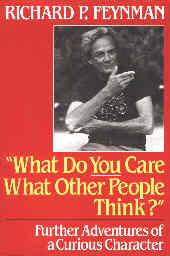
4. Richard Feynman's What Do You Care What Other People Think?
The saddest part of this book is the realization that there will be no more books from this amazing Mr. Feynman. He won the Nobel Prize in physics for his famous Feynman diagrams. These are diagrams that explain the structure of matter by showing how particles (electrons) travelling forward in time may be thought of as anti-particles (positrons) traveling backwards in time. My insight on how this makes sense stems from watching a motorcyclist traveling down a road winding alongside a hill. As I reversed the direction of time (via Laserdisc), the cyclist moved back down the left side of the road (you must imagine that your viewpoint is on the rear seat of the cycle looking in its now forward traveling direction). The attribute of electron versus positron is as simple as the left or right handedness that switches when time is considered as a variable that can have a positive and negative value (or direction).
The first chapter on "How to Make a Scientist" is worth the price of the book. He tells how his father bought colored tile seconds and stacked them with Richard, teaching him thereby to recognize patterns as a basic mathematical process. His mother would say "Let him put a blue if he wants," focusing on the human values (feelings) of the child and the father would say, "No, I'm teaching him basic mathematical operations."The anecdote teaches that the really important learnings are simple ones, if they are presented at the opportune age. A small step for a child to stack colored tiles, a large leap for mankind to stack eight colors of quarks into a proton.
The middle of the book deals with Arlene, his first wife, and how the two of them flouted convention and parental advice to get married even though Arlene had a terminal illness. She used his words on him on several occasions, such as gave rise to the book title, "What do you care what people think?" That was used when he had second thoughts about his role on the Challenger investigation. There's a great film with the humor and pathos potential of a "Steel Magnolias" waiting in his two books. ("Surely you're joking?" you ask?)
The second half of the book covers his fun with NASA and the Challenger investigation. His press conference, his histrionics with the ice water and O-rings turned the NASA investigation in the right direction. In 2003, another shuttle has an accident, the Columbia this time, upon re-entry. Another investigation awaits. John McQuaid in the Times-Picayune on February 5, 2003 wrote that Feynman's "simple experiment" on the NASA panel solved the Challenger problem and added, "Now a similar panel is investigating Saturday's Columbia disaster . . ." I don't it would be hyperbole to say that there will never be another "similar panel" because there will never be another genius like Richard Feynman. To do such a simple experiment in front of the eyes of world on such a prestigious panel required a genius and a genius who didn't "care what other people think" — in other words, it took a Richard Feynman.
If Richard had any weakness, it was his love of physics. To paraphrase the fairy in Gilbert & Sullivan operetta, Iolanthe, "he had a weakness for physics and the weakness was so strong."
5. Farley Mowat's Woman in the Mists

When in 1969 Sandra Darlene Mews suggested that I read Never Cry Wolf by Farley Mowat I told her that I never read books about animals, but she gave me a copy of the book so I read it anyway. The book turned out to be about that most curious and humorous of God's creatures called man, in that case, Farley himself.
In Woman in the Mists Farley reprises Never Cry Wolf, but this time the main character is Dian Fossey and the companion animals are gorillas, mountain gorillas in the wilds of the Varunga Mountains. Like Farley, who came to love and understand wolves, Dian came to love and understand the mountain gorillas. She called on her work with autistic patients for new strategies for habituating gorillas to humans. After months of work, she was able to make physical contact with the gorillas, becoming an adopted member of the group — playing, wrestling, hugging, cooing, chest-beating, and even given to long, thoughtful staring when a favorite gorilla named Tiger was suffering from chest wounds. The gorilla scenes are touching and made me yearn for a world in which such majestic animals would be allowed to live in peace.
But there is little peace in Dian's life outside of the time she spent with her gorillas. She was beset by physical ailments (pneumonia, emphysema, kidneys, corneal growths, sciatica, heart murmurs, stress fractures of her feet, and broken ribs just to mention a few) and psychological ailments in the form of continual betrayals, including the theft of her ideas and the products of her work at her mountain camp Karisoke . When her beloved gorilla, Digit, was beheaded for a trophy room, she established a fund in his name. Shortly thereafter all the funds she had collected were re-appropriated (stolen) by bureaucrats and funneled into building parking lots to bring more of the very tourists Dian was dedicated to eliminating from the gorilla park.
Bereft of the support she helped create, she used her personal savings to dismantle traps and to provide patrols to scare off and capture poachers of the gorillas. The poachers did to the gorillas what Harcourt, the VW couple, and park officials did to Dian's work. They took away every piece, idea, credit, camera, gun, lamp, and goodness they could get their hands on and justified it to themselves and the world as being for the good of the gorillas. Only in her death did these meta-poachers rid themselves of the Woman in the Mists.
Thanks to Mowat's book, we can long remember the work and the indomitable spirit of this unique and courageous woman of the mists.
Hits (Watch as soon as you can. A Don't Miss Hit is one you might otherwise ignore.):~~~~~~~~~~~~~~~~~~~~~~~~~~~~~~~~~~~~~~~~~~~~~~~~~~~~~~~~~~~~~~
Movies we watched this past month: Notes about our movies: Many of the movies we watch are foreign movies with subtitles. After years of watching movies in foreign languages, Arabic, French, Swedish, German, British English, Russian, Spanish, Italian, Japanese, Chinese, and many other languages, sometimes two or three languages in the same movie, the subtitles have disappeared for us. If the movie is dubbed in English we go for the subtitles instead because we enjoy the live action and sounds of the real voices so much more than the dubbed. If you wonder where we get all these foreign movies from, the answer is simple: NetFlix. For a fixed price a month they mail us DVD movies from our on-line Queue, we watch them, pop them into a pre-paid mailer, and the postman effectively replaces all our gas-consuming and time-consuming trips to Blockbuster. To sign up for NetFlix, simply go to http://www.netflix.com/ and start adding all your requests for movies into your personal queue. If you've seen some in these movie blurbs, simply copy the name, click open your queue, and paste the name in the Search box on NetFlix and Select Add. Buy some popcorn and you're ready to Go to the Movies, 21st Century Style. You get to see your movies as the Director created them — NOT-edited for TV, in full-screen width, your own choice of subtitles, no commercial interruptions, and all of the original dialogue. Often you get the Director's Cut Edition which adds back excellent footage that was cut from the theater releases. With a plasma TV and Blu-Ray DVD's and a great sound system, you have theater experience without someone next to you talking on a cell phone during a movie plus a Pause button for rest room trips.
P. S. Ask for Blu-Ray DVD movies from NetFlix.“Pipe Dream” (2002) think plumbing pipes and a casting director who hasn’t cast a movie in his career makes a deal with a plumber, who has never directed a movie or anything else, to make a casting call for a fictional movie, whose script he steals from his wannabe writer neighbor he has just slept with. Soon the buzz around Hollywood about a movie called “Pipe Dream” scares up a rich geek who invests $2 million and our plumber becomes Our Director with the script writer giving him directions on directing. Can the new director forgo the casting couch with the ingenue starlet till the movie is over? Can he plumb the necessary depths of feeling to make the movie a hit? Can he learn to tell crullers from jelly donuts? Will the director in his ear start whispering sweet nothings? The fun starts early and continues till the last Mambo. A DON’T MISS HIT ! ! ! ! !
“Take Me Home Tonight” (2011) with Topher Grace meeting his secret high school love ten years later, and he strives to find a way to make contact with her with this second chance. They bounce into each others’ arms on a trampoline and he rolls heads over heels down a Hollywood hill in love. A DON’T MISS HIT ! !
“Source Code” (2011) about an Air Force pilot downed in Afghanistan being pressed into service to avoid a train wreck with bigger implications. Like “Groundhog Day”, our hero can replay a loop of 8 minutes (instead of a whole day) and find the culprit who planted a bomb. How many times can you get blown to smithereens by a bomb before you are eligible for Worker’s Compensation? Will he talk to his father? Will he get Christine? Will he save the city and the train? All the answers are in the Source Code, or are they? "Everything is going to be okay." A DON’T MISS HIT ! ! ! ! !
“HappyThankYouMorePlease” (2011) a hit by Josh Radnor, Writer, Director, and Star. Three story lines converge as a foster child gets separated from his family on subway and adopts Sam No.1. Will the pregnant gal be abandoned by the father who is off to L.A. Will Sam No. 2 finally get to date the gal with the colorful turban? Will Sam No.1 ever get to hear Mississippi sing? A movie that will make you Happy and want to say Thank you, More Please!
“Silk” (2007) a lush epic (ala “Dr. Zhivago”), a period piece of the silk business in France which required healthy eggs for silkworms and a young man who is charged with acquiring them. He becomes rich but the trips get longer and more treacherous. Where does his heart lie, in Japan or in France? The answer is in a long note written in Japanese from a beautiful lady. But which lady? A movie which will move you. A DON’T MISS HIT ! ! ! ! !
“State of Play” (2009) (see also digest09a) shows the seamy insides of the Senate, the Defense Dept, and a large newspaper trying to survive in Internet Times. Russell Crowe has newsprint under his fingernails and the new Blogger has pixels in her blood. Can they team up to uncover a plot in which Crowe is sleeping with a key protagonist? The suspense is almost as killing as the mysterious sniper. A DON’T MISS HIT ! ! ! !
“Daydream Nation” (2010) A gal moves from big city to a small town for her senior year and seduces English teacher out of boredom, then finds boy her age attractive. Amazing script, well-directed, non-stop action at many levels. Can the key people in this movie survive their growing up time, including English teacher?
“Bleak House” (2005) Beats reading Dickens long novel any day. Charles Dance as a great bad lawyer. The Chauncery makes US Congress look good in comparison. Novel is like a satire on modern politics. Don’t have watch all episodes to know this one is a Hit.
“Treme” (2010) Season 1, Disk 1, 2 Want to experience New Orleans without a long drive or taking off your shoes in an airport? These episodes will give you everything but the smells and tastes of the French Quarter and surrounding areas. Coco Robichaux, Deacon John, resident John Goodman, WWOZ studio & DJ’s, Mardi Gras Indians, second lines, people pissed off by cops doing their job, etc, they’re all here. These two disks built up the characters.
“Treme, Season 1, Disk 3,4" (2010) in the last episode Davo is buried with a Second Line, Big Chief of Guardians of the Flame parades on St. Joseph’s day, Tony mourns the loss of her husband, DJ Davis is back at WWOZ, his chef squeeze off to Big Apple and a new squeeze, the violin player, moves in with him. A great look at a part of the living New Orleans that rarely gets portrayed anywhere, up until now. The simple words, “Who daid?”, said by observer of 2nd line can only be said that way in New Orleans. A DON’T MISS SEASON OF HITS ! ! !“Treme” (2010) Season 1 Disk 3Antoine gets a new bone from Japanese fan, then locates the one the cops took from him, and gave the new trombone to fellow musician who lost his in storm (Played by Deacon John). Melissa Leo’s odyssey to locate Davo comes to an end at a makeshift morgue upstate. The first Mardi Gras after Katrina takes place with Big Chief in jail, and John Goodman and family dressed in “blue roof tarp” costumes. DJ Davis gets himself a “Get Out of Jail Free” card and spends Fat Tuesday with the poor butterfly violin player. A DON’T MISS HIT! ! !
“Limitless” (2011) premise is that a drug can improve mental capacity so that a normal person can become a freaking idiot who devotes his life to making money! And getting more drugs. In the process he gets to ruin his life, kill others, and spend a couple of lifetimes undoing the bad karma he has unleashed upon himself.
“The Conspirator” (2010), alleged cospirator, is Mary Surratt who ran a boarding house where her son met repeatedly with John Wilkes Booth in the weeks before he killed President Lincoln. How can a neophyte attorney fresh out of Union Army defend her against a stacked military tribunal wanted to set an example? A DON’T MISS HIT ! ! !
“Cyrus” (2010) is an only child clinging to his single mother at age 22 and manipulating her to drive away any suitors. Marisa Tomei plays the most vulnerable female part I’ve seen he do and does it admirably. John C. Reilly meets the mom and falls for her but Cyrus has a bigger fall planned for him. Can he survive the scheming brat?
“The Way Back” (2010) about three men who survived a walk from the frigid prison of Siberia gulag all the way down to India! Some 4,000 miles on foot, most of it through hostile territory with no supplies and only a single knife between the six original crew of multinational prisoners. Incredible story and scenery make this A DON’T MISS HIT ! ! !
“Restrepo” (2010) was a beloved soldier who died in Afghanistan and his buddies gave his name to a new outpost from which they cleared out the militants. Based on interviews of soldiers who survived and live footage during their tour in the field, it is a gripping first-person view of actual combat and war-time rarely ever seen before.
“Kill the Irishman” (2011) Danny Green is all Irish and decides to kick some Mafia butt in return for their abuses of him. True story of how the Mafia was wiped out of Cleveland makes a powerful movie. A DON’T MISS HIT ! ! !
“Cedar Rapids” (2011) What happens in Cedar Rapids stays in Cedar Rapids and spreads laughter and delight wherever anyone watches it. Leave your expectations behind for this one. A DON’T MISS HIT ! ! ! ! !Misses (Avoid At All Costs): We attempted to watch these this month, but didn't make it all the way through on most of them. Awhile back when three AAAC horrors hit us in one night, I decided to add a sub-category to "Avoid at All Costs", namely, A DVD STOMPER. These are movies so bad, you don't want anyone else to get stuck watching them, so you want to stomp on the disks. That way, if everyone else who gets burnt by the movie does the same, soon no copies of the awful movie will be extant and the world will be better off.
“Another Day” (2001) Another script, Another cast, Another director and this might have been a good movie. Forget the throw-back-into-the-past storyline: throw this DVD in the trashcan! AAACYour call on these — your taste in movies may differ, but I liked them:
 “Careless” (2007) Colin Hanks is a bumbling bookstore employee with liberal arts major who finds a human finger on the floor of his kitchen. He calls the police and they hang up on him, so he carries the finger around with him and soon finds his Cinderella with a missing finger. The rest of the story is how her finger came unraveled and traveled to the floor of his kitchen. Can love survive a missing finger?
“Fish Without a Bicycle” (2004) is what a woman is without a man, some feminist said, but this Julia Roberts wannabe with flaming red hair is learning to ride that fish bicycle and learning along the way. A quirky movie with benefits.
“Tron: Legacy” (2010) Can you overload on blue and white lights? Or Jeff Bridges? Or motorcycles inside a computer? Or a boring script? Or a zzzzzzz. . . .
“The Other Guys” (2010) Will Ferris and Mark Wahlberg, two actors totally unsuited to play with each other star as two quirky and whacky cops who go over the top to replace the stars in the initial crash scene which must be seen to be believed. If you’re in a hurry, you can stop the DVD at that point and not miss much.
“Sympathy for Delicious” (2010) DJ Delicious is an angry young man in a wheel chair living in his car on Skid Row. What’s he to do when he discovers he can heal by laying his hands on people? How about becoming a Super Rock Star? Rocket to the top, and forget about gravity! Yeah, good plan, not one that will get you any sympathy or happiness.
“King Lear” (2009) Ian McKellen as the King who divided up his land before his death and set his three daughters against each other. In a parallel plot Gloucester has his two sons set against each other and he and Lear wander the rainy moor, the blinded man and the insane king leading a ship of fools.
“Just Go For It” (2011) if you like stories where kids act like adults and adults like kids. Lies build upon lies till it’s not funny anymore. Puerile adults and precocious kids add up to obnoxious movie.
== == == == == == == == == == == == == == == == == == == == == ==
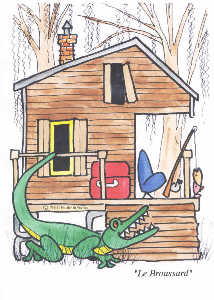
Le Broussard Cajun Cottage, drawn by and Copyright 2011 by Paulette Purser, Used by Permission
4.STORY:
== == == == == == == == == == == == == == == == == == == == == ==Boudreaux was out in da field wit' his frien' Broussard who owned the farm with him. Broussard pointed and said "Boudreaux, you see our ole barn out dere? Dat maudits t'ing is completely infestered wit' rats. Ah tried everything Ah know an' dey don' go away. Can't you help me wit dat?""Mais, Broussard, Ah know 'xactly how to get rid of dem rats. We gotta get us one of dem bull constriptors," Boudreaux said proudly.
"Wats a bull constriptor? Ah never heard of dat, me."
Boudreaux explained, "Don' you know dat's one of dem big ole snakes dat loves to eat rats and swallers dem whole, all at once?" Broussard was impressed and decided to go get them a snake like that.
Well, the next day Broussard went down to Klibert's reptile farm and bought himself the biggest boa constrictor they had.
He brought the snake to their barn and let him loose right in the middle of the floor and sat there on the steps to the loft to watch the action. Well, Broussard was watching for a long time. I mean a long, l o n g time, and there wasn't nothing happening. That dumbass snake just curled up hiself in the middle of that barn and slept all day. He didn't even move and the rats just ran all around the place.So Broussard got real frustrated and he called up Boudreaux on the phone, "Boudreaux, man dats some bad advice 'bout dat snake. Dem rats is still runnin' all around and dat snake jus' lays dere sleepin' all day long."
"Mais, Broussard. Ah know just what to do. Give dat snake some Viagra." Broussard almost yelled in the phone, "What! Viagra! What's dat gonna do?"
Boudreaux replied,"Ah was just listening to da radio and de man say dat Viagra is de best ting to use for a reptile dysfunction!"
== == == == == == == == == == == == == == == == == == == == == ==
5. RECIPE of the MONTH for September, 2011 from Bobby Jeaux’s Kitchen:
(click links to see photo of ingredients, preparation steps)
= = = = = = = = = = = = = = = = = = = = = = Cherry Bounce
Background on Cherry Bounce: This is a drink that my Cajun ancestors made and drank, and I remember well from when I was a kid and was too young to drink it or even taste it. About twenty years ago I found some berries growing on a tree at my new home and I brought some to my mother who confirmed they were wild cherries. "The kind used to make Cherry Bounce?" I asked her and she said, "Yes." Well, how do I make some, I asked her. This recipe is what she gave me and in several consecutive years, I made Cherry Bounce from my tree.
Ingredients
Collected Cherries
Sugar
Vodka or brandy
Preparation
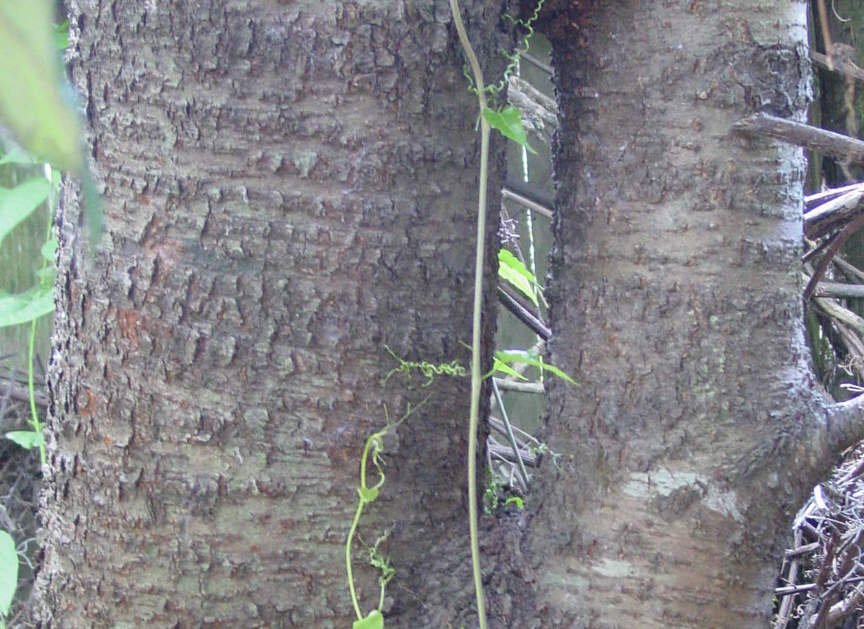
You get the cherries from the black cherry tree which grows throughout the state of Louisiana. The cherry's size averages about 1 cm or a quarter inch. The cherry stone is large in portion to the cherry, so they are no use for eating as there's no enough flesh to make it worth while. The Cherry Tree can be identified by the striped bark which circles the tree parallel to the ground. In early Spring, you'll see long racemes of tiny white flowers: each of these flowers will likely develop into a cherry. These are wild cherries, which means that the cherries turn ripe at different times, not all at once. To harvest cherries, take a clean sheet or tablecloth and spread under a tree which has already dropped some of its black cherries.
Shake the tree and collect the cherries which fall. Pour into a large open 4 cup measure. Rinse in water and discard any green or still bright red cherries. Keep only the dark, almost black ripe cherries. Pour then into a quart Mason Jar like used for canning. Cover with granulated sugar. Just enough to reach top of cherries. Continue this process every other day until cherries are no longer falling when you shake tree. When cherries reach top of jar, either stop or start a new jar. Cap off the top of the jar and place it over the fridge or stove.
Cooking Instructions
Allow the cherries to sit for a full year. The skins will dissolve, mix into the sugar, dissolving it, and the solution will ferment. At the end of the 12 month period, open the jar and pour its contents into a coffee filter and let it sit until all the liquid has seeped through the filter. Add some liquor like vodka (my preference as it doesn't modify the cherry taste) or your favorite brandy. Amount is optional, to suit your own taste. Place in an elegant bottle in your liquor cabinet.
Serving Suggestion
Serve in cordial glasses as an appetirif or a post-prandial toast or with dessert.

== == == == == == == == == == == == == == == ==
6. POETRY by BOBBY from Becoming the Archangel Michael's Companions:
= = = = = = = = = = = = = = = = = = = = = =Waking Consciousness
With our waking consciousness
we can build a bridge to Paris
But we cannot build a bridge to our soul.With our waking consciousness
we can fly a plane to Rio
But we cannot fly within our soul.With our waking consciousness
we can work upon the natural world
But we cannot work upon
the inner nature of our soul.Only with our sleeping consciousness
can we work upon
the inner nature of our soul.With our waking consciousness
if we were to strive to stay awake
We would soon grow very old.With our waking consciousness
we can work upon the natural world
But only while asleep
can we work upon our soul.With our waking consciousness
we can read a book
and learn about the world
But with our waking consciousness
we cannot learn about our soul.With our waking consciousness
we can have clever concepts in our head
But we cannot understand our soul
because these concepts are stillborn dead.
== == == == == == == == == == == == == == == == == == == == == ==
7. REVIEWS and ARTICLES for September:
= = = = = = = = = = = = = = = = = = = = = =And for my Good Readers, here’s the new reviews and articles for this month. The ARJ2 ones are new additions to the top of A Reader’s Journal, Volume 2, Chronological List, and the ART ones to A Reader’s Treasury. NOTE: these Blurbs are condensations of the Full Reviews sans footnotes and many quoted passages.
1.) ARJ2: Our Magnificent Bastard Tongue — The Untold History of English by John McWhorter

I pride myself on speaking English. I really do speak English. I also do write English. I'm writing English right now. I rejoice in writing English, but I do not rejoice myself in the same way that I pride myself. Something is going on in English and we native speakers do it all the time without noticing that we're doing it. We talk about something being in progress using [-ing] form of verbs and we use the verb "do" frequently even though it has no meaning when used as an auxiliary verb as in "I do rejoice". What is the difference between "Why do I write English?" and "Why I write English?"? None, except we usually use the word "do" in such sentences. How is it we say "I pride myself on my work" but I rejoice sounds funny if you add myself to it? Why does the author McWhorter spend the first 27 pages of this book discussing the meaningless word "do" which is indispensable to our way of talking? If you disagree that do is indispensable, try spending a day doing without the verb do, and you'll soon understand how valuable and useful the meaningless verb do is. It does not make sense, or does it?
If this sounds like useless gobbledygook to you, you won't enjoy this wonderful book, so stop reading the review now and return to speaking English and using do without any idea of how or why you do. At one point in this book, I imagined some lady embroidering a sampler with instructions for embroidering and wondering at some point how many stitches there were in the word stitches as she worked on that word in her sampler. That may give you an idea of what reading this book is like.
Why did he write this book in the first place? I knew James McWhorter from taking his Teaching Co. course, The Story of Human Language several years ago. In it he looked at how the 6,000 languages of the world evolved with special emphasis on English which evolved along with many other languages, influenced by the peoples who used those foreign tongues and who incorporated many words from them into English. I had already learned elsewhere that the Anglo-Saxons words in English like hat, house, and boat had more elegant words from the French which supplanted them like chapeau, chateau, and bateau, but now I learn that Latin slips in alongside to form a third level:
[page ix] And then even cuter are the triplets, where the low-down word is English, the really ritzy one is Latin, and the French one hovers somewhere in between: Anglo-Saxon ask is humble; French-derived question is more buttoned up; Latinate interrogate is down-right starchy.
Germanic languages are more like each other than any one of them is like English. Some examples will help illustrate and the author provides many examples.
[page xv] For example, English daughter is Tochter in German, dochter in Dutch, datter in Norwegian, dotter in Swedish, dottir in Icelandic. With techniques developed by linguists in the nineteenth century and refined since, we can deduce — with the help of now extinct Germanic languages preserved in ancient documents, like Gothic, in which the word was daúhtar — that all of these words are the spawn of a single original one, daukhtrô.
In all of the Germanic languages but English, their descent from that same ancient language is clear first, it is true, from their words. No Germanic language's vocabulary happens to be as mixed as English's, and so the others' vocabularies match up with one another more than English's does with any of them. German's word for entrance is Eingang, Dutch has ingang, Swedish ingdng, Yiddish areingang, Icelandic innganga. Before the Invasion of the Words, Old English had ingang, but later, English took entrance from French.Other Germanic languages will easily recognize our word daughter but not our word entrance. But the syntax which determines word order is dramatically different as I quickly learned when I studied German for the first time in college. Here's a dramatic example of several of the differences between German and English in one sentence which also illustrates our usage of the verb do.
[page xvi, xvii] To see that English is the oddball, take a look at a sentence in English and German, where all of the English sentence's words happen to be good old native ones, having come down from Old English. No Old Norse, French, or Latin:
Did she say to my daughter that my father has come alone and is feeling better?
Sagte sie meiner Tochter, dass mein Vater allein gekommen ist und sich besser fühlt?
The words, you see, are not a problem. Even if you have never taken German, you can match up the German words pretty well with the English ones. Sagte is said, Tochter is daughter, allein is alone, and so on.The author breaks down the words to reveal the structure of the German sentence which matches the structure (syntax) of most Germanic languages, but is strikingly different from English in several ways demonstrated by this one sentence.
[page xvii]
Sagte sie meiner Tochter,
said she to-my daughter
dass mein Vater allein gekommen ist
that my father alone come is
und sich besser fühlt?
and himself better feelsDo we usually start a question with a verb? No, but the Germanic languages do. Instead we usually use the meaningless word "do" to help us get started on a question, while a German might ask, "Start we usually with a verb? Ja!"
In English we always say, "I have arrived" as if we possessed our arrival, whereas many other languages say, "I am arrived" as if arrival were a state of being. A condition of being does make better sense than a possession, however, language rarely follows logic, but rather something else, and that something else is exactly the subject of McWhorter's book.
[page xvii, xvii] Word for word, the German sentence is "Said she to my daughter that my father alone come is and himself better feels?" The way German puts the words together is a whole new world for an English speaker. English has Did she say, . . ? German has Said she. . . ? Why does English have that business with Did she say. . . ? Why did? "Did" what?
English has to my daughter; German bundles the "to-ness" onto the end of the word for my, meiner — i.e, German is a language with lots of case marking, like Latin. In English, case marking remains only in shards, such as the possessive 's and moribund oddities like whom. In English, one has come, but in German one is come (just as many will recall from French's grand old passé composé: je suis venu ).The author has laid down the gauntlet in his Introduction and if we aren't interested in how we came to use "do" or "-ing" words or "to" instead of endings of words, no need to proceed into the book proper. I know that many people never read Forewords or Introductions to books, so I often spend a lot of time reviewing the material in those sections as authors reveal their plans for books in exactly those places.
[page xx] English's Germanic relatives are like assorted varieties of deer — antelopes, springboks, kudu, and so on — antlered, fleet-footed, big-brown-eyed variations on a theme. English is some dolphin swooping around underwater, all but hairless, echolocating and holding its breath. Dolphins are mammals like deer: they give birth to live young and are warm-blooded. But clearly the dolphin has strayed from the basic mammalian game plan to an extent that no deer has.
I enjoyed McWhorter's comparison of English to it closest relatives as dolphins to deer. Clearly something happened during the evolution of dolphins which didn't happen to four-legged mammals. His use of the word "echolocating" in his description of dolphin activity should be replaced with phizualizing as I describe in my book The Spizznet File. To phizualize is to create a visual image of one's surroundings from the ultrasonic waves bouncing back. Since dolphins have two phonation devices and the visual images they create are in the same bandwidth as their phonation or speaking devices, dolphins, I postulate, are able to speak pictures, i.e., spizualize images to other dolphins. Since we have ultrasonic imaging devices which create images for us to view, is it so hard to believe that dolphins can do the same thing with their own built-in equipment? After all, the portion of their brain devoted to processing audio input is the same portion of our brain devoted to processing visual inputs. And no one would deny that our brain creates better images than our machines do. If dolphins speak pictures, humans should be able to create machines to view those pictures and the first example of inter-species communication could occur!
Humans speaking in English are handicapped compared to dolphins speaking images. We must use our hands as we speak about some object we have seen to help create the three-dimensional object. Watch engineers speaking you'll notice how they use their hands to create the shape of the object they're describing, like where the on-off switch is located in relation to the valve it controls on a mechanical skid. A dolphin would simply transmit the 3-D image to another dolphin without need for words.
As for how all the changes got into English, it seems that English got chopped up by the Vikings and seasoned by the Welsh and Cornish people and we've been enjoying the language stew which resulted ever since.
[page xxii, xxiii] While the Vikings were mangling English, Welsh and Cornish people were seasoning it. Their rendition of English mixed their native grammars with English grammar, and the result was a hybrid tongue. We speak it today. . . . The real story of English is about what happened when Old English was battered by Vikings and bastardized by Celts. The real story of English shows us how English is genuinely weird — miscegenated, abbreviated. Interesting.
One of the ways of coming to terms with an author is to discover the origin of the title of the book, the eponymous inspiration, and for this book, the revelation comes in the penultimate paragraph of the Introduction, which if the readers skipped, would be lost on them forever. They might be left thinking the author merely wanted to shock potential readers into buying his book, instead of sharing the origin of the unique aspects of English in a memorable way.
[page xxii, xxiii] It's not, then, all about words that just happened into our vocabulary. It's also about things speakers of other languages did to English grammar, and actions speak louder than words. The real story of English is about what happened when Old English was battered by Vikings and bastardized by Celts. The real story of English shows us how English is genuinely weird — miscegenated, abbreviated. Interesting.
The verb form write is the present tense, but it is never used to indicate present tense except by the addition of the -ing ending, e. g., I write everyday, but I am writing right now. This is a distinction which other European languages do not make. A Spaniard would say "Escribo" and a Frenchman would say, "J'écris" while an Englishman, "I'm writing." (Page 3) A similar situation for our usage of "do" as an auxiliary verb — it happens only in English. Other languages have words for "do" but it is not used as an appendage to another verb as in English. In this next passage we see "do" and "-ing" together in one sentence, a rather common sentence to us, but very strange to foreigners hearing it for the first time and trying to learn what it means.
[page 4] English, then is the only Germanic language out of the dozen in which there could be a sentence like Did you see what he is doing? rather than Saw you what he does? Since none of the other offshoots of Proto-Germanic seems to have sprouted oddities like these, one might ask whether there is a reason English has.
The author explains the Welsh/Celtic roots of do and -ing usage and how the natives of Britain were speaking sentences using the two forms before the roots of English were ever planted in its soil.
[page 10] So: the Angles, Saxons, and Jutes brought a language to Britain in which a sentence like Did you see what he is doing? would have sounded absurd. The people already living in Britain spoke some of the very, very few languages in the world — and possibly the only ones — where that sentence would sound perfectly normal. After a while that kind of sentence was being used in English as well.
One of my favorite songs that my mother sang to me as a very young boy was "Bye, Bye, Baby Bunting, Daddy's gone a'hunting." I had no trouble understanding it, but what was the reason for a' in front of hunting? There was a drift in language which led to our saying simply, I am hunting, which went through the stage of saying I am a-hunting.
[page 9] It went like this. In Old English one could say "I am on hunting" to mean that you were hunting. This was, obviously, just like the Welsh "Mary is in singing." Then in Middle English, the on started wearing down and one might say "I am a-hunting," just as we now say "Let's go" instead of "Let us go."
One of the key precepts that McWhorter uses in his layout of the evolution of English is that written language rarely reflected the actual way people of the time talked. (Many were shocked to read, in Mark Twain's writings, a dialect written down that most people had heard spoken but had never seen written down before.) Writing until recent centuries was reserved mostly for religious texts and that language, while understandable to the average person, was never spoken outside of churches. Often in pioneer days in America, the Bible was the only book in a frontier home. Anyone who spoke the language written in the Bible would be ridiculed or called a Preacher.
[page 53] In ancient times, few societies had achieved widespread literacy. Writing was primarily for high literary, liturgical, and commercial purposes. Spoken language changed always, but the written form rested unchanging on the page. There was not felt to be a need to keep the written form in step with the way people were changing the language with each generation.
Even so, the official "History of Language" which McWhorter derides in this book claims things about language to be true based only upon the written languages at the time. To do so is to miss completely the fruitful changes occurring over long periods of time in the spoken language which doesn't appear in written form for many centuries. Basically the challenge for McWhorter is to postulate those changes, lacking written records, and he does so admirably by using his several principles to show how languages intermixed in verbal spoken form long before any written records of the changes appeared.
Our modern sense of the closeness of spoken language to written language can lead us to mistaken conclusions about language usage in the past.
[page 34] . . . there was always a natural tendency, which lives on today, to view the written language as the "legitimate" or "true" version, with the spoken forms of the language as degraded or, at best, quaint — certainly not something you would take the trouble of etching onto the page for posterity with quill and ink. As such, the sense we moderns have that language on the page is supposed to more or less reflect the way the language is spoken would have seemed peculiar to a person living a thousand years ago, or even five hundred.
We make a huge mistake if we read Old English and imagine this was the way people of the time spoke in their daily conversations.
[page 40, 41] The Old English in writing, then, is the language as it was when the Germanic invaders brought it across the North Sea, preserved as a formal language, a standard code required on the page, kept largely unchanging by generation after generation of scribes and writers imitating the language of the last. The language used every day was quite different, not policed and preserved the way the written language was, free to change naturally as all spoken language does, such as by losing suffixes one by one.
When the Normands invaded England and insisted on French being used by everyone for 150 years, this blackout of written English, when it ended, was followed by an English being written close to the way people of the time spoke. No one alive remembered anything written in the old way. Now we can understand how the Celtic/Welsh innovations of the language only began to show up a thousand years later in writing. These changes that had gradually entered the spoken language over those ten centuries were appearing for the first time in written form in Middle English.
[page 42, 43] However, starting in the Middle English period, when it became acceptable to write English more like it was actually spoken, this would have included not only virtually case-free nouns, but also our Celticisms. Therefore, it is not that the Celticisms only entered English almost a thousand years after Germanic speakers met Celts in Britain. It is merely that Celticisms did not reach the page until then, which is quite a different thing.
It is as if languages bruise by knocking into each other in the course of everyday speech. The Celtic language bumped into English for a thousand plus years and two prominent bruises remained behind, our usage of do and -ing. After the continental armies had conquered the Celts in Britain in every way visible, the people who remained behind had been invisibly conquered by the Celtic language which exists today in the language we call English, which is the most prevalent and widespread language in the world of the Internet today, due in no small part to the bruises of simplification it endured from the Celts. Score a huge victory for the Celts.
[page 61] Celtic grammar is underneath all of those utterly ordinary utterances in Modern English. Our language is a magnificent bastard.
Want to gracefully split an infinite? Is ending a sentence with a preposition a length you simply would not go to? Well, McWhorter reminds us that our English lost all of its suffixes in the morning of our Western Civilization! (page 65) Give it a rest, he seems to be saying. Write English to be comprehensible not to impress people or otherwise coerce them into rules. Everyone deserves to have their own way of writing without having to klutz it up with "his or her own way of writing." As Winston Churchill famously said when asked about whether he thought it was okay to end a sentence with a preposition, "That is an absurdity up with which I shall not put!" Mangling our English because of grammatical rules is exactly such an absurdity, so long as the language is comprehensible. Want to use a plural pronoun for a singular noun as I did above? Go ahead. That usage has been around for 700 years at least.
[page 65] Take the idea that it is wrong to say If a student comes before I get there, they can slip their test under my office door, because student is singular and they "is plural." Linguists traditionally observe that esteemed writers have been using they as a gender-neutral pronoun for almost a thousand years. As far back as the 1400s, in the Sir Amadace story, one finds the likes Iche mon in thayre degree "(Each man in their degree").
Verbs in all the Germanic languages, except one, need to be in second place. You can say in German "I saw a movie." But if you wish to say "Yesterday I saw a movie." the verb "saw" has to rocket into second place crossing over the subject "I", like this "Yesterday saw I a movie." All this sounds natural in German, but in English it is simply not done! Linguists call this peculiarity of the verb rocketing into second place, aptly, V2. (Page 103) This was too tantalizing for me to pass up writing a short poem about.
Does the English Channel grammar?
Do the English Channel?
Is the English Channel arrived?
Did V2 Rockets cross the English Channel?
Did V2 rocket across the English Channel?
Why is it the English Channel
instead of the French Channel?
It split the French coast into Lesser and Greater Brittany, did it not?Let's summarize what we have learned from McWhorter's magnificent book. Our English arrived from across the channel as a new schoolmarm all dressed in ornate ruffles, with multilayered petticoats, and a feathery bonnet. Over time she began to sway to the music of the Vikings and the Celts, and one by one she stripped off her outer garments as she danced to her audience of rough seamen, fighters, and farmers who demanded that she reveal her inner charms to them, or else. She peeled away her frilly suffixes and dropped them to the floor. She tore away the frivolous feminine and masculine endings from all of her undergarment nouns. Soon her beauty, remaining almost naked on the stage, revealed to everyone the English we all speak and write so lovingly today. To paraphrase page 124, "the people whose language became the most user-friendly member of the family of Germanic Languages lived on an island that was lustily disturbed by invading migrants." English may be a bastard language, but the Bastard is user-friendly and has been adopted as the lingua-franca of the entire world since the advent of the Internet.
Read/Print the Review at:
http://www.doyletics.com/arj/bastardt.htm2.) ARJ2: Lost in the Barrens — A Novel by Farley Mowat

As a long time fan of Farley Mowat's writings, I couldn't resist this paperback as I walked through The Strand Bookstore in New York City last Fall. I was looking for a good read for our upcoming cruise up to Montreal and this fit the bill nicely. As luck would have it the book sat unread until the doldrums of Summer arrived, you know, the several weeks before Football kicks itself into prominence again. In the warm days of subtropical New Orleans Summer what better time to read about two boys stranded in the frigid subarctic regions.
In his Never Cry Wolf, my introduction to Mowat, he related the true story of his surviving alone in the frozen North, a place north of Norway, where he had himself airlifted and abandoned so he could investigate the feared and dreaded wolves of the region which were thought to be decimating the reindeer herds. He soon came upon evidence that the wolves survived mostly on a diet of mice. The book is filled with humorous and self-deprecating tales of his various predicaments, like when he radioed for help in England and the only station which picked up his signal was in Argentina! Or his tale of trying to survive on a diet of mice to prove that mice had all the nutrients necessary for a large mammal like himself and thus could comprise a complete diet for wolves. His subsequent fat-craving led him to conclude that he must eat the entrails of the mice, just as the wolves did, to prove his point. The recipe he left us in the book for "Mouse Stew" probably didn't suggest adding mouse-guts.
In this fictional account, one hero is Jamie, a teenaged boy from metropolitan Toronto, set out on a trip to the North with the other hero, Awasin, a young Cree, about Jamie's age. With a load of supplies, guns, bullets, and winter gear, they headed out in a canoe, wanting to meet up with the Chipeweyan hunting party which had gone to hunt reindeer in order to keep their families alive during the upcoming Winter.
The Chipeweyans lived on caribou meat and trap white foxes to trade for ammunition. Due to a couple of bad trapping years, they were in dire straits, with no pelts to trade for bullets.Our heroes journey was to take them from Cree territory through Chipeweyan land into Eskimo land. The Eskimos were enemies of their Southern neighbors and posed a serious threat to the hunting parties and to Jamie and Awasin. They strove to conserve their food supplies and live off fish and animals along the way.
[page 49] At dawn Awasin had left camp to scout out the land. He had gone less than half a mile when he spotted one of the brightly colored arctic ground squirrels sitting bolt upright on a ridge, whistling at him. Awasin had never before seen such a beast — but any animal was food just then. He had not brought his gun, and he was afraid to go back for it, so dropping on his hands and knees he crawled carefully forward.
He tried throwing a rock at it, but it quickly dropped down in the hole. He was about to give up when he heard the squirrel pop up and whistle at him again.
[page 49] For a moment Awasin stared back while he racked his mind for a way of killing the beast. Then an idea came to him. Hurriedly he untied the moose-hide lacings of his moccasins. Knotted together, the two pieces stretched about six feet. He tied a noose in one end, walked up and laid the noose over the hole — down which the ground squirrel had vanished — went back to the end of the lacing and lay down.
Soon he had the squirrel and was preparing for his supper. By using their wits, the two boys canoed North till they came to the Great Stone House. It seemed to be more of huge cairn rather than a house, but Jamie noticed a hare coming out of a small hole and lowered himself into it.
[page 61] His body blocked out the light but his outstretched hands touched something cold and rough. He gripped it, and backed out of the hole dragging the object with him.
As the sunlight fell upon it Jamie's eyes grew wide with wonder, for in his hand he held a sword! And what a sword it was. Four feet in length, it had a double-edged blade and a two-handed hilt. It was the sort of weapon that only a giant of a man could have handled. The blade was deeply pitted and rusted and on the hilt were broad rings of gold, turned greenish by centuries of weather.Clearly this mound of rocks was part of a Viking settlement. Later Jamie recovered a small sheet of lead with runic characters on it. When Awasin joined him, they also found a human skull which freaked out the superstitious Indian boy. They pushed the weapons back into the crevice and broke camp. At one point the two boys were mistaken from a distance as Eskimos by the very hunters they were trying to reach, and the Indians who could have been their salvation "slid silently past the place where the two boys slept by the dead ashes of their fire." The boys had neglected to leave some sign that they were not Eskimos, and their adventure continued into the barrens the next day.
They found the deer fence which warriors had erected to allow them to survive the mass migration of the caribou while hunting them from up close. They make it across the frozen lake and the hidden valley and discovered a highway which consisted of a river bed turned upside down. How can a river bed of gravel travel up and down over hills? Imagine a huge glacier of thousands of feet thick. Over its surface when the glaciers began to melt, rivers would run across them, creating grooves in the ice and depositing gravel. Later as the ice age ended, the glaciers would melt away completely and the gravel in the icy river beds would fall across the hilly terrain below leaving a stony trail which ran up and down hills. These trails are called eskers. For Jamie and Awasin these were the quickest routes they could take across land.
[page 104] Some are hundreds of miles long and they may even cross mountain ranges in the same way that the Great Wall of China snakes its way up and down mountains. In places the eskers drive straight across big lakes like causeways. They are the natural highways of the arctic plains.
Finally the boys spot the great migration of deer where they are waiting. They know they will have only day to shoot as much food as possible to help them survive the winter on the plain which will soon become a barren waste, void of vegetation or animal life. Jamie's eyes kept focused on the ridge for signs of life.
[page 107] Suddenly the crest of the ridge underwent an amazing change. It was as though a forest had sprouted on that naked hill. Thousands upon thousands of twisting branches seemed to be springing from the rocky ground and waving gently in the breeze. Jamie knew the trees were the antlers of the deer coming up the far slope. He pressed the butt of the rifle tightly against his shoulder.
Soon Jamie was firing at the deer passing him as he stood on a large rock and the teeming herd poured past him. Within a half hour he and Awasin needed to kill enough deer to see them through the winter. In a nearby location, Awasin was killing deer with his homemade spear and getting blood splattered all over him. After he stopped shooting, Jamie rested on his rock and surveyed the spectacle around him.
[page 108, 190] The endless movement of the deer began to hypnotize him. He sat still as a statue while the tremendous impact of the spectacle gradually registered on his mind. The heaving, seething sea of antlers and brown backs flowed on. Time passed like light. The flood poured on . . .
It must have been several hours later that Jamie looked down from his perch and saw no living deer. Instead he saw the bloody figure of Awasin walking toward him. Stiffly Jamie lowered himself from the rocks.
The world was very still and motionless.
They met beneath the rock pile and said not a word to each other. Silently they walked back to their camp, each alone with his own thoughts. Never, while they lived, would they forget this day — for they had looked deeply into one the great mysteries of the animal world.Once they had cleaned and secured their large stash of deer meat in several rock covered pits, Jamie and Awasin began making them a log cabin which would protect them from the wintery blasts to come. To do that they required rope, much more than they had available to them. Awasin set about making some babiche or Indian rope to lash the logs securely together. How can one make a continuous rope out of a pelt of hide? Awasin showed Jamie how to do it.
[page 114, 115] First of all he took a deer hid and scraped and cut all the hair from it. Next he soaked it till it was soft, pegged it out on the ground, and made a slit in the edge near one corner. From here he began a spiral knife-cut that went round and round, cutting off a strip about an inch in width. By the time Awasin had reached the center of the hide, he had a piece of skin and inch wide and almost a hundred feet in length.
He soaked this for an hour in warm water, then took it in his hands and rolled it between his palms, starting at one end and working along to the other. Back and forth he went, and as the hide slowly dried it began to form a round, rawhide rope a quarter inch thick and as strong as the best hemp line.
When a piece was needed, they soaked it until it was soft, then tied the logs in place. As the rawhide dried it shrank, and the joint became as tight as if it had been spiked.The other part of winter survival required clothing for them which they made from deer hide. The hoods of their handmade parkas were lacking only one thing, wolf or wolverine fur to edge them, Awasin said.
[page 12] Why is wolf fur so special?" Jamie wanted to know.
Because it and wolverine fur are the only kinds your breath won't form ice on," Awasin answered patiently. "Any other kind of fur ices up and may stick to you and freeze your face."There was one missing piece of survival gear the boys needed: a pack animal. The small reindeer which had adopted them would not be big enough to help them, but it helped them in a different way. Oatanak as they had named the fawn, got separated from them and became a meal for some wolves. But as the two animals got closer, the boys were amazed to find them to be very large Huskies and Awasin immediately recognized the possibility of the acquiring the two as sled dogs. Building a trap and luring the dogs in it with meat, they captured the animals, but were unable to get outside their cabin because the trap utilized the cabin door as one side. They were forced to become friends with the dogs or else.
Soon the dogs were sleeping in the cabin and pulling their sled with their caches of meat from their rock covered pits. Mainly the dogs dispelled the two boys' depressive loneliness.[page 151] Now the loss of little Otanak was made good. The presence fo the dogs in the camp dispelled the loneliness of the land as nothing else could have done. The boys had a fresh interest in life, and they devoted themselves to the Huskies, who — if all went well — might be the means of delivering them from the winter Barrens.
With their sled dogs, the boys loaded up their supplies on the sled and began to make time heading south over the frozen waste. No more slogging through muskegs, no more wearisome paddling against a current, no more treacherous rapids to negotiate, just a brisk ride or walk alongside the sled as the dogs pulled their survival gear. Ironically, it was a tribe of the feared and avoided Eskimos who located the boys during their trek southward and helped them return to camp, creating a reconciliation of the long separated residents of the sub-arctic expanses. Finding the Stone House, witnessing the great caribou migration, building a log cabin, outwitting the wily wolverines, surviving a huge Grizzly Bear's attack, patching up relations between the Eksimos and Indians, and arriving home safely the two boys' adventures in the Far North have made for a great Summer read in the Deep South.
Read/Print the Review at:
http://www.doyletics.com/arj/lostbarr.htm3.) ARJ2: A Being So Gentle — The Frontier Love Story of Rachel & Andrew Jackson by Patricia Brady

Twice in the history of the United States of America, New Orleans played a vital role in helping this country stay out of the clutches of the British Empire. The first time, it was a Banker from the City named Solomon who funded George Washington's rag tag Continental army and put boots on their feet, without which the frigid Christmas Eve surprise attack on the British Army at Valley Forge would have never happened. The second time was when a favorite son of New Orleans, Jean Lafitte supplied crucial gunpowder and lead for making bullets to General Jackson's army plus a hearty group of fighting men to man the battle lines during the decisive victory known as the Battle of New Orleans. Much too much has been made of the well-known fact that a Peace Treaty at Ghent had already been signed a month or so before the battle. Boots on the ground trumps ink on paper any day, any time, any war. Can you imagine the same country whose troops burnt Washington to the ground earlier would have said, "Sorry, Old Chap, the treaty says we have give you back control of the entire Mississippi River valley we gained from our victory in New Orleans."? The USA's mere 39 years of precarious independence could have flown away like cherry blossoms in a stiff breeze and we could all be British subjects today if Old Hickory had not stood up to the British army and chased them away from our Land, their redcoats flapping behind their flailing legs as they ran as far away as possible from General Andrew Jackson.
[page 145] Cynics then and later dismissed the Battle of New Orleans as insignificant because the Treaty of Ghent had already been signed. But they overlooked the amazing jolt to the American psyche and the probability that the British would not have returned either New Orleans or Mobile to the United States but would have given them to Spain. Large portions of the American Southeast might have been lost, not to speak of the damage to America's international reputation without the victory. Andrew Jackson was deservedly hailed as the Hero of the nation.
It was with these thoughts in mind that I began reading this book which was given to me on my birthday. I was expecting a romantic love story in a docudrama form, the likes of Stealing Athena by Karen Essex which I enjoyed so much a couple of years ago. Instead I got an eighth grade history book of cold facts. It was shock to me, equivalent to taking a big bite into a Dove bar and instead of getting luscious vanilla ice cream and chocolate crust into my mouth, hitting a frozen-solid rock of ice cream which can not be bitten off, but only sucked on till it freezes your mouth and melts enough to gnaw off small pieces of goodness. There are delicious bits in this book, mostly from newspaper reports, not from the pen of a skilled novelist. A good collector of historical facts has regurgitated them upon the pages of this book to reconstruct a man and woman's life. The man was crucial to the life of this country and the woman, his woman, was crucial to his life. This is their story.
The Prologue tells the story of the election's aftermath for Jackson, how John Quincy Adams was to be the last of the string of Northeast Annointeds to the Presidency. The Royals in Washington did not take kindly to be kicked out of their digs by an outsider from the territories, Andrew Jackson and his backwoods companions. The shock was almost too much for the city none of Adams' administration showed up, calling in sick.
[page 4] Despite his deep disappointment and disgust at the electoral outcome and an ongoing physical malaise, President Adams kept up appearances, attending public events and greeting guests at his wife's receptions. Begun by Martha Washington, these so-called drawing rooms were large affairs at the presidential mansion, where the first ladies entertained both ladies and gentlemen. An acute observer remarked, "How strange it is, that every individual of the administration, should be ill."
The biggest surprise came from Jackson himself who disdained ceremony of any kind and who basically snuck into city unnoticed.
[page 4] But Jackson surprised supporters and opponents alike. Plans for mass celebrations along his route from Tennessee and a grand parade to greet him in the capital were declined by the president-elect. In fact, he avoided any reception at all in Washington. The death of his beloved wife, Rachel, just before Christmas had plunged him into profound sorrow. Escorted by some ten horsemen, veterans of the American Revolution who had requested the honor, the single coach carrying Jackson and his party rolled into Washington early on Wednesday morning, February 11. Arriving four hours earlier than expected, they eluded the welcoming committee and went directly to the elegant Gadsby's National Hotel on Pennsylvania Avenue, conveniently located about halfway between the presidential mansion and the Capitol. Jackson was in town for hours before anyone knew he was there.
We have not finished the first page of this book and we know that Rachel, clearly the eponymous "Being so gentle" never made it to Washington but died in Tennessee and was buried in her white Ball gown.
[page 10] Struck down by a heart attack at sixty-one, she had been buried in the garden at their home outside Nashville on Christmas Eve. Instead of dancing at the inaugural ball in the white satin gown she had chosen, she had worn that gown to the grave. Jackson would live on for another sixteen years, transforming the American political scene. But every day of those sixteen years, he would remember and grieve for Rachel. Their love was the stuff of fables. This is their story.
All of the charges and recriminations of campaign rhetoric aimed at Jackson and his marriage to Rachal were blown away by her untimely death, and Jackson blew away all the those who had leveled such charges, making a clean sweep of every office where he had the ability and the right — he appointed his own men and began to set aright the government he had been elected to head.
The inauguration was a riotous affair even though Jackson was in mourning — he welcomed those who had elected him and had come from as far as 500 miles away to celebrate the dawn of a new day in a country Jackson had helped to save from the British and expand greatly by conquering lands from the Spanish.
[page 10] Traditionalists were shocked by the melee, but Jackson's adherents thought the whole affair went off very well. Neither then nor later did the president apologize for the exuberance and rowdiness of that party. He had come much further than they, but these were his people, and he stood for them. Never would he turn his back on these republicans of a free nation. He understood that they were merely celebrating the new day dawning in government. After the excitement of the inauguration, that very night the Jacksonian strangers to the capital began leaving for home. By the following afternoon, Washington had emptied out, as though the people's festival had never been.
Having lived for several years in Tennessee right out of college, it's hard for me to imagine the state as a frontier territory as it was in Jackson's time. Or Nashville as Nashborough as it was known when Jackson first arrived there, named after a revolutionary war commander Nash. Actually Nashville was an area originally known as French Lick because of its salt licks which were valuable because salt was a dietary requirement for humans and cattle. Rachal's family, the Donelsons, settled the land together with Colonel Richard Henderson.
[page 23] John Donelson, however, was astute in the land he claimed — a clover bottom. This was a low-lying field of clover with very few trees alongside a river. Clover Bottom, as they called their place was on the Stones River, a few miles east of the new town. Without the heavy labor of clearing a forest, Donelson [was] able to plant fields of corn and the first cotton in Tennessee.
The rifle of choice for the frontiersmen was the renown Kentucky Long Rifle.
[page 24] The favored gun was a long-barreled lightweight model developed by arms makers in Pennsylvania. These so-called American, later Kentucky, rifles were easy to carry, accurate at long distance, silent in loading with a hickory rod, and so small-bored that a pound of lead was sufficient to make sixty to seventy bullets in the molds that all pioneers owned.
Nashville today is the head of the Natchez Trace which is delightful winding road which follows the original road to Natchez followed by the wooden barges which floated down river before steam power and were dis-assembled, the boards were stacked up, and they were carted up the Trace back to Nashville for the next trip. Many of those "barge boards" can be found in old homes in the New Orleans area today.
Jackson's love for his wife never faltered and he wrote her often during his long travels away from home. Here is a typical ending of such a letter to Rachal.
[page 62] May you be blessed with health. May the Goddess of Slumber every evening light on your eyebrows and gently lull you to sleep, and conduct you through the night with pleasing thoughts and pleasant dreams. Could I only know you were contented and enjoyed Peace of Mind, what satisfaction it would afford me whilst traveling the lonely and tiresome road. It would relieve My anxious breast and shorten the way — May the great "I am" bless and protect you until that happy and wished for moment arrives when I am restored to your sweet embrace which is the Nightly prayer of your affectionate husband, Andrew
Their married life was a balanced and complementary one, each one fulfilling the roles they were best suited to, both by temperament and by availability.
[page 63] He worked at his profession, entered politics, and traveled on business. He oversaw the plantation, and when employees, like the overseer or craftsmen, or slaves were disobedient, he saw to their chastisement. She kept house, gardened, maintained a closely knit web of family and friends, and arranged their entertaining and social life. Unlike some patriarchal husbands, he also depended on Rachel completely and trusted her to make decisions about money, the plantation, and any other matters of importance during his frequent absences from home.
Jackson's steely determination in the face of overwhelming odds were obvious during the Battle of New Orleans, but it had its roots in his early life as in this episode when he did alone what a sheriff and group of deputies were afraid to do.
[page 72] Russell Bean, a big gunsmith of great strength and irascibility, had been imprisoned for cutting the ears off a baby not his own who had been borne by his wife while he was away on a very long trip. He broke out of jail the very first night and defied anyone to take him back. The sheriff and his deputies tried unsuccessfully. Then, seeing Jackson coming down the street to take him in, Bean immediately surrendered to the one man he feared.
More colorfully, newspapers reported that Bean, armed to the teeth, disturbed a court session by blustering and cursing outside in the street. Neither sheriff nor posse dared lay hands on the violent giant to arrest him for contempt of court. Jackson then adjourned court for ten minutes and walked up to Bean and a crowd of ruffians gathered about him as he swore defiance.
Pistols in hand, Jackson walked into the center of the group and said, "Now, surrender, you infernal villain, this very instant, or I'll blow you through!" Bean looked for a moment into the judge's blazing eyes and then gave up, allowing the sheriff to lead him away
A few days later, when asked why he allowed one man to cow him when he had defied an entire posse, he replied, "Why, when he came up, I looked him in the eye, and I saw shoot, and there wasn't shoot in nary other eye in the crowd; and so I says to myself, says I, Hoss, it's about time to sing small, and so I did."Jackson never sang small — he was always looking for a generalship of the army, which finally came to him.
[page 74] On April 1, 1802, Jackson achieved a longtime goal when he was commissioned major general of the Tennessee militia. Like all westerners, Jackson craved military command. Nothing set the seal on a man's gentility like a military title, and all those militia captains, majors, colonels, and generals were addressed by their titles for the rest of their lives, however short or undistinguished their service may have been. Although he had no experience to speak of, Jackson believed fervently that he was born to command. For years he had been working toward that goal, quietly politicking among the state's officers. When the position opened up, these officers put his name forward "unsolicited." In Tennessee, militia officers were elected, and Jackson was widely admired and imitated by the younger men.
One cannot drive in East Tennessee today without encountering the name Sevier. Sevier County and the city of Sevierville is the gateway to the Smoky Mountains. Jackson had a running feud with John Sevier for many years. Given a chance to attack Jackson when he was ill, a mob of Sevier's supporters descended on his hotel. What could Jackson do? Sing small? No way.
[page 79, 80] Rachel was terrified for her husband's safety. As a judge riding circuit, he was required to travel regularly through eastern Tennessee, Sevier's stronghold. Despite her pleas in person and by letter, he went about his business as usual. While on the road to Jonesborough shortly after the exchange in the Gazette, Jackson fell ill with a very high fever. When he arrived in town, he went straight to bed at his hotel. Already alerted that Sevier's supporters planned to "mob him" at the first opportunity, Jackson was hardly surprised when a friend ran into the bedroom to warn him that a group of rowdies under the command of a Colonel Harrison had gathered in the street out front. They planned to tar and feather him — rough frontier justice indeed.
Rather than locking the door as his friend begged, Jackson leaped out of bed and threw the bedroom door open. He sent the man down to deliver a message: "Give my compliments to Colonel Harrison, and tell him my door is open to receive him and his regiment whenever they choose to wait upon me; and that I hope the colonel's chivalry will induce him to lead his men, and not follow them." Dismayed by the threat of violence from their intended victim, the group dispersed without entering the hotel. Once again, Jackson had faced down opponents by sheer bravado and unbending will.After many of these episodes of courage and fortitude, his men began to compare him to a hickory tree and thus came his sobriquet of Old Hickory. No leader of a country can be better than one who is fearless in adversity and a powerful visionary. And President Andrew Jackson was both.
[page 153, 154] Jackson's view of the ideal United States was geopolitical. He saw it stretching from the Atlantic Ocean to the Mississippi River and from the Great Lakes to the Gulf of Mexico, in other words, the present-day map of the eastern United States. Once that was achieved, expansion to the far West would naturally follow. But in 1816 the reality was a patchwork of competing national claims — several nations of Indians, as well as Spanish colonies, with the British ready to support any or all of them. Such overlapping claims were, in Jackson's opinion, always a potential source of war. He saw the future strength of the United States lying in a consolidated territory under American law.
Ever noticed how many cities named Lafayette there are? Especially east of the Mississippi. The illustrious French hero of the American Revolution made a famous tour of the United State in 1824, visiting every one of the states in the union at the time. Undoubtedly this led to the naming of cities and towns after him.
[page 192] General Lafayette, making a lightning tour of the southern and western states, arrived in Nashville on May 4. His goal was to visit every one of the twenty-four states, and he did it despite age and infirmity. Everyone wanted to meet the hero of the Revolution, and his two-day stay in Nashville was another tribute to Jackson's importance.
When Rachal died, Jackson refused to acknowledge she was gone, insisting that she be bled, even when no blood came from her arm or temple, he remained beside her, alone, in an all-night wake.
[page 221] Still Jackson refused to believe that she was dead, staying by her side throughout the night, praying that she might awaken. Only when her body grew cold and stiff did he accept the truth. At dawn, friends found him at her bedside, grieving, head in hands, all but speechless with despair. Throughout the day, as funeral arrangements were made, he tightly embraced his wife of thirty-seven years. He left her only briefly while some of her nieces prepared her for burial. They washed the body, arranged her hair and cap becomingly, and dressed her in the white gown that had been intended for the gaieties of Washington.
Jackson had to face the toughest job of his life: he had to leave from a funeral to be inaugurated as President. No doubt he would have given up the presidency if Rachal had only survived. But if he had, the face and culture of the new American nation would have never been same. God Bless Andrew Jackson.
Read/Print the Full Review with 2 Footnotes at:
http://www.doyletics.com/arj/abeingso.htm
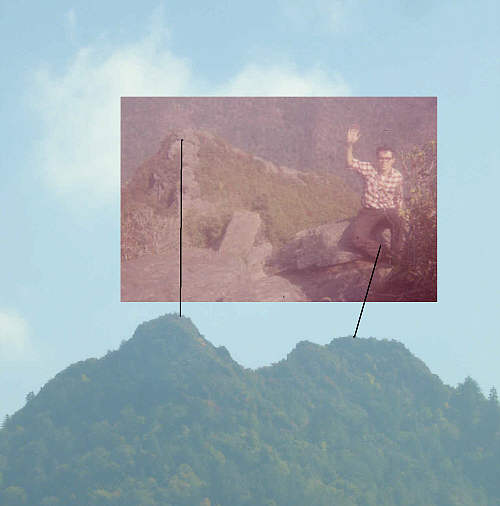
= == == == == == == == == == ==
I hear often from my Good Readers that they have bought books after reading my book reviews. Keep reading, folks! As I like to remind you, to obtain more information on what's in these books, buy and read the books — for less information, read the reviews.
== == == == == == == == == == == == == == == == == == == == ==
8. COMMENTARY:
= = = = = = = = = = = = = = = = = = = = = =In this section I like to comment on events in the world, in my life, and in my readings which have come up during the month. These are things I might have shared with you in person, if we had had the opportunity to converse during the month. If we did, then you may recognize my words. If I say some things here which upset you, rest assured that you may skip over these for the very reason that I would likely have not brought up the subject to spoil our time together in person.1. Padre Filius Reads a Billboard this Month:
Padre Filius, the cartoon character created by your intrepid editor and would-be cartoonist, will appear from time to time in this Section of the Digest to share us on some amusing or enlightening aspect of the world he observes during his peregrinations.
This month the good Padre reads an Ad for a Transmission Repair Company.
2.Comments from Readers:
- EMAIL to/from Kevin Dann in NYC re: Washington Square:
Dear Kevin,
Del and I saw last night this movie: “Washington Square” (1997) — a Henry James novel set in the house we saw during the Time Spirt Tour you led for us in the Washington Square area of NYC. Made the movie all the more special because of our having been there, thanks to you!
Bobby~~~~~~~~~~~~~~~~ Kevin's Reply ~~~~~~~~~~~~~~~~~~
Thanks for this great memory Bobby.I may go to a movie this afternoon – a once or twice a year occasion for me. I'm keen to see the newest Harry Potter film. "Research" for my latest inspiration to unmask Ahriman.
KevinEMAIL from Dr. Kaisu Viikari in Turku, Findland:
Dear Bobby,I must tell you that when yesterday discussing with my good lady friend for nearly 80 years, who really knows me, was so happy and glad, after reading your review of my Struggle!
She said that how have you been able to dig to the fore just the right features of me!!! She, who hardly has so much vision left in her one eye that she could barely read it, had underlined certain spots of the text!
EMAIL from 2nd Cousine, Suzanne Potier in Baton Rouge:
Subject: Wilma Matherne Gueniot
Dear Bobby, Just a note to let you know that we lost our Mother Tuesday, August 2, 2011. She suffered a stroke March 25 and never fully recovered. She always said she would like to live to be 99 (and if you remember, she and your Dad shared the same Birthday), so she was in her 99th year. She lost her Dad when she was 8 years old, and for a while had to live with an Aunt that lived to be 99, so that was her goal. We had her for a long time, for that we are happy and we are happiest that now she will be back with everyone else she loved and lost. SuzanneEMAIL from Andrew Flaxman in NYC:
Hi Bobby,Always good to get your Digest. I hope you are in good health.
I have transformed my web site into www.classicinsights.com to be much easier to navigate and understand. I have been attracting a good group of mentors to help me and they are beginning to offer seminars on our topics based on the seminar that we held this past spring. We show the model for a seminar on Ben Franklin next spring.
Any comments or suggestions that you may have will be greatly appreciated.
Warmly,
AndrewEMAIL from 2nd Cousine Frances Matherne Cagle in Port Allen, LA:
Subject: Enjoyed your Digest No. 50Bobby,
In fact I did enjoy this digest as I read through to find an e-mail address for you.
I wanted to express my heartfelt thanks to you for taking the time to visit with new found relatives at my precious Aunt Sue's services yesterday.
As you could probably glean from Suzanne and my excitement at meeting/seeing you and especially getting to share and enjoy tidbits from each other's life. So, so often I have spent time wondering what my grandfather, Adolph Matherne was like. His physical appearance (whether my daddy or Aunt Sue resembled him), his mannerisms, his likes and dislikes, his attitude about life, knowing his family, and whether he was a gentle man who loved to bounce his two children on his knee or read books to them before bedtime. All these things we missed out on.with his early death and never having someone to share those things with us.
So I thank you for the opportunity to know at least one member of my grandfather's family. It made Aunt Sue's celebration of death into heavenly life so special. I will continue to enjoy your website and the wealth of information you share as well as the newsy information about you and your family's life.Your cousine,
Frances Matherne Cagle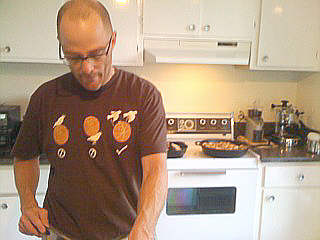
EMAIL from Candace in New Orleans re: Instant Concrete Tents:
Check this Video Clip of installing a Concrete Blowup Building in minutes. http://www.wimp.com/concretetents/EMAIL from daughter-in-law Kathryn Yost in San Francisco:
Bobby,California has been a fun experience for me so far. Rob had coworkers over on Wednesday night and made them Jambalaya. It turned out well and we had fun making our own Cajun seasoning.
Rob's been busy with work and I'm on a full-time job hunt with part time work lined up (teaching art) in September.
love,
KathrynEMAIL from Amy (not her real name) in Arizona forwarded to me from the Ophthalmologist Kaisu Viikari, Ph.D, M.D. in Finland who specialized in migraines for almost fifty years. Dr. Viikari treated over 2,500 patients for migraine by correcting their eyeglass prescriptions. (Used by permission from Amy and Dr. Viikari)
Hello Dr. Viikari,~~~~~~~~~~~~~~~~~~~~~~~ Bobby's introduction and then Dr. Viikari's Reply to Amy ~~~~~~~~~~~~~~~~~~~~
My name is Amy, I live in Arizona in the United States. I suffer from migraines and have by a true miracle found your books yesterday. I have read three of them today, as best as I can, not being in the medical profession. I sat at my computer reading them with my mother's +1.75 reading glasses on, and for the first day in 5 months, have not had a headache, and have not taken any pain medication. I felt the most amazing feeling this morning upon waking when I put them on. Also been wearing her +3.25 just to fog for a bit. NO PAIN!I'm currently seeing a neurologist who has me on Topamax, but I know it is not the cure. She has no clue what is causing this.
God bless you for your work. I do not know where to go from here.
My question to you is: Are there Doctors in Arizona who can treat me with your protocol?
Now that I have found you, what do I do?
I have no problem buying one of every strength glasses, I'm so ready to begin my recovery.
Thank you so much. I could say more, I'm just keeping this short in case it has to be translated.
Amy
Dear Amy,
Dr. Viikari asked if I might edit her reply to you. But first I'd to thank you for your email. Dr. Viikari is in a very weakened condition at 89 years old, but her spirit is still lively. Your courage in following the advice she has in her books with great success has brought tears of joy to her eyes because her greatest hope is that the work of her lifetime will not be forgotten. I was honored to be able to help her get the record of her Struggle (previously only available in the Finnish book, "totuus") converted into English. Her translator did the major work and I helped with some suggestions. My review of the book http://www.doyletics.com/arj/struggle.htm was my tribute to the elegant lady who received almost pauper's wages in order to help her clients.Imagine an eye doctor who did weekly followups to ensure that each patient's health was improved. People from all over Europe came to her with migraine problems and found amazing relief.[NOTE: Below is Dr. Viikari's response to Amy as edited by Bobby.]Dear Amy,
Thank you so much for your email — I'm surely equally happy as you!"
I suppose you have already been helped because you have understood the essence. I have always said that the message is so clear, that everyone with common sense can get it — they must only have an open mind!
The lack of open minds — given the simplicity of the idea — and the centuries-old, still ongoing, miserable schooling of the optometric and ophthalmological world are the worst obstacles!
I regret, also for my own part, that I am so old that I may not be alive long enough to follow your progress. I see that you are already on safe grounds, however I would like to give you an important mission: to spread the rewarding and easy good news!
 My reviews of two of her books are available on the web.
I have enjoyed meeting you and hope soon to hear more! You need not to go anywhere, at least so long we have seen where you have come in this way. There are hardly anywhere doctors who have grasped enough, this so simple item. I have seen it everywhere, also here in Finland by the professors who imagine having understood my work, but really have not — what silly articles they can write about me and my work!!
No problem with the language, that much do I understand, but I would like to thank you in advance if you will allow me to have your case report added to my webpages!
Have you read Lucians (super-unique) and Nunos casereports? and the reviews of Bobby Matherne!]]
Preventing Mypopia is here: http://www.doyletics.com/arj/nomyopia.htm
and Struggle Here: http://www.doyletics.com/arj/struggle.htm.
I note that Amazon.com will soon have Dr. Viikari's books available on Kindle.
3. Poem from Freedom on the Half Shell:
"Road of Freedom"

Give me your poor, huddled masses yearning to breathe free and I will give them taxes, regulations, restrictions, and every manner of unfairness ever created by persons saddled with the illusion that they can decide what is best for someone else's welfare. The individual, like the business professional, knows what's best in a given situation and, given the freedom, will take that action. The forces of coercion are prying open the shell that contains the living muscle and spirit of the American people — will we resist those forces and keep our muscles and spirit alive, free to open at will, or will we give up like the oyster and settle for "freedom on the half shell?" Here is another poem from Freedom on the Half Shell:
Road of Freedom
I find the road of freedom
To be in a sorry state.
Here, where little traffic seems to come,
Weeds grow in wild profusion
Where free men trod of late.Nearby the highway of coercion
Spews noxious fumes into the air
From super-regulated engines
And auto-mobile passions
Sounding with a syncopated blare.Is the former the road that Frost preferred,
That path by ancestors forsaken,
When they in congress deeply erred
And freedom in the tomb of law interred
Alongside the dormant road not taken?This morning I was feeling frustrated by the slow progress of adding all my Digest Subscribers into the new Contact Manager. Seemed an endless task even though I was almost halfway done. I could only do about 25 before I had to stop and take a break. Suddenly I realized that the feeling which was stopping me from doing the List was undoubtedly a doylic memory, and I did a quick speed trace, and by one month before birth the feeling was gone. Must have been tired of waiting in the womb to be born during the ninth month. When I went back to adding the names with a new vigor, I found this note from a doyletics user back in 2005. I will disguise the personal details, but you can hear how relieved this speed trace user was after her successful speed trace to convert a doylic memory into a cognitive memory.5. The 1884 New Orleans Cotton ExpositionMy name is Anna Mae. About six months ago, I found your page and it must have been by God's grace. Any way here is my story. A few years ago I was widowed in a new city. My circumstances were such that my grief completely overwhelmed me. In fact during the eighteen months previous to my husband dying, I had experienced many of the top ten stresses such as, selling a business, relocating, etc. The grief went on and on...I got lost in it. I was so lost that I was convinced that I had no future. The "future" didn't look dark; it didn't exist at all.Then, I found your page! My body had developed a tick, and I was having a hard time swallowing. I remembered having the same symptom as a child, and I tried the Speed Trace. It worked!! Then, it came back. I tried it again but this time, my mind projected me to age 93! What a surprise! Instantly I recognized that I HAVE A FUTURE!!
It has been six months now, and I am happily pursuing a new career, my life is broadening, my emotions are much more in command. I have been able to maintain relationships and I am looking forward to the rest of my life! What a tremendous gift you have given me. I cannot thank you enough. This may be an unusual way to use your discovery, but My mind took me there without any real intent on my part. God bless you.
Anna Mae Ephesians 3:14-21
The World's Fair or Cotton Exposition held in New Orleans in 1884-1885 was staged on the land which has become Audubon Park. Del's great-grand Aunt Cora Kinsley attended that Fair and had her photo taken by the official photographer Moses. She obtained an souvenir glass goblet with the words Cora Kinsley, N. O. Exposition, 1885 engraved on it. The photo at right shows a reproduction of the Fair's Visitor's Guide, Cora's photo, and her goblet.
== == == == == == == == == == == == == == == == == == == == ==
9. CLOSING NOTES:
= = = = = = = = = = = = = = = = = = = = = =Thanks to all of you Good Readers for providing the Chemistry which has made this site a Glowing Success. — Especially those of you who have graciously allowed us to reprint your emails and show photos of you and by you on this website — you're looking good! As of June 1, 2019, it enters its 20th year of publication. The DIGESTWORLD Issues and the rest of the doyletics website pages have received over 21.6 MILLION VISITORS ! ! !
We have received over ONE MILLION VISITORS per Year to the Doyletics Website since its inception June 1, 2000, over twenty years ago. Almost 2 million in the past 12 months. We are currently averaging about 150,000 visitors a month. A Visitor is defined as a Reader who is new or returns after 20 minutes or more has passed. The average is about one visitor for every 10 Hits.
IMPORTANT NOTES about DIGESTWORLDtm Our DIGESTWORLD came into existence years before Facebook and all the other social media which interrupt people's schedules many times a day. All our photos, reviews, cartoons, stories, etc, come to you via a link inside of one short email Reminder at the beginning of each month. We hope you appreciate how we let YOU choose when to enjoy our DIGESTWORLD Issues. To Get a Monthly Reminder, Click Here .
We especially want to thank you, our Good Readers, in advance, for helping our readership to grow. NOTE our name is now: DIGESTWORLD. Continue to send comments to Bobby and please do create links to DIGESTWORLD issues and Reviews on LinkedIn, on your Facebook page, and on other Social Media. When you copy any portion of a webpage or review, please include this text: "Copyright 2018 by Bobby Matherne".
Email your friends about the reviews, the handy doyletics Speed Trace, the Household Hints, the cartoons, the Cajun jokes, the recipes, the poems, and the photos in all the DIGESTWORLD Issues archived on our website. Urge them to subscribe to the DIGESTWORLD Reminder so they won't miss a single issue!
The Subscription Process SIMPLE: no Reply Confirmation is required. An email to the Editor with your First and Last names is all that's required. There is never a charge for viewing any page on our website; nor for any of the guidance we offer to people using the FIRST AID KIT or asking for help with doyletics in any other areas.
For those who are able to contribute to the site we offer a year's subscription for receiving the DIGESTWORLD Monthly Reminders for $50.~~ NOTE: DIGESTWORLD is a Trademark of 21st Century Education, Inc. ~~ The cost of keeping this website on-line with its 300 Gbytes of bandwidth a month is about $50 a month. Thank you, our Good Readers, for continuing to patronize our advertisers when they provide products and services you are seeking as you visit any of our web pages. Remember the ads are dynamically displayed and every time you read even the same page a second time, you may find new products and services displayed for your review. Our reviews, digests, tidbits, etc, all our webpages act as Google magnets to bring folks to the website to learn about doyletics and frequent our advertisers, so they support one another in effect.
We wish to thank all Good Readers who have made a contribution to the doyletics.com website! Special thanks go to Chris and Carla Bryant in Corpus Christi and Gary Lee-Nova in Canada!We welcome your contributions to the support of the website and research into the science of doyletics. To obtain our street address, email Bobby at the address found on this page: http://www.doyletics.com/bobby.htm and we will send it to you. Every $50 subscription helps toward keeping this website on-line for another month. If you can't send money, at least show your support by sharing your favorite Issue of DIGESTWORLD and Reviews with a friend.
You can read a description of how to do a Speed Trace (either in English or Spanish):Learn to Do a Speed Trace Here

Or Watch Bobby extemporaneously explain How to Do a Speed Trace on Video:
To make a connection to the Doyletics website from your own website, here's what to do. You may wish to use the first set of code below to link to the site which includes a graphic photo, or to use the second set of code for a text-only link. Immediately below is how the graphic link will look on your website. Just place this .html in an appropriate place on your website.
<CENTER> < — with graphics link — >
<A HREF="http://www.doyletics.com/index.htm">Learn to Do a Speed Trace Here<BR>
<IMG SRC="http://www.doyletics.com/doylepb.gif" width="309" height="102" border="2" TITLE="Learn to Remove Doyles — all those Unwanted Physical Body states of fear, depression, migraine, etc." ALIGN=middle><A/></CENTER>
<CENTER> < — text only link — >
<A HREF="http://www.doyletics.com/introduc.htm">Learn to Do the Speed Trace at doyletics.com <A/>
</CENTER>Check out the new additions to the Famous and Interesting Quotations at:
http://www.doyletics.com/quotes.htm
== == == == == == == == == == ==
My reviews are not intended to replace the purchasing and reading of the reviewed books, but rather to supplant a previous reading or to spur a new reading of your own copy. What I endeavor to do in most of my reviews is to impart a sufficient amount of information to get the reader comfortable with the book so that they will want to read it for themselves. My Rudolf Steiner reviews are more detailed and my intention is to bring his work to a new century of readers by converting his amazing insights into modern language and concepts.
== == == == == == == == == == ==The Good Mountain Press Digest is mailed monthly to:
Friends and associates
Individuals who have expressed interest in the Digest
Persons who have subscribed at the Digest Subscription Page.Please Don't Bug Us Nothing BUGS US more than losing Hale-and-Hearty, Ready-to-Read Good Friends from the DIGESTWORLD Reminder List.
So we've made it easy for Good Readers who have changed their Email addresses and Friends who would like to begin receiving the DIGESTWORLD Reminder at the first of each Month:
IT'S EASY to RE-SUBSCRIBE or SUBSCRIBE:
CLICK HERE!
As of August, 2011 we have begun using a Contact Manager with an Email Merge feature which allows us to send personalized Emails to everyone in our Contact List. You can receive the colorful Email containing the DIGESTWORLD Reminder beginning with "Dear [Your First Name]". It is important that we have your First Name, so if the name you are addressed by in your Reminder is not your first name, please notify us of the name you wish us to use. For convenience you can send a quick email to give us your name by Clicking Here. To Contact Bobby, his Email address is visible on this page.
NOTE: As of 2018 the Topica.com List messages are NO LONGER READABLE!
Please do your part by letting us know of any email address change so that you may continue receiving the DIGESTWORLD Reminders. Most of our Readers come from folks who don't get these Reminders, but we offer the DIGESTWORLD Reminder as a service to our regular Good Readers. To send us your new email address, CLICK HERE! .
If you discovered this page by a Google Search and want to SUBSCRIBE NOW
If you have enjoyed a particular issue, let us know, especially around the first of each month when those "lost soul" messages are bugging us, Send us a quick email by Clicking Here!
Simply Click the Link at right to send an Email Request: SUBSCRIBEIf you have a friend or two that you think would enjoy reading the DIGESTWORLD, suggest they view the current DIGESTWORLD Issue and perhaps they'll decide to Subscribe.To unsubscribe from the DIGESTWORLD Reminder List:
Click Link at right to send a Blank email to: UNSUBSCRIBEIf the above links which provide canned emails don't work on your system, you can send a Subscribe/Unsubscribe request to the address found on this page: http://www.doyletics.com/bobby.htm Please include your first and last name when Subscribing.
== == == == == == == == == == == == == == == == == == == == ==
10. GRATITUDE - in Three Easy Steps:
= = = = = = = = = = = = = = = = = = = = = =
Maintaining a website requires time and money, and apart from sending a donation to the Doyletics Foundation, there are several ways you can show your gratitude and support our efforts to keep doyletics.com on-line.
One would be for you to buy a copy of my Dolphin Novel, The SPIZZNET File. Books May be ordered in hardback or paperback form from Xlbiris the Publisher here:
online: http://www.xlibris.com/TheSPIZZNETFILE.html
email: orders@xlibris.com
The best source at the best price is to order your copies on-line is from the publisher Random House/Xlibris's website above.
Two would be for you to use the Google Search Engine for your web searches or to find an item on doyletics.com website. New reviews will have a place to do a Google Search at the top and the bottom of the reviews. Just enter a search phrase in the box below to do a Search. Note you can check whether to Search just this site or all websites.
Three would be for you to let us know you like us by Subscribing to our monthly Reminder. One short email each month with a link to our Latest DIGESTWORLD Issue will keep you apprised of our latest reviews, photography, poetry, Cajun stories, recipes, Movie Blurbs, Travels, and even more! Simply Click Here: Subscribe Me!
Thank you in advance!
~~~~~~~~~~~~~~~~~~~~~~~~~~~^~~~~~~~~~~~~~~~~~~~~~~~~~~~
Like Us? Subscribe to Receive a Monthly Email
Reminder of New Reviews & New DIGESTWORLD Issues — CLICK
~^~== == == == == == == == == == == == == == == ==
22+ Million Good Readers have Liked Us
22,454,155 as of November 7, 2019
Mo-to-Date Daily Ave 5,528 Readers
For Monthly DIGESTWORLD Email Reminder:
Subscribe! You'll Like Us, Too!
== == == == == == == == == == == == == == == ==
Any questions about this DIGESTWORLD ISSUE, Contact: Bobby Matherne
CLICK HERE TO OPEN OUR FIRST-AID KIT. Does your Face sometimes resemble the Faces Below? If so, Click on the Faces or Flags to Dig into our First Aid Kit.
To follow Research in the science of doyletics, Read our Monthly DIGESTWORLD Issues.
Click Here to get Monthly Reminder.
For Copies of Reviewed Steiner Books, Click on SteinerBooks Logo below.
Visit Bobby's Other Reviews, Articles, and Essays
Books are Lighthouses Erected in the Sea of Time
Counselor?
Visit the Counselor's Corner for Suggestions
on Incorporating Doyletics in Your Work.
e-mediatelytm is a Trademark of 21st Century Education, Inc. Prototyped 2000.